
EU-Mexico Deal Signed at Palacio Nacional Diversifies Trade
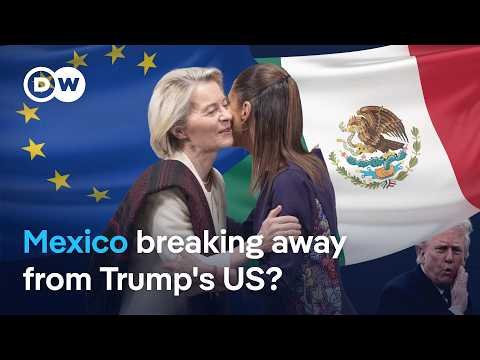
In a recent DW News report from Mexico City, the historic signing of the modernised EU-Mexico trade deal unfolded at the National Palace as European Council President António Costa and European Commission President Ursula von der Leyen joined President Claudia Sheinbaum at the 8th EU-Mexico Summit on May 22. The agreement, updating a partnership first established in 2000, cuts
In a recent DW News report from Mexico City, the historic signing of the modernised EU-Mexico trade deal unfolded at the National Palace as European Council President António Costa and European Commission President Ursula von der Leyen joined President Claudia Sheinbaum at the 8th EU-Mexico Summit on May 22. The agreement, updating a partnership first established in 2000, cuts tariffs across hundreds of product categories and opens new markets for Mexican farmers, miners, and manufacturers.
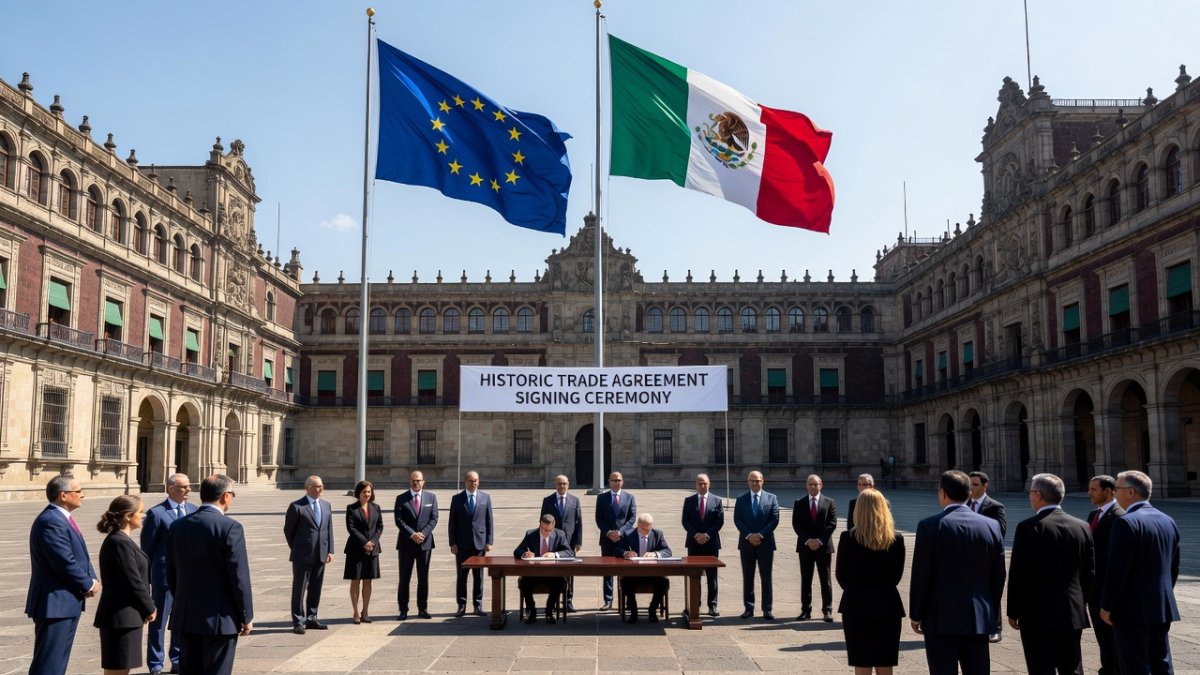
The signing ceremony at Palacio Nacional
On the morning of May 22 2026 the courtyard of Palacio Nacional in the heart of Mexico City filled with the sounds of mariachi music and the scent of fresh tortillas as President Claudia Sheinbaum welcomed European Council President Antonio Costa and European Commission President Ursula von der Leyen for the eighth EU-Mexico Summit. The three leaders stood beneath the historic balconies where presidents have greeted dignitaries for generations while Mexican and EU flags fluttered side by side in the spring breeze. This marked the first high-level meeting in over a decade and carried deep symbolism for a nation that values its independence yet recognizes the need for diversified partnerships.
Sheinbaum spoke first emphasizing that the Modernised Global Agreement and the Interim Trade Agreement represented an opening of other horizons while maintaining strong ties with traditional partners. Costa described the moment as a true geopolitical statement that showed both sides could build bridges even when global winds blew uncertain. Von der Leyen highlighted the €86 billion in annual bilateral trade that had already quadrupled since the original 2000 agreement and noted how the new framework would protect Mexican geographical indications such as tequila from Jalisco and mezcal from Oaxaca.
The ceremony concluded with the formal signing of documents that had taken nearly a decade to negotiate beginning around 2016 with a political agreement reached in 2018 and final technical work completed in January 2025. EU Council authorization came on May 11 2026 allowing the leaders to put pen to paper in front of cameras and a small group of campesino representatives invited from across the republic. Ordinary Mexicans watching on television saw not abstract diplomacy but concrete steps that could affect jobs in their own communities.
What tariffs are cut immediately
The Interim Trade Agreement entered into provisional application right after the signatures allowing Mexico to remove nearly all remaining tariffs on European imports within weeks. European machinery industrial components and certain chemicals will now enter Mexican ports with duties slashed from an average of 10 percent down to zero in most categories. At the same time the European Union opened additional quotas for Mexican agricultural products and raw materials creating immediate new export pathways for producers who have long competed under restrictive rules.
Specific minerals from northern and central states gained instant advantages including fluorspar mined in San Luis Potosí copper extracted in Sonora zinc from Zacatecas and lead shipments that will now face lower barriers when reaching European smelters. Agricultural exporters also saw expanded access for avocados from Michoacán berries from several central valleys and fresh vegetables grown in Sinaloa fields. These tariff reductions translate directly into higher margins for cooperatives that previously paid thousands of pesos in duties on every container.
Analysts note that the immediate effect will be most visible at customs posts in Veracruz and Manzanillo where paperwork for EU-bound shipments has already begun to simplify. The changes build on the existing €86 billion yearly trade volume and are expected to add several billion euros in new flows within the first two years. Mexican officials stress that these openings come without compromising labor or environmental standards already embedded in the agreement.
(Global 1 News)
How Mexican campesinos and farmers benefit
In the avocado orchards of Michoacán smallholder families who supply 80 percent of Mexico’s exports to Europe now anticipate steadier prices and larger purchase orders because the new quotas remove previous volume caps. A typical family plot of five hectares that once struggled with seasonal gluts can now plan multi-year contracts with European distributors who value the protected denomination status. This stability allows farmers to invest in irrigation systems and organic certification rather than living harvest to harvest.
Berry growers in Jalisco and vegetable producers in Sinaloa similarly gain from expanded market access that rewards quality over sheer volume. Cooperatives in these regions have already begun forming export consortia to meet European phytosanitary requirements knowing that the tariff savings of 8 to 12 percent per kilo will stay in their pockets instead of disappearing at the border. The human impact appears in the faces of young people who once left for the United States but now see viable futures staying on the land their grandparents worked.
These agricultural gains also reinforce rural economies where every additional euro earned circulates through local tiendas and schools. Government extension agents in Michoacán report rising enrollment in technical courses on sustainable farming as families prepare for the increased demand. The deal therefore touches not only trade statistics but the daily rhythm of life in villages that have supplied Mexico’s tables and now Europe’s as well.
Maquiladora workers and factory jobs
Along the northern border in Tijuana and in the industrial corridors of Monterrey and Guadalajara thousands of maquiladora workers stand to benefit from new supply chains that will feed European assembly plants. Components previously sourced from Asia can now move more competitively from Mexican factories because tariffs on European machinery drop sharply allowing plant managers to upgrade equipment without prohibitive costs. This modernization often leads to higher-skilled positions and better wages for operators who have spent years on repetitive assembly lines.
In Guadalajara electronics clusters workers already producing parts for European automotive suppliers expect order books to lengthen once the Interim Trade Agreement clears remaining paperwork. The same pattern appears in Monterrey where steel and aluminum fabricators anticipate contracts tied to EU clean-energy projects funded through the €5 billion Global Gateway initiative. These investments target wind farms in Baja California and water-management systems in Chihuahua creating downstream demand for Mexican-made parts.
The human stories emerge in conversations with shift supervisors who recall past cycles of boom and bust tied solely to US demand. With European buyers now anchored by long-term tariff certainty families in these cities can plan for apprenticeships and technical diplomas rather than fearing sudden layoffs. The diversification therefore spreads risk across continents and gives workers a measure of security they have sought for decades.
Consumers in Mexico City colonias
Residents of neighborhoods such as Roma Norte Condesa and even working-class areas like Iztapalapa will soon notice lower shelf prices on European cheeses olive oils and wines once the tariff cuts take full effect. A bottle of Spanish Rioja that previously carried a 15 percent duty may drop by 20 to 30 pesos allowing middle-income households to add variety to weekly shopping baskets without stretching budgets. Pharmacies and specialty stores in these colonias already report advance orders from importers eager to stock expanded selections.
The price relief extends beyond luxury items to industrial inputs that affect everyday goods such as German-made appliances assembled locally and Italian fabrics used by small garment workshops. Families who once chose between imported medicines and domestic alternatives gain options as European pharmaceutical components enter with reduced costs. This consumer-side benefit reinforces the sense that trade policy can touch kitchen tables as directly as factory floors.
Local economists tracking inflation in the capital note that diversified import sources help cushion households against swings in any single currency or supplier. For pensioners living on fixed incomes in the colonias even modest savings on staples accumulate into meaningful monthly relief. The agreement therefore carries a quiet dignity for ordinary city dwellers whose voices rarely reach international negotiating tables yet whose daily lives reflect the outcomes.
Sheinbaum's political strategy
President Claudia Sheinbaum framed the signing as consistent with Morena principles of sovereignty while pragmatically widening Mexico’s economic options. By securing European commitments on political dialogue climate cooperation digital regulation security migration and health she positioned the country to negotiate from strength during upcoming USMCA reviews. The strategy avoids rupture with Washington yet signals that Mexico will not remain captive to any single partner’s tariff threats including the 30 percent duties floated by former President Trump.
Within Morena circles the deal receives praise for protecting geographical indications such as Jalisco tequila and Oaxaca mezcal while opening doors for small producers who form the party’s rural base. Sheinbaum’s team emphasizes that the Modernised Global Agreement still requires ratification by the European Parliament and all 27 member states giving Mexico time to align domestic policies on labor rights and environmental safeguards. This measured pace reflects a leadership style that values both speed on immediate tariff relief and deliberation on deeper integration.
The political calculus also includes domestic messaging that Mexico remains open for business without surrendering policy autonomy. By hosting the summit at Palacio Nacional Sheinbaum underscored national dignity even as she welcomed new investment flows. Observers note that this balancing act strengthens her hand with voters who appreciate both nationalist rhetoric and tangible improvements in household economies.
(Global 1 News)
The USMCA review context
With the United States-Mexico-Canada Agreement scheduled for formal review within the next two years the EU agreement arrives as a timely counterweight to potential US tariff escalations. Mexican negotiators can now point to diversified markets when Washington presses for concessions on autos dairy or digital services. The €5 billion Global Gateway package targeting clean energy in Baja California and anti-violence programs in Ciudad Juárez further demonstrates that European partners bring not only trade but development resources that complement existing North American frameworks.
Industry groups in Monterrey and Mexico City have already begun modeling scenarios in which a tougher USMCA renegotiation coincides with rising EU demand for Mexican raw materials. This dual-track approach reduces the leverage any single administration in Washington might wield. Farmers in Sinaloa who remember the 2019-2020 tariff disputes over tomatoes now see European quotas as insurance against similar shocks.
The timing also allows Mexican diplomats to test new language on labor and environmental chapters that could later inform USMCA talks. By locking in provisional application of the Interim Trade Agreement Mexico gains breathing room to prepare detailed positions before the next trilateral round begins. The result is a foreign-policy posture that looks south and east as well as north preserving strategic flexibility for the decade ahead.
Small businesses and ejidos
In Zacatecas and Oaxaca ejido assemblies have started mapping how zinc lead and mezcal producers can form export cooperatives eligible for the new tariff preferences. A typical ejido of 40 families that once sold zinc ore to middlemen at distressed prices can now contract directly with European refiners saving an estimated 9 percent on duties. Similar calculations in Puebla textile workshops show that duty-free access to Italian machinery could modernize looms and raise output for local designers selling into EU markets.
These grassroots shifts matter because ejidos still control significant portions of Mexico’s mineral and agricultural land. Technical assistance programs funded partly through the Global Gateway initiative will help ejido leaders navigate European standards on traceability and sustainability. The human impact registers in the confidence of young ejidatarios who see pathways to stay on ancestral lands rather than migrate northward.
Small urban businesses in Puebla and Oaxaca city centers likewise anticipate lower costs for European components used in artisanal production. Bakeries that import specialty flours and chocolatiers who source premium cocoa butter will pass modest savings to customers while expanding product lines. The agreement therefore reaches beyond large exporters to the micro-enterprises that employ neighbors and sustain community life.
Long-term implications for Mexican sovereignty and economic independence
Over the coming decade the Modernised Global Agreement is projected to deepen Mexico’s economic resilience by spreading risk across multiple poles rather than concentrating exposure in any single market. The requirement for full ratification by the European Parliament and all 27 states ensures that Mexican civil society and legislators retain opportunities to shape implementing legislation on issues from data privacy to climate commitments. This deliberate pace protects sovereignty even as it locks in tariff advantages.
Investment under the €5 billion Global Gateway envelope targeting wind farms water systems and community security programs further embeds European capital in regions historically dependent on US or domestic funding alone. Mexican officials retain regulatory authority over these projects ensuring that local content rules and labor standards reflect national priorities. The result is a model of partnership that augments rather than erodes decision-making power in Mexico City.
Ultimately the deal signals a maturing Mexican foreign economic policy that honors the country’s revolutionary heritage of self-determination while engaging the realities of 21st-century supply chains. Families in Michoacán colonias of the capital and mining towns of Zacatecas now hold tangible stakes in this diversified future. Their daily struggles and quiet hopes remind us that trade agreements succeed only when they improve lives on the ground where Mexico’s strength has always resided.
By Rosa Martinez, Staff Writer
This article was produced with AI-assisted research and editorial support. Reporting is based on sources cited in the article.
What's Your Reaction?
 Like
0
Like
0
 Dislike
0
Dislike
0
 Love
0
Love
0
 Funny
0
Funny
0
 Wow
0
Wow
0
 Sad
0
Sad
0
 Angry
0
Angry
0

Latin America/Andes Correspondent at Global1.News. Based in Bogota, covering politics, environment, energy, and social movements across the Andean region. Passionate about environmental journalism and communities protecting their land.












Comments (0)