
Cuba Under the Microscope: Washington's 100-Page Indictment of a Cold War Enemy
he Global Story podcast examined allegations that Cuba has waged a decades-long campaign of subversion against the United States — claims given new weight by a 100-page State Department report titled "Cuba: The Capital of 21st Century Communism," released on 20 July 2026. Cuba Under the Microscope: Washington's 100-Page Indictment of a Cold War Enemy London – 27 July 2026 — The United States Department of State has published a sweeping 100-pag...
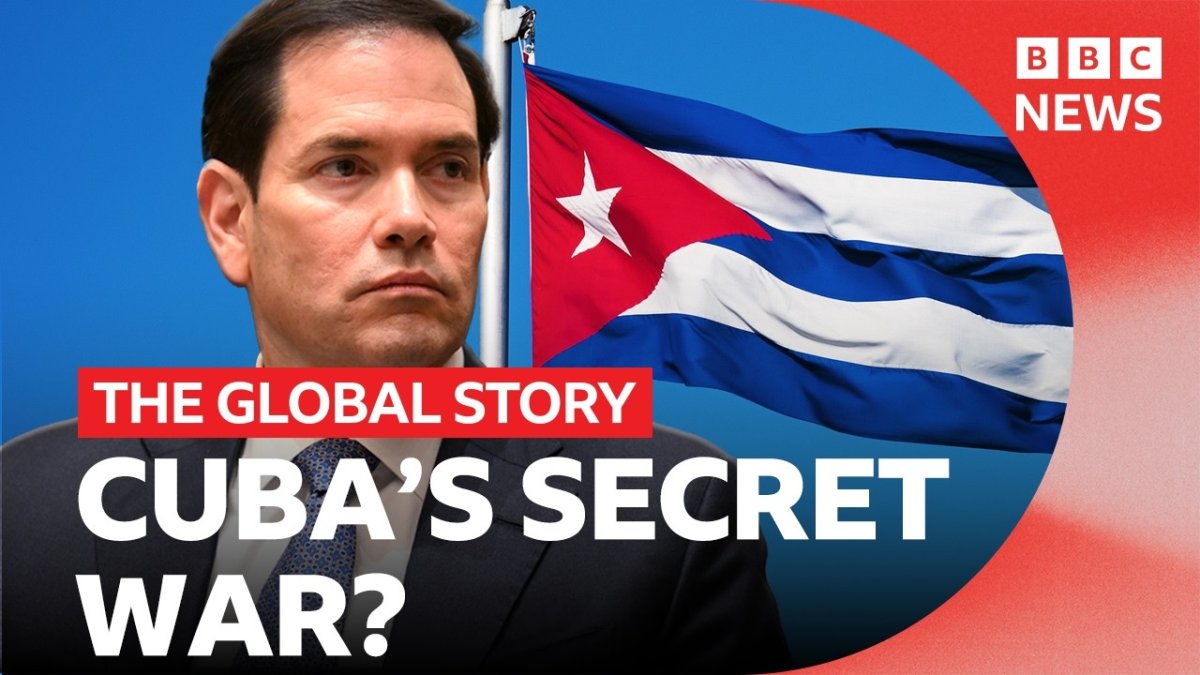
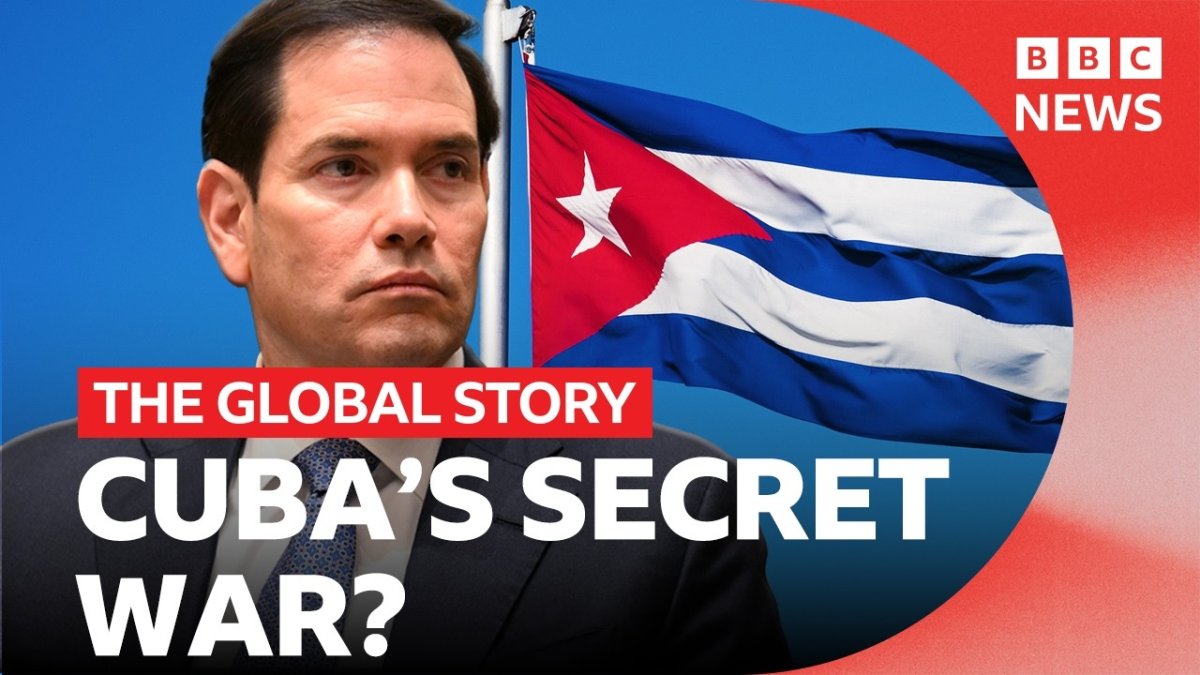
In a recent BBC News report, The Global Story podcast examined allegations that Cuba has waged a decades-long campaign of subversion against the United States — claims given new weight by a 100-page State Department report titled "Cuba: The Capital of 21st Century Communism," released on 20 July 2026.
Cuba Under the Microscope: Washington's 100-Page Indictment of a Cold War Enemy
London – 27 July 2026 — The United States Department of State has published a sweeping 100-page report accusing Cuba of running an organised campaign of espionage, ideological subversion, and revolutionary export against the American mainland for nearly seven decades. Secretary of State Marco Rubio presented the document with a stark warning: "For over six decades, the Cuban regime has been the main sponsor of radical leftism and Third Worldism in the United States. The American people deserve to know." The report, titled Cuba: The Capital of 21st Century Communism, draws unprecedented connections between the communist island and left-wing movements in the United States, including the Black Panthers, the Pan-African movement, radical feminism, and Antifa. Published on 20 July, the document arrives as the Trump administration continues its policy of maximum pressure on Havana — a strategy that has included tightened sanctions, the re-designation of Cuba as a state sponsor of terrorism, and an executive order targeting the regime's overseas influence networks.
The Espionage Empire: Seven Decades of Infiltration
At the heart of the State Department's indictment is a detailed accounting of Cuban intelligence operations against the United States — operations that, the report argues, rank among the most successful foreign penetration campaigns in American history. The document names three cases in particular that illustrate the depth and longevity of Havana's reach into the highest levels of the US government. Víctor Manuel Rocha, a Cuban-born US diplomat educated at Yale, Harvard, and Georgetown, was recruited by Cuban intelligence in Chile in 1973. Over the following five decades, he rose through the State Department to become Director of Inter-American Affairs at the National Security Council under President Bill Clinton, later serving as US ambassador to Bolivia and adviser to the US Southern Command. Arrested in December 2023, Rocha confessed to an undercover FBI agent that what Cuban intelligence had achieved through him was "enormous and more than a grand slam." Then-Attorney General Merrick Garland called it "one of the deepest and most enduring infiltrations of the US government by a foreign agent."
Then there is Ana Belén Montes, recruited in 1984 as a graduate student at Johns Hopkins University, who became the senior Cuba analyst at the Defence Intelligence Agency — a position from which she briefed the Joint Chiefs of Staff on Cuban military capabilities while simultaneously delivering that same intelligence to Havana. Known within the intelligence community as the "Queen of Cuba," Montes compromised the identities of at least four undercover US agents and revealed the location of a secret military base in El Salvador. Former National Counterintelligence Director Michelle Van Cleave testified that Montes "compromised practically everything we knew about Cuba." She was arrested ten days after the 11 September 2001 attacks and served 22 years before her release in January 2023.
The Wasp Network and the Brothers to the Rescue Shootdown
The report also revisits one of the most provocative episodes of Cuban intelligence activity on US soil: the Red Avispa, or Wasp Network, dismantled by the FBI in 1998. Operating out of South Florida, the network had a dual mission — infiltrating Cuban exile organisations opposed to the Castro regime, and placing agents inside US military facilities. The network's leader, Gerardo Hernández, oversaw a operation that placed two volunteer pilots inside Brothers to the Rescue, a Miami-based exile group that flew reconnaissance missions over the Florida Straits. On 24 February 1996, Cuban MiG fighter jets shot down two unarmed Brothers to the Rescue civilian aircraft over international waters, killing all four crew members. Decoded communications later revealed that Havana had prepared a specific operation — codenamed "Scorpion" — designed to provoke precisely that confrontation. Hernández was sentenced to life imprisonment but was released in December 2014 as part of the Obama administration's diplomatic opening with Cuba, returning to Havana to a hero's welcome.
Signals Intelligence and the Beijing-Moscow Connection
The State Department report documents that Cuba currently hosts 18 signals intelligence facilities on the island — three operated by the People's Republic of China and two by the Russian Federation — capable of intercepting military communications from the southeastern United States, including transmissions from US Southern Command headquarters in Miami, naval traffic from Guantánamo Bay, and signals from the Eastern Seaboard. This network gives both Beijing and Moscow a persistent electronic surveillance platform just 90 miles from the Florida coast — a strategic asset that, analysts suggest, far exceeds the espionage value of the island's own intelligence operations. Former CIA Counterintelligence Chief James Olson, quoted in the report, warned: "The Cubans have penetrated our government. We only know the tip of the iceberg. They are much better than the KGB." The presence of Chinese and Russian intelligence infrastructure on the island adds a layer of great-power competition to what has traditionally been framed as a bilateral US-Cuba dispute. During the Cold War, the Soviet Union provided Cuba with extensive military and intelligence support that shaped Havana's capabilities for decades, a legacy that continues today as Russia seeks renewed footholds in the Western Hemisphere amid broader tensions with Washington.
The Ideological War: From the Black Panthers to Antifa
Perhaps the most controversial section of the report is its attempt to trace a direct line from Cuba's revolutionary ideology to contemporary American left-wing movements. The document argues that Cuba's influence was "never, at root, a quarrel over economic policy or sovereignty or even ownership of a particular territory" but rather "a revolution against Western civilisation itself" — waged by persuading "the children of the West to turn against their own inheritance." The report names the Black Panther Party, the Pan-African movement, radical feminist organisations, and Antifa as movements that Cuba allegedly nurtured, trained, or inspired. Critics have dismissed this narrative as overstated. The Cuban government itself called the document "a mediocre propaganda pamphlet," while the Metro DC Democratic Socialists of America characterised it as part of "the Trump administration's attempt to smear its domestic political opposition." Michael Bustamante, a professor of history at the University of Miami who joined The Global Story podcast to discuss the report, noted that while Cuban involvement with some of these movements is historically documented, the report's sweeping claims risk conflating genuine historical ties with exaggerated conspiracy.
Sanctions, Rapid Response Networks, and the Road Ahead
In June 2026, the State Department took concrete action against what it describes as the central node of Cuba's overseas influence apparatus — sanctioning the Cuban Institute of Friendship with the Peoples (ICAP) and its travel agency Amistur under Executive Order 14404, issued by President Donald Trump. The same month, authorities discovered that a network aligned with the Cuban regime had distributed a "National Rapid Response Plan" — a document outlining coordinated actions against federal facilities, military bases, and Immigration and Customs Enforcement centres to be launched within 24 hours of any US military action against Cuba. The report's release and the accompanying sanctions signal that the Trump administration has no intention of easing pressure on Havana. Secretary Rubio, himself of Cuban descent, has been one of the most vocal advocates of maintaining and even tightening the embargo. For Moscow and Beijing — both of which maintain significant intelligence assets on the island — the intensification of US-Cuba tensions represents a strategic opportunity: a permanent irritant in America's own backyard, sustained by a regime that, despite its economic desperation, continues to project a reach far beyond its size.
Historical Echoes of Soviet Support and Modern Rivalries
The report places current Cuban activities within a longer arc of Cold War competition, recalling how Soviet backing enabled Havana to project influence across Latin America and into the United States during the 1960s and 1970s. Russian officials have continued limited cooperation with Cuban intelligence services in recent years, viewing the island as a useful counterweight to American dominance in the region. This dynamic echoes earlier eras when Moscow supplied weapons, training, and diplomatic cover to the Castro government, allowing it to survive economic isolation imposed by Washington. Analysts note that renewed Russian engagement with Havana today serves similar geopolitical purposes, complicating US efforts to isolate the regime without triggering broader great-power friction.
Critics, Defenders, and the Cuban Response
Cuban officials have rejected the State Department findings outright, describing them as recycled Cold War rhetoric designed to justify continued economic warfare against the island. Havana points to its own history of providing medical and educational assistance to developing nations as evidence of internationalist solidarity rather than subversion. Academic observers caution that while documented espionage cases exist, the report may overstate the coherence of any single ideological export strategy. Some critics within the United States argue that the document serves domestic political ends by linking foreign threats to progressive domestic movements, potentially chilling legitimate debate over foreign policy.
Analysis — A 90-Mile Challenge That Refuses to Fade
The State Department's 100-page report is, in many respects, the most comprehensive public accounting of Cuban intelligence and subversion activities ever released by the US government. Whether it will translate into new policy remains to be seen. The sanctions already imposed on ICAP and Amistur suggest a targeted approach — hitting the regime's overseas influence networks rather than pursuing a broader escalation that could risk a humanitarian crisis on an island already suffering severe fuel and food shortages. But the report also carries a political dimension that cannot be ignored. Released in the midst of a presidential election cycle, the document serves as both a foreign policy statement and a domestic political signal — framing the administration's Cuba policy as part of a larger struggle against radical ideologies. For Havana, the report is an unwelcome reminder that despite the diplomatic opening of 2014 and the limited thaw under President Obama, the fundamental dynamic of US-Cuba relations remains unchanged: an asymmetrical confrontation in which the smaller power survives through ingenuity, intelligence, and the strategic patience of its patrons in Moscow and Beijing. Whether that formula can hold in the face of renewed American pressure is the question that now hangs over the Florida Straits.
By Irina Volkov, Staff Writer
This article was produced with AI-assisted research and editorial support. Reporting is based on sources cited in the article.
What's Your Reaction?
 Like
0
Like
0
 Dislike
0
Dislike
0
 Love
0
Love
0
 Funny
0
Funny
0
 Wow
0
Wow
0
 Sad
0
Sad
0
 Angry
0
Angry
0
Russia/Eastern Europe Correspondent at Global1.News. Covering Russian politics, energy, security, and the shifting dynamics of the post-Soviet space. Provides clear-eyed analysis on one of the world's most opaque regions.










Comments (0)