
China’s WAICO and the Contested Future of Global AI Governance: Implications for South Korea and the Emerging Bloc Order
On 16 July 2026, representatives of twenty-nine countries signed a founding agreement in Shanghai establishing the World Artificial Intelligence Cooperation Organization, or WAICO. The following day, Chinese President Xi Jinping formally unveiled the organization at the opening ceremony of the 2026 World AI Conference and High-Level Meeting on Global AI Governance. Framed by Beijing as the world’s first intergovernmental international organization dedicated to artificial inte
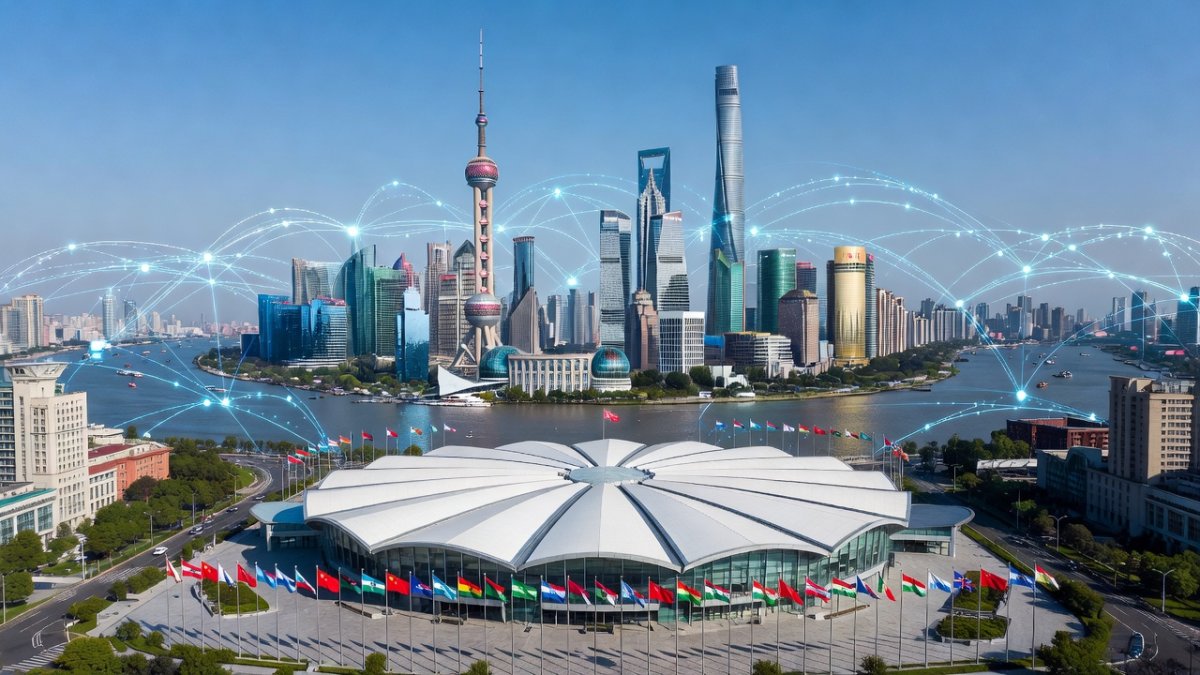
On 16 July 2026, representatives of twenty-nine countries signed a founding agreement in Shanghai establishing the World Artificial Intelligence Cooperation Organization, or WAICO. The following day, Chinese President Xi Jinping formally unveiled the organization at the opening ceremony of the 2026 World AI Conference and High-Level Meeting on Global AI Governance. Framed by Beijing as the world’s first intergovernmental international organization dedicated to artificial intelligence cooperation and governance, WAICO represents China’s most ambitious institutional bid yet to shape the norms, capacity pipelines, and diplomatic architecture surrounding AI. For middle powers such as South Korea—absent from the confirmed list of founding members, deeply embedded in the United States security alliance, yet economically intertwined with China—the emergence of WAICO sharpens an already difficult strategic dilemma. This article examines WAICO’s institutional design, membership pattern, substantive offerings, and implications for the evolving landscape of global AI governance, with particular attention to Seoul’s position between competing technology orders.
The Birth of WAICO: A Treaty-Based Organization
WAICO did not emerge spontaneously. Premier Li Qiang floated the concept at the World AI Conference in July 2025. Over the subsequent year, the Shanghai AI Laboratory and Fudan University functioned as a de facto secretariat, preparing the ground for a finished instrument rather than an open-ended negotiation. When representatives signed the agreement on 16 July 2026, and when Xi delivered his keynote on 17 July, the political work had already been completed. Xi’s address was an unveiling, not the start of bargaining. Chinese Foreign Minister Wang Yi signed on behalf of the Chinese government, a detail that underscores WAICO’s character as a diplomatic asset rather than a purely technical or industry-ministry initiative.
According to the founding agreement and official Chinese statements, WAICO is constituted as an independent intergovernmental international organization headquartered in Shanghai. It sits outside the United Nations system even as it purports to uphold the purposes of the UN Charter, to pursue extensive consultation and joint contribution for shared benefit, and to adhere to a people-centered approach. Its stated aims are to promote international cooperation and global governance on AI, and to ensure that AI is beneficial, safe, and fair, thereby supporting healthy and orderly development for all humanity. Xi described the organization’s establishment as “an important milestone in the history of AI development” and as a “major move by China to answer the call of the Global South and unite the international community in advancing AI development and governance.”
UN Secretary-General António Guterres, present at the signing ceremony, characterized WAICO as a “natural development” of the Global AI Governance Initiative proposed by Xi in 2023. Guterres added that technology shaping the future of humanity “must be shaped by all humanity” and “cannot be governed by a handful of countries or a handful of companies.” Kazakh President Kassym-Jomart Tokayev, also in attendance, expressed appreciation for China’s leadership and proposed a Central Asian regional office of WAICO. These endorsements lend multilateral coloration to what remains, in institutional origin and headquarters location, a China-initiated project.
The timing matters. AI has become a central driver of economic growth projections even as governments confront security, dual-use, and ethical challenges and as development gaps in AI capacity widen. China itself reported that in 2025 its core AI industries exceeded 1.2 trillion yuan, roughly 175 billion U.S. dollars, with more than 6,200 AI enterprises nationwide. WAICO thus arrives at a moment when Beijing can credibly claim both industrial weight and a diplomatic narrative oriented toward inclusion of the Global South.
The Architecture of Beijing's AI Diplomacy
WAICO’s architecture reveals a deliberate strategy of institutional competition. By creating an independent intergovernmental body outside the UN system, China avoids the procedural constraints and Western voting weight that often shape negotiations in existing multilateral forums. At the same time, by invoking the UN Charter and securing the Secretary-General’s supportive language, Beijing retains a claim to compatibility with universalist principles. The result is a parallel track: a China-centered organization that can set agendas, distribute capacity-building resources, and cultivate normative language without requiring consensus from Washington, Brussels, or Tokyo.
Xi’s rhetoric at the conference reinforced this dual move. He argued that AI development “should not be a solo performance by a single country, but a symphony of international cooperation.” He also urged opposition to “overstretching the national security concept in the field of AI,” a formulation widely interpreted as a critique of United States semiconductor export controls and related technology-restriction regimes. In this framing, WAICO is presented not merely as a cooperative platform but as a corrective to what Beijing portrays as exclusionary and securitized approaches to AI governance.
The organizational design further emphasizes diplomacy over regulation. The signatory role of the Ministry of Foreign Affairs, the emphasis on founding-member states drawn heavily from the Global South and from partners already aligned with Chinese initiatives, and the absence—at least in publicly described materials—of binding safety standards or enforcement mechanisms all point to WAICO as an instrument of AI diplomacy and technical assistance rather than as a classical regulatory agency. It is built to aggregate political support, deliver training and infrastructure access, and embed Chinese platforms and standards in partner countries’ AI ecosystems.
This approach fits a broader pattern in which Beijing constructs issue-specific institutions that complement, and at times compete with, Western-led orders. Just as earlier initiatives sought to reshape development finance and connectivity norms, WAICO seeks to shape the human capital, application environments, and governance vocabulary of AI in regions where Chinese technology firms and state partnerships already have traction. The 2026 World AI Conference itself—with more than 140 forums, over 1,400 speakers and guests, more than 1,100 exhibitors, and over 300 global product debuts—provided a high-visibility stage on which to launch the organization and demonstrate industrial depth.
Who Signed and Who Stayed Away
Twenty-nine countries signed the WAICO founding agreement. Confirmed founding members reported in open sources include Russia, Indonesia, Brazil, Malaysia, South Africa, Senegal, Pakistan, Kazakhstan, Laos, Venezuela, Ethiopia, and Cameroon. Seventeen additional signatories have not been fully disclosed in the reporting available at the time of writing. The visible list clusters around Eurasian partners, Southeast Asian states, African countries, and Latin American governments already engaged with Chinese diplomatic and economic initiatives. Russia’s participation is unsurprising given the broader alignment between Moscow and Beijing; Indonesia and Malaysia’s presence signals Southeast Asian interest in capacity and non-exclusive partnerships; Brazil and South Africa’s involvement gives WAICO a BRICS-adjacent flavor even without full BRICS consensus.
Equally consequential are the absences. The United States did not join. No major European Union member state appears on the confirmed list. Japan is absent. India, despite BRICS membership and a sustained emphasis on AI sovereignty, is not among the confirmed founders—an omission that is analytically significant given New Delhi’s reluctance to be locked into China-led technology governance structures. South Korea is likewise absent from the confirmed founding membership.
This membership pattern maps onto an emerging bloc structure in AI governance. The Bletchley Process, inaugurated at the UK AI Safety Summit in 2023, and the subsequent Seoul AI Summit in 2024, have drawn together advanced economies concerned with frontier-model safety, testing regimes, and responsible deployment. WAICO, by contrast, organizes a coalition around development access, capacity delivery, and resistance to what China terms the over-securitization of AI. The two tracks are not formally mutually exclusive, but their political centers of gravity, preferred instruments, and narratives of legitimacy differ sharply. Institutional competition is no longer hypothetical; it is operational.
What WAICO Actually Offers
Substantively, WAICO’s publicly described offerings concentrate on capacity building and application cooperation rather than on binding rule-making. China has indicated that the organization will provide 5,000 AI training and seminar opportunities for developing countries over the next five years. It envisions international AI application cooperation centers linked to ASEAN, the Arab League, the African Union, CELAC, the Shanghai Cooperation Organization, and BRICS. Beijing has also stated that it is prepared to open its “Mazu” AI-powered meteorological early-warning system to thirty countries—an offer reiterated in Ministry of Foreign Affairs readouts emphasizing China’s readiness to be “more open” and to take “more practical actions.”
These deliverables matter. For governments that lack large domestic AI research bases, training slots, shared application centers, and access to functioning early-warning infrastructure constitute tangible public goods. They lower the political cost of association with a China-led institution and create path dependencies in skills, data practices, and technical standards. In that sense, WAICO functions as the architecture of a technical aid and capacity-delivery agency.
What WAICO does not, on current evidence, provide is equally important. There are no publicly disclosed binding AI safety standards attached to membership. There is no detailed enforcement mechanism. There is no penalty regime for misuse or for failure to meet safety benchmarks. Analysts have therefore cautioned that WAICO should not be mistaken for a global regulator. Its near-term power lies in agenda-setting, resource distribution, and the cultivation of a governance discourse that privileges development and access alongside, or sometimes above, the restrictive safety and security frames dominant in U.S. and allied debates. Al Jazeera’s coverage captured the strategic reading shared by many observers: Beijing is likely to use the WAICO alliance to influence global AI regulations over time, even if the initial instruments are cooperative rather than coercive.
South Korea's Awkward Position
South Korea’s absence from the confirmed list of WAICO founding members is conspicuous. Korea is a major AI player. Samsung, LG, SK Telecom, Naver, and Kakao have all invested heavily in artificial intelligence across semiconductors, consumer applications, telecommunications, and platform services. National strategies associated with the Digital New Deal and successive AI policy frameworks have sought to position Korea among the world’s leading AI powers. Seoul hosted the 2024 AI Summit, building on its participation in the 2023 Bletchley Park meetings, and has thereby invested political capital in the multistakeholder, safety-oriented track associated with advanced democracies.
At the same time, Korea’s structural position is inherently dual. The country maintains a close security alliance with the United States, which anchors its defense posture and increasingly shapes technology-security cooperation, export-control alignment, and supply-chain initiatives. Yet Korea also retains deep economic ties with China, including in intermediate goods, manufacturing networks, and consumer markets. Korean governments have at various points participated in frameworks associated with both the U.S.-led Indo-Pacific Economic Framework and aspects of broader regional connectivity initiatives. Navigating between U.S. and Chinese technology blocs is not a new problem for Seoul; WAICO raises the cost of ambiguity in the specific domain of AI governance.
For Korean AI companies, the implications are practical as well as diplomatic. Access to Global South markets, training partnerships, and application ecosystems organized under WAICO could, in principle, offer commercial opportunities. Exclusion or self-exclusion from those networks may cede ground to Chinese firms already embedded in WAICO’s cooperation centers and capacity programs. Conversely, formal participation in a China-led intergovernmental AI body could complicate relations with U.S. and allied partners who view WAICO as an effort to formalize Chinese normative influence and to blunt security-based technology controls. Korea’s semiconductor industry, already exposed to the cascade effects of U.S. export restrictions and allied coordination, is especially sensitive to perceptions of alignment.
Seoul’s optimal strategy may therefore remain one of calibrated non-founding engagement: monitoring WAICO’s technical workstreams, preserving commercial channels where they do not violate alliance commitments, and continuing to invest in the Bletchley–Seoul safety track while avoiding early lock-in to either bloc’s exclusive institutional identity. That posture is easier to describe than to sustain. As WAICO moves from founding ceremony to program delivery, pressure will increase on middle powers to signal where they stand on standards, data governance, compute access, and the legitimacy of security-driven controls. Korea’s awkward position is not a temporary diplomatic inconvenience; it is a structural feature of a bifurcating AI order.
The Global South's Calculus
For many developing countries, the appeal of WAICO is straightforward. Frontier AI development remains concentrated in a small number of firms and states, principally in the United States and China. Widening capacity gaps threaten to lock in long-term disadvantages in productivity, public administration, and security. When Xi presents WAICO as an answer to the “call of the Global South,” and when Guterres insists that every nation needs a seat at the table, they speak to a genuine distributional grievance in the international system.
Founding members such as Senegal, Ethiopia, Cameroon, Laos, and Pakistan stand to gain training opportunities, exposure to application centers, and potential access to systems such as Mazu for meteorological early warning. Brazil, South Africa, Indonesia, and Malaysia, with more substantial domestic technological bases, may view WAICO as a hedge—an additional forum in which to bargain for technology transfer and to avoid exclusive dependence on Western platforms. Russia’s participation adds a geopolitical dimension distinct from pure development logic.
Yet the Global South’s calculus is not uniform. India’s apparent absence illustrates that claims to speak for developing countries do not automatically generate consensus when sovereignty, border disputes, and strategic rivalry with China intervene. Some governments will welcome capacity without endorsing every element of Beijing’s governance narrative. Others may treat WAICO certificates and cooperation centers as complementary to, rather than substitutes for, engagement with Western safety summits and UN processes. The critical variable will be whether WAICO’s benefits remain available on relatively non-exclusive terms or whether, over time, deeper participation becomes conditioned on normative alignment regarding data governance, standards, and opposition to security-based technology controls.
In institutional terms, WAICO offers developing countries voice opportunities that can be scarce in forums dominated by frontier labs and advanced economies. Voice, however, is not the same as agenda control. Headquarters in Shanghai, Chinese initiation of the project, and the central role of Chinese diplomatic and technical institutions mean that agenda-setting power will remain asymmetric. Scholars of international organization will recognize the pattern: inclusive membership paired with concentrated entrepreneurial and financial leadership.
Implications for the Future of AI Governance
WAICO’s establishment crystallizes several structural trends. First, AI governance is moving from ad hoc summits toward competing treaty-based or treaty-like institutions. The Bletchley Process and the Seoul AI Summit built political momentum around safety research, evaluation, and responsible innovation among advanced economies. WAICO institutionalizes a different coalition around development, access, and multipolar participation. Neither track has yet produced a comprehensive global statute; both now possess organizational vehicles through which to propagate norms.
Second, the center of gravity in China-led AI diplomacy has shifted from declarative initiatives to capacity-bearing institutions. The Global AI Governance Initiative of 2023 supplied language; WAICO supplies an organization, a headquarters, founding members, and a menu of training and infrastructure offers. Even without binding enforcement, such institutions shape expectations and create constituencies with a stake in their continuation.
Third, middle powers face intensifying pressure to navigate institutional dualism. South Korea’s situation is paradigmatic but not unique. States that combine advanced technological capabilities with complex dependency relationships will find it increasingly difficult to treat AI governance as a technocratic domain separable from alliance politics and geoeconomic competition. Corporate actors—Korean firms included—will be drawn into these choices through standards compliance, market access, and research collaboration rules.
Fourth, the Global South is being courted with concrete deliverables rather than solely with rhetoric. Whether that courtship produces sustainable capacity or primarily deepens technological dependence on Chinese systems will be an empirical question for the next five years, measurable in part by the disposition of the promised 5,000 training opportunities, the operation of regional cooperation centers, and the uptake of tools such as the Mazu early-warning system.
Finally, the absence of disclosed binding safety standards inside WAICO leaves unresolved the relationship between inclusion and risk management. A governance order that expands access without commensurate safety and accountability frameworks may accelerate diffusion of powerful capabilities into environments with weak oversight. Conversely, a safety order that neglects development access will continue to face legitimacy challenges and will drive excluded states toward alternative institutions. The long-term stability of global AI governance will depend on whether these tracks can be bridged or whether they harden into rival blocs with divergent standards, supply chains, and political loyalties.
WAICO is less than a week old as a signed organization at the time of this writing. Its operational effectiveness, the full roster of members, and the practical meaning of its cooperation centers remain to be demonstrated. What is already clear is that China has moved to formalize its global AI influence through an intergovernmental instrument designed to appeal to the Global South, to contest security-centered restriction regimes, and to situate Shanghai as a hub of AI diplomatic activity. For South Korea and other middle powers, the question is no longer whether bloc-based AI governance is emerging. It is how to preserve strategic autonomy and technological excellence when the institutional landscape itself is becoming a domain of great-power competition.
By Prof. David Park, Staff Writer
This article was produced with AI-assisted research and editorial support. Reporting is based on sources cited in the article.
What's Your Reaction?
 Like
0
Like
0
 Dislike
0
Dislike
0
 Love
0
Love
0
 Funny
0
Funny
0
 Wow
0
Wow
0
 Sad
0
Sad
0
 Angry
0
Angry
0
East Asia/Technology Correspondent at Global1.News. Seoul-based voice covering Korean politics, technology, business, and culture. Analyzes how technology and geopolitics intersect across East Asia.













Comments (0)