
Armenia at the Ballot Box: A Nation's Pivot Between Russia and Europe
Armenia at the Ballot Box: A Nation's Pivot Between Russia and Europe The Vote That Could Reshape the Caucasus On June 7 2026 polling stations across Armenia opened under clear skies as citizens arrived to cast ballots in the first regularly scheduled parliamentary election since 2017. Long lines formed in the capital Yerevan and regional centers where voters discussed the stak
Armenia at the Ballot Box: A Nation's Pivot Between Russia and Europe
The Vote That Could Reshape the Caucasus
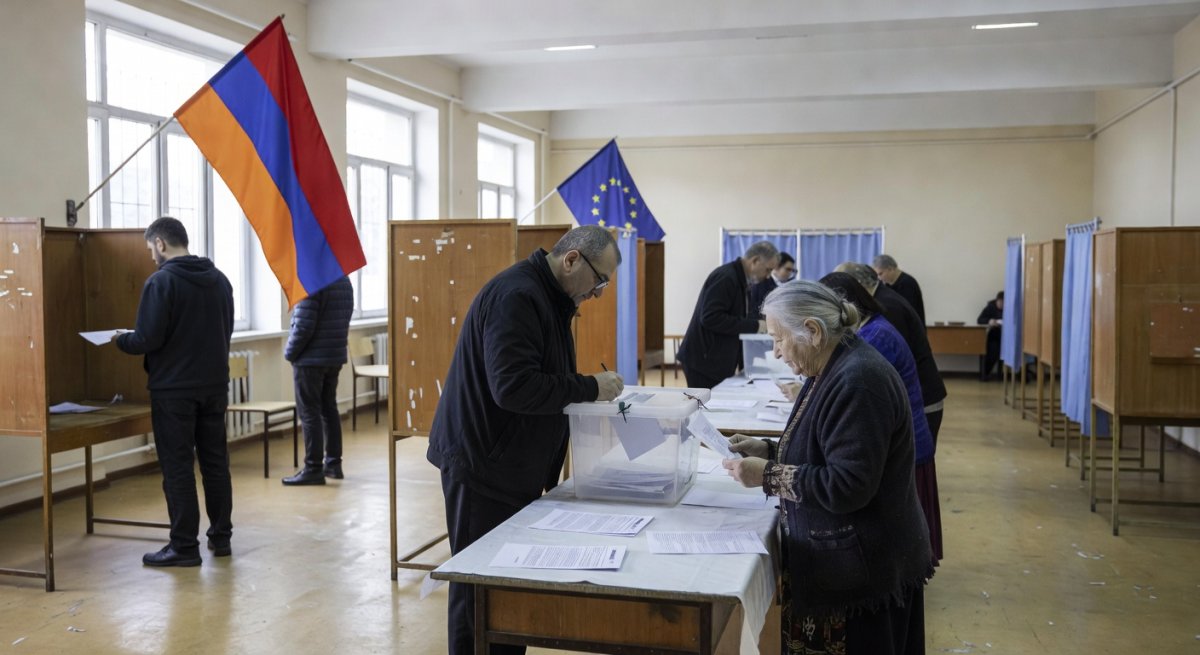
On June 7 2026 polling stations across Armenia opened under clear skies as citizens arrived to cast ballots in the first regularly scheduled parliamentary election since 2017. Long lines formed in the capital Yerevan and regional centers where voters discussed the stakes of choosing among 19 parties and 2 alliances listed on the ballot. International observers noted the orderly process while local media captured images of families bringing children to witness the democratic ritual that could determine the country’s future orientation.
The election carries weight far beyond Armenia’s borders because the outcome will signal whether the nation continues its shift away from traditional alliances or doubles down on longstanding partnerships. With turnout reaching 48.92 percent as of 5pm the participation rate already hinted at strong public interest in the direction the country might take. Analysts from multiple outlets emphasized that results could influence stability across the entire Caucasus region where competing powers have long vied for influence.
Global attention focused on Armenia because its choice between deeper European ties and continued reliance on Moscow could set precedents for other post-Soviet states navigating similar pressures. The presence of 19 parties plus two alliances ensured a crowded field that reflected diverse visions for the nation’s path forward. Early reports indicated that the day’s proceedings would be scrutinized closely by governments and organizations monitoring democratic transitions in volatile neighborhoods.
Pashinyan’s Gamble: From Revolution to EU Application
Nikol Pashinyan rose to prominence through the 2018 Velvet Revolution that swept him into power and established his Civil Contract party as the dominant force in Armenian politics. Since then he has pursued an explicit agenda favoring European Union integration and a pro-West stance that marks a departure from previous alignments. Supporters credit him with energizing a new generation of voters who see EU membership as a pathway to economic modernization and rule-of-law reforms.
Critics from the opposition have accused Pashinyan of overreaching by accelerating the EU application without sufficient domestic consensus. They argue that his pivot risks alienating traditional partners and exposing Armenia to unnecessary geopolitical friction. Pashinyan has countered these claims by highlighting how his government has already diversified key sectors while maintaining core national interests.
The prime minister’s journey from revolutionary leader to advocate for European structures underscores the high personal and political stakes riding on today’s vote. Civil Contract currently leads polls by margins ranging from 10 to 21 points yet the fragmented opposition continues to challenge his narrative at every turn. Observers note that the 2018 revolution’s legacy now faces its most direct test at the ballot box.
The Pro-Russian Challenge: Tycoons and Former Presidents
Samvel Karapetyan a prominent Russian-Armenian tycoon has emerged as a leading voice in the pro-Russia opposition alongside former president Robert Kocharyan. Their platforms emphasize restoring closer ties with Moscow and caution against rapid Western integration that they claim could destabilize the economy. Both figures draw on established networks within Armenia and abroad to mobilize voters wary of Pashinyan’s direction.
Kocharyan’s experience as a past head of state lends credibility to the opposition’s warnings about the dangers of abandoning familiar security arrangements. Karapetyan meanwhile leverages his business background to argue that economic stability depends on preserving strong commercial links with Russia. Together they present a unified front that appeals to segments of the electorate concerned about abrupt geopolitical shifts.
The pro-Russia bloc’s strategy centers on framing the election as a referendum on national sovereignty versus foreign influence. With 19 parties and two alliances competing the opposition hopes to consolidate enough support to narrow Civil Contract’s lead. Their messaging resonates particularly in communities that still view Moscow as a reliable guarantor of regional balance.
How Armenia Cut Its Military Dependence on Moscow
Over recent years Armenia has redirected 95 percent of its military imports away from Russia toward suppliers in India France and China. This dramatic reorientation reflects deliberate policy choices aimed at reducing vulnerability to external pressure and diversifying defense capabilities. The shift has allowed the country to acquire modern equipment suited to contemporary security needs without sole reliance on any single provider.
The change carries significant implications for Armenia’s strategic autonomy because it lessens Moscow’s leverage over critical defense supplies. Officials have pointed to improved relations with new partners as evidence that the nation can maintain robust armed forces while pursuing broader foreign-policy goals. Military analysts note that the transition required careful planning to avoid capability gaps during the adjustment period.
Despite the military diversification Russia remains Armenia’s number-one trading partner underscoring the complex balance the country must strike between security and commerce. The 95 percent import shift demonstrates a pragmatic approach that prioritizes national interests over ideological loyalty. This evolution in defense procurement now stands as a concrete example of how Armenia is redefining its international posture ahead of the election results.
Russia’s Warning Shot: The Ukraine Comparison
Moscow has issued pointed warnings that Armenia’s EU bid risks repeating the trajectory that led to conflict in Ukraine in 2022. Russian officials have highlighted potential economic and security repercussions should Yerevan accelerate its Western alignment. These statements serve as a reminder of the leverage still available through energy supplies and regional diplomacy.
Trade data continues to show Russia as the leading partner even as military sourcing has changed dramatically illustrating the selective nature of the pivot. Pashinyan’s government has acknowledged these realities while insisting that European integration can coexist with pragmatic economic ties. The opposition has seized on Moscow’s rhetoric to argue that the prime minister is gambling with national stability.
The Ukraine analogy deployed by Russian commentators aims to sow doubt among Armenian voters about the wisdom of rapid change. Yet the country’s ability to source 95 percent of military needs elsewhere suggests that some dependencies have already been mitigated. The election will reveal whether such warnings resonate strongly enough to alter the projected outcome.
The Azerbaijan Factor: Peace or More Conflict
The ongoing peace process with Azerbaijan remains central to the election debate because any new government will inherit responsibility for negotiations following the Nagorno-Karabakh conflict. Pashinyan has tied his EU aspirations to the hope that European involvement could facilitate lasting agreements. Voters understand that the choice at the ballot box could either advance or stall diplomatic momentum.
Opposition leaders caution that distancing from Russia might weaken Armenia’s position in talks by removing a traditional mediator. They point to historical precedents where Moscow played a stabilizing role during periods of tension. Supporters of the current administration counter that diversified partnerships could attract broader international support for a durable settlement.
The stakes extend to everyday security concerns as communities near the border watch developments closely. With turnout at 48.92 percent as of 5pm participation levels indicate that citizens recognize how parliamentary composition will shape future policy toward Azerbaijan. The election therefore functions as an indirect referendum on the prospects for regional peace.
What Happens Next — and Why It Matters to You
Three main scenarios emerge from the vote depending on whether Civil Contract secures a clear majority a coalition forms or the opposition gains unexpected ground. A strong showing for Pashinyan would likely accelerate EU integration efforts while a narrower result could force compromises on foreign policy. International observers will monitor coalition negotiations that follow the official tally.
The outcome holds lessons for other nations balancing great-power competition because Armenia’s experience illustrates both the opportunities and risks of strategic reorientation. Citizens worldwide who value democratic choice and regional stability have a stake in seeing transparent processes respected. Media coverage from outlets including BBC NPR Bloomberg Al Jazeera Moscow Times DW and the Crisis Group will shape global understanding of the results.
Ultimately the election underscores how small states can influence larger geopolitical dynamics through consistent policy choices. Armenia’s voters have demonstrated engagement by turning out at nearly 49 percent by late afternoon and their decisions will echo across the Caucasus and beyond. As results come in the world will watch to see whether the nation completes its pivot or pauses at a critical crossroads.
By Jessica Ali, Lead Anchor, Global 1 News
This article was produced with AI-assisted research and editorial support. Reporting is based on sources cited in the article.
What's Your Reaction?
 Like
0
Like
0
 Dislike
0
Dislike
0
 Love
0
Love
0
 Funny
0
Funny
0
 Wow
0
Wow
0
 Sad
0
Sad
0
 Angry
0
Angry
0

Editor-in-Chief at Global1.News. Atlanta-based journalist who cuts through the BS and tells it like it is. Lead anchor, host, and the voice you hear when the spin stops and the truth starts.








Comments (0)