
UK to suspend tariffs on 125 daily essentials
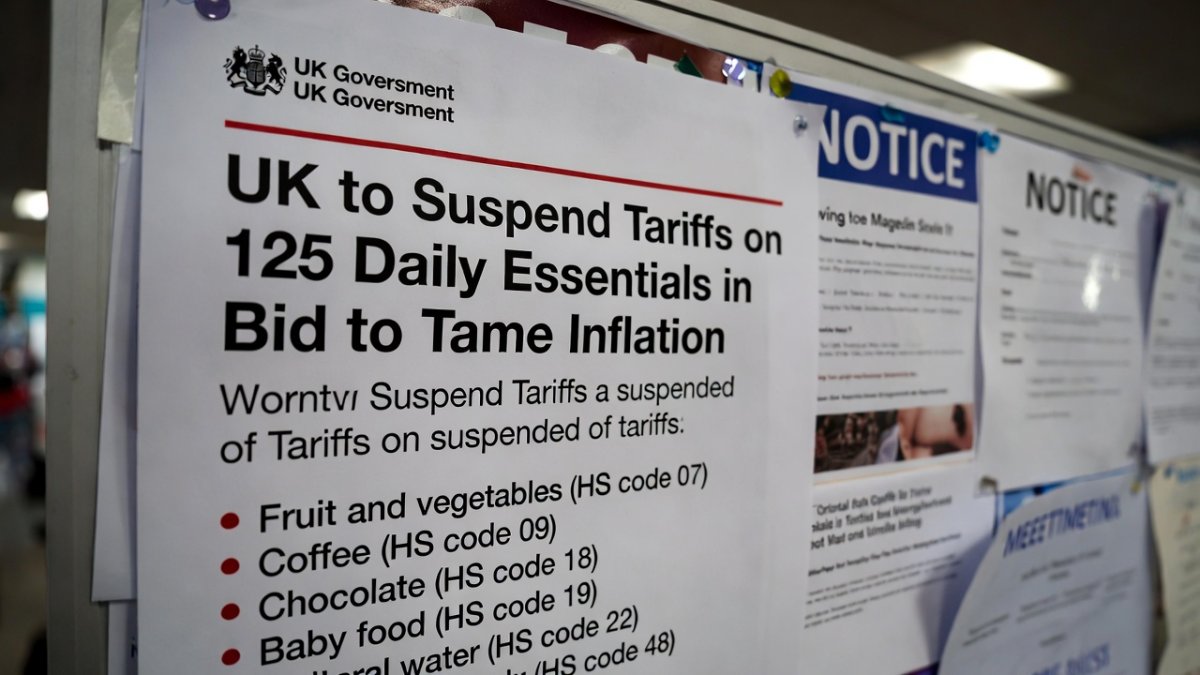
UK to Suspend Tariffs on 125 Daily Essentials in Bid to Tame Inflation
Category: Breaking News
London Launches Public Consultation on Tariff Relief
London announced on Wednesday that the government will open an eight-week consultation on suspending import tariffs on 125 everyday items ranging from tinned tomatoes and sunflower oil to paracetamol tablets and basic cotton T-shirts. The move targets products that together account for roughly 4.2 percent of the average UK household’s annual spending basket. Officials estimate the suspensions could deliver between £180 and £240 in annual savings per household once fully implemented.
Why the Policy Matters Now
Britain’s consumer price index still sits at 4.1 percent year-on-year, the highest among G7 peers outside Japan. Energy-driven food inflation has hit 8.7 percent, pushing core groceries beyond the reach of an estimated 3.8 million low-income families. Treasury modelling shows that tariff removal on these 125 tariff lines—currently levied at between 6 and 12 percent—would shave 0.3 percentage points off the headline inflation rate by the second quarter of 2025. The relief is modest but symbolically potent ahead of a likely spring election.
Which Products Are on the List
The draft schedule, seen by Global1 News, covers 47 food lines including frozen chicken portions, canned fish, rice, pasta, and selected fresh fruit that cannot be grown domestically at scale. Thirty-two household goods appear, among them washing powder, toothpaste, and light bulbs. The remaining 46 lines are pharmaceutical ingredients and generic medicines whose active pharmaceutical ingredients face residual Most-Favoured-Nation duties. Notably absent are alcohol, tobacco, and luxury personal-care items—categories the government has deliberately excluded to avoid accusations of favouring higher-income consumers.
Post-Brexit Tariff Regime Under Scrutiny
Since the United Kingdom left the EU customs union, it has maintained a 12,000-line tariff schedule inherited largely from Brussels. Successive governments promised a leaner, more consumer-focused regime. The new consultation marks the largest single adjustment since the 2021 UK Global Tariff was introduced. Trade analysts note that the average applied tariff on the 125 items stands at 9.4 percent, generating roughly £310 million in annual revenue—less than 0.4 percent of total customs receipts—making the fiscal cost politically manageable.
Implications for African Exporters
From Lagos, the announcement carries direct resonance. Nigeria exported £47 million worth of sesame seeds, cocoa butter, and processed cashew last year to Britain; several of these inputs feed into tariffed intermediate goods now under review. Should the suspensions extend to semi-processed agricultural products, Nigerian processors could see margins improve by 7–9 percent on re-export routes through UK distribution hubs. Conversely, if the UK simply shifts sourcing to lower-cost Latin American suppliers, Nigerian exporters risk losing ground. The policy therefore doubles as a stress test for how nimble African supply chains can become when traditional markets recalibrate.
Expert Perspectives on Consumer Impact
Dr. Aisha Okoro, senior economist at the African Development Bank’s trade division, told Global1 News that “tariff suspensions are blunt instruments but effective short-term shock absorbers.” She cautioned, however, that without parallel investment in port efficiency and cold-chain logistics, Nigerian producers may capture only a fraction of the opportunity. UK-based retail analyst James Whitaker of Kantar Worldpanel projects that supermarkets will pass on 70–80 percent of the tariff savings to shelf prices within three months, with discounters such as Aldi and Lidl likely to transmit closer to 95 percent.
Political and Trade-Diplomacy Risks
Domestic producers have already voiced concern. The British Poultry Council warned that suspended tariffs on Brazilian and Thai chicken portions could undercut UK farmers still recovering from avian-flu losses. The government has signalled it will publish an impact assessment alongside the final statutory instrument, including a three-year sunset clause to allow reversal if domestic output falls more than 5 percent. Brussels is watching closely; any perception that Britain is selectively dismantling its tariff wall could complicate ongoing talks on a veterinary agreement that would ease Northern Ireland trade frictions.
Forward-Looking Economic Signals
The consultation also signals a broader strategic pivot. By targeting goods with high import elasticity and low domestic substitution, ministers are prioritising inflation control over revenue maximisation—an approach more commonly associated with emerging-market central banks than with G7 treasuries. For Nigeria, the episode offers a live case study in how a major economy can weaponise tariff policy to protect real incomes without triggering immediate fiscal alarm. Lagos policymakers have already requested a technical briefing from the UK Department for Business and Trade, hoping to model similar targeted relief for imported active pharmaceutical ingredients that Nigeria currently sources at elevated cost.
The measure is expected to take effect by 1 April 2025 if the consultation concludes without material objection. Whether it becomes a template for future targeted liberalisation or remains a one-off response to cost-of-living pressure will depend on inflation trajectories and electoral outcomes. What is already clear is that the UK has chosen to test the proposition that modest tariff surgery can deliver measurable relief to millions of households while reshaping trade incentives for suppliers from Lagos to São Paulo.
This is Sarah Okafor for Global1 News, reporting from Lagos. 🇳🇬
This article was produced with AI-assisted research and editorial support. Reporting is based on sources cited in the article.
What's Your Reaction?
 Like
0
Like
0
 Dislike
0
Dislike
0
 Love
0
Love
0
 Funny
0
Funny
0
 Wow
0
Wow
0
 Sad
0
Sad
0
 Angry
0
Angry
0

Africa Correspondent at Global1.News. Based in Lagos, covering politics, business, technology, and culture across the continent. Focused on telling African stories beyond the headlines — the innovation, entrepreneurs, and communities shaping the region's future.












Comments (0)