
Uganda Lawyers Challenge Colonial Courtroom Titles
The Kampala Directive That Shook the Bench The Uganda Law Society has issued a clear directive to its members, instructing lawyers to stop using titles such as My Lord, Your Lordship, My Lady and Your Worship when addressing judges and magistrates. Instead, advocates are told to use straightforward forms including Mr Justice, Madam Justice, Mr Judge, Madam Judge or Mr Magistrat
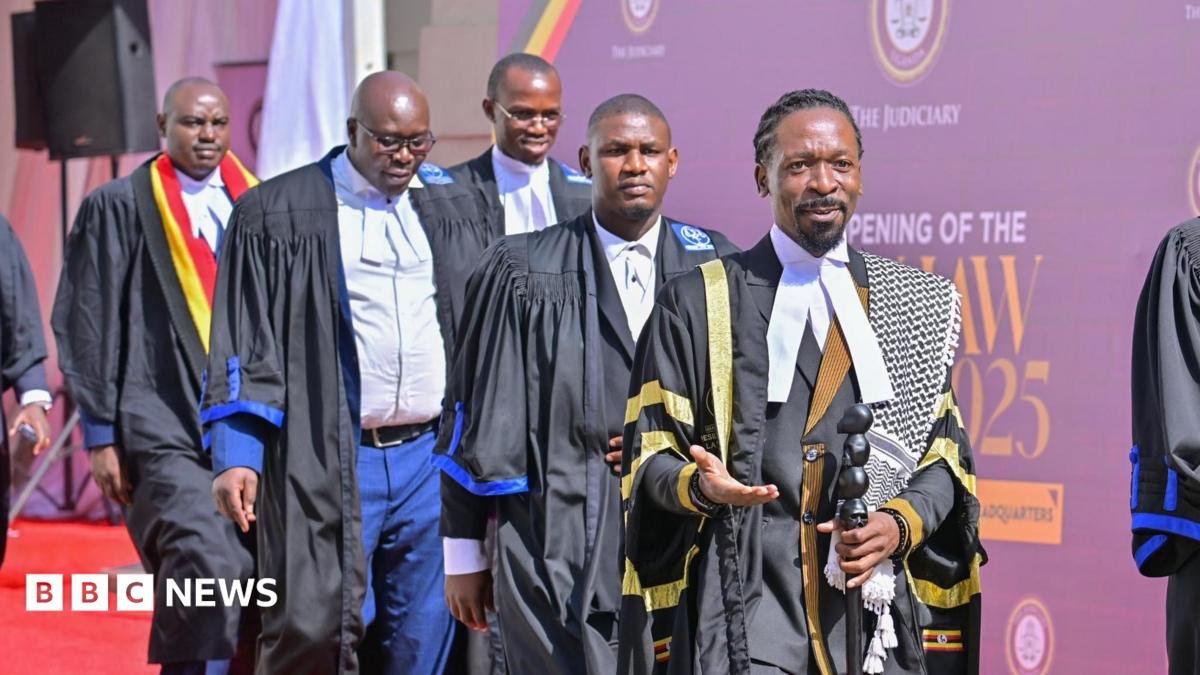
The Kampala Directive That Shook the Bench
The Uganda Law Society has issued a clear directive to its members, instructing lawyers to stop using titles such as My Lord, Your Lordship, My Lady and Your Worship when addressing judges and magistrates. Instead, advocates are told to use straightforward forms including Mr Justice, Madam Justice, Mr Judge, Madam Judge or Mr Magistrate, and to refer to judicial officers simply by their surnames. The directive also requires lawyers and litigants to stand upright in court and speak as free citizens rather than bow before the bench.
ULS president Isaac Ssemakadde signed the directive, which describes these traditional forms of address as feudal and colonial honorifics. The society argues that such language elevates judicial officers above ordinary citizens, who are in reality the employers of those who serve on the bench. The change is presented as a direct challenge to practices that the ULS believes keep citizens in positions of unnecessary deference.
The directive applies to all advocates and litigants appearing before any court or tribunal in Uganda. It calls for an end to bowing and insists that courtroom interactions should reflect equality rather than inherited hierarchy. By replacing elaborate titles with plain address, the ULS seeks to reshape daily exchanges between lawyers and judges across the country.
This move has drawn immediate attention because it targets habits that have shaped Ugandan courtrooms for generations. The society frames the change as necessary to restore a sense of dignity for citizens who enter the justice system. Lawyers are now expected to carry out their work without the verbal and physical gestures that once marked the courtroom as a place of submission.
Colonial Inheritance in the Courtroom
Uganda, like many former British colonies, received its legal system and courtroom traditions directly from the United Kingdom. These include the use of honorific titles and the practice of bowing, both of which were transplanted without significant adaptation to local realities. The ULS describes this inherited structure as archaic and argues that it has contributed to the broader failure of Uganda's judicial system to serve its people effectively.
The society states that colonial courtroom practices force Ugandans into postures of humiliation while allowing the powerful to enjoy comfort and deference. This observation connects to the daily experience of ordinary citizens who appear in courtrooms that still operate according to rules designed for another era and another society. The language of the directive highlights how these rituals continue to shape interactions long after independence.
Colonial legal systems across the continent were built primarily for administration and control rather than for delivering justice to local populations. In Uganda, the persistence of these forms has meant that citizens often encounter the courts as distant institutions rather than places where their rights are protected. The ULS directive seeks to address this gap by removing symbols that reinforce distance.
Many Ugandans still navigate court processes that feel foreign in both language and procedure. The directive points to these inherited elements as barriers that prevent the justice system from becoming truly accessible. By naming the colonial origins of the practices, the ULS places the conversation within the wider African effort to examine institutions left behind by European powers.
Judiciary Pushes Back
Judiciary spokesperson James Ereemye responded to the directive in comments to the BBC, stating that the Uganda Law Society has no authority to tell judges what to do or say. He made clear that the courts would continue to demand the known decorum from lawyers appearing before them. This position sets the judiciary and the bar on opposing sides of the issue for the time being.
Ereemye dismissed the ULS as just a section of young people who have failed to know the principles of agenda setting in management and administration. The remark frames the directive as an internal matter within the legal profession rather than a serious institutional challenge. It also signals that senior judicial figures do not intend to alter established courtroom routines in response to the society's call.
The exchange reveals a power struggle between the organised bar and the bench over who controls the tone and symbols of judicial proceedings. While the ULS represents advocates, the judiciary maintains operational control inside courtrooms and can enforce its preferred forms of address. For now, lawyers who follow the new directive may face resistance when they appear before judges who expect traditional respect.
This standoff shows how institutional authority in Uganda remains concentrated within the judiciary itself. The ULS can issue guidance to its members, yet judges retain the final say over what happens in their courtrooms. The practical result is that traditional decorum is likely to continue in most proceedings until a broader agreement or external pressure changes the balance.
Continent-Wide Debate on Legal Traditions
Across Africa, lawyers and judges have debated whether colonial-era courtroom traditions should be retained or set aside. In 2011, Kenya's then-Chief Justice Willy Mutunga criticised the judges' dress code and chose to take his oath of office in a suit rather than the traditional robes. His action opened space for similar questions in other countries about the continued relevance of inherited symbols.
Comparable discussions have taken place in Zimbabwe, Malawi and Ghana, where lawyers have questioned the use of wigs, robes and formal titles. These conversations often focus on whether such practices make the justice system feel distant from the societies it serves. The Ugandan directive adds to this growing list of efforts to examine what colonial legal culture still imposes on independent nations.
Anglophone African countries have tended to conduct these debates more openly than their Francophone counterparts. In places where British legal traditions were imported wholesale, the visible markers of that inheritance have become frequent targets for reform. The ULS move fits within this pattern of questioning practices that arrived with colonial rule and remained after independence.
The symbols matter because they signal whether justice systems are viewed as African institutions or as extensions of earlier colonial administrations. When lawyers address judges as My Lord or bow in court, the interaction carries echoes of a time when courts existed to serve the colonial state. Removing these forms raises the deeper question of what legal sovereignty actually requires in practice.
A Senegalese Perspective on Legal Culture
Senegal inherited its legal framework from France, including the Code Napoleon and formal modes of address such as Monsieur le Président and Madame la Présidente. Courtroom attire follows the French model of red and black robes, while the bâtonnier system governs the leadership of the bar. These elements have shaped Senegalese legal practice since independence without the same level of public contestation seen in some Anglophone countries.
Francophone Africa has generally approached questions of colonial legal traditions through quieter evolution rather than open confrontation. Changes to procedure or address have tended to occur gradually within professional circles instead of through public directives from bar associations. This difference in style reflects distinct colonial legacies and different paths of institutional development after independence.
The role of the bâtonnier in Senegal provides a structured channel for dialogue between lawyers and the state. While this system maintains professional standards, it has not produced the kind of direct challenge to courtroom language that the Uganda Law Society has now issued. Senegalese lawyers continue to operate within a framework that blends French legal forms with local realities in ways that have not yet been widely debated in public.
Uganda's open discussion offers Senegal and other Francophone nations an opportunity to reflect on their own inherited practices. The question of whether titles and physical gestures reinforce distance between citizens and the courts remains relevant across legal traditions. Senegal's experience shows that colonial legal culture can persist in stable form, yet the Ugandan example demonstrates that younger lawyers may eventually press for more visible change.
What This Means for Justice in Africa
The way citizens address judges shapes how they experience the justice system on a daily basis. When language and gestures create distance, ordinary people may approach courts with hesitation rather than confidence. The ULS directive raises the possibility that removing these barriers could help build greater public trust in judicial institutions across the continent.
Colonial courts were designed to serve the administration rather than to protect the rights of local populations. That memory continues to influence how many Africans view their justice systems today. Efforts to change courtroom etiquette therefore touch on larger questions of whether institutions can be made to feel like they belong to the people they serve.
Dignity and access remain central to the long process of decolonising justice. The ULS argues that citizens should stand and speak as free individuals rather than as subjects. This principle connects courtroom practice to broader African conversations about equality before the law and the responsibilities of independent states.
Whether the directive produces lasting change or remains a statement of principle will depend on how the judiciary and the bar resolve their current disagreement. The debate itself already contributes to a wider continental reflection on what African justice systems should look and sound like in the present day.
The Road Ahead
The Uganda Law Society directive may face legal challenges as the judiciary asserts its authority over courtroom conduct. The tension between the bar's professional guidance and the bench's operational control will likely shape the immediate future of the reform effort. Other African countries are watching to see how the standoff develops and whether similar initiatives emerge elsewhere.
A generational dimension runs through the discussion, with younger lawyers appearing more willing to question practices that older members of the profession have accepted. The symbolic power of language plays a central role in this shift, as changing titles and gestures can alter the tone of daily interactions inside courtrooms.
Across the continent, the work of building institutions that truly belong to Africans continues at different speeds and in different styles. Senegal's more measured approach and Uganda's direct challenge both reflect attempts to align inherited legal systems with contemporary realities. The outcome in Uganda will provide one data point in this ongoing continental process.
The long, patient effort to create justice systems that feel rooted in African societies rather than in colonial precedents requires attention to both structure and symbol. The ULS directive focuses on the latter, yet its implications reach into questions of legitimacy and trust that affect every citizen who enters a courtroom. By Amara Diop, Staff Writer
This article was produced with AI-assisted research and editorial support. Reporting is based on sources cited in the article.
What's Your Reaction?
 Like
0
Like
0
 Dislike
0
Dislike
0
 Love
0
Love
0
 Funny
0
Funny
0
 Wow
0
Wow
0
 Sad
0
Sad
0
 Angry
0
Angry
0

Canada Correspondent at Global1.News. Based in Toronto, covering Canadian politics, energy, trade, and US-Canada relations. Provides the Canadian perspective on North American and global affairs.















Comments (0)