
Ukraine Drone Strikes Push Russian Oil Refining to 21-Year Low
Ukraine's drone strikes on Ryazan cut Russian refining to a 21-year low of 3.91 million barrels per day, exposing air defense gaps and hitting export revenue. Zelenskyy confirmed the operation while allies voiced support. The campaign continues to degrade Moscow's war funding with growing domestic impact inside Russia.
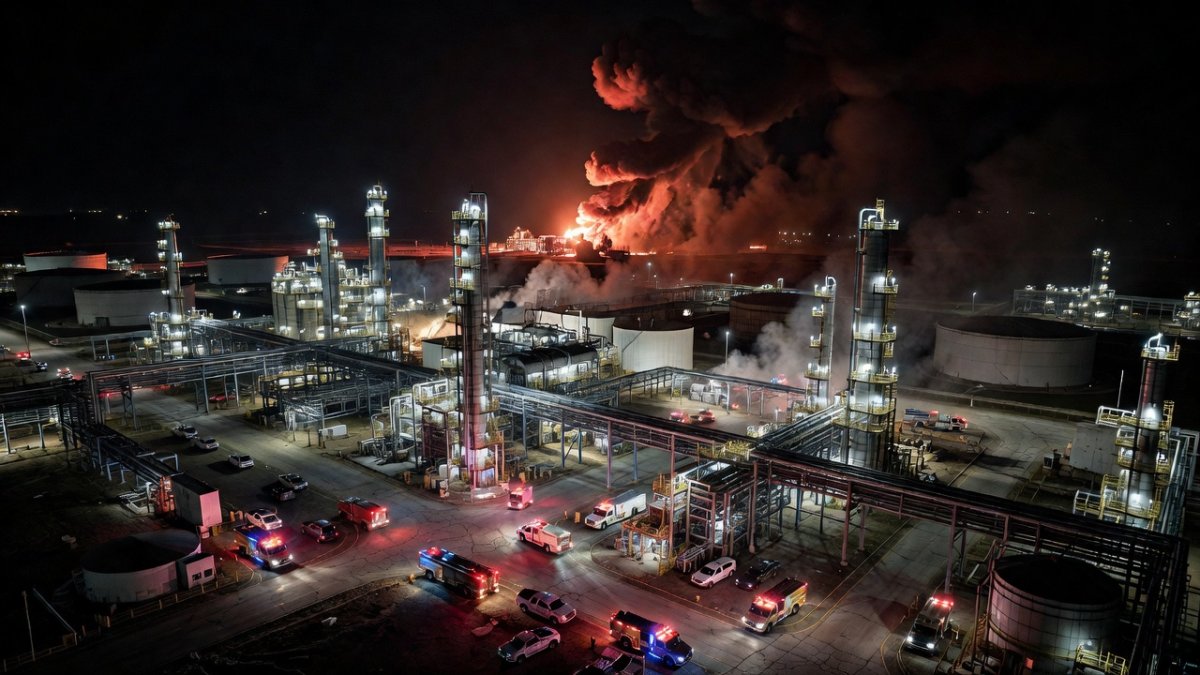
Ukraine Drone Strikes Push Russian Oil to 21-Year Low
Ryazan, Russia - Article continues...
The Attack Unfolds in Ryazan Oblast
Ukraine struck the Ryazan Oil Refinery, one of Russia's largest facilities owned by Rosneft, along with a sprawling Wildberries logistics warehouse complex. The operation relied on domestically developed long-range drones that have become Ukraine's signature weapon in this grinding war. Reports from the Kyiv Independent detail how the strikes ignited fires visible for miles, forcing emergency shutdowns at the refinery and disrupting supply chains tied to the warehouse. This was no isolated raid. It formed part of a sustained campaign that has targeted Russian oil infrastructure for months, and yesterday's action pushed the pressure even higher.
The drones approached Ryazan from multiple vectors under cover of darkness around 2 a.m. local time, exploiting low-altitude flight paths and electronic warfare jamming that temporarily blinded segments of Russia's S-400 systems. Clear skies and light winds that night aided navigation while complicating thermal detection for defenders. Witnesses in nearby villages described swarms of small aircraft buzzing overhead for nearly twenty minutes before the first explosions rocked the refinery complex.
Firefighting crews battled blazes for over six hours, deploying more than forty units and specialized foam equipment to contain the inferno at the processing units. The scale required reinforcements from neighboring districts, highlighting how quickly the attack overwhelmed local response capacity and forced a full operational halt at the site.
Crude Oil Refining Hits a 21-Year Low
The immediate result landed like a hammer. Russia's crude oil refining capacity dropped to 3.91 million barrels per day, the lowest level in 21 years. Al Jazeera's coverage confirms the scale of the disruption, noting that the Ryazan facility alone processes hundreds of thousands of barrels daily under normal conditions. The Wildberries warehouse hit compounded the damage by snarling logistics for goods moving across central Russia. These are not minor inconveniences. They represent a measurable choke on the revenue stream that funds Russia's military machine, and the 21-year low figure shows just how effective Ukraine's precision strikes have become.
Russia's refining capacity stood near 5.5 million barrels per day in 2005 and hovered around 5.8 million barrels daily before the 2022 invasion. The current 3.91 million figure marks a roughly 33 percent drop from pre-war peaks, translating directly into lost export earnings estimated at several billion dollars monthly when combined with discounted Urals crude sales.
By comparison, Saudi Arabia maintains steady refining around 2.8 million barrels per day while the United States processes over 16 million barrels daily. The gap underscores how Ukraine's campaign is eroding Russia's ability to monetize its vast reserves at a time when global buyers are already wary of sanctioned volumes.
The drop in refining capacity creates a direct feedback loop that amplifies Ukraine's military strategy of sustained attrition. Each barrel lost represents funding denied to Russian frontline operations, compelling Moscow to reallocate scarce air defense assets away from the battlefield and into the interior. This economic bleed, achieved through scalable domestic drone production, allows Kyiv to pursue a low-cost, high-impact campaign that exploits Russia's vast geography without requiring conventional superiority.
Over time, these pressures compound as repair backlogs and fuel shortages erode Russian operational tempo, turning isolated strikes into a coherent strategy of systemic degradation that targets both the treasury and the logistics sustaining the invasion.
Zelenskyy Steps Forward with Confirmation
President Zelenskyy did not mince words when he confirmed the strikes. In statements picked up by ABC News, he framed the operation as a necessary response to Russia's ongoing aggression and a demonstration of Ukraine's growing self-reliance in weapons production. This direct acknowledgment matters. It signals that Kyiv intends to keep the pressure on energy targets rather than hide behind ambiguity. My take is simple: when a leader owns the action this plainly, it forces the other side to respond with more than empty threats.
"We are striking back with our own weapons at the sources that feed the aggressor's war machine," Zelenskyy stated in his address. "Every refinery hit weakens their ability to sustain this unjust invasion."
Western allies including the United States and Germany issued measured statements of support, emphasizing Ukraine's right to self-defense. NATO officials noted the strikes align with efforts to degrade Russian logistics without crossing into direct alliance involvement, while privately acknowledging the growing sophistication of Kyiv's domestic drone programs.
Russia's Exposed Vulnerabilities
Rosneft's Ryazan refinery stands as a prime example of how exposed Russia's oil sector remains despite years of supposed modernization. The facility's size made it an obvious target, and the drone swarm exploited gaps in air defenses that Moscow still cannot fully plug. The Wildberries complex added insult by showing that even commercial infrastructure tied to daily Russian life is no longer safe. This week alone has seen multiple such incursions, and each one chips away at the narrative that Russia can absorb these blows indefinitely. The 3.91 million barrels per day figure is not abstract. It translates to lost export income and tighter domestic fuel supplies that ordinary Russians will feel at the pump.
Military analysts point to chronic shortages of radar coverage and interceptor missiles across Russia's interior as key factors allowing repeated penetrations. These gaps have forced Moscow to pull systems from frontline areas, creating new vulnerabilities elsewhere.
Domestic gasoline prices have already ticked upward in central regions, with some stations reporting shortages. Public sentiment on Russian social media reflects growing frustration over rising costs and perceived government inability to shield critical infrastructure from deep strikes.
Media Outlets Paint a Consistent Picture
Al Jazeera, the Kyiv Independent, and ABC News all converged on the same core facts without contradiction. Their reporting underscores the use of Ukrainian-made drones and the deliberate focus on energy and logistics nodes. What stands out is the consistency across outlets with very different editorial slants. When independent verification lines up this cleanly, it becomes harder for anyone to dismiss the events as propaganda. The strikes are real, the damage is measurable, and the strategic intent is clear: degrade Russia's ability to sustain its war effort over the long haul.
The Ongoing Campaign of Long-Range Strikes
This latest assault fits squarely into Ukraine's months-long pattern of hitting Russian oil facilities with homegrown weapons. The drones have evolved in range and payload, allowing strikes deep into Russian territory that were once considered off-limits. Yesterday's dual targeting of the Ryazan Oil Refinery and the Wildberries warehouse shows an expanding playbook that now includes both energy infrastructure and commercial distribution hubs. The result is cumulative. Each successful run forces Russia to divert resources to defense and repair, resources that could otherwise flow to the front lines. The 21-year low in refining capacity is the clearest scorecard yet of how this campaign is working.
Recent strikes on facilities in Bryansk and Krasnodar followed similar patterns of coordinated drone waves timed for maximum disruption. Military analysts credit Ukraine's expanding drone industrial base, which now produces several hundred long-range units monthly, for sustaining the tempo despite Russian attempts to interdict supply lines.
Production estimates suggest Kyiv can field over 300 advanced drones per month, enabling repeated deep operations that compound pressure on Russian energy exports and force ongoing reallocations of air defense assets.
Implications That Extend Beyond One Day
Look past the immediate fires and you see a Russia that is increasingly boxed in. Energy revenue funds the war, and when refining drops to levels unseen since the early 2000s, the math turns against Moscow. Ukraine's willingness to strike these sites openly, backed by Zelenskyy's confirmation, sends a message that the old rules of engagement no longer apply. The Wildberries warehouse strike, in particular, hints at a broader effort to disrupt the everyday machinery that keeps Russian society functioning. This is bold strategy, and it carries risks, but the payoff in degraded Russian capacity is already visible in the 3.91 million barrels per day number. The world is watching how Russia answers, and so far the answers have been more bluster than effective countermeasure.
Where This Leaves the Conflict
Yesterday's events in Ryazan Oblast are not the end of anything. They are another chapter in a war where Ukraine has learned to fight with the tools it can build itself. The hits on the Rosneft-owned refinery and the Wildberries complex, combined with the resulting 21-year low in refining, demonstrate that long-range drone campaigns can reshape economic realities on the ground. Sources across Al Jazeera, the Kyiv Independent, and ABC News have laid out the facts without embellishment. My view remains unchanged: Ukraine is proving that sustained pressure on critical infrastructure can force an opponent to confront limits it once believed it could ignore. The coming weeks will show whether Russia adapts or simply absorbs more of the same.
The Bottom Line
Ukraine's drone strikes on Ryazan cut Russian refining to a 21-year low of 3.91 million barrels per day, exposing air defense gaps and hitting export revenue. Zelenskyy confirmed the operation while allies voiced support. The campaign continues to degrade Moscow's war funding with growing domestic impact inside Russia.
Analytically, the strikes reveal how targeted economic disruption through asymmetric means can erode an adversary's staying power more effectively than symmetric battlefield engagements, leaving Russia to manage mounting internal strains while Ukraine sustains momentum with limited resources.
By Jessica Ali, Staff Writer
This article was produced with AI-assisted research and editorial support. Reporting is based on sources cited in the article.
What's Your Reaction?
 Like
0
Like
0
 Dislike
0
Dislike
0
 Love
0
Love
0
 Funny
0
Funny
0
 Wow
0
Wow
0
 Sad
0
Sad
0
 Angry
0
Angry
0

Editor-in-Chief at Global1.News. Atlanta-based journalist who cuts through the BS and tells it like it is. Lead anchor, host, and the voice you hear when the spin stops and the truth starts.














Comments (0)