
Wat Phra Mahathat: 1,500 Years of Heritage
Nakhon Si Thammarat, Thailand — In the gentle light of southern Thailand, where the sea breeze carries whispers of ancient voyages, Wat Phra Mahathat Woramahawihan has long stood as a quiet guardian of faith and memory. Its recent recognition as Thailand’s ninth UNESCO World Heritage Site feels less like a sudden honor and more like the natural blooming of a lotus that has been tended for centuries.
Wat Phra Mahathat: 1,500 Years of Heritage
Nakhon Si Thammarat, Thailand — In the gentle light of southern Thailand, where the sea breeze carries whispers of ancient voyages, Wat Phra Mahathat Woramahawihan has long stood as a quiet guardian of faith and memory. Its recent recognition as Thailand’s ninth UNESCO World Heritage Site feels less like a sudden honor and more like the natural blooming of a lotus that has been tended for centuries. This temple does not merely preserve stones; it continues to cradle the living heartbeat of Buddhist practice in the peninsula.
Thailand Gains Its Ninth UNESCO World Heritage Site
Wat Phra Mahathat Woramahawihan in Nakhon Si Thammarat province received official inscription as Thailand's ninth UNESCO World Heritage Site on Saturday during the UNESCO World Heritage Committee session in Busan, South Korea. This recognition marks the first UNESCO World Heritage Site located in Thailand's southern region, highlighting the temple's role as a major regional Buddhist center. The temple complex stands as a living record of religious exchange, maritime connections, and cultural traditions that shaped Southeast Asia over centuries.
For local monks and devotees, the news arrived like the soft chime of temple bells at dawn. Many had quietly maintained the site’s sanctity through generations of storms and change, never seeking the spotlight yet always offering shelter to those who sought wisdom. The inscription now invites the wider world to witness what southern Thai communities have cherished all along.
The decision also reflects a growing appreciation for heritage that remains alive rather than frozen in time. Wat Phra Mahathat continues to host daily alms rounds, ordination ceremonies, and quiet meditation sessions beneath its ancient trees. In this way, the temple bridges the distant past with the gentle rhythms of present-day devotion.
Foundations Dating Back to the Eighth Century
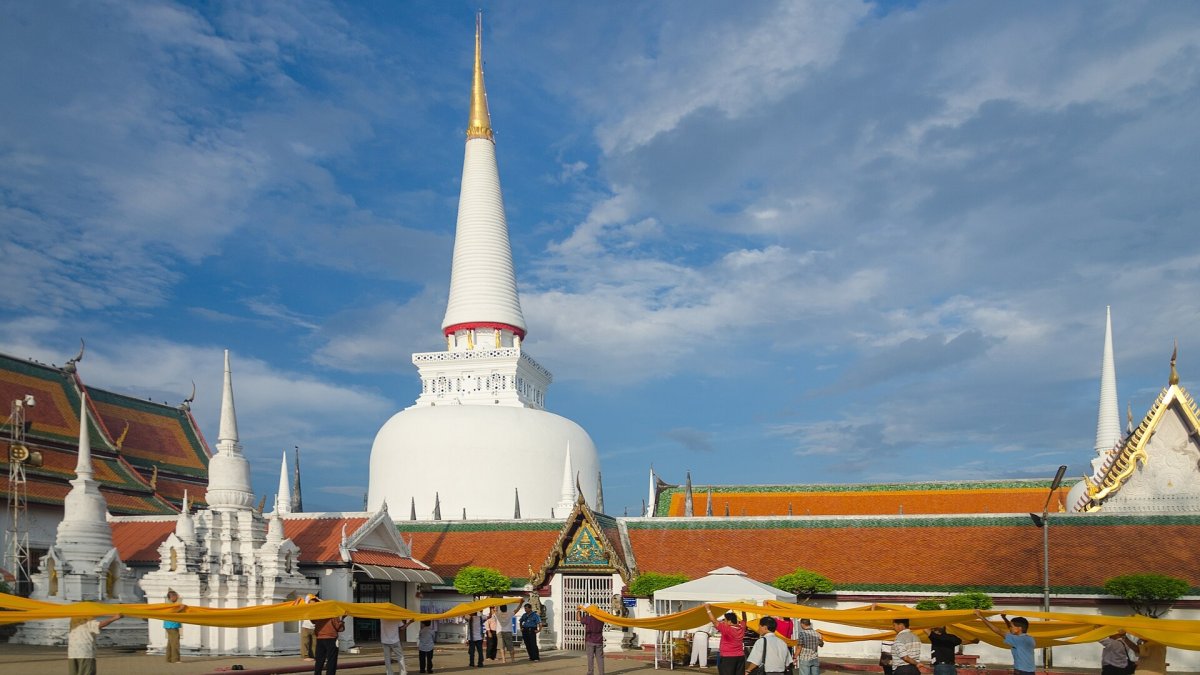
Wat Phra Mahathat Woramahawihan was founded in the eighth century and has stood for more than 1,500 years in Nakhon Si Thammarat province. The site occupies a narrow ridge between the Pacific Ocean and Indian Ocean in peninsular Thailand, serving as a center of religious practice, learning, and cultural exchange for over a millennium. Its UNESCO listing recognizes the Outstanding Universal Value of this Buddhist monastery complex that continues to anchor local Buddhist communities in the south.
Travelers arriving by sea in those early centuries would have seen the temple’s silhouette rising above the coastal plain, a beacon for weary sailors and wandering scholars alike. Over time, the complex absorbed influences from distant lands while remaining rooted in the gentle Theravada traditions of the peninsula. Monks here once studied palm-leaf manuscripts that traveled along monsoon winds from Sri Lanka and India.
Today, the same pathways of exchange live on in the stories elders share with visiting children. Grandmothers still recount how their ancestors carried offerings of jasmine and incense along these paths, keeping the flame of faith alive through quiet acts of kindness. The temple’s endurance speaks to a deeper resilience that no storm or century could extinguish.
The Temple’s Architectural Significance
At the heart of the complex rises a 77-meter chedi, its graceful spire visible for miles across the surrounding rice fields and coconut groves. Encased within its golden layers rests the revered Phra Borommathat relic, believed to be a tooth of the Buddha brought here centuries ago. The structure’s distinctive Sri Vijaya-style architecture, with its stepped terraces and intricate stucco work, reveals the temple’s deep connections to the maritime empire that once dominated the region.
Walking the shaded cloisters, visitors notice how each carved motif tells a story of cultural blending. Naga serpents coil beside lotus blossoms, while guardian figures wear expressions of quiet compassion rather than fierce warning. These details reflect the gentle spirit of southern Thai Buddhism, where strength and tenderness walk hand in hand.
Local artisans still repair the temple’s delicate plasterwork using traditional techniques passed down through families. Their patient hands ensure that the chedi’s beauty remains not only preserved but continually renewed, much like the living faith it shelters.
Nakhon Si Thammarat’s Role in Thai History
Long before Bangkok became the capital, Nakhon Si Thammarat served as an ancient city and luminous center of Buddhist learning. Kings and scholars traveled here to study the Dhamma, while traders exchanged spices, textiles, and ideas along the narrow isthmus that links two great oceans. The city’s libraries once held manuscripts that influenced the development of Thai script and law.
Beyond its scholarly past, the province pulses with vibrant local culture. Southern Thai cuisine, rich with turmeric, lemongrass, and fresh seafood, fills market stalls each morning, while the delicate art of Nang Talung shadow puppetry continues to enchant audiences under the stars. Rubber plantations and fishing communities provide steady livelihoods, yet the temple remains the spiritual compass guiding daily life.
This layered heritage gives Nakhon Si Thammarat a quiet dignity that visitors often sense the moment they step into its shaded lanes. The province does not shout its history; it offers it gently, like a cup of fragrant jasmine tea shared between friends.
UNESCO Session in Busan Confirms Global Status
The inscription took place on Saturday at the UNESCO World Heritage Committee session held in Busan, South Korea, elevating the temple alongside Thailand's eight existing sites. Thailand's other UNESCO World Heritage Sites include the Historic City of Ayutthaya, Sukhothai Historical Park, Thungyai-Huai Kha Khaeng Wildlife Sanctuaries, Ban Chiang Archaeological Site, Dong Phayayen-Khao Yai Forest Complex, Phu Phrabat Historical Park, and Si Thep Historical Park. The new designation positions Wat Phra Mahathat Woramahawihan as the first southern entry on this national list of protected heritage locations.
Delegates from many nations spoke of the temple’s unique ability to embody both tangible architecture and intangible living traditions. Their words echoed the feelings of local residents who have long viewed the site as a second home rather than a distant monument.
Celebrations Organized by the Tourism Authority of Thailand
The Tourism Authority of Thailand held celebrations running from Sunday to Monday that featured grand cultural performances reflecting Thai identity in Nakhon Si Thammarat province. These events drew local communities together to honor the temple's Buddhist heritage and its new international status as a World Heritage Site. Tourism Authority of Thailand Governor Thapanee Kiatphaibool stated that Nakhon Si Thammarat would become a global cultural destination following the inscription.
Families gathered beneath strings of golden lanterns, sharing plates of spicy southern curries and watching Nang Talung performances that told stories of the Buddha’s compassion. The gentle laughter and song that filled the evenings reminded everyone that heritage is not only remembered but joyfully lived.
Promotion of Living World Heritage Experiences
The Tourism Authority of Thailand is launching a tourism promotion campaign to encourage visitors to experience Living World Heritage at Wat Phra Mahathat Woramahawihan. This campaign focuses on the temple's ongoing role as a center of religious practice and cultural exchange in the southern region of Thailand. Visitors are invited to explore the site's maritime connections and traditions that have linked peninsular Thailand with broader Southeast Asian networks for more than 1,500 years.
Travelers may soon join guided walks that trace the temple’s influence on local crafts, from delicate goldwork to fragrant incense making. Such experiences allow guests to carry home not only photographs but also a deeper sense of connection to southern Thailand’s gentle spirit.
What This Means for Thai Tourism
With the new UNESCO status, Nakhon Si Thammarat expects a steady rise in visitors seeking authentic cultural encounters rather than crowded beaches. Local guesthouses and small restaurants anticipate new opportunities, while artisans who create shadow puppets and traditional sweets may find wider markets for their work. The economic ripple could help sustain southern communities that have long balanced quiet faith with modest livelihoods.
Officials hope the growth will remain gentle, preserving the temple’s peaceful atmosphere even as more travelers arrive. Sustainable practices, such as limiting group sizes during peak festivals, are already being discussed with community elders.
The Spiritual Significance of Asalha Bucha and Buddhist Lent
The timing of the inscription carries special meaning, arriving just before Asalha Bucha, the full-moon day that commemorates the Buddha’s first sermon. This sacred occasion marks the beginning of Buddhist Lent, a period of reflection and renewed commitment observed with particular devotion across southern Thailand. Monks at Wat Phra Mahathat will soon begin their three-month retreat, offering the community a chance to deepen its practice amid the temple’s newly honored global significance.
Devotees often describe this season as a time when the heart grows quieter and more open. The recognition from UNESCO feels, to many, like a gentle confirmation that the path of compassion walked here for fifteen centuries continues to light the way forward.
Impact on Southern Thai Communities and Buddhism
The inscription strengthens the position of Nakhon Si Thammarat province as a hub for Buddhist learning and community gatherings centered on Wat Phra Mahathat Woramahawihan. Local residents in the province now see increased attention to the temple's function as a living monastery that has served the region since the eighth century. The Tourism Authority of Thailand campaign supports community efforts to share the site's heritage with travelers interested in Thailand's southern Buddhist traditions.
Young people in nearby villages speak of renewed pride in their roots. Some who once considered leaving for larger cities now see ways to contribute to the temple’s future through guiding, teaching crafts, or simply maintaining the quiet gardens that surround the chedi.
Looking Ahead for Nakhon Si Thammarat Province
With the UNESCO recognition secured on Saturday, Nakhon Si Thammarat province prepares for sustained interest in its historic temple complex between the Pacific Ocean and Indian Ocean. The Tourism Authority of Thailand continues its work to position the area as a destination where visitors can engage directly with centuries-old practices of religious exchange and cultural preservation. Wat Phra Mahathat Woramahawihan remains a focal point for both local Buddhist communities and international travelers seeking Thailand's southern heritage sites.
As the sun sets each evening over the chedi, the temple continues its gentle work of holding space for all who arrive seeking peace. In this quiet constancy lies the true gift of the new World Heritage status: an invitation to slow down, listen, and remember what truly endures.
By Ann Srisawat, Staff Writer
This article was produced with AI-assisted research and editorial support. Reporting is based on sources cited in the article.
What's Your Reaction?
 Like
1
Like
1
 Dislike
0
Dislike
0
 Love
0
Love
0
 Funny
0
Funny
0
 Wow
0
Wow
0
 Sad
0
Sad
0
 Angry
0
Angry
0

Southeast Asia Correspondent at Global1.News. Based in Bangkok, covering Thai and Southeast Asian politics, economy, technology, and culture. Deep regional perspective on one of the world's most dynamic regions.














Comments (0)