
Jail Time Records: Finding Freedom Through Music in Douala's New Bell Prison
In the shadowed courtyards of Douala's New Bell prison, where survival hinges on makeshift markets and whispered alliances, a handful of inmates discovered that rhythm could pierce concrete. What began as stolen moments at a microphone has grown into songs streaming from South Africa to Argentina, proving that even the most confined voices can travel far.
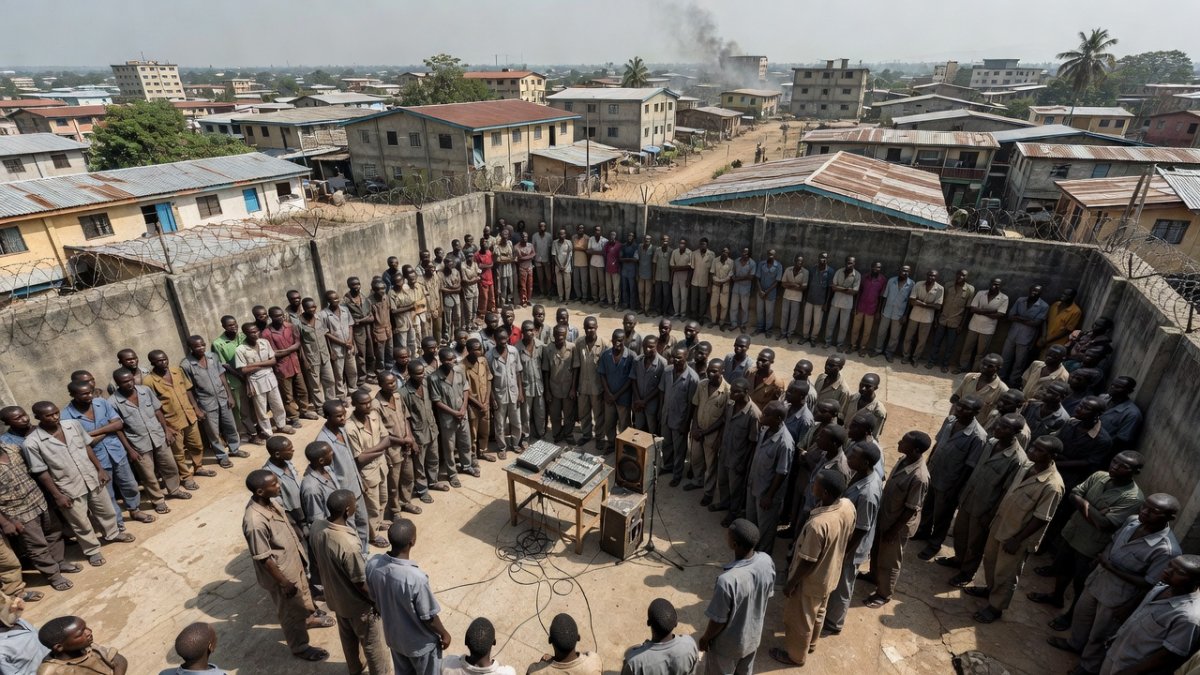
From Douala's New Bell Prison to Tribeca: The Redemptive Power of Music
Douala, Cameroon — In the congested courtyards of New Bell prison in Douala, Cameroon, where inmates run makeshift taxis on foot and manage their own markets selling fried cassava and beignet pastries, a small recording booth has become a space for voices long confined by concrete walls. Jail Time Records, the music label founded inside this facility, turns the daily realities of incarceration into songs that reach listeners across South Africa, the United States and Argentina.
The Founding of Jail Time Records
Jail Time Records began in 2018 after Dione Roach volunteered with a non-profit organisation that organised events inside New Bell. During one dance class, prisoners seized the microphone and started freestyling. Roach, impressed by the raw talent on display, sought permission to establish a studio. She partnered with Steve Happi, a former inmate, to launch the label. The pair created a rudimentary setup consisting of a small, sweaty recording booth connected to a room with a single computer. In 2022 they released the album Jail Time Vol 1, directing half the profits to the artists and reinvesting the remainder into the project.
Steve Happi entered New Bell after his aunt accused him of theft during a bitter inheritance dispute, a common trigger for wrongful imprisonment in Cameroon where family conflicts frequently reach the courts. He spent nearly three years awaiting trial in overcrowded cells, watching younger men arrive and leave while his own case stalled. The trauma of betrayal by a relative he had once trusted compounded the physical hardships of poor sanitation and limited medical care. Yet Happi began composing lyrics in his head during long nights, shaping personal pain into verses that later became the foundation for Jail Time Records.
Once he gained access to the makeshift studio, music offered both purpose and proof of innocence. He recorded tracks that detailed his arrest and the absence of evidence, sharing them with fellow inmates who recognized their own stories in his words. His acquittal in 2021 arrived without fanfare, yet it allowed him to walk out with recordings that would later reach international ears. Freedom meant returning to Douala’s streets while still carrying the responsibility of the project he had helped build from inside. Today Happi speaks of the studio as the place where he reclaimed agency after the courts had stripped it away.
Empereur and Stone: Inmates Finding Expression
Empereur, known as a feared leader of gangs both inside and outside the prison, recorded a music video entirely within New Bell that has drawn 24,000 YouTube views. His work helped establish the label's reach beyond Cameroon. Stone, a former soldier in Cameroon's presidential guard serving a ten-year sentence for robbery and illegal possession of firearms, uses the studio to rap lines such as "Heart of stone, it's war. My senses shatter like broken glass. I'm closed and tight like a cell door. No solid ground I slip like a fish." The documentary captures Stone's repeated attempts to reach his young daughter Maira by phone, often without success. Earlier this year the label organised a large concert in the prison courtyard, giving many inmates their first public performance opportunity.
Conditions Inside New Bell Prison
Inside New Bell, the informal economy operates with the precision of any Douala market. Prisoners known as taxis ferry messages, food, and small goods between cell blocks for a few CFA francs or a share of cassava. Stalls line the courtyard edges where women visitors and trusted inmates fry beignets and plantain chips, the scent cutting through the damp air. These micro-enterprises allow families outside to send support that reaches their relatives without passing through official channels that often skim profits. The system echoes long-standing West African practices where prisoners in places like Ghana’s Ussher Fort or Nigeria’s Kirikiri have turned confinement into commerce, selling crafts or running credit circles to survive.
Entrepreneurship within prison walls has deep roots across the region. In Senegal’s Rebeuss prison, inmates have historically managed tailoring cooperatives and food stalls that feed both prisoners and guards. New Bell’s version adds a layer of internal governance: senior inmates enforce stall locations and settle disputes, reducing violence that would otherwise draw attention from overstretched warders. This self-regulation mirrors traditional West African market associations that predate colonial prisons, where traders formed guilds to protect livelihoods under foreign rule.
Comparisons with other regional facilities highlight both similarities and differences. South Africa’s Pollsmoor prison once hosted elaborate inmate-run shops before stricter lockdowns curtailed them. In Cameroon, the persistence of these activities stems partly from chronic underfunding that leaves the state unable to supply basic meals. Prisoners therefore recreate the vibrant street economies of Douala inside the gates, turning scarcity into opportunity. The result is a fragile but functional parallel society where music now joins food and transport as another traded good.
New Bell's Long Shadow: Overcrowding and Human Rights
New Bell currently holds approximately 4,700 inmates in a facility built for roughly one-quarter that number. Human Rights Watch reports from 2022 documented cells where prisoners sleep in shifts because floor space is insufficient for everyone to lie down simultaneously. The resulting sanitation crisis contributed to a cholera outbreak that claimed at least six lives, highlighting how overcrowding transforms minor illnesses into deadly threats. These conditions persist despite repeated calls from local activists for expanded infrastructure and faster case processing.
The 2008 breakout attempt that ended with guards shooting sixteen inmates remains a painful reference point for current residents. Families still recount how the incident exposed the lethal gap between official capacity limits and actual population pressures. Human Rights Watch noted that many of those killed had not participated in the escape, underscoring the indiscriminate risks created by chronic understaffing and fear-driven security responses. Such events continue to shape inmate behavior, encouraging reliance on internal economies rather than confrontation with authorities.
Despite these documented violations, creative initiatives like Jail Time Records operate within the same overcrowded space. The contrast between international awards and persistent health crises illustrates the uneven progress of prison reform in Cameroon. While music provides momentary relief and external visibility, structural issues of capacity and accountability require sustained governmental action beyond what any single project can achieve.
The Tribeca Documentary and International Reach
Over six years Happi and Roach filmed a documentary titled after the studio. Last month the film won three prizes at New York's Tribeca film festival, including best documentary feature. Oscar-winning director Taika Waititi and his wife Rita Ora served as executive producers. The project highlights the creative process inside the prison and has drawn attention from audiences far beyond Cameroon. Songs produced at the label continue to circulate online, connecting incarcerated artists with listeners who may never visit Douala.
Jail Time Records the documentary earned three Tribeca awards, including best feature, after six years of filming that required patient relationship-building between Roach, Happi, and wary inmates. Trust grew slowly through shared meals and repeated visits that proved the filmmakers would not exploit suffering for quick footage. This extended timeline allowed the camera to capture quiet moments of songwriting alongside the visible strain of overcrowding, giving the film an authenticity rarely achieved in shorter prison documentaries.
Taika Waititi’s involvement as executive producer alongside Rita Ora brought resources and visibility that Cameroonian stories seldom receive on global platforms. For prisoners still inside New Bell, the recognition signals that their voices can travel beyond Cameroon’s borders without needing official permission. Within the African film industry, the awards challenge the notion that meaningful cinema must originate from established studios in Lagos or Cape Town, proving that stories from under-resourced facilities can compete when given sustained attention.
Art as Resistance and Redemption in West African Context
Steve Happi describes the studio as "this instrument of resistance… where we can really share friendship, love and our voices can be heard. We don't think anymore about the four walls - we find the freedom." In Cameroonian and broader West African music traditions, oral expression and rhythm have long served as tools for storytelling and communal memory. Jail Time Records extends that lineage into a prison setting, where inmates transform personal hardship into tracks that assert dignity. The label's model of profit-sharing and reinvestment reflects community-oriented approaches common in regional music scenes, even as it operates under the constraints of incarceration.
West African musical traditions have long used rhythm and lyrics to comment on power and injustice. Fela Kuti’s Afrobeat directly confronted military regimes, while Cameroonian bikutsi and makossa artists embedded social critique within danceable beats that evaded outright censorship. Jail Time Records continues this lineage by letting inmates transform personal hardship into tracks that assert dignity rather than despair. The studio becomes a modern griot circle where oral storytelling meets contemporary production, preserving communal memory under conditions designed to erase individual voices.
Hip-hop inside New Bell functions as both testimony and resistance. Stone’s line “Heart of stone, it’s war. My senses shatter like broken glass” captures the psychological pressure of confinement while refusing to surrender narrative control. Similar expressions appear in makossa songs from earlier decades that chronicled political detentions, showing how prisoners adapt existing genres to new realities. The music therefore links today’s inmates to a broader regional history of artists who turned bars and cells into stages for truth-telling.
Prison Reform and the Role of Creative Programmes
Creative initiatives inside facilities like New Bell intersect with ongoing discussions about prison conditions across Cameroon and West Africa. By providing equipment and a platform, Jail Time Records demonstrates how structured artistic activity can reduce isolation for participants. The label's growth from a single volunteer-led class to an album and award-winning film illustrates the potential for sustained programmes to generate both internal morale and external awareness. While structural challenges such as overcrowding remain, the work of Happi, Roach and the inmates shows one avenue for reclaiming agency through sound and story.
The Beat Goes On
The release of Jail Time Vol 1 demonstrated that profit-sharing models can function even inside maximum-security settings. Half the proceeds reach the artists directly, while the remainder funds new equipment and training for additional inmates. This structure echoes cooperative traditions found in West African music scenes where collective ownership sustains long-term participation rather than short-term individual gain. The album’s circulation across continents proves that audiences will engage with stories from places rarely featured in mainstream playlists.
Resilience in New Bell manifests not through dramatic escape narratives but through daily choices to create rather than merely endure. Inmates who once viewed their sentences as permanent erasure now see recorded tracks as evidence that their time inside carries forward value. The model offers a modest template for other facilities across the region seeking low-cost programmes that simultaneously address mental health and generate modest revenue without requiring major state investment.
Hope remains grounded in the recognition that music alone cannot resolve overcrowding or cholera risks. Yet the continued operation of the studio, the growing catalogue, and the international attention together suggest that creative expression can coexist with advocacy for structural change. As long as the beats continue, the human capacity to transform confinement into connection persists, offering one small but persistent counterweight to the concrete walls of New Bell.
By Amara Diop, Staff Writer
This article was produced with AI-assisted research and editorial support. Reporting is based on sources cited in the article.
What's Your Reaction?
 Like
0
Like
0
 Dislike
0
Dislike
0
 Love
0
Love
0
 Funny
0
Funny
0
 Wow
0
Wow
0
 Sad
0
Sad
0
 Angry
0
Angry
0

West Africa/Sahel Correspondent at Global1.News. Dakar-based journalist covering politics, security, climate, and development across Francophone and Anglophone West Africa. Tells the stories of a region undergoing profound transformation.













Comments (0)