
First Nations Leaders Demand Accountability After RCMP Arrest Video in Saskatchewan
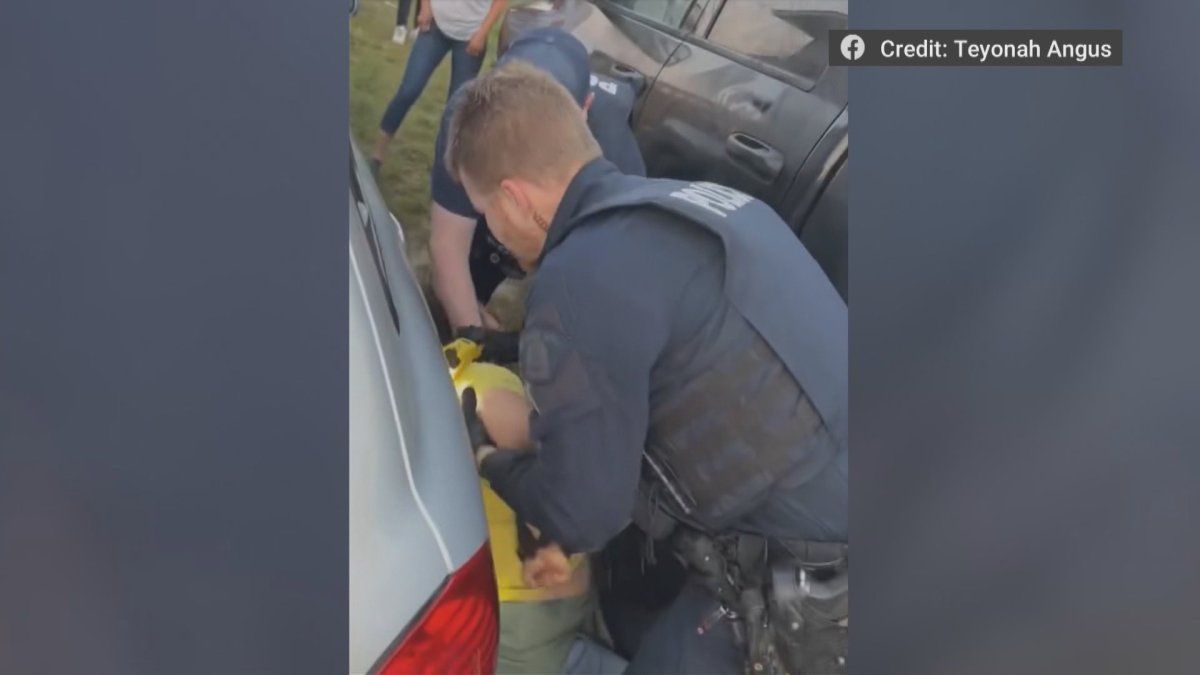
The recent circulation of video footage showing an arrest in a remote Saskatchewan First Nation has ignited fresh demands for police accountability and improved relations with Indigenous communities. This incident has brought to light longstanding concerns about the use of force and the need for independent oversight in rural and First Nations areas. As investigations proceed, leaders are pushing for systemic changes to ensure fair treatment and transparency.
First Nations Leaders Demand Accountability Following Viral Video of RCMP Arrest in Saskatchewan
Makwa Sahgaiehcan First Nation, Sask. — The circulation of a video depicting the arrest of a woman in a northern Saskatchewan First Nation has prompted renewed calls for oversight of police conduct and greater respect for Indigenous communities across Canada.
Details of the July 27 Incident
Saskatchewan RCMP officers from the Loon Lake detachment responded shortly after 5 a.m. on July 27 to a report of an impaired person on a street in the Makwa Sahgaiehcan First Nation, roughly 300 kilometres northwest of Saskatoon. While on scene, officers located a man wanted on an outstanding warrant and arrested him along with another man inside a residence.
According to the RCMP, Rose Angus, 40, became confrontational during the arrests and struck two officers. A second video shows Angus descending stairs as officers direct her to the ground. She was taken into custody outside the home. Emergency responders later treated her for what police described as minor injuries. Angus now faces six charges, including two counts of assaulting a police officer, two counts of resisting arrest, obstructing police, and possession of cocaine. Two other men arrested that morning, aged 30 and 28, were held on existing warrants.
The remote location of Makwa Sahgaiehcan First Nation, situated roughly 300 kilometres northwest of Saskatoon near Meadow Lake in Saskatchewan, underscores the logistical pressures facing rural detachments. In such isolated communities, response times and limited backup resources often shape the initial approach taken by police, a factor that later drew scrutiny in public statements. Court records indicate the group was travelling together, raising questions about the scale of the initial call and the decision to treat the encounter as a higher-risk intervention. Data from Statistics Canada show that drug-related arrests in rural Saskatchewan have risen steadily since 2019, often involving multiple individuals in single incidents.
Video Footage and Public Reaction
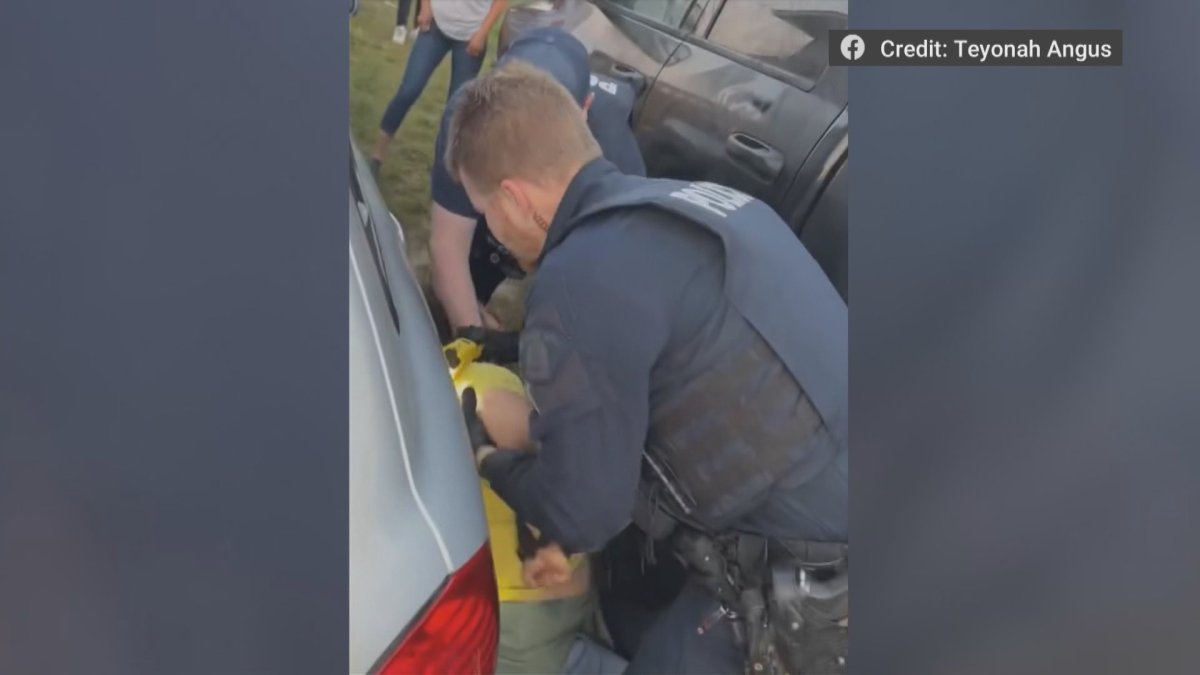
The footage that has drawn widespread attention shows two officers forcing Angus to the ground, delivering several punches to her face, deploying a conducted energy weapon to her back, and placing a knee near her neck while applying handcuffs. Her face appears bloodied when she is later directed to stand. The images have circulated widely on social media and prompted statements from Indigenous organisations.
The Federation of Sovereign Indigenous Nations, the Makwa Sahgaiehcan First Nation, and the Meadow Lake Tribal Council issued a joint statement calling for an independent investigation and full accountability. Chief Melvin Mooswa of Makwa Sahgaiehcan First Nation stated that the treatment shown was unacceptable and that community members deserve answers and better treatment.
Family members of Rose Angus have stated that the video does not reflect the full context of the early-morning encounter and have requested that body-worn camera footage be released promptly. Such incidents join a growing list of police videos that have circulated widely across Canada in recent years. Research from the Canadian Centre for Justice and Community Safety Statistics indicates that Indigenous people are over-represented in use-of-force encounters relative to their share of the population. The rapid spread of the footage on social media has amplified calls for systemic change while also highlighting the need for careful verification before conclusions are drawn.
RCMP Response and Referral to SIRT
On July 29 the RCMP stated that an initial review had determined the use of force to be reasonable. The following day the force announced it would refer the matter to the Serious Incident Response Team, the provincial police watchdog, after initially indicating the injuries did not meet the threshold for external review. SIRT has confirmed it is now investigating the incident.
SIRT investigators will examine body-camera recordings alongside witness statements and radio communications. The agency operates independently of the RCMP, a structure established to strengthen public confidence in the review process. Early referral allows SIRT to secure original footage before routine data-retention periods expire, a procedural safeguard that has become standard in several provinces following high-profile cases. The RCMP has not released further operational details while the SIRT review proceeds.
Analysis of Use-of-Force Practices
Aaron Thomas, who served 17 years with the Blood Tribe Police Service in Alberta, reviewed the footage and described the punches and conducted energy weapon deployment as excessive once officers had gained physical control. He noted that continued escalation, including raised voices and profanity directed at a person already being restrained, runs counter to standard training on de-escalation.
The visible placement of a knee near the neck area has prompted comparisons to the 2020 death of George Floyd, though investigators stress that each case must be assessed on its specific facts. Section 25 of the Criminal Code permits officers to use force that is necessary and proportional, yet determining proportionality in rapidly evolving rural encounters remains a persistent challenge for oversight bodies. Training standards across Canadian police services now place greater emphasis on communication and distance management before physical intervention. National data compiled by the Canadian Association of Chiefs of Police show that de-escalation training hours have increased in most jurisdictions since 2018. Critics argue, however, that resource constraints in smaller detachments can limit the practical application of these approaches during early-morning calls.
Indigenous Relations and Calls for Reform
The incident occurs against the backdrop of federal commitments under the United Nations Declaration on the Rights of Indigenous Peoples and recommendations from the Truth and Reconciliation Commission. First Nations leaders have long advocated for independent oversight mechanisms and culturally appropriate policing models that reduce reliance on external forces in their communities.
The Truth and Reconciliation Commission's Calls to Action urge all levels of government to address the over-representation of Indigenous people in the criminal justice system. Implementation of the United Nations Declaration on the Rights of Indigenous Peoples in federal legislation has added further expectations around culturally appropriate policing. The National Action Plan on Missing and Murdered Indigenous Women and Girls similarly identifies improved police-community relations as a core priority. Statistics Canada data reveal that Indigenous adults are incarcerated at rates roughly five times higher than non-Indigenous adults. Advocates maintain that sustained investment in community-based safety initiatives, alongside independent oversight mechanisms such as SIRT, offers a pathway toward the accountability measures outlined in these national frameworks.
Practical Implications for Saskatchewan Communities
Residents of Makwa Sahgaiehcan and neighbouring First Nations served by the Loon Lake detachment have expressed concern that the events captured on video will further erode trust. Community leaders note that effective policing depends on cooperation, which becomes difficult when residents fear disproportionate force.
Provincial officials have not yet commented publicly on the referral to SIRT. The outcome of the watchdog investigation will determine whether any officers face disciplinary measures or criminal charges. In the meantime, the Federation of Sovereign Indigenous Nations has urged its member nations to document similar encounters and support those affected.
The case also highlights the challenges of delivering consistent police services across vast rural and remote areas of Saskatchewan, where detachments cover large territories with limited personnel. Calls for additional resources and alternative response models, such as community safety officers, have gained renewed attention following the video's release.
Tags: RCMP, Saskatchewan, First Nations, Makwa Sahgaiehcan, SIRT, police accountability, Indigenous relations
By Alex Thompson, Staff Writer
This article was produced with AI-assisted research and editorial support. Reporting is based on sources cited in the article.
What's Your Reaction?
 Like
0
Like
0
 Dislike
0
Dislike
0
 Love
0
Love
0
 Funny
0
Funny
0
 Wow
0
Wow
0
 Sad
0
Sad
0
 Angry
0
Angry
0

Canada Correspondent at Global1.News. Based in Toronto, covering Canadian politics, energy, trade, and US-Canada relations. Provides the Canadian perspective on North American and global affairs.












Comments (0)