
Inside New Bell: Cameroon's Prison Record Label Gives Inmates a Voice
In the heart of Douala, Cameroon, New Bell prison stands as a place where inmates have built their own systems of survival and expression amid overcrowding and hardship. A music studio called Jail Time Records has emerged as a focal point for creativity, allowing prisoners to record songs that reach listeners across continents.
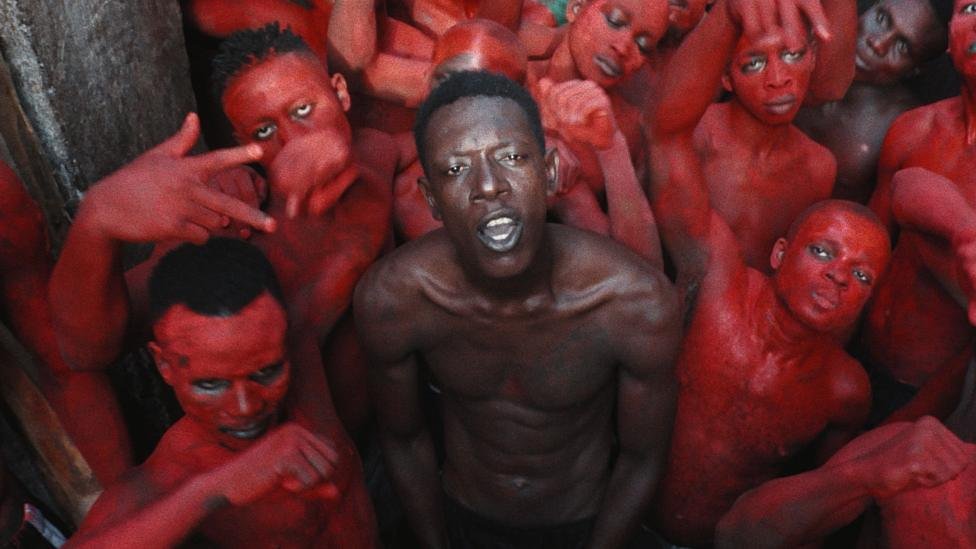
In the heart of Douala, Cameroon, New Bell prison stands as a place where inmates have built their own systems of survival and expression amid overcrowding and hardship. A music studio called Jail Time Records has emerged as a focal point for creativity, allowing prisoners to record songs that reach listeners across continents. This project, documented over six years, highlights both the challenges of incarceration and the power of artistic outlets.
Inside New Bell: Cameroon's Prison Record Label Gives Inmates a Voice
Dakar, Senegal — New Bell prison in Douala operates as a self-contained world where inmates manage daily logistics through informal networks. Prisoners act as messengers on foot, enforce order alongside guards, and run small markets selling items like fried cassava and pastries. This adaptation of the facility's environment created space for Jail Time Records, an on-site studio founded in 2018 that turns talented convicts into recording artists.
A Studio Born from a Dance Class
Jail Time Records began when Italian artist Dione Roach volunteered with a nonprofit hosting events at New Bell. During one dance session, a group of rappers seized the microphone and freestyled, prompting Roach to seek official approval for a dedicated recording space. Prison authorities agreed, and Roach recruited former inmate Steve Happi to serve as producer and sound engineer. The resulting setup consists of a basic booth and a single computer, yet it has supported the release of an album titled Jail Time Vol 1 in 2022, with half the proceeds going directly to the artists and the rest funding further work.
Steve Happi ended up in New Bell after a family argument over his late father's body; his aunt, a high court judge, allegedly arranged for him to be jailed for killing his father, though he was acquitted two years later. The studio itself consists of a small, sweaty recording booth attached to a room with a solitary computer.
"It's this instrument of resistance… where we can really share friendship, love and our voices can be heard," Happi told the BBC. "We don't think anymore about the four walls - we find the freedom."

Artists Who Found Expression Inside
Empereur, a gang leader serving time, produced the track Sa Ngando, whose music video has drawn 24,000 views on YouTube. Stone, a former presidential guard soldier convicted of robbery and firearms possession, records rap verses that describe his isolation and failed attempts to reach his daughter Maira by phone. Jeje became the label's first female artist in 2022 with the Afrobeats song Show Me The Way, recorded in the women's wing after she was jailed for theft while fleeing an abusive relative. These tracks have attracted listeners in South Africa, the United States, and Argentina.
Stone, a former soldier in Cameroon's presidential guard, received a 10-year sentence for robbery and illegal possession of firearms, which he maintains he did not commit. The film shows him repeatedly failing to reach his young daughter Maira by phone and leaving a voice message stating, "It's been a long time. She needs to hear my voice from time to time, so she doesn't forget about her father."
Jeje's Afrobeats track includes the refrain "Nobody show me the way, nobody show me the way, I did it all alone." She recorded it in the yard of the women's wing after being jailed for stealing money while fleeing an allegedly abusive uncle.
A Six-Year Film Captures Daily Life
Directors Steve Happi and Dione Roach filmed the Jail Time Records documentary over six years inside the prison. The project won three prizes at the Tribeca Film Festival last month, including best documentary feature. One sequence shows Stone rapping lines about feeling trapped like a cell door, while another depicts a courtyard concert held in February that drew hundreds of inmates. Executive producers Taika Waititi and Rita Ora supported the film, noting the humane value of creative outlets for those serving long sentences.
Stone raps the lines: "Heart of stone, it's war. My senses shatter like broken glass. I'm closed and tight like a cell door. No solid ground I slip like a fish." The February courtyard concert allowed hundreds of inmates to gather and participate as actors and crew in video productions.
Taika Waititi, executive producer alongside Rita Ora, stated: "The music that comes out of there is amazing. Just in terms of the power of art in relation to redemption and what that can mean to someone who, you know, some of these people are in prison for life. I think having an outlet is an incredibly powerful and humane thing."
Overcrowding Fuels Health and Safety Risks
Human Rights Watch documented 4,700 inmates living in New Bell in 2022, four times the facility's intended capacity. Unsanitary conditions allowed cholera to spread during an outbreak four years ago, resulting in at least six deaths. In 2008, guards killed 16 inmates during a failed escape attempt. The documentary also records instances of prisoners intimidating one another, including Empereur confronting a younger inmate over personal items.
The documentary records Empereur, serving 10 years for multiple crimes and the son of a traditional Douala chief, confronting a younger inmate and demanding a necklace chain and flip-flops. An "in memoriam" sequence at the end of the film honors six prisoners who died during the project's six-year span.
Authorities Back the Music Initiative
Prison leadership welcomed the studio from the start, with the head of the facility attending this year's concert and joining performers on the dance floor. Happi has described Cameroon as a country where music holds deep cultural importance, which helped secure ongoing support. This backing enabled the label to extend activities into the women's section and maintain operations despite the environment's pressures.
"They were really welcoming of the project. Cameroon is a super musical country… everyone loves music," Happi said, noting that the head of the prison attended the February concert and danced with the performers. This official support allowed the label to extend activities into the women's section.
Rehabilitation Through Creative Work
Co-founder Dione Roach has framed the project as a rehabilitation process that approaches participants without judgment. Music serves as a tool for self-discovery, allowing inmates to confront past actions and envision change. Happi notes that many artists previously held a mindset of opposition to the outside world, but participation has given them a renewed sense of importance and connection to society.
Roach described the approach: "The process we're doing is a rehabilitation process, basically. We enter the prison without any judgment and it's the only way we can really approach this kind of work. Music, as with any creative process, is also a way of self-discovery... coming to terms with things you've done and hopefully changing for the better."
Expansion to New Locations
In 2023, Roach and Happi opened a second studio in the central prison of Ouagadougou, Burkina Faso, roughly 1,000 miles from Douala. The goal is to replicate the New Bell model, including its label operations, video production, and community events. The original documentary closes with an in memoriam section honoring six prisoners who died during the project's run, underscoring both the persistent difficulties and the hope music provides as a lantern toward a brighter future.
Happi observed that before the project many artists held "the stubborn mentality: it's them against the world," but participation has made them "feel now important - they feel like they have a place in the society." Music, he added, provides inmates with a "lantern for a brighter future."
By Amara Diop, Staff WriterThis article was produced with AI-assisted research and editorial support. Reporting is based on sources cited in the article.
What's Your Reaction?
 Like
0
Like
0
 Dislike
0
Dislike
0
 Love
0
Love
0
 Funny
0
Funny
0
 Wow
0
Wow
0
 Sad
0
Sad
0
 Angry
0
Angry
0

West Africa/Sahel Correspondent at Global1.News. Dakar-based journalist covering politics, security, climate, and development across Francophone and Anglophone West Africa. Tells the stories of a region undergoing profound transformation.













Comments (0)