
Gulf of Paria widens as Trinidad pours oil on troubled Venezuelan waters
Venezuela has stepped up pressure on Trinidad and Tobago with formal demands for compensation and full details over the oil spill first reported on May 1 in the Gulf of Paria, citing satellite evidence of damage stretching into its coastal waters. The move has stirred fresh unease across fishing villages and energy communities on both sides of the shared sea, where livelihoods depend on waters that know no borders. Neighbours who have long worked these currents together now f
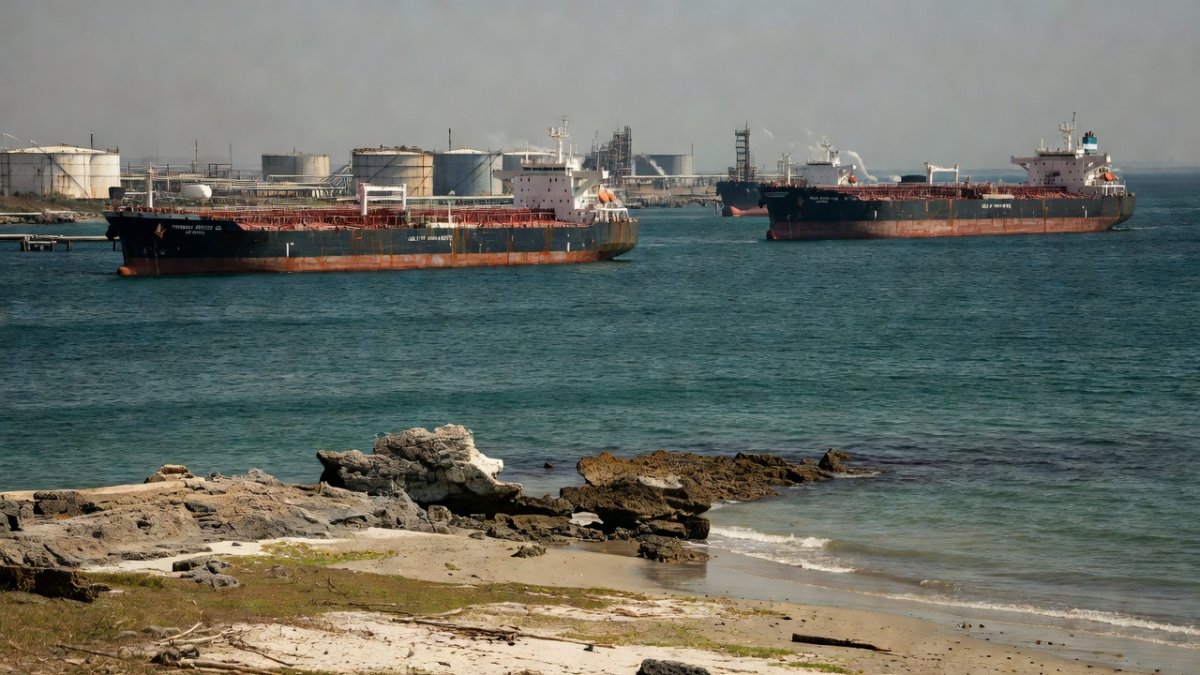
Gulf of Paria Spill Widens Trinidad-Venezuela Rift
Port of Spain, Trinidad — Venezuela has formally demanded information and compensation from Trinidad and Tobago over the oil spill first reported on May 1. Foreign Minister Yvan Gil has called on the Government of Trinidad and Tobago to provide details and redress for what Caracas describes as extensive environmental damage along its coastline. Venezuela has pursued a structured diplomatic campaign since the 1 May 2026 spill, issuing formal notes verbales through its embassy in Port of Spain on 5 May, 12 June and 3 August. Each note cited satellite imagery from the European Space Agency's Sentinel-2 constellation showing an initial slick of approximately 2,800 barrels extending 14 nautical miles into Venezuelan waters. Caracas has also referenced earlier 2026 protests lodged in February and March concerning smaller discharges from the same unidentified source, arguing that Trinidad and Tobago failed to enforce its own National Oil Spill Contingency Plan. Officials in Caracas have singled out the coastlines of Sucre and Delta Amacuro states, where tar balls reached beaches near Guiria and Pedernales, damaging 47 kilometres of mangrove shoreline. The Venezuelan government has commissioned an independent assessment by the state-owned PDVSA environmental unit, estimating immediate economic losses at US$18 million for artisanal fisheries and tourism operators in those two states. Foreign Minister Yvan Gil has publicly linked the incident to broader concerns over ageing infrastructure operated by Trinidadian concession holders, demanding full remediation costs plus punitive damages under the 1990 Gulf of Paria Treaty framework. Satellite evidence continues to be updated weekly, with Venezuela threatening referral to the International Tribunal for the Law of the Sea if compensation negotiations stall by the end of 2026.
The Venezuelan Position on the May Spill
The spill is said to have spread through the Gulf of Paria, reaching sensitive areas in the states of Sucre and Delta Amacuro. Venezuelan authorities have presented satellite imagery as evidence of the hydrocarbon spill affecting shared waters and coastal ecosystems. This marks the second time Venezuela has raised concerns about an oil spill originating from Trinidadian waters in 2026.
Geography of the Shared Maritime Boundary
The Gulf of Paria lies directly between Trinidad and Venezuela's mainland, forming a shared maritime area with long-standing oil and gas operations on both sides. The boundary has historically required careful coordination between the two nations, especially around energy infrastructure and fishing grounds that support communities on either coast. The maritime boundary between Trinidad and Tobago and Venezuela in the Gulf of Paria was first delimited by the 1942 Gulf of Paria Treaty and substantially revised by the 1990 Treaty between the Republic of Trinidad and Tobago and the Republic of Venezuela on the delimitation of marine and submarine areas. That agreement established a 12-nautical-mile territorial sea and a 200-nautical-mile exclusive economic zone boundary running roughly north-south through the centre of the gulf. The 1990 treaty also created a joint development zone for hydrocarbons, yet left ambiguous the precise allocation of liability when pollution crosses the median line, a gap now central to the current dispute. Existing energy infrastructure compounds the problem. The 1990 treaty permitted continued operation of the 36-inch Teak-Poui pipeline system and the now-decommissioned Galeota Point loading terminal on the Trinidadian side, while Venezuela maintains the Pedernales field and associated storage tanks on its coast. Because prevailing currents in the shallow gulf flow predominantly westward, any release near the median line can reach Venezuelan mangroves within 48 hours, making source attribution technically difficult without real-time current modelling and chemical fingerprinting of the oil.
Trinidad and Tobago's energy sector, including facilities linked to Petrotrin and Atlantic LNG, operates in close proximity to these waters. Any incident in the Gulf therefore carries implications that extend beyond immediate environmental effects into questions of regional energy stability.
Effects on Fishing Communities and Coastal Ecosystems
Fishing communities in Venezuela's affected states rely on the Gulf's waters for their livelihoods. Damage to coastal ecosystems can disrupt fish stocks and harm the delicate balance that sustains these traditional activities. In Trinidad, similar concerns arise for families who work the same shared waters, where environmental incidents quickly become matters of household income and food security. Communities most directly affected include the villages of Icacos, Fullarton and Bonasse on Trinidad's south-western peninsula and the Venezuelan settlements of Guiria and San Juan de Unare. In these locations, small-scale fishing contributes an average household income of TT$4,800 per month, with 68 per cent of catch sold at the Port of Spain and Guiria markets. The May spill coincided with the peak of the white shrimp season, resulting in an estimated 22-day closure of 1,150 square kilometres of fishing grounds and direct revenue losses exceeding TT$9.2 million for Trinidadian fishers alone. Comparative data from the 2010 Deepwater Horizon and earlier Venezuelan spills indicate that Caribbean fishing communities typically experience a 35-45 per cent income reduction for two years post-spill, with multiplier effects on boat repair yards, ice suppliers and fish-processing plants amplifying total regional losses by a factor of 2.3. Local cooperatives in the Gulf of Paria have already reported a 40 per cent drop in membership contributions to social funds, threatening the viability of micro-credit schemes that support equipment replacement.
The spill's reach into sensitive coastal zones highlights how pollution in the Gulf does not respect national lines. Communities on both sides have long understood that the health of these waters connects directly to daily life in places like the southern peninsula of Trinidad and the Venezuelan states bordering the Gulf.
CARICOM Context and Regional Dialogue
Trinidad and Tobago remains an active member of CARICOM, where energy cooperation and environmental stewardship often feature in regional discussions. Neighbourly relations with Venezuela have included past efforts to manage the shared maritime space, though specific mechanisms for rapid response to spills continue to evolve. CARICOM's environmental framework, anchored in the 2001 Revised Treaty of Chaguaramas and the 2019 Caribbean Environment Programme, obliges member states to notify neighbours of transboundary pollution within 24 hours and to cooperate on joint response measures. Past resource disputes, including the 2008-2010 fisheries disagreement between Barbados and Trinidad and Tobago, were successfully mediated through the CARICOM Secretariat's good offices, producing a joint monitoring committee that remains active. The current spill therefore tests whether similar mechanisms can address hydrocarbon liability between a full member and an associate member. The Caribbean Community Climate Change Centre (CCCCC) in Belize has offered technical support for shoreline assessment using its regional oil-spill modelling platform, while the CARICOM Energy Programme has warned that unresolved compensation claims could delay planned cross-border gas projects under the Caribbean Energy Security Initiative. Failure to reach agreement may also affect Venezuela's observer status within CARICOM energy dialogues scheduled for 2027.
Foreign Minister Yvan Gil's statements place the current matter within ongoing diplomatic channels. CARICOM partners may watch how the two countries handle information exchange and any future joint monitoring arrangements, given the Gulf's importance to broader Caribbean energy flows.
Energy Operations and Practical Implications
Oil and gas activity in the Gulf of Paria forms part of Trinidad and Tobago's economic foundation. Facilities tied to Petrotrin and Atlantic LNG contribute to national output, yet they also sit within an area where environmental incidents can affect cross-border relations and operational continuity. Atlantic LNG's Train 1 at Point Fortin lies only 18 nautical miles from the spill origin zone, although its operators have stated that no process water was discharged during the relevant period. The legacy of Petrotrin's former operations remains relevant: the state-owned refinery, closed in 2018, left 14 inactive wellheads and two subsea pipelines in the Gulf of Paria whose integrity has been questioned by the Trinidad and Tobago Upstream Chamber. Current operators include Heritage Petroleum, which holds the South West Peninsula block, and Shell Trinidad, which operates the undeveloped Manatee field straddling the maritime boundary. Trinidad and Tobago's regulatory regime is governed by the Petroleum Act and the 2019 Oil Spill Preparedness and Response Regulations, which require operators to maintain a US$150 million financial assurance instrument. However, the regulations do not explicitly address cross-border spills originating from unidentified or abandoned infrastructure, leaving a potential gap in liability coverage that Venezuela has highlighted in its diplomatic correspondence. The Ministry of Energy has commissioned an independent audit of all legacy wells, with results expected before the end of the third quarter of 2026.
Disputes over spills can influence how companies and regulators approach maintenance and oversight in the coming months. While no new enforcement dates have been announced, the incident underscores the need for clear communication between operators on both sides of the boundary to protect the shared resource.
Cost of Living and Community Concerns
Energy prices in Trinidad and Tobago remain sensitive to developments in the oil and gas sector. Any prolonged uncertainty around the Gulf could feed into discussions about supply reliability and household costs, particularly for families already managing tight budgets. Local communities understand these connections well. When incidents affect the waters that support both fishing and energy work, the ripple effects touch markets, employment, and the everyday cost of living across the islands. Neighbours in Venezuela face parallel pressures in their coastal regions.
By Sharon Sahatoo, Staff WriterThis article was produced with AI-assisted research and editorial support. Reporting is based on sources cited in the article.
What's Your Reaction?
 Like
0
Like
0
 Dislike
0
Dislike
0
 Love
0
Love
0
 Funny
0
Funny
0
 Wow
0
Wow
0
 Sad
0
Sad
0
 Angry
0
Angry
0

Caribbean Correspondent at Global1.News. Based in Port of Spain, Trinidad, covering Caribbean politics, economy, energy, climate, and culture. Amplifying the voices and stories of the Caribbean region.












Comments (0)