
Trump Threatens Iran With 'a Beating' as Saudi Arabia Joins US Strikes
In a recent BBC News report, President Donald Trump threatened Iran with a severe military response — vowing they would receive "a beating" — after Tehran launched what Centcom called an "attempted surprise attack" on US forces in the Middle East. The escalation marks a dramatic breakdown of a temporary lull in hostilities, as Saudi Arabia joined US strikes on Iran-backed militias in Iraq for the first time, widening the conflict across the region.
In a recent BBC News report, President Donald Trump threatened Iran with a severe military response — vowing they would receive "a beating" — after Tehran launched what Centcom called an "attempted surprise attack" on US forces in the Middle East. The escalation marks a dramatic breakdown of a temporary lull in hostilities, as Saudi Arabia joined US strikes on Iran-backed militias in Iraq for the first time, widening the conflict across the region.
Trump Threatens Iran With 'a Beating' as Saudi Arabia Joins US Strikes on Iraqi Militias
Washington, DC – 30 July 2026 — The US military launched "heavy" strikes against dozens of Islamic Revolutionary Guard Corps (IRGC) targets across Iran on Wednesday evening, hours after President Donald Trump publicly vowed a punishing retaliation for what the Pentagon described as an Iranian ballistic missile attack on US forces in Jordan. The strikes, which Centcom said targeted command centers, missile and drone facilities, and coastal surveillance sites, came as Saudi Arabia conducted its own publicly acknowledged joint operation with American forces against Iran-aligned militias in Iraq — a significant expansion of Riyadh's role in the five-month conflict.
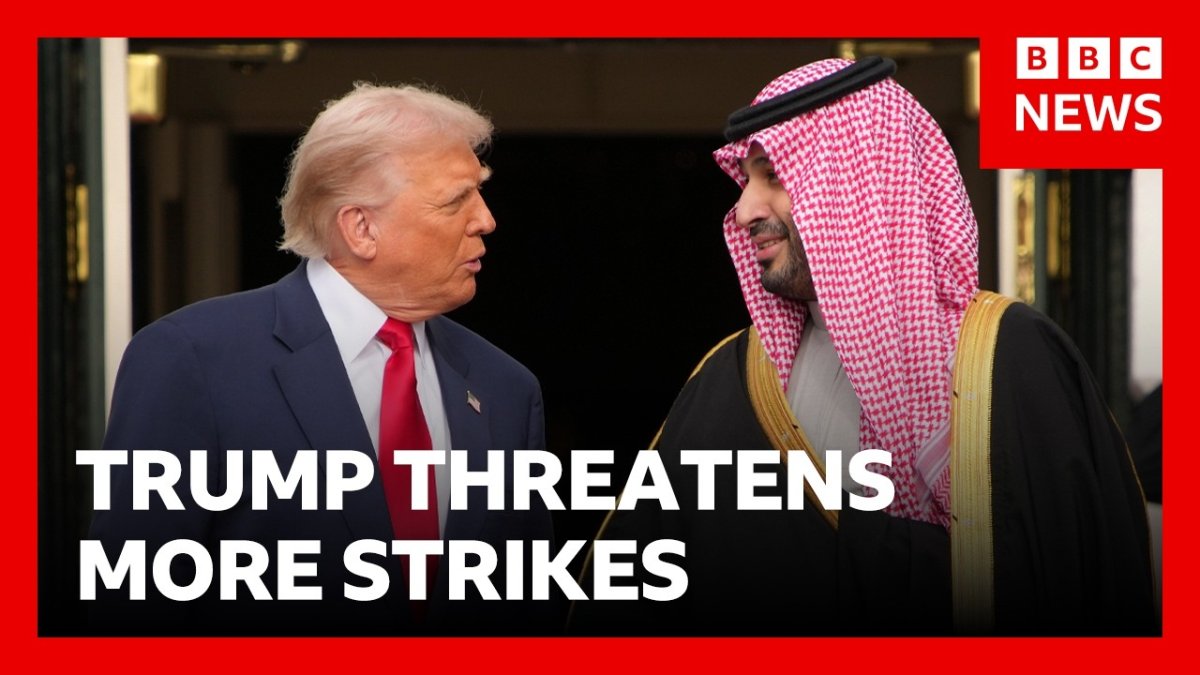
The Joint US-Saudi Strikes on Iraqi Militias
In a major escalation that broke a three-day pause in hostilities, US Central Command confirmed that American and Saudi Arabian forces conducted coordinated strikes against Iran-backed militia positions across eastern Iraq on Tuesday. Centcom said the operation targeted "multiple terrorist logistics and weapons sites across eastern Iraq in a strong response to over 30 IRGC-directed aerial drone attacks in the last 72 hours." Saudi defence ministry spokesman Maj-Gen Turki al-Maliki accused "Iran-backed terrorist militias" of launching drones from Iraqi territory at oil facilities in the Eastern and Riyadh regions on Monday and Tuesday, and said the kingdom had responded under its "right to self-defence." Iraq's Popular Mobilisation Forces (PMF) — an umbrella organisation of mostly Shia Muslim militias formally integrated into the Iraqi armed forces — reported that at least 20 of its members had been killed and 32 others wounded in strikes across seven provinces including Baghdad, Nineveh, Diyala, Basra, Kirkuk, Karbala and Wasit.
Iran's Ballistic Missile Attack and Trump's Response
The US-Saudi strikes followed what Centcom called an Iranian "attempted surprise attack" on Tuesday evening, in which the IRGC launched ballistic missiles targeting a US air base and command centre in Jordan. Centcom said all missiles were "successfully intercepted." The IRGC confirmed the operation, stating it had struck American positions "in response to the acts of aggression of the American child-killing army," and also announced that its naval forces had hit three oil tankers in the Strait of Hormuz after they "ignored warnings" and attempted to transit what Tehran describes as an "unsafe and illegal route." When asked by a Fox News correspondent about the Iranian attack, President Trump responded with an expletive-laden declaration that US forces would be "hitting them hard" and that Tehran was "going to get a beating." Later, at the White House, Trump told reporters: "We're going to be hitting them very hard because it's our turn to hit them. They know it's coming. They asked us not to do it."
Heavy US Retaliation — Dozens of IRGC Targets Destroyed
The US Central Command executed heavy strikes beginning at 20:00 ET on Wednesday. The operation lasted one hour and focused on dozens of Islamic Revolutionary Guard Corps sites inside Iran. Centcom reported that the targets included command centers, missile and drone production facilities, coastal surveillance installations, and maritime capabilities along the Iranian coastline. Officials described the strikes as precise and intended to degrade Iran's ability to launch further ballistic missile or drone attacks against US positions in the region.
This round of bombing ended a brief lull that had followed 13 consecutive nights of US strikes. President Trump had suspended the earlier campaign last Friday, describing ongoing discussions with Iranian representatives as "very friendly negotiations." Iranian officials immediately denied that any such talks had taken place or produced any agreement. The current phase of the conflict is now in its fifth month, having begun in February. During the preceding 13-night campaign, US forces struck weapons storage sites and military installations across multiple Iranian provinces, with scores of casualties reported by Iranian state media and local authorities.
Centcom stated that the Wednesday operation destroyed or severely damaged key nodes used for IRGC planning and logistics. The command added that follow-on assessments would determine the full extent of the damage to Iran's missile and drone infrastructure. Regional analysts noted that the intensity of the strikes reflected a shift from the previous pattern of limited responses to a more sustained campaign aimed at long-term degradation of Iranian capabilities.
Saudi Arabia's Strategic Dilemma
According to Axios, President Trump met Saudi defence minister Prince Khalid bin Salman in recent days to discuss the expanding conflict. Saudi officials have privately expressed a preference for de-escalation while publicly supporting the joint strikes against Iran-backed militias in Iraq. Riyadh has sought to remain outside direct US-Iran hostilities since February, yet repeated attacks on its territory have forced a reassessment of that stance.
Saudi Arabia now faces threats from three directions: Iranian drones launched from Iraqi territory, Houthi attacks on Red Sea shipping lanes, and strikes on oil facilities in the Eastern Province and near Riyadh. As the leading Sunni power in the region, Riyadh views Iran, the largest Shia state, as its primary strategic rival after decades of competition for influence across the Middle East. Diplomatic ties restored in 2023 have not prevented the current cycle of attacks, and Saudi officials have grown increasingly angered by the repeated violations of their airspace and territory.
The Houthi movement began targeting Saudi-linked tankers in the Red Sea earlier in July, adding further pressure on Riyadh to respond. Saudi participation in the Tuesday strikes on Iraqi militias marks the first time the kingdom has publicly coordinated kinetic operations with US forces against Iran-aligned groups. This involvement alters the regional balance and risks drawing Saudi Arabia deeper into a conflict it had previously sought to avoid.
Iraq Caught in the Crossfire
The Iraqi presidency denounced the strikes as an "unacceptable attack and blatant violation of sovereignty." The Popular Mobilisation Forces condemned what it called "treacherous terrorist attacks" targeting its official security institutions. President Trump claimed the operations had been coordinated with the Iraqi government, a statement Baghdad has not confirmed. Iran's foreign ministry described the strikes as a "gross violation" of international law and warned that the United States and its "accomplices" would be responsible for any "dangerous consequences."
Oil prices rose 5 percent to $88.50 per barrel for Brent crude following the escalation. Israeli Prime Minister Benjamin Netanyahu visited Washington this week, meeting with President Trump and attending the funeral of Senator Lindsey Graham. The Strait of Hormuz has remained effectively closed to most commercial traffic since February, contributing to global energy market volatility.
Iraqi officials have called for an immediate cessation of foreign military actions on their soil, warning that continued strikes risk destabilizing the country's fragile security arrangements. Regional diplomats are monitoring whether Baghdad can maintain neutrality or will be forced to align more closely with one side in the widening confrontation.
Analysis — What Comes Next
The collapse of even a short-lived pause in hostilities suggests that neither side is prepared to pursue a diplomatic solution at present, despite earlier references to talks. Saudi Arabia's direct military involvement represents a fundamental shift in regional dynamics, moving Riyadh from a position of restraint to active participation in strikes against Iran-backed groups. This change could encourage further coordination between the United States and its Gulf partners but also raises the prospect of broader escalation.
Iran's continued capacity to launch attacks despite sustained US bombing raises questions about the effectiveness of the current strategy and the resilience of IRGC networks. The conflict is entering its sixth month with no clear endgame in sight. Economic pressures are mounting through higher oil prices, the closure of the Strait of Hormuz, and disruptions to global energy markets.
The recurring pattern of brief lulls followed by renewed escalation indicates that the current phase of confrontation could persist indefinitely without a significant change in approach by any of the principal actors. Observers will watch closely for signs that either Washington or Tehran is willing to accept the costs of sustained operations or seek an off-ramp through indirect channels.
By Irina Volkov, Staff Writer
This article was produced with AI-assisted research and editorial support. Reporting is based on sources cited in the article.
What's Your Reaction?
 Like
0
Like
0
 Dislike
0
Dislike
0
 Love
0
Love
0
 Funny
0
Funny
0
 Wow
0
Wow
0
 Sad
0
Sad
0
 Angry
0
Angry
0

Russia/Eastern Europe Correspondent at Global1.News. Covering Russian politics, energy, security, and the shifting dynamics of the post-Soviet space. Provides clear-eyed analysis on one of the world's most opaque regions.











Comments (0)