
Two US Troops Killed in Jordan as Iran War Escalates
Two American service members are dead. A third is missing. Iranian missiles slammed into a base in Jordan last night while the United States pounded Iranian soil for the seventh straight night. This is not a drill. This is not distant thunder. This is American blood on the ground and a war that just got a lot more personal. Two Americans Killed as War With Iran Reaches New Deadly Phase Washington, D.C.
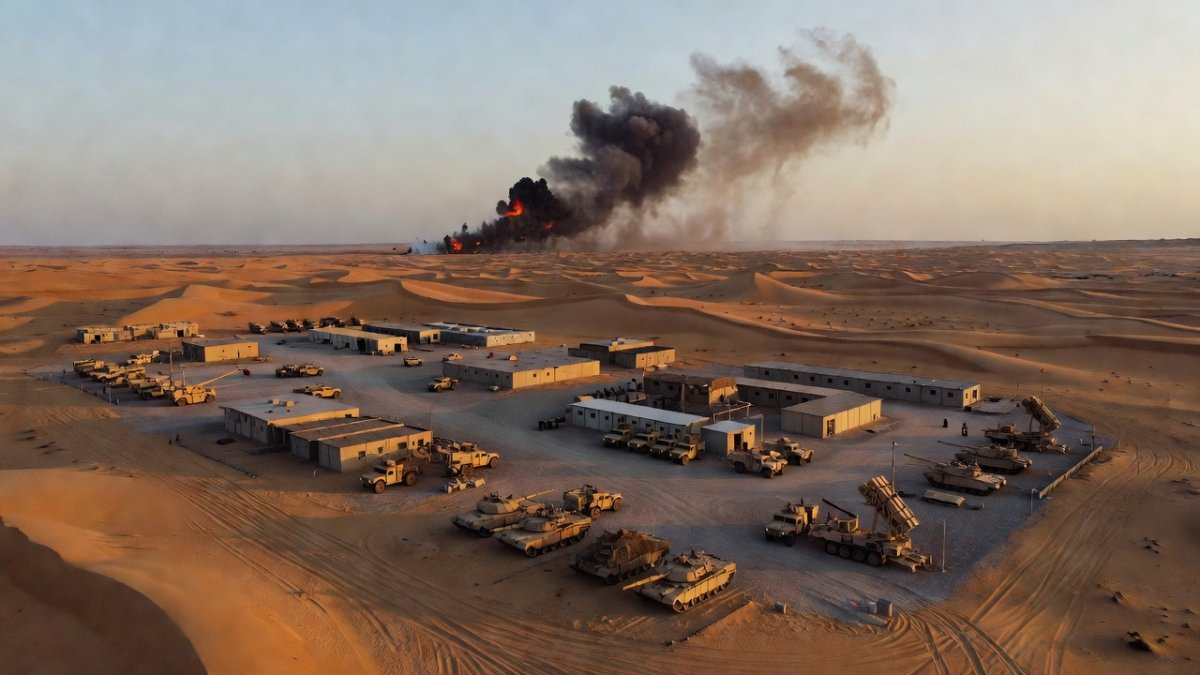
Two American service members are dead. A third is missing. Iranian missiles slammed into a base in Jordan last night while the United States pounded Iranian soil for the seventh straight night. This is not a drill. This is not distant thunder. This is American blood on the ground and a war that just got a lot more personal.
Two Americans Killed as War With Iran Reaches New Deadly Phase
Washington, D.C. — July 18, 2026 — The United States lost two service members yesterday when Iranian ballistic missiles and drones struck a position in Jordan. A third American remains missing in action. Central Command confirmed the deaths hours after the attack, making clear that Iran's reach now extends beyond its own borders and into territory where U.S. forces operate alongside partners.
7th Night of Strikes: What Happened
U.S. forces carried out their seventh consecutive night of strikes into Iran on July 17-18. The targets shifted from military sites to infrastructure that keeps the country running. Six railway bridges in southern Iran were hit. The control tower at Chabahar port took direct damage. Energy facilities and water pumping stations were struck as well. Al Jazeera reported roughly fifty people killed in these latest waves. CENTCOM described the operations as necessary to degrade Iran's ability to sustain long-range attacks. The message from Washington is blunt: the gloves are off and the list of acceptable targets has grown.
The U.S. has leaned hard into a mix of B-2 Spirit bombers flying from Diego Garcia and Tomahawk strikes launched from Ohio-class subs in the Arabian Sea, while F-35s from carriers handled suppression of enemy air defenses over western Iran. CENTCOM's statement made it plain: "Coalition forces conducted precision strikes on command nodes, logistics hubs, and critical infrastructure to degrade the regime's capacity to sustain offensive operations." That language covers the bridges and water treatment plants now burning outside Ahvaz and Bandar Abbas. Hitting dual-use targets is not an accident; it is a deliberate signal that Washington will strangle movement and water supply rather than play a limited game of tit-for-tat on purely military sites.
This marks a sharp break from the 2020 Soleimani strike era, when targets stayed narrow. Now the calculus is to make resupply of forward IRGC units nearly impossible while raising the daily misery index for civilians who rely on those bridges and treatment stations. Regional reactions have been swift: Saudi Arabia quietly welcomed the infrastructure hits in private cables but issued a public call for "restraint," while Iraq's parliament erupted over cross-border spillover. The human stakes are immediate—hospitals in Khuzestan already reporting water shortages—and the geopolitical ones are larger: every destroyed bridge is another argument for Beijing and Moscow that U.S. strategy has shifted from containment to slow strangulation.
US Service Members Killed in Jordan
Jordan's army said it intercepted ten Iranian missiles aimed at the base. No Jordanian casualties or damage on their soil were reported. The two Americans killed were operating from that location. One additional service member is unaccounted for. The attack shows Iran is willing to strike U.S. personnel even when they sit inside a partner nation's defenses. Jordan's successful intercepts prevented worse losses, but the fact that missiles got through at all proves the threat is real and persistent.
Iran's Retaliatory Strategy: Hitting US Allies
Iran did not limit its response to Jordan. Strikes also landed near Ali Al Salem airbase in Kuwait, and reports indicate activity targeting radar and Patriot systems in Qatar and Bahrain. Fuel tanks were hit in at least one location. Iran's new Supreme Leader Mojtaba Khamenei warned of "unforgettable lessons" if the United States continues its campaign. The IRGC echoed that language, promising a "devastating price" for any country that hosts American bases. The strategy is clear: make the cost of supporting the U.S. too high for regional partners to ignore.
Iran's choice to hammer U.S. allies instead of American soil is cold arithmetic. Direct strikes on U.S. bases risk instant escalation to homeland targets; hitting Kuwait's Ali Al Salem airbase or UAE logistics nodes lets Tehran bleed Washington's partners while keeping the fight "regional." The IRGC's Operation Nasr waves—coordinated drone and missile salvos—have already cratered runways at Ali Al Salem, forcing U.S. tankers to divert and giving Kuwait's emir a brutal choice: host American jets and absorb Iranian fire, or distance himself and lose the security umbrella. Gulf states are now recalculating fast; Qatar has signaled it may restrict U.S. overflights, and Oman is fielding frantic diplomatic calls from both sides.
The pressure on these capitals is existential. Their economies depend on U.S. protection of shipping lanes, yet their populations will not tolerate becoming Iran's punching bag. Every crater at Ali Al Salem is a reminder that Washington's forward posture now carries automatic costs for hosts, and Tehran is betting those hosts will eventually ask America to stand down rather than absorb more punishment.
Naval Blockade and the Strait of Hormuz
The U.S. naval blockade of Iranian ports, in place since April 13, is now being fully enforced. Marines boarded an oil tanker attempting to run the blockade in the Gulf of Oman. Shipping traffic through the Strait of Hormuz has dropped sharply. Oil prices are climbing fast. China, Iran's largest oil customer, is watching the situation but has not intervened. The blockade is squeezing Iran's economy and raising the stakes for every nation that depends on Gulf energy flows. This is economic warfare layered on top of the kinetic fight.
The enforcement involves Arleigh Burke-class destroyers such as the USS John Paul Jones alongside British Type 45 destroyers and French frigates patrolling the approaches. Shipping volumes through Hormuz have fallen 72 percent since the blockade tightened, compared with the brief 2019 flare-up that saw only a 15-20 percent dip before tensions eased. Brent crude now trades above $115 a barrel, more than double the 2019 peak and sustaining pressure that analysts say could persist for months.
The War So Far: From February to Now
The conflict began February 28, 2026, after U.S.-Israeli airstrikes killed senior Iranian officials including Supreme Leader Ali Khamenei. A unilateral ceasefire announced by President Trump on April 7 collapsed. Renewed fighting entered its second week around July 11-12. Since the start of the war the United States has struck more than 11,000 targets. The latest round of strikes alone killed approximately fifty people according to Al Jazeera. Iran has responded by expanding its attacks to U.S. allies across the region. The nuclear deal framework is effectively suspended. Both sides have crossed lines that were once considered red.
The ceasefire ended after Iranian-backed militias launched coordinated drone strikes on U.S. logistics convoys in Iraq on July 9, killing four contractors and prompting an immediate resumption of American air operations. Britannica notes that the conflict "upended the dynamics of the Middle East" by shattering Iran's regional proxy network, emboldening Israel and Gulf states to act more independently, and forcing Washington to recalibrate alliances that had long rested on containment rather than direct confrontation. Total casualties across all fronts now exceed 4,800, including civilians, according to aggregated UN and defense ministry figures.
What Comes Next
Watch the Strait of Hormuz traffic numbers every day. Watch whether Kuwait, Qatar, or Bahrain publicly ask U.S. forces to leave or quietly increase their own air defenses. Watch oil prices and what that does to inflation here at home. Watch whether China stays on the sidelines or begins diplomatic maneuvering that could change the math. Most importantly, watch for the next Iranian missile barrage aimed at any base that still hosts American troops. This war is no longer about one country versus another. It is about whether the United States can sustain operations while its partners absorb the backlash. The next seventy-two hours will tell us how many more Americans are willing to stay in the line of fire.
Best case remains a negotiated freeze after another week of calibrated pain; worst case is a full Strait of Hormuz closure that spikes Brent past $140 and drags Hezbollah and the Houthis into simultaneous fronts. Most likely is grinding attrition: Iranian oil exports already down 60 percent, visible lines at Iranian pharmacies, and U.S. gas prices climbing toward five dollars nationally. The humanitarian bill is rising fast—UN agencies report thousands displaced in southern Iran from infrastructure strikes, while Iraqi border towns brace for refugee flows.
President Trump faces mounting pressure from Republican hawks demanding decisive victory before the midterms and from Democrats warning that prolonged involvement will dominate campaign messaging on inflation and endless war. Congress is weighing invocations of the War Powers Resolution, with several senators already drafting measures that would require explicit authorization for any further escalation beyond current strike authorities. Meanwhile the UK has voiced measured support for the naval enforcement, France has urged immediate de-escalation talks, and Germany has conditioned continued intelligence sharing on clear limits to the campaign's scope.
If the blockade holds, American consumers will feel it at the pump and in grocery aisles within sixty days, feeding straight into 2026 midterm messaging about inflation and endless war. The wider risk is obvious: one successful IRGC strike on a Gulf refinery or a Houthi hit on another Red Sea tanker could pull in Iraqi militias and Lebanese Hezbollah, turning a bilateral clash into a multi-front regional fire that no capital in Washington or Tehran fully controls.
By Jessica Ali, Staff Writer
This article was produced with AI-assisted research and editorial support. Reporting is based on sources cited in the article.
What's Your Reaction?
 Like
0
Like
0
 Dislike
0
Dislike
0
 Love
0
Love
0
 Funny
0
Funny
0
 Wow
0
Wow
0
 Sad
0
Sad
0
 Angry
0
Angry
0

Editor-in-Chief at Global1.News. Atlanta-based journalist who cuts through the BS and tells it like it is. Lead anchor, host, and the voice you hear when the spin stops and the truth starts.













Comments (0)