
Springboks Demolish Wales 43-0 at Kings Park Durban
The Green Machine Rolls On in Durban The Springboks delivered a statement performance at Kings Park on 18 July 2026, crushing Wales 43-0 in front of a roaring crowd of around 50,000 in the new global Nations Championship. This was their third straight win and the second time they have blanked the Welsh, following that famous 73-0 thrashing in Cardiff.

The Green Machine Rolls On in Durban
The Springboks delivered a statement performance at Kings Park on 18 July 2026, crushing Wales 43-0 in front of a roaring crowd of around 50,000 in the new global Nations Championship. This was their third straight win and the second time they have blanked the Welsh, following that famous 73-0 thrashing in Cardiff. From the first whistle the home side dominated, turning slippery ball conditions and Welsh handling errors into a one-sided affair that left the visitors shell-shocked.
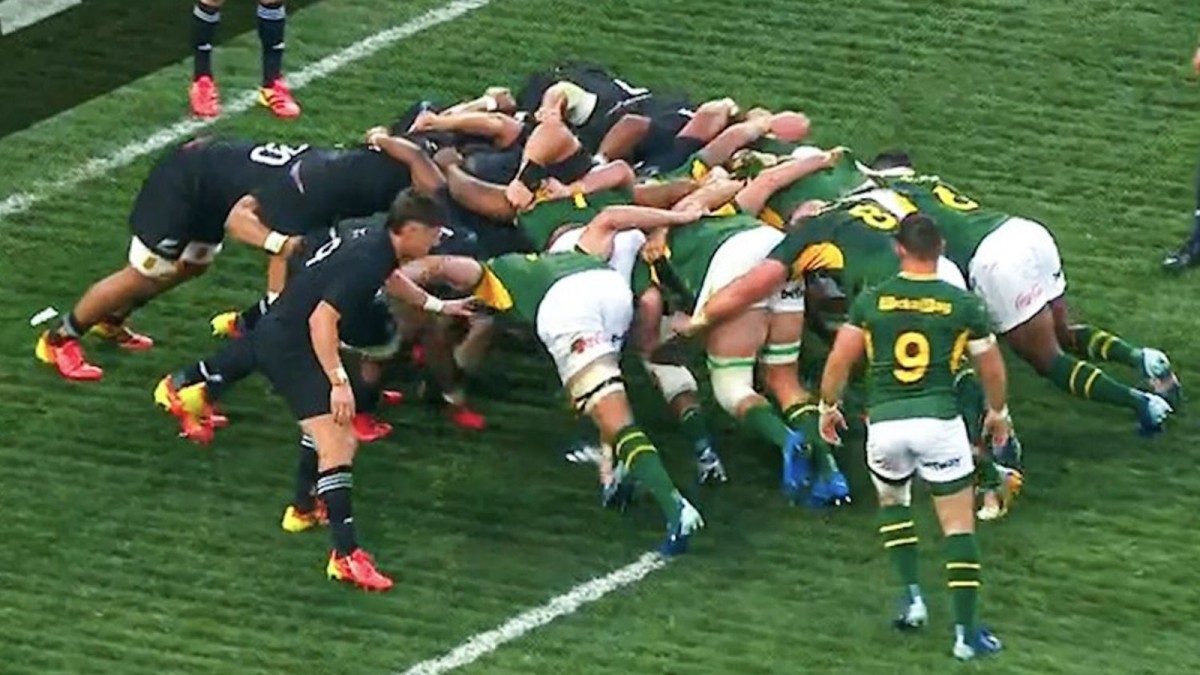
Kings Park was alive with vuvuzelas and the unmistakable energy only a Durban crowd can bring. The Springboks scrum was a weapon from the opening minutes, giving them front-foot ball and the platform to launch wave after wave of attack. Wales struggled to find any rhythm, and by halftime the writing was already on the wall as the Boks pulled clear with clinical finishing.
By full time the scoreboard told the full story of a clinical demolition. Seven tries flowed as the green machine clicked into gear, showing exactly why this squad is building serious momentum in the Nations Championship. The atmosphere never dipped, with fans singing and dancing long after the final whistle.
The Nations Championship itself has quickly become the defining global stage for southern-hemisphere sides, replacing fragmented tours with a structured league that rewards consistency across home and away fixtures. For the Springboks, three wins from three has already placed them atop the early standings, echoing the 2019 Rugby World Cup campaign when Rassie Erasmus first instilled a ruthless, high-tempo identity that opponents still struggle to match. Durban’s humid conditions only amplified the tactical edge, as the Boks used short, sharp carries through the forwards to tire the Welsh pack before releasing the backs into wider channels.
Historically, Kings Park has been a fortress where Springbok sides have often produced their most dominant displays, from the 1995 World Cup pool matches to the 2007 Tri-Nations deciders. The 2026 crowd carried that legacy forward, blending traditional amapiano beats with the old “Shosholoza” chants that have echoed through South African rugby for generations. This cultural fusion underscores how the sport remains a unifying force in post-apartheid society, where every try scored at home feels like a collective celebration of resilience and excellence.
Tactically, Erasmus’s decision to keep the ball in hand rather than kick for territory paid immediate dividends. The Boks averaged 68 percent possession in the first half, using a 1-3-3-1 attacking shape that allowed the loose forwards to clear out rucks efficiently while the halfbacks varied their passing angles to exploit Wales’ narrow defensive line. Such precision reflects years of deliberate planning that has turned raw physical power into repeatable, championship-winning patterns.
Debutants Write Their Names in Green and Gold
Two young guns stole the show on a memorable afternoon. Twenty-year-old Sharks flyhalf Vusi Moyo started at No 10 and looked every bit the future star, slotting three conversions on debut and directing the backline with maturity beyond his years. His calm presence under the high ball and sharp distribution helped the Springboks stretch the Welsh defence time and again.
Jaco Williams also marked his first cap with a try, crossing in the corner after a slick move that had the crowd on its feet. The youngster showed no nerves, taking his chance with both hands and earning big hugs from teammates who have watched him rise through the ranks. These are the moments that make South African rugby so special.
The rest of the try scorers were a who’s who of current form: Jasper Wiese powered over from close range, Cobus Reinach sniped from the base of the scrum, Jesse Kriel finished a sweeping backline move, Herschel Jantjies added his name to the list, Kurt-Lee Arendse raced clear, and Paul de Villiers capped a strong display. Manie Libbok added one conversion to Moyo’s three for good measure.
Captain Pieter-Steph du Toit led from the front with his usual physicality and offered quiet mentorship to the debutants throughout the match. His leadership is helping turn this transformational pathway into reality, with young black talent like Moyo and Williams thriving at the highest level and proving the system is working.
Vusi Moyo’s journey from the township fields of KwaZulu-Natal to a Springbok debut mirrors countless stories that define South African sporting culture. Growing up idolising the likes of Henry Honiball and later watching Handré Pollard steer the 2019 World Cup campaign, Moyo honed his game at Glenwood High School before breaking into the Sharks senior side at just 19. His ability to read defensive alignments and execute cross-field kicks under pressure already marks him as a potential long-term successor to the current generation of flyhalves.
Jaco Williams, a product of the Western Province academy, brings a different flavour to the back three with his blistering pace and aerial prowess. Having captained the SA Schools side in 2024, he has been earmarked for stardom since his schoolboy days, much like Cheslin Kolbe before him. The Durban crowd’s roar when he dotted down in the corner was a reminder of how local heroes can instantly become national icons in a country that lives and breathes its rugby.
Within the broader Nations Championship context, these debuts signal South Africa’s intent to blend experience with youth across a compressed calendar. Erasmus has repeatedly stressed the importance of blooding players during high-stakes fixtures rather than low-pressure tours, ensuring the next generation understands the intensity required to compete with the world’s best. The result was a performance that felt both nostalgic and forward-looking, rooted in the same values that have made the Springboks perennial contenders.
Physical Power and Tactical Mastery
Wales coach Steve Tandy admitted after the match that his side was simply “no match for power and precision.” The Springboks scrum and lineout were near perfect, giving them the platform to dominate territory and starve Wales of possession. Every set-piece felt like a statement of intent.
Rassie Erasmus once again showed his squad rotation magic without any drop in intensity. Players rotated in and out yet the machine kept humming, a sign of the depth being built across the Bulls, Sharks and Stormers pipelines. The clean bill of health for the squad is another massive plus heading into the rest of the Nations Championship.
This performance was about more than just one result. It showed a team that is physically superior and tactically sharp, ready to take on whoever comes next. The home advantage at Kings Park only added to the fire.
The scrum dominance was particularly telling, with the Boks winning four penalties on their own feed and disrupting Welsh ball on multiple occasions. This set-piece mastery traces back to the post-2019 overhaul of the forward coaching structures, where specialists from the franchise unions were integrated into a national programme that emphasises repeatable technique over brute force alone. Against Wales, the front row’s low body height and coordinated drive created a platform that allowed the back row to arrive at breakdowns first, turning defence into immediate attacking opportunities.
Historically, South African sides have used home conditions in Durban to impose a physical template that touring teams rarely replicate. The 1998 Tri-Nations victory over the All Blacks at the same venue remains a benchmark, and the 2026 Wales match echoed that blueprint with its emphasis on maul defence and territorial kicking accuracy. The Nations Championship rewards exactly this blend of set-piece control and clinical finishing, giving the Springboks an early advantage as they prepare for tougher away fixtures later in the window.
Erasmus’s rotation strategy also deserves scrutiny. By introducing fresh legs at the 50-minute mark without losing momentum, he demonstrated the squad depth that has been years in the making. Players such as Paul de Villiers and Herschel Jantjies, both carrying strong Currie Cup form, slotted seamlessly into the system, proving that the franchise pathways are now aligned with national requirements. This continuity is vital in a tournament that demands recovery and adaptability across multiple time zones and climates.
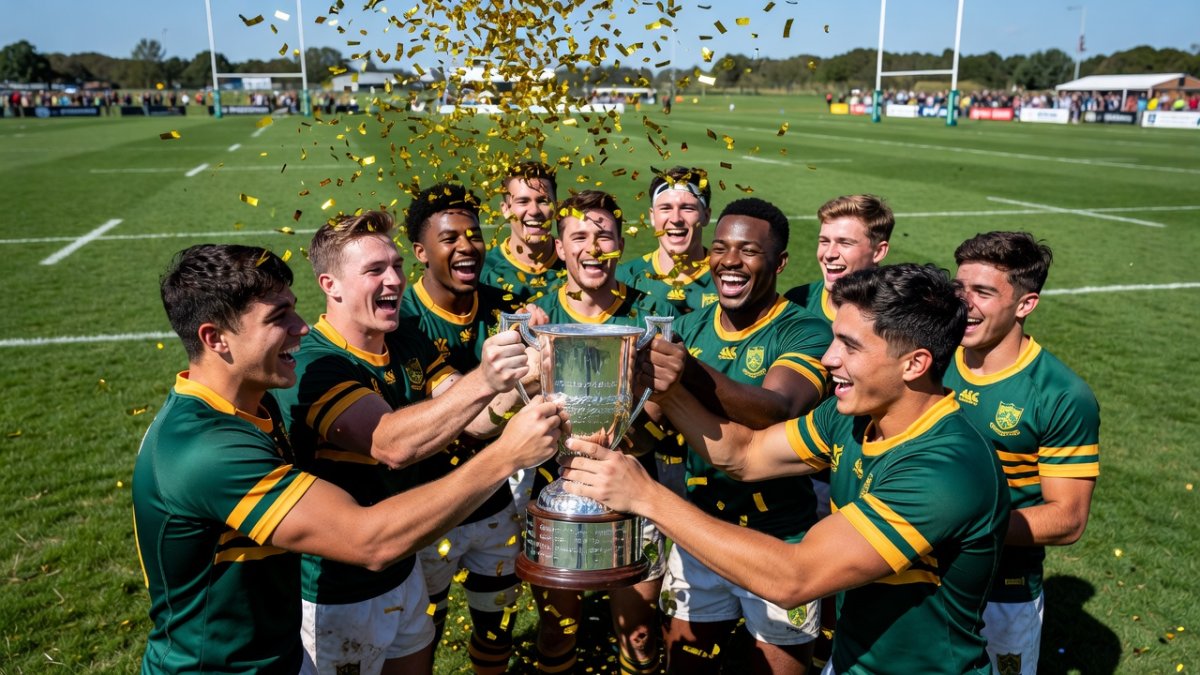
Junior Boks Complete a Golden Double
While the senior side were shutting out Wales in Durban, the Junior Springboks were writing their own piece of history in Tbilisi. They defended their U20 World Championship title with a win over France, completing a golden double on the same day that will be talked about for years.
Last year’s triumph in 2025, when they beat New Zealand 23-15, marked the first title since 2012. Now they have back-to-back crowns, the first time any South African age-group side has achieved that feat. The pathway investment from SARU is clearly paying dividends at every level.
Vusi Moyo and Jaco Williams are direct products of this system. Their senior debuts on the same day the juniors lifted another trophy shows the continuity that is turning South African rugby into a production line of world-class talent. The future looks bright, boet.
The U20 success in Tbilisi was built on the same tactical foundations visible at Kings Park: dominant set-piece play and structured attacking phases that wore down opponents. France, despite their physical pedigree, could not match the Junior Boks’ line-speed in defence or their ability to recycle quick ball from rucks. This mirrored the senior side’s approach and highlighted how SARU’s coaching curriculum has created a unified playing identity from school level upward.
Historically, South Africa’s age-group teams have often been the proving ground for future Springboks, with the 2008 and 2012 Junior World Cup winners supplying multiple senior caps. The current back-to-back titles represent a new peak, reflecting increased investment in high-performance centres across all nine provinces. The cultural significance cannot be overstated in a nation where rugby remains a powerful symbol of aspiration and unity, especially for young players from previously disadvantaged communities.
Within the Nations Championship ecosystem, this dual triumph strengthens South Africa’s position as the benchmark for talent development. Other nations are watching how the Springboks integrate juniors into senior squads so seamlessly, and the 2026 season may well set the template for how emerging competitions can accelerate player pathways while maintaining competitive excellence at the top level.
National Pride and What Comes Next
Three wins from three in the Nations Championship and the Springboks are flying. Rugby sits at the very heart of South African sporting culture, and days like this remind us why. From dusty school fields to the biggest stages, the journey is the same for every player who pulls on the green and gold.
The new generation is carrying the jersey forward with pride and skill. Home advantage will only grow as the tournament continues, and fans can expect more electric nights under the lights. The continuity from junior ranks to senior Test arenas is stronger than ever.
What a time to be a Springbok supporter. The machine is rolling, the kids are stepping up, and the nation is behind them every step of the way. Bring on the next challenge.
The emotional resonance of a Durban victory extends far beyond the scoreboard. In townships and suburbs alike, families gather around radios and screens to watch the Springboks, passing down stories of the 1995 World Cup triumph and the 2007 and 2019 victories that followed. This intergenerational connection fuels the passion that turns ordinary matches into national events, reinforcing rugby’s role as a cultural cornerstone that transcends language and background.
Looking ahead, the Nations Championship schedule presents stern tests on the road, where the Boks will need to replicate their set-piece dominance in unfamiliar conditions. Yet the depth shown in Durban, combined with the Junior Boks’ parallel success, suggests the squad is equipped for sustained excellence. Erasmus has already hinted at further experimentation with attacking shapes, ensuring the team evolves while staying true to its physical identity.
Ultimately, performances like the 43-0 demolition serve as both celebration and statement. They honour the past while building the future, reminding every South African that the green and gold remains a beacon of excellence, unity, and hope on the global stage. The road ahead is long, but the machine shows no signs of slowing.
Tags: Springboks, Wales, Durban, Nations Championship, Rassie Erasmus, Vusi Moyo, Jaco Williams, Junior Springboks
By Dante Williams, Staff Writer
This article was produced with AI-assisted research and editorial support. Reporting is based on sources cited in the article.
What's Your Reaction?
 Like
0
Like
0
 Dislike
0
Dislike
0
 Love
0
Love
0
 Funny
0
Funny
0
 Wow
0
Wow
0
 Sad
0
Sad
0
 Angry
0
Angry
0

Breaking News and Investigations Correspondent at Global1.News. Based in London, covering global breaking news, security, and investigative stories. Known for digging deeper and connecting the dots across continents.












Comments (0)