
US-Iran Strikes Hit Night 7 as Islamabad MoU Collapses — 50 Dead, Oil at $82 and Climbing
US-Iran strikes hit night 7 after Islamabad MoU collapse. Trump ended deal post-Hormuz attacks; CENTCOM raids continue. 50 Iranians dead, 2 US killed. Oil at $82 (+4%), up 12% since Friday. Gulf infrastructure hit. Atlanta feels pump pain and midterm stakes.
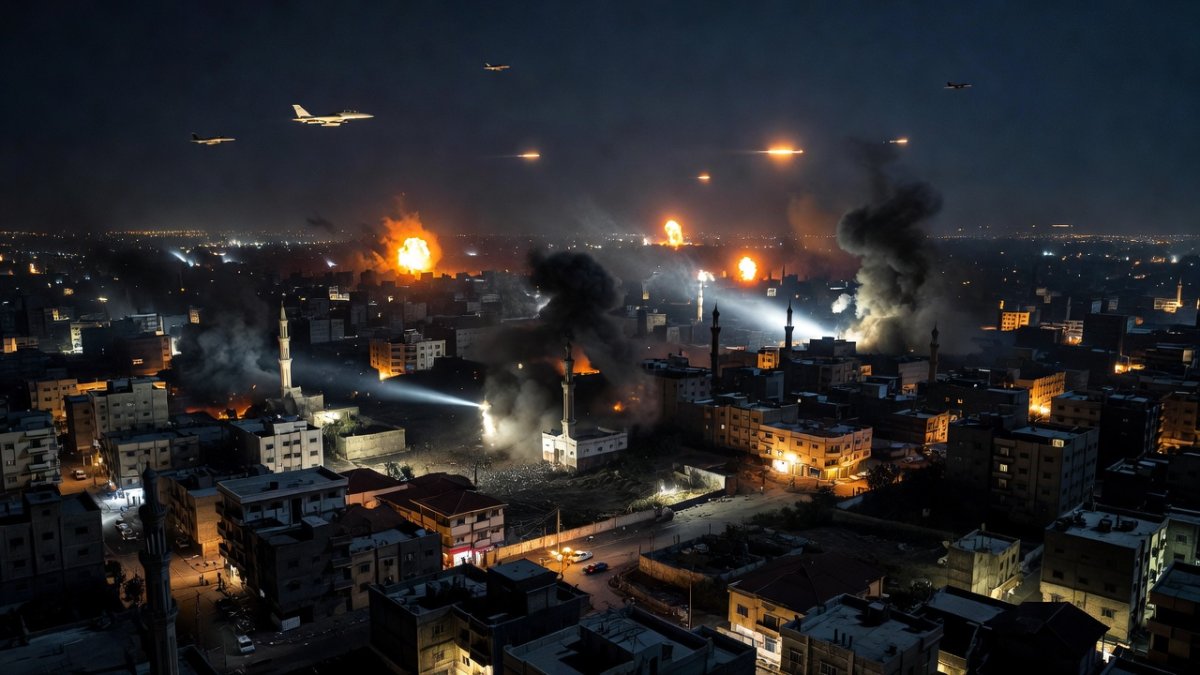
Midnight Raids and a Shattered Truce Leave the Gulf on Edge
Global1.News has confirmed through multiple wire services and official statements that the United States and Iran have now traded blows for a seventh straight night, turning what was supposed to be a fragile pause into open confrontation. The Islamabad Memorandum of Understanding, that June 2026 interim arrangement everyone in Washington and Tehran pretended might hold, is effectively dead. Iran’s Deputy Foreign Minister Kazem Gharibabadi put it bluntly: the US “violated and suspended all its commitments,” and Iran has “likewise suspended all our own commitments.” From my desk here in Atlanta, watching the overnight feeds, this feels less like diplomacy failing and more like both sides deciding the gloves were never really on.
President Trump called the MoU “over” ten days ago at the NATO summit in Ankara, right after Iranian attacks on tankers near the Strait of Hormuz. He reimposed the naval blockade on Iranian ports and yanked the sanctions waiver on Iranian oil exports. CENTCOM followed with precision raids on surveillance sites, military logistics infrastructure, underground weapons storage, and maritime capabilities inside Iran. Facts first: these are not abstract targets. They are the backbone of Iran’s ability to threaten shipping lanes that still carry a huge slice of the world’s energy.
Iran’s Health Ministry reports at least 50 killed and more than 500 injured in US strikes since July 6. Two US service members were killed in Jordan—the first American combat deaths since the April truce—and one more is listed as missing in action. That lands hard for military families across Georgia and the rest of the country. We do not get to treat those numbers as background noise.
What the Islamabad MoU Promised and Why It Crumbled
The deal was never a full peace treaty. It was a stopgap: limited sanctions relief in exchange for Iran dialing back harassment in the Strait of Hormuz and freezing certain enrichment and militia activities. Both sides now say the other broke it first. Trump’s team points to the tanker attacks. Tehran points to the reimposed blockade and the waiver revocation. Kazem Gharibabadi’s statement makes clear Iran considers every commitment suspended. Esmaeil Baghaei, the Foreign Ministry spokesman, insists Iran “has not sought war and has only defended itself in the imposed war.”
Timeline matters. Trump’s declaration came July 7-8 in Ankara. The current round of US raids has run nightly since roughly July 11-12, reaching night seven by July 18. Iran’s retaliation has focused on US-allied Gulf states rather than direct continental strikes, a pattern that keeps the conflict regional for now but still dangerous. Oil markets noticed immediately. WTI crude sat at $82 a barrel, up 4 percent on the day, after jumping 12 percent since Friday according to OilPrice.com. China’s crude imports have already sunk to a decade low because of the Hormuz uncertainty.
Here in Atlanta we feel it at the pump before the politicians finish their talking points. Midterm elections are four months away. Trump wants lower energy prices; this strategy has so far produced the opposite. That is not opinion. That is the price board.
The MoU’s collapse also removes the thin legal cover both sides used to claim restraint. Once the paper is shredded, every subsequent strike becomes easier to justify as self-defense. That is how limited fights become grinding ones.
CENTCOM’s Seventh Night and the Human Cost Inside Iran
US Central Command described the latest wave as focused on “surveillance sites, military logistics infrastructure, underground weapons storage and maritime capabilities.” One concrete result: the Bunji desalination plant in Jask, southern Iran, was completely destroyed. Twenty villages lost their water supply; roughly 10,000 people are affected. Tehran calls this deliberate targeting of civilian infrastructure and is already using the language of war crimes. Washington maintains the plant had dual-use military value. Independent verification is thin on the ground, so we report both claims and the casualty figures Iran’s Health Ministry has released: 50 dead, more than 500 wounded since July 6.
Two American service members killed in Jordan and one missing mark the first US combat fatalities since the spring truce. Those deaths occurred amid Iranian drone and missile fire that also reached Kuwait and Bahrain. For families at Fort Moore or Robins Air Force Base, the abstract “regional contingency” just became a folded flag risk again. That reality should sit heavier in every stateside conversation about escalation.
I will not pretend the targeting lists are clean. Desalination plants keep people alive in the desert. Destroying one creates immediate humanitarian pressure even if the intent was military. At the same time, Iran’s own strikes on power and water facilities in Kuwait show both sides are willing to hit the systems civilians rely on. That is the ugly symmetry of this round.
Iran’s Counterstrikes Across the Gulf
The Islamic Revolutionary Guard Corps answered with drones and missiles. In Kuwait, two power and water desalination plants were hit; airspace closed; firefighters wounded. Bahrain heard air-raid sirens and told residents to shelter. Jordan took fire at the US base at Azraq; the IRGC claims two fighter jets destroyed there. IRGC naval forces say they struck a US military fuel pier at Kuwait’s al-Ahmadi port and a warplane assembly site at Bahrain’s Sheikh Isa Air Base.
These are not symbolic pinpricks. Hitting desalination and power in the Gulf in July is a direct attack on habitability. Bahrain’s shelter order and Kuwait’s airspace closure show how quickly commercial aviation and daily life seize up. Esmaeil Baghaei’s line that Iran is only defending itself collides with the geography: the missiles landed on the soil of US partners, not just US bases.
Hamzeh Pour has been referenced in Iranian military communications surrounding the naval actions, underscoring that the IRGC is running a multi-domain response rather than isolated rocket fire. The pattern is clear—pressure the hosts of American forces until those hosts start asking Washington how much longer the protection is worth the blowback.
From an Atlanta newsroom the distance feels shorter when you realize Gulf instability travels through the price of jet fuel, shipping rates, and eventually the cost of goods on shelves in Buckhead and College Park.
Oil Shock, Midterms, and the Atlanta Kitchen-Table Test
WTI at $82, already up 4 percent, after a 12 percent climb since Friday, is not a blip. China’s imports at a decade low signal that the world’s biggest buyer is pulling back hard. Every dollar at the pump is a tax on working families who do not have time for geopolitical nuance. Trump’s explicit goal was cheaper energy heading into November. The current trajectory undercuts that goal in real time.
Georgia drivers are already doing the math. A sustained Hormuz disruption does not stay in the Strait; it shows up in diesel for the trucks that stock Kroger and in the airfare that determines whether families can fly to see relatives. Military households feel a second hit: deployment tempo and the knowledge that “missing in action” is no longer a phrase from another decade.
Politicians will spin. Markets will reprice. The facts on the board right now are higher crude, suspended diplomacy, and casualties on both sides. That is the kitchen-table test, and it is failing.
Competing Claims Over the Strait of Hormuz
Iran insists it retains the right to control shipping in the Strait under the now-suspended MoU. Trump says the waterway must stay open to all traffic. Those two sentences cannot coexist. The tanker attacks that triggered Trump’s Ankara announcement sit at the center of the dispute. Once the MoU is gone, the legal and political restraints that kept tit-for-tat from becoming free-for-all are gone with it.
CENTCOM’s repeated night raids on maritime capabilities are an attempt to degrade Iran’s ability to close or menace the Strait. Iran’s counter-moves against Gulf infrastructure are an attempt to raise the cost of that campaign for every US partner. Neither side has shown an off-ramp in the last 72 hours.
Baghaei’s formulation—“imposed war”—and Gharibabadi’s suspension language tell us Tehran has moved to a wartime information posture. Washington’s reimposed blockade and waiver revocation do the same. When both capitals speak in the past tense about the peace paper, the risk of miscalculation spikes.
War-Crimes Rhetoric and the Information Battle
Tehran is already accusing the United States of targeting civilian infrastructure and committing war crimes over the Bunji plant and other sites. Washington rejects the framing and points to the military utility of the targets plus Iran’s own strikes on Kuwaiti water and power. In the absence of neutral inspectors on the ground, the public is left with dueling statements and casualty counts. Iran’s Health Ministry numbers—50 killed, 500-plus injured—are the most specific figures available; they deserve to be reported as such, not dismissed or inflated.
The information fight matters because it shapes third-party support. Gulf states hit by Iranian missiles have their own populations to answer to. American voters have midterms and gas receipts. Neither audience is moved by vague claims; they are moved by water plants offline, jets claimed destroyed, and service members killed or missing.
I have no patience for either capital’s purest narrative. The desalination plant is destroyed; 10,000 Iranians are without water. Two Americans are dead and one is missing. Kuwaiti firefighters are wounded. Those are the data points that cut through the spin.
What Americans Should Do Right Now
First, track your own exposure. If you drive, budget for volatility at the pump; the 12 percent crude jump since Friday is already working its way downstream. Second, contact your representatives—especially if you are in a military community—and demand clear, public objectives and a defined end state rather than open-ended raids. Third, support the families of the two service members killed and the one missing; local USO and base family readiness groups are the practical channel. Fourth, treat every official statement from Washington or Tehran as a claim to be checked against the casualty figures, the oil price, and the status of Gulf infrastructure, not as gospel.
This is not abstract foreign policy. It is the price of diesel in Georgia, the safety of troops who train at our bases, and the stability of a waterway that still sets the global energy floor. The Islamabad MoU is suspended. The strikes continue. The costs are already landing at home. Stay sharp, stay factual, and do not let either side’s talking points replace the body count or the price board.
By Jessica Ali, Staff Writer
This article was produced with AI-assisted research and editorial support. Reporting is based on sources cited in the article.
What's Your Reaction?
 Like
0
Like
0
 Dislike
0
Dislike
0
 Love
0
Love
0
 Funny
0
Funny
0
 Wow
0
Wow
0
 Sad
0
Sad
0
 Angry
0
Angry
0

Editor-in-Chief at Global1.News. Atlanta-based journalist who cuts through the BS and tells it like it is. Lead anchor, host, and the voice you hear when the spin stops and the truth starts.












Comments (0)