
Two Chinese Nabbed in Nominee Bust in Bangkok Police Raids
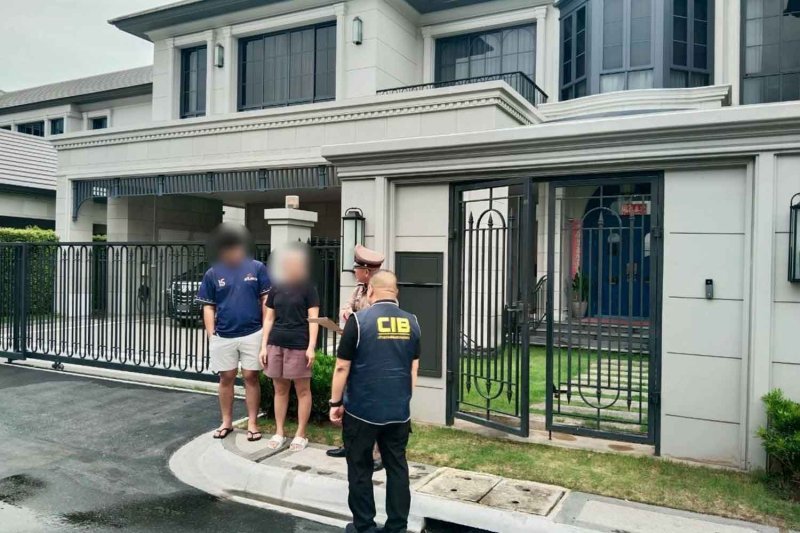
Two Chinese Nabbed in Nominee Bust — Royal Thai Police Crack Down on Foreign Property Loopholes Bangkok, Thailand — The Economic Crime Suppression Division of the Royal Thai Police arrested two Chinese nationals in a coordinated operation targeting nominee-linked property networks across five locations in Bangkok this week. The arrests, carried out on Friday at luxury residence
Two Chinese Nabbed in Nominee Bust — Royal Thai Police Crack Down on Foreign Property Loopholes
Bangkok, Thailand — The Economic Crime Suppression Division of the Royal Thai Police arrested two Chinese nationals in a coordinated operation targeting nominee-linked property networks across five locations in Bangkok this week. The arrests, carried out on Friday at luxury residences in Bang Kapi and other districts, represent the latest enforcement action against alleged use of Thai nominees to conceal foreign ownership of prime real estate. Investigators say the network used Thai nominees and corporate structures to acquire high-value homes and condominiums worth hundreds of millions of baht, with one suspect accused of coordinating transactions for Chinese clients in exchange for commissions. Both suspects have been charged under foreign business and labour-related laws and deny all allegations. The operation signals the Thai government's renewed commitment to enforcing long-standing restrictions on foreign land ownership, a sensitive issue that touches on national sovereignty, housing affordability, and Thailand's relationship with foreign investors — particularly from China, which has become the largest source of foreign capital in Bangkok's luxury property market.
Details of the Coordinated Raid Operation
The Economic Crime Suppression Division launched the raids at 6 a.m. on Friday across five Bangkok sites. Officers first entered a high-rise condominium on Srinakarin Road in Bang Kapi district where they detained 34-year-old Chinese national Li Wei. Documents seized included share transfer agreements naming Thai nominees as majority shareholders in three limited companies that held title to properties valued at 187 million baht.
A second team moved to a villa compound in the Ekamai area of Watthana district and arrested 41-year-old Zhang Ming. Police recovered USB drives containing scanned land title deeds for condominiums in Sukhumvit Soi 24 and a townhouse in Lat Phrao district. The evidence showed monthly commission payments of 2.3 million baht transferred from Chinese bank accounts to a Bangkok intermediary.
Investigators also searched an office on Phayathai Road and a residence in Bang Na district. They collected 47 company registration certificates, 12 land title deeds, and mobile phones showing WeChat messages arranging nominee payments. Both men were taken to the Economic Crime Suppression Division headquarters on Phahonyothin Road for processing under the Foreign Business Act and labour laws.
The operation involved 28 officers and was coordinated with the Department of Business Development. Officials confirmed that the two suspects remain in custody at the Metropolitan Police Bureau detention facility while further financial records are examined.
Thailand's Foreign Property Ownership Framework
Thai law restricts foreign land ownership under the Land Code B.E. 2497 and the Foreign Business Act B.E. 2542. Foreigners may own condominium units up to 49 percent of a building's total floor area but cannot hold freehold title to land. The restrictions aim to preserve national sovereignty over territory, a principle rooted in Thailand's historical independence during the colonial era.
The Foreign Business Act lists 27 restricted businesses, including land trading and brokerage services that require Thai majority ownership. Violations carry fines up to 1 million baht and imprisonment of up to three years. The Board of Investment has occasionally granted exceptions for large-scale projects, yet residential property remains tightly controlled.
Local communities in Bangkok's older districts such as Dusit and Bang Rak have voiced concerns that nominee arrangements drive up housing prices for Thai families. Buddhist temples in these areas often host community meetings where residents discuss preserving neighbourhood character against foreign capital inflows.
Government agencies including the Department of Lands and the Securities and Exchange Commission continue to monitor corporate structures. Recent cabinet resolutions have directed stricter scrutiny of shareholding patterns in property companies to prevent indirect foreign control.
Nominee Networks and How They Operate
Nominee arrangements typically involve Thai citizens registering companies that list themselves as holding 51 percent or more of shares while foreign investors retain actual control through loan agreements or power of attorney documents. In the current case, investigators found that Thai nominees received monthly stipends of 35,000 baht each for allowing their names to appear on registration forms.
Legal arrangements exist when foreigners purchase condominium units directly within the 49 percent quota. Illegal nominee structures cross into criminal territory when they conceal land ownership or when Thai nominees act merely as fronts without genuine decision-making power. The Royal Thai Police have identified similar patterns in Phuket and Chiang Mai where foreign buyers target beachfront villas and mountain estates.
Thai cultural values emphasise community harmony and respect for national laws. Many local residents view these nominee schemes as undermining the spirit of the Land Code, which was enacted to protect Thai citizens' access to ancestral land. Village headmen in rural provinces often remind newcomers that property ownership carries responsibilities tied to Buddhist principles of stewardship.
Authorities have warned that Thai nominees who knowingly participate face charges of false registration and money laundering. In the Bangkok operation, police are tracing fund flows through Kasikorn Bank and Siam Commercial Bank accounts linked to the seized documents.
Impact on Bangkok's Luxury Real Estate Market
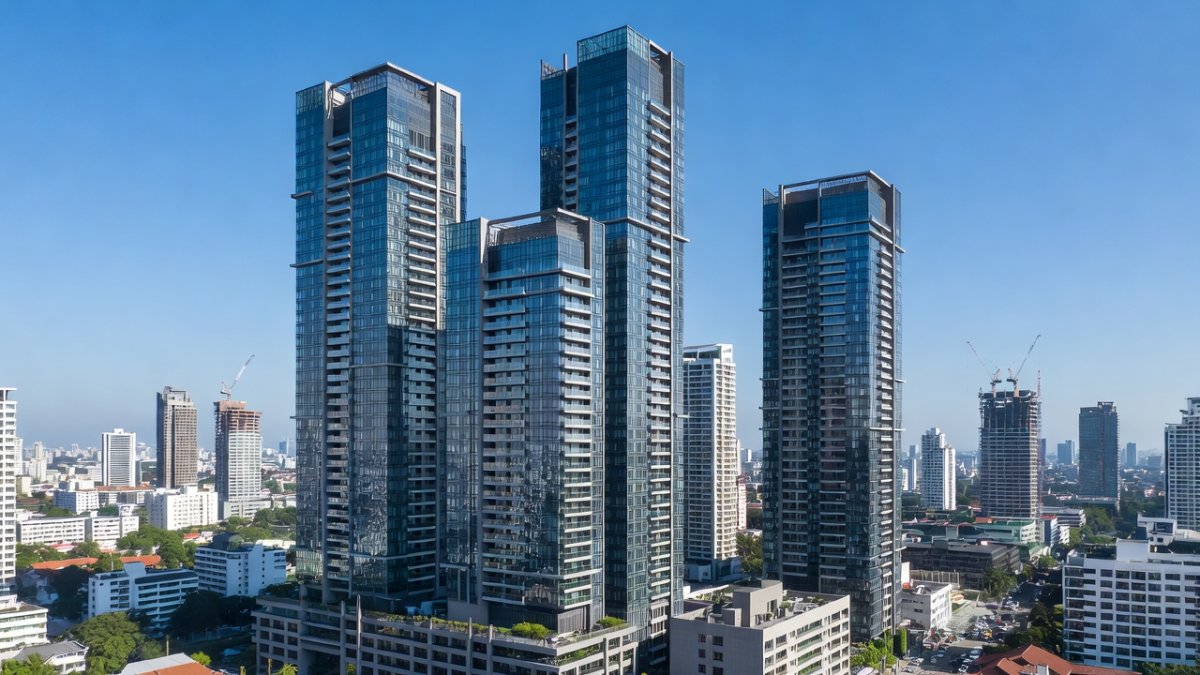
Chinese buyers have accounted for 38 percent of luxury condominium sales in Bangkok's central business district over the past three years, according to data from the Agency for Real Estate Affairs. Projects such as The Residences at Mandarin Oriental and Magnolias Waterfront Residences have drawn significant investment from Shanghai and Shenzhen clients.
The arrests have prompted several Bangkok developers to review their sales procedures. Companies including Sansiri and AP Thailand now require additional affidavits confirming that purchasers are not using nominee structures. Some projects in the Sukhumvit corridor have reported a temporary 12 percent dip in inquiries from Chinese clients since the raids.
Housing affordability remains a concern for middle-income Thai families in Bangkok. Average prices for new condominiums near the BTS Skytrain have risen 9 percent annually, partly attributed to foreign demand. Community groups in Phra Khanong district have petitioned the Bangkok Metropolitan Administration to increase social housing quotas.
Market analysts note that legitimate foreign investment continues through long-term leaseholds of 30 years, renewable under Thai civil law. Developers are shifting marketing emphasis toward these lease structures to maintain investor confidence while complying with ownership rules.
Royal Thai Police Enforcement and Broader Crackdown
The Economic Crime Suppression Division has expanded its task force to 45 officers following the Bangkok operation. Additional investigations are underway in Phuket, where three similar nominee cases involving Russian and Chinese nationals were opened last month, and in Chiang Mai, where land records in the Mae Rim district are under review.
Police Major General Somchai Ratanachai stated that the division will continue cross-checking company records with the Department of Business Development database. The agency has already flagged 186 companies for further examination across 12 provinces.
Enforcement aligns with broader government efforts to regulate foreign labour and business activities. The Ministry of Labour has increased inspections of work permits held by foreign property consultants in Bangkok's Silom and Sathorn areas.
Local police stations in tourist provinces have received training on identifying nominee red flags, such as Thai shareholders with no visible income or addresses outside Thailand. These measures aim to protect both national sovereignty and the integrity of Thailand's property registration system.
The Royal Thai Police have also partnered with the Anti-Money Laundering Office to trace financial flows connected to nominee operations. Banking records from Siam Commercial Bank and Kasikorn Bank are being analysed to map the full extent of the network, with investigators expecting to identify additional properties in Chon Buri and Nonthaburi provinces in the coming weeks. The operation has drawn praise from community leaders in Bang Kapi, who have long called for action against rising property costs driven by hidden foreign capital.
Implications for Thailand-China Relations and ASEAN
China remains Thailand's largest trading partner and a key source of tourism revenue, with 3.2 million Chinese visitors recorded in the first half of this year. The property enforcement actions occur alongside ongoing cooperation on infrastructure projects such as the Bangkok-Nakhon Ratchasima high-speed railway.
Thai officials have emphasised that the raids target illegal practices rather than Chinese investors as a group. The Ministry of Foreign Affairs has communicated this position through diplomatic channels to Beijing, stressing Thailand's commitment to fair treatment of all foreign nationals under the law.
Within ASEAN, neighbouring countries including Vietnam and Malaysia have implemented similar restrictions on foreign land ownership. Thai policymakers are studying these models to refine enforcement while maintaining the kingdom's welcoming stance toward legitimate investment.
Buddhist leaders in Bangkok have called for calm dialogue, noting that Thailand's long history of absorbing foreign influences can guide current policy. Community forums at temples such as Wat Pho have discussed balancing economic openness with cultural preservation, reflecting the gentle yet firm approach that characterises Thai governance.
Looking ahead, Thailand's ability to balance foreign investment with national ownership rules will continue to shape its property market and its reputation among international buyers. With the government signalling stronger enforcement through operations like Friday's raids, both Thai citizens and foreign investors can expect clearer boundaries around what is permissible — and what carries consequences. For now, the residents of Bang Kapi and other Bangkok districts watch closely, hopeful that consistent application of the law will preserve both affordable housing and the kingdom's traditional character in an increasingly globalised market. By Ann Srisawat, Staff WriterThis article was produced with AI-assisted research and editorial support. Reporting is based on sources cited in the article.
What's Your Reaction?
 Like
0
Like
0
 Dislike
0
Dislike
0
 Love
0
Love
0
 Funny
0
Funny
0
 Wow
0
Wow
0
 Sad
0
Sad
0
 Angry
0
Angry
0

Southeast Asia Correspondent at Global1.News. Based in Bangkok, covering Thai and Southeast Asian politics, economy, technology, and culture. Deep regional perspective on one of the world's most dynamic regions.















Comments (0)