
Amazon Drought Emergency: Brazil's 2026 Climate Crisis
Global1.News — June 2026. The Amazon, Earth’s largest rainforest and a vital climate regulator, stands on the brink of another catastrophic dry season. A new Al Jazeera English report titled “Dry spell casts pall over fate of Brazil's Amazon jungle” captures the growing alarm as scientists and officials brace for potentially historic water deficits across the basin. Amazonas De
Global1.News — June 2026. The Amazon, Earth’s largest rainforest and a vital climate regulator, stands on the brink of another catastrophic dry season. A new Al Jazeera English report titled “Dry spell casts pall over fate of Brazil's Amazon jungle” captures the growing alarm as scientists and officials brace for potentially historic water deficits across the basin.
Amazonas Declares Climate Emergency as El Niño Threatens Historic Drought
Manaus, Amazonas – Brazil, June 2026 — The Amazon basin faces its gravest water crisis since record-keeping began, as the convergence of a strengthening El Niño and rising global temperatures threatens to push Earth's largest rainforest past a critical tipping point.
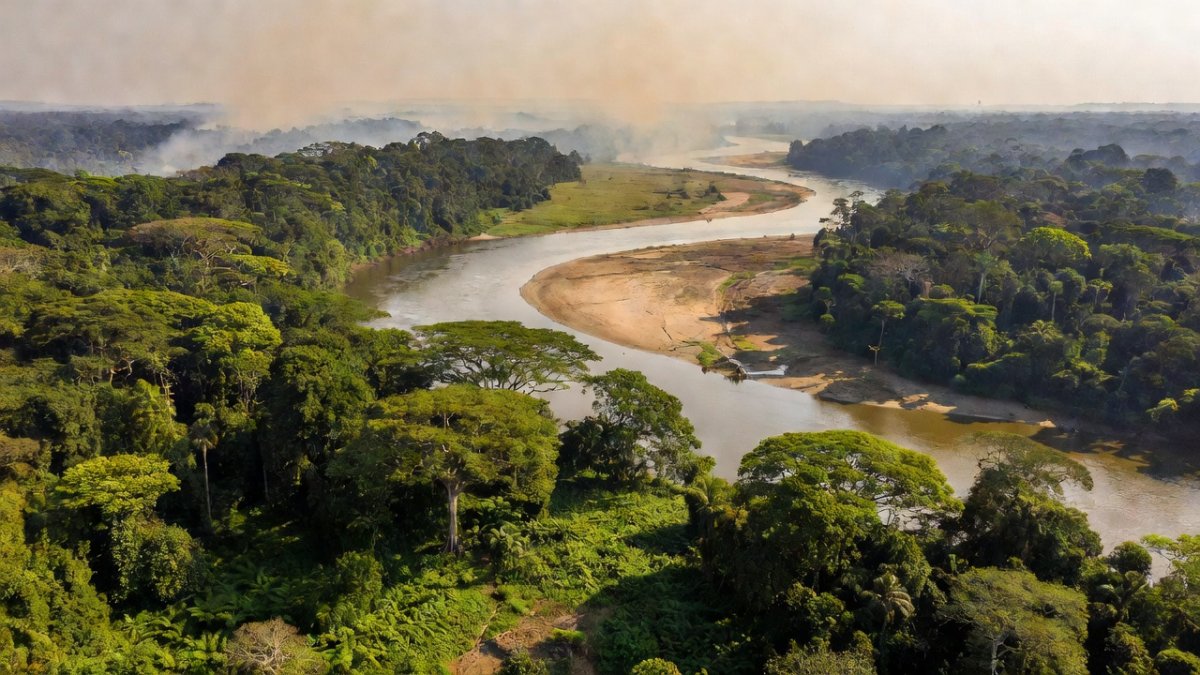
Amazonas Declares Climate Emergency
On June 9-11 2026, Amazonas state governor Roberto Cidade signed a formal climate and environmental emergency decree that will remain valid for 180 days. The measure anticipates a potentially record-breaking dry spell driven by below-average rainfall, elevated temperatures, and the return of a strong El Niño in the second half of 2026. Officials described the decree as a precautionary step that unlocks faster mobilization of firefighting resources, emergency funding, and inter-agency coordination before conditions deteriorate further. Governor Cidade specifically warned of prolonged dry conditions, record heat waves, and an elevated risk of queimadas across the state’s vast territory. By declaring emergência climática early, authorities aim to avoid the chaotic response that followed the 2023-2024 drought, when river levels collapsed and communities were left isolated for weeks. The 180-day window provides legal flexibility to pre-position aircraft, expand brigadista teams, and coordinate with federal agencies. This decisive action reflects the growing recognition that climate extremes in the Amazon now arrive with increasing frequency and intensity, demanding proactive governance rather than reactive crisis management.
El Niño Returns to a Warming World
Scientists have warned since early 2026 that atmospheric and oceanic conditions favor the development of a strong El Niño event during the second half of the year. El Niño disrupts normal precipitation patterns across South America, typically bringing drier conditions to northern Brazil while increasing rainfall in southern Brazil, Uruguay, and Argentina. In the Amazon basin, the phenomenon sharply reduces humidity, lowers river levels, and dramatically raises fire risk. Climate change is expected to amplify these effects, potentially producing a record-breaking El Niño in 2026-2027. The previous 2023-2024 event already demonstrated the destructive potential: the Rio Negro at Manaus reached historic lows, navigation halted, and millions faced water shortages. With global temperatures higher than during previous cycles, experts fear the upcoming event could push ecosystems beyond critical thresholds. Higher baseline heat combined with reduced rainfall creates a dangerous feedback loop that dries vegetation faster and ignites more readily. The convergence of natural variability and anthropogenic warming means the Amazon faces conditions that are both more frequent and more severe than historical norms.
Amazon Fires and the Fight to Contain Them
Brazil has responded by hiring a record number of brigadistas and deploying additional aircraft and helicopters for aerial firefighting across the Amazon and neighboring biomes. The Amazon Fund has been expanded beyond the rainforest to support operations in the Cerrado and Pantanal, where extreme heat and water deficits are also projected. Authorities have adopted a “war room” approach that integrates real-time climate forecasts with rapid deployment protocols. The Fund now finances new firefighter contracts, equipment purchases, and expanded monitoring networks. Despite these efforts, illegal activities continue to heighten vulnerability. Projections indicate that without aggressive containment, fires could consume vast areas already stressed by prior droughts. The strategy emphasizes prevention through early detection and community involvement, yet the scale of the challenge remains immense. Record brigadista numbers and expanded aerial capacity represent the most robust response to date, but success will depend on sustained funding and swift action once the dry season intensifies.
Rivers Running Dry
The Rio Negro at Manaus reached record-low levels during the 2023-2024 drought, disrupting navigation, water supply, and daily life for millions. Similar or worse conditions are forecast for late 2026. Low river stages isolate entire regions, preventing boats from reaching markets or delivering medicine. Fish die-offs have already been reported as water temperatures rise and dissolved oxygen drops, stressing aquatic ecosystems that sustain both wildlife and human communities. In 2024 alone, Brazil lost approximately 1.8 million hectares of primary Amazon forest, with illegal gold mining and cattle ranching driving much of the degradation. These activities compound the effects of drought by removing vegetation that helps retain moisture. The 2023-2024 event affected millions across the basin, while Bolivia recorded roughly 20 flood-related deaths in December 2025 when erratic rains finally arrived. Navigation on major tributaries becomes impossible for weeks, cutting off food supplies and medical evacuations. The combination of extreme low water and high temperatures creates a cascade of ecological and humanitarian consequences that reverberate far beyond the riverbanks.
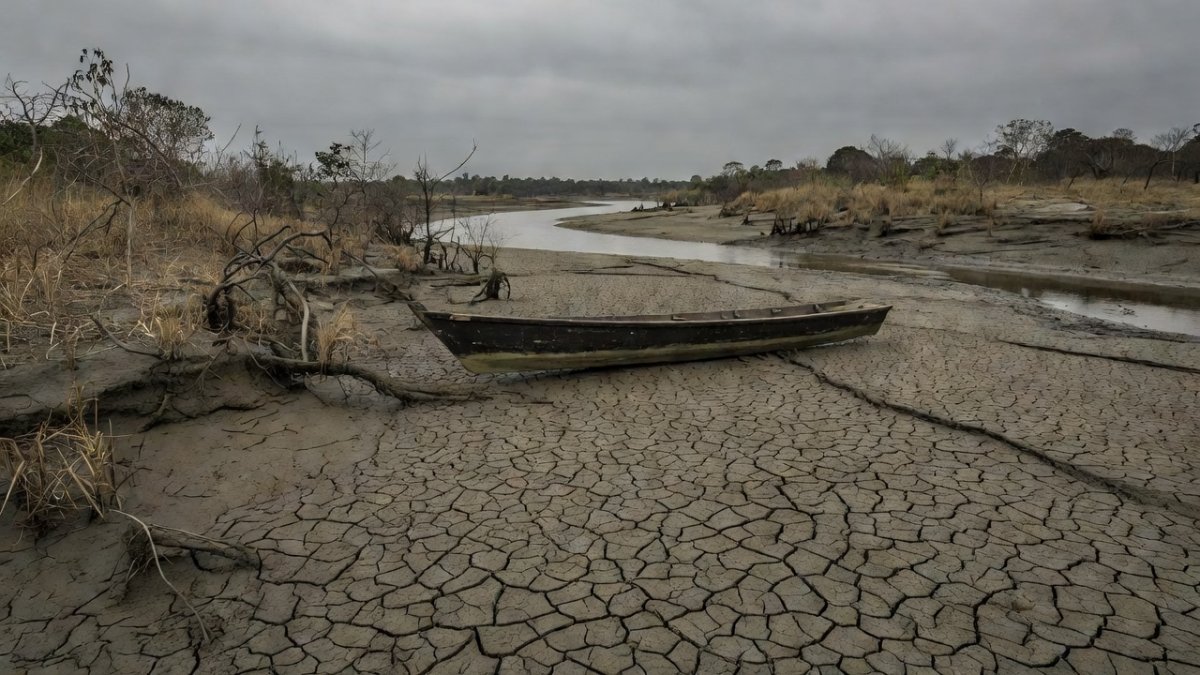
Lives on the Frontline: Riverside Communities
Ribeirinho communities remain the most vulnerable populations, depending entirely on rivers for transport, fishing, agriculture, and drinking water. Warming waters trigger mass fish mortality, reducing protein sources and income. When river levels drop, villages become inaccessible, blocking access to healthcare, schools, and essential goods. Altered flood cycles damage floodplain agriculture, while wildfire smoke triggers widespread respiratory illness. Scarce or contaminated water increases the incidence of waterborne diseases, and extreme heat adds physiological stress in areas with minimal infrastructure. These communities have adapted to seasonal rhythms for generations, yet the accelerating pace of climate extremes now overwhelms traditional coping mechanisms. Limited government presence leaves many families to manage crises alone. The human cost of each drought compounds over time, eroding health, education, and economic stability. Protecting ribeirinhos requires targeted early-warning systems, mobile health units, and sustained investment in resilient water infrastructure that current emergency decrees only begin to address.
A Global Crisis Anchored in the Amazon
The Amazon functions as a critical global carbon sink, yet deforestation and fires currently release 12-15 percent of worldwide greenhouse gas emissions. Scientists warn that crossing a tipping point could liberate 200-250 billion tonnes of CO₂, accelerating planetary warming. Brazil has reported significant reductions in deforestation rates, with some monthly comparisons showing declines exceeding 60 percent, demonstrating that policy and enforcement can yield rapid results. Nevertheless, pressure from illegal mining, agriculture, and fires persists. When deforestation rates fall, the forest exhibits greater resilience, but repeated extreme droughts test that resilience. The Amazon’s fate is therefore inseparable from global climate stability. International support through mechanisms such as the Amazon Fund remains essential, yet domestic political will and enforcement capacity ultimately determine whether the forest can continue absorbing carbon or shift toward net emissions. The stakes extend far beyond Brazil’s borders.
The Bottom Line — What Comes Next
Prevention, continuous monitoring, and protection of the most vulnerable groups must guide the response. Expanded brigadista forces and the war-room forecasting model offer promising tools, yet long-term success requires addressing root drivers of degradation. Ribeirinho communities need dedicated support systems that recognize their unique dependence on river health. Brazil’s recent deforestation reductions prove progress is possible, but sustaining gains amid a strengthening El Niño demands vigilance. The 180-day emergency decree provides a critical window for preparation. Whether authorities use it effectively will determine if the Amazon avoids the worst outcomes of the 2026-2027 dry season or repeats the suffering witnessed in 2023-2024. The world watches as the Amazon’s tipping point draws nearer. By Elena Vasquez, Staff Writer
This article was produced with AI-assisted research and editorial support. Reporting is based on sources cited in the article.
What's Your Reaction?
 Like
0
Like
0
 Dislike
0
Dislike
0
 Love
0
Love
0
 Funny
0
Funny
0
 Wow
0
Wow
0
 Sad
0
Sad
0
 Angry
0
Angry
0

Latin America Correspondent at Global1.News. Based in Mexico City, covering politics, economics, energy, and culture across the region. Brings an on-the-ground perspective to stories spanning from the Rio Grande to Patagonia.














Comments (0)