
Trump's Medical Marijuana Reclassification and Latin America's Response
In April 2026, the Trump administration's finalization of medical marijuana reclassification to Schedule III marked a pivotal shift in U.S. drug policy, easing restrictions on state-licensed operations and FDA-approved products while leaving recreational use untouched. This development carries profound implications for Latin America, where countries like Mexico, Colombia, and U
Trump's Medical Marijuana Reclassification Reshapes Latin America's Cannabis Trade and Climate Dynamics
Washington, D.C. – United States, April 15, 2026 — The U.S. Department of Justice and Drug Enforcement Administration completed the reclassification of state-licensed medical marijuana and FDA-approved marijuana products to Schedule III in April 2026, with Interim Attorney General Todd Blanche signing the order. This adjustment unlocks tax relief for medical cannabis businesses by allowing deductions of ordinary business expenses previously barred under IRC Section 280E for Schedule I substances. Operators now gain pathways to federal DEA registration through an expedited 60-day window, alongside updated rules for research, handling, and improved banking access. Recreational cannabis stays federally illegal as a Schedule I substance, and no national recreational market emerges from this action. Hemp regulations continue updating separately to maintain a total THC threshold of 0.3 percent or less on a dry weight basis. Al Jazeera English's "This is America" program examined these developments in depth through its report titled "Weed restrictions eased as Trump reclassifies medical marijuana." The process built upon rulemaking initiated under the prior administration, generating mixed public reactions of industry optimism alongside reformer skepticism for broader changes. Latin American nations watch closely, given their established medical cannabis laws and export ambitions that could align with evolving U.S. federal standards.
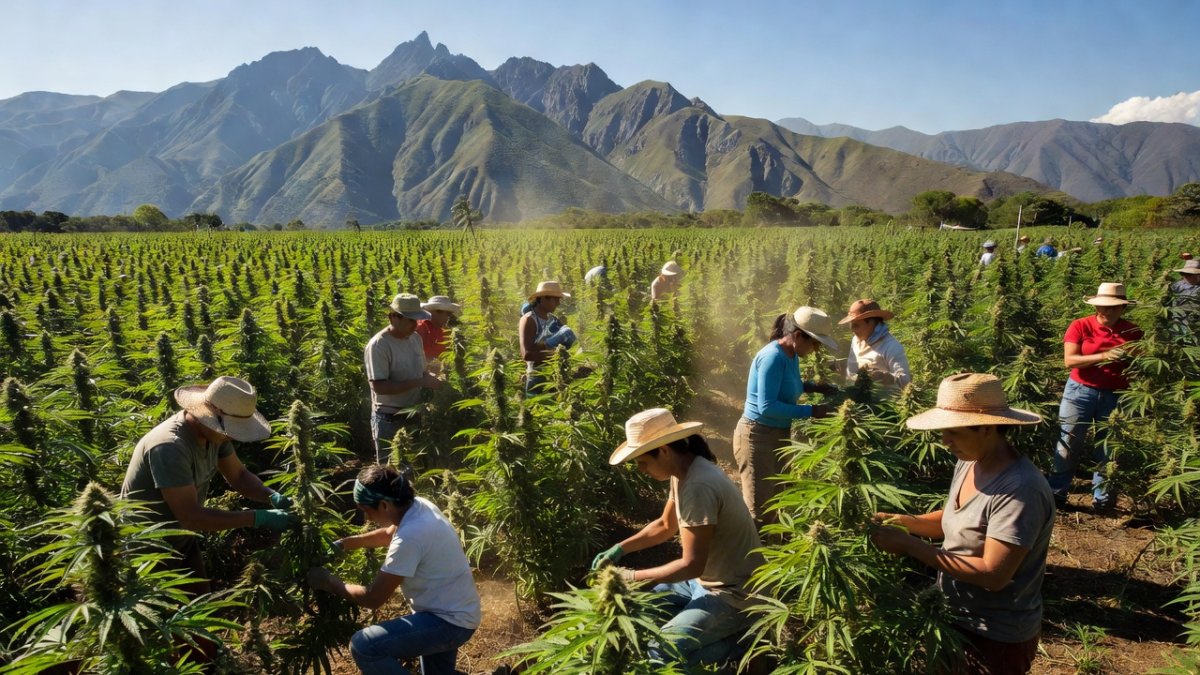
What the Schedule III Reclassification Actually Means
The reclassification delivers concrete operational benefits to medical cannabis entities in the United States. Tax relief stands out as a primary gain, permitting businesses to deduct standard expenses that IRC Section 280E had previously prohibited for Schedule I items. Interim Attorney General Todd Blanche formalized this through the April 2026 order, enabling medical operators to achieve greater financial stability. DEA registration becomes accessible via an expedited 60-day application window, streamlining federal compliance for licensed producers and processors. Research and handling protocols receive updates that facilitate scientific inquiry without prior Schedule I barriers. Banking access improves as institutions face reduced regulatory hurdles when serving these now reclassified entities. These shifts do not extend to recreational cannabis, which remains Schedule I and federally illegal. No national recreational market forms as a result. Hemp rules proceed on a separate track, preserving the 0.3 percent total THC limit on a dry weight basis. For Latin American stakeholders, these U.S. adjustments signal potential alignment opportunities in medical trade, particularly as countries like Colombia prepare export strategies targeting regulated markets. The changes emphasize medical frameworks while maintaining strict boundaries on broader legalization.
Environmental considerations also surface in this context. U.S. indoor cultivation often demands high energy inputs, contrasting with Latin America's outdoor growing potential that could lower overall carbon emissions if trade expands. This reclassification thus positions medical cannabis as a bridge for hemispheric cooperation on sustainable practices.
The Road to Rescheduling — A Long Effort
The reclassification process originated from rulemaking efforts launched during the previous administration, reflecting years of advocacy and regulatory review. Trump's DOJ and DEA finalized the Schedule III shift in April 2026, with Interim Attorney General Todd Blanche affixing his signature to complete the transition. Public sentiment divides between industry supporters celebrating tax and banking relief and reformers expressing skepticism over the absence of recreational reforms. Al Jazeera English's "This is America" program provided extensive coverage in the report "Weed restrictions eased as Trump reclassifies medical marijuana," highlighting both domestic industry responses and international ripple effects. The YouTube video "Weed restrictions eased as Trump reclassifies medical marijuana | This is America" at https://www.youtube.com/watch?v=DY8pn9Tn7O8 further details these nuances for global audiences. Latin American governments interpret this timeline as evidence of gradual U.S. policy evolution that could influence their own regulatory harmonization efforts. Mexico's COFEPRIS, Colombia's INVIMA, and Uruguay's IRCCA monitor these developments for export and compliance strategies. The measured pace underscores how federal adjustments build incrementally rather than through abrupt overhauls.
Climate linkages emerge here as well. Latin America's outdoor cultivation models offer lower-energy alternatives to U.S. indoor operations, potentially reducing the sector's water and electricity demands if cross-border medical trade grows under the new framework.

Mexico: The World Cup Co-Host Without a Cannabis Framework
Mexico legalized medical cannabis in 2017 yet continues without a fully regulated broad market, leaving COFEPRIS to manage limited approvals amid ongoing legislative gaps. As the sole 2026 World Cup co-host lacking a comprehensive cannabis framework, Mexico faces unique pressures ahead of the international tournament. U.S. consular guidance explicitly warns travelers that importing drugs, including medical marijuana, remains illegal and carries severe penalties under Mexican law. This creates practical challenges for fans and participants navigating cross-border movement during the event. The absence of robust regulation contrasts with the U.S. Schedule III progress, potentially complicating bilateral health and trade discussions. Economic opportunities for Mexican producers stay constrained without expanded licensing, limiting competition in the regional medical space. Patients in Mexico encounter inconsistent access compared to neighbors with more developed systems. The World Cup spotlight may accelerate domestic reforms, yet current U.S. consular advisories reinforce enforcement priorities over liberalization. Latin American observers note how Mexico's position highlights disparities in hemispheric drug policy evolution.
From a climate perspective, Mexico's potential for outdoor cultivation could align with lower-carbon goals if frameworks advance, offering sustainable alternatives to energy-intensive U.S. production methods.
Colombia and Uruguay: Latin America's Cannabis Export Leaders
Colombia legalized medical cannabis in 2015 and built one of the region's strongest licensing regimes through INVIMA oversight for cultivation, processing, and export. Ideal growing conditions support high-quality output, with exports directed primarily toward European medical markets in Germany and the United Kingdom. Global oversupply and resulting price pressures challenge Colombian producers despite these advantages. Uruguay pioneered early medical legalization and advanced to recreational regulation in 2013 via a state-controlled system involving pharmacies, cannabis clubs, and home cultivation options. IRCCA manages this framework, which also enables exports of medical cannabis derivatives. Both nations position themselves as export leaders, yet they must adapt to U.S. market signals from the Schedule III reclassification. The changes could ease certain federal barriers for international medical partnerships without creating recreational pathways. Environmental benefits arise from Latin America's outdoor methods, which consume less energy than indoor U.S. grows and support climate-conscious trade expansion. These countries demonstrate how early regulatory action fosters export readiness amid shifting global standards.
Price pressures from oversupply underscore the need for diversified markets, where U.S. medical access improvements might provide relief if trade agreements evolve.
What This Means for Latin America
U.S. rescheduling influences regional drug policy by modeling incremental medical reforms that Latin American institutions can reference. Economic implications include expanded opportunities for producers in Colombia and Uruguay to supply U.S. medical channels once DEA registrations stabilize. Mexico may accelerate its own framework development to avoid exclusion from emerging trade flows. Potential for expanded medical cannabis trade grows as banking and research rules ease, allowing smoother cross-border transactions. Environmental angles prove especially relevant: Latin American outdoor cultivation presents a lower-carbon pathway compared to U.S. indoor operations reliant on high energy use. This aligns with climate priorities by reducing water consumption and emissions associated with controlled-environment agriculture. INVIMA and IRCCA stand ready to leverage these dynamics for sustainable exports, while COFEPRIS in Mexico evaluates compliance upgrades. Regional economies could benefit from job creation in cultivation sectors if harmonized standards emerge. Patients across Latin America may gain indirect access improvements through increased research collaboration. The reclassification thus serves as a catalyst for policy dialogue rather than immediate overhaul.
Climate-focused analysis reveals how these shifts favor outdoor Latin American models that minimize environmental footprints in global supply chains.
The Bottom Line — What Comes Next
Upcoming hearings scheduled for June 29, 2026, will shape implementation details and determine the pace of DEA registration expansions. If implemented fully, the Schedule III framework could stimulate medical trade with Latin American partners, boosting economies in Colombia and Uruguay while prompting Mexico toward regulatory completion ahead of the World Cup. Patients stand to gain from enhanced research and product availability across borders. Regional regulatory harmonization remains essential to maximize benefits and address oversupply challenges. Environmental sustainability gains traction as outdoor cultivation in Latin America offers climate advantages over intensive U.S. indoor methods. Elena Vasquez emphasizes that these developments invite coordinated action among COFEPRIS, INVIMA, and IRCCA to align health, trade, and climate objectives. Forward momentum depends on careful navigation of remaining Schedule I restrictions and separate hemp updates. Latin American nations hold strategic positions to influence and benefit from this evolving landscape.
The reclassification ultimately points toward pragmatic medical progress with hemispheric reach, provided stakeholders prioritize sustainable and equitable outcomes.
By Elena Vasquez, Staff WriterThis article was produced with AI-assisted research and editorial support. Reporting is based on sources cited in the article.
What's Your Reaction?
 Like
0
Like
0
 Dislike
0
Dislike
0
 Love
0
Love
0
 Funny
0
Funny
0
 Wow
0
Wow
0
 Sad
0
Sad
0
 Angry
0
Angry
0

Latin America Correspondent at Global1.News. Based in Mexico City, covering politics, economics, energy, and culture across the region. Brings an on-the-ground perspective to stories spanning from the Rio Grande to Patagonia.














Comments (0)