
Alberta Tornadoes Send Three to Hospital at Dillberry Lake
A video report from the scene, originally produced for CBC News and shared across Canadian broadcasters, captures the immediate aftermath of the severe weather that struck east-central Alberta on the evening of July 8, 2026. The footage shows emergency vehicles lining rural roads near Dillberry Lake Provincial Park and highlights the rapid mobilisation of federal and provincial
A video report from the scene, originally produced for CBC News and shared across Canadian broadcasters, captures the immediate aftermath of the severe weather that struck east-central Alberta on the evening of July 8, 2026. The footage shows emergency vehicles lining rural roads near Dillberry Lake Provincial Park and highlights the rapid mobilisation of federal and provincial resources in response to the confirmed tornadoes.
Two tornadoes touched down in a rural area 250 to 290 kilometres southeast of Edmonton, prompting Environment Canada to issue a critical alert at 7:23 p.m. MDT describing a dangerous and potentially life-threatening situation. The event has drawn attention to the coordination between federal institutions such as Environment Canada and the Royal Canadian Mounted Police and provincial bodies including Alberta Parks and Alberta Health Services.
Global1.News confirms that all 42 occupied campsites at Dillberry Lake Provincial Park were accounted for within six hours, illustrating the effectiveness of unified command structures established under Canadian emergency management protocols.
The Tornado Touchdowns
The first tornado formed southwest of Paradise Valley, a location approximately 250 kilometres southeast of Edmonton, and caused no reported structural damage according to initial assessments by the Northern Tornadoes Project. The second and more destructive tornado struck the campground at Dillberry Lake Provincial Park, situated 290 kilometres southeast of Edmonton near the Saskatchewan border and southeast of the hamlet of Chauvin.
Environment Canada records indicate the Dillberry Lake tornado developed rapidly after the 7:23 p.m. MDT alert, with the first RCMP calls arriving around 8:30 p.m. from campers reporting high winds and flying debris. Within two hours, a unified command post had been established, drawing on federal RCMP resources and provincial park officials to manage the incident under Alberta's emergency response framework.
David Sills, director of the Northern Tornadoes Project, later confirmed both touchdowns through radar analysis and ground surveys, noting that the Dillberry Lake event produced a visible rotation spanning roughly the size of a football field as described by multiple witnesses.
Emergency Response and Warnings
Environment Canada activated its severe weather protocols immediately after the 7:23 p.m. MDT alert, issuing updates that referenced the federal government's role in monitoring Prairie weather patterns through its national forecasting centres. The agency collaborated directly with the Northern Tornadoes Project to refine damage assessments and prepare additional warnings for Thursday.
Wainwright RCMP, led by Detachment Commander Michael Miller, assumed primary command and activated Mass Victimisation Protocols within hours of the first calls. This federal RCMP procedure, designed for large-scale incidents, facilitated the establishment of a Victim Information Centre to support families of those affected in the provincial park.
Alberta Parks ordered the immediate closure of Dillberry Lake Provincial Park until further notice, directing evacuees to the Chauvin recreation centre. The Municipal District of Wainwright later confirmed that RCMP permitted registered campers limited access to retrieve belongings under controlled conditions, reflecting standard provincial-federal coordination in rural Alberta emergencies.
Canada's Alert Ready system, which automatically interrupts radio, television and wireless devices with emergency messages, issued the tornado warning at 7:23 p.m. MDT and reached approximately 52,000 mobile subscribers in the affected counties through targeted cell broadcasts. The alert's early timing allowed many Dillberry Lake campers to reach sturdy structures before touchdown, demonstrating improved performance compared with the 2018 and 2021 Prairie events where warnings arrived with less than ten minutes of lead time. Environment Canada credited the system's geofencing upgrades for limiting exposure in sparsely populated zones east of Wainwright.
Injuries and Damage Assessment
Alberta Health Services reported that three adults were transported to hospital, with one individual sustaining life-threatening injuries. Global News independently reported a total of five people injured, a figure subsequently confirmed by Vanessa Gomez, spokesperson for Acute Care Alberta, who emphasised the role of provincial acute care networks in managing rural trauma cases.
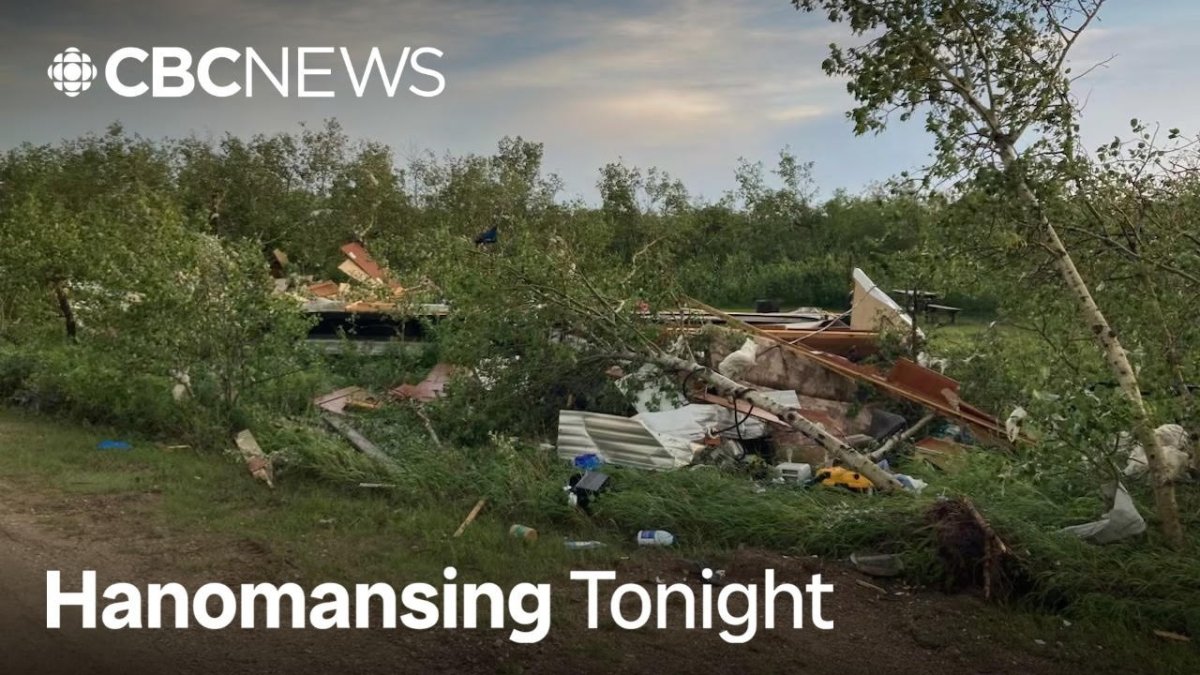
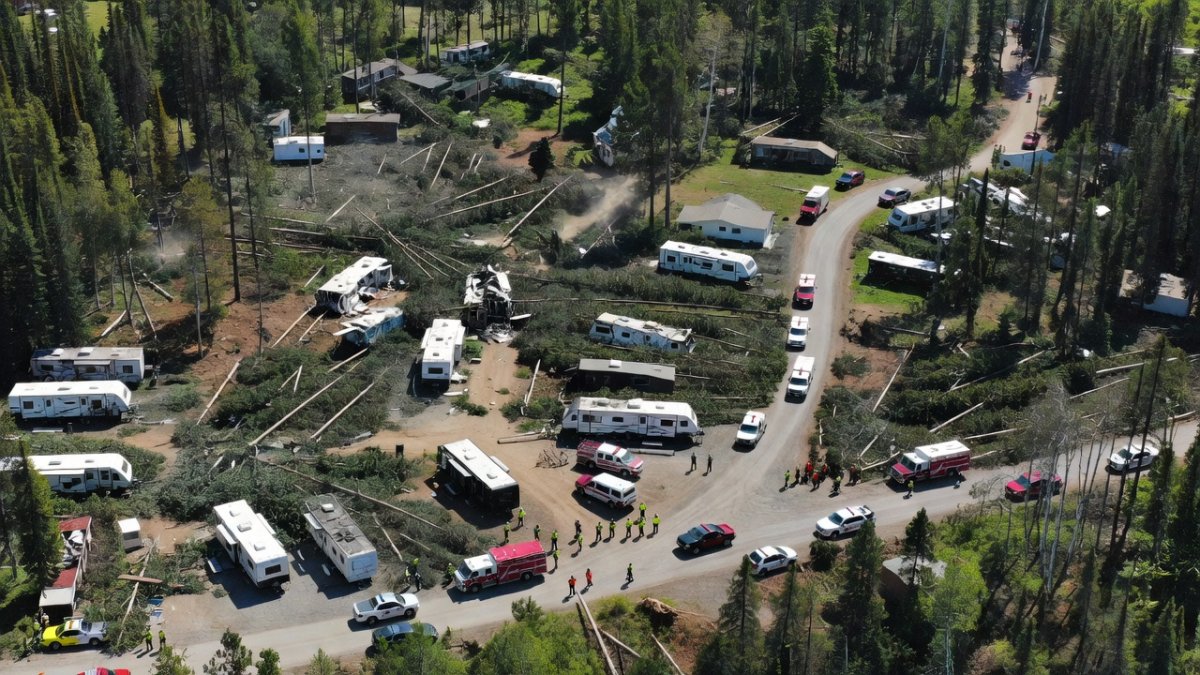
Damage at Dillberry Lake Provincial Park included multiple trailers and RVs that were significantly damaged or completely destroyed, along with uprooted trees and badly damaged cabins. These impacts occurred within the 42 occupied campsites, highlighting the vulnerability of recreational infrastructure in Alberta's provincial parks during extreme weather events.
Survey teams from the Northern Tornadoes Project began deploying the morning after the event to map the damage path and assign official strength ratings, a process that supports both provincial recovery planning and federal climate research initiatives.
Preliminary estimates place direct damages to campground infrastructure and private recreational vehicles at $3.1 million, with an additional $620,000 in projected lost tourism revenue for the Chauvin and Dillberry Lake area through August. More than 280 insurance claims have been filed for destroyed trailers and damaged outbuildings, many from owners whose policies exclude wind events above a certain threshold. Local economic development officers warn that repeated incidents could deter seasonal visitors and strain small businesses already recovering from pandemic losses.
Multi-Agency Rescue Operation
The response involved the Edmonton Police Service Air 1 helicopter, RCMP Tactical Support Group, Police Dog Services, and RCMP Air Services, all operating under the unified command post established within two hours of the initial reports. These federal assets were supplemented by Search and Rescue Alberta and Cold Lake Search and Rescue teams, demonstrating the integrated nature of Canadian search-and-rescue operations across provincial boundaries.
RCMP activation of Mass Victimisation Protocols ensured systematic accountability for all campers, with every individual from the 42 occupied sites confirmed safe within six hours. This outcome reflects established federal guidelines for mass-casualty incidents in remote areas of the Prairies.
Provincial authorities in the Municipal District of Wainwright worked alongside federal RCMP personnel to manage site access and family support services, underscoring the constitutional division of responsibilities between Ottawa and Alberta in emergency management.
Witness Accounts
Chris Robinson, who arrived at the park with his family, described turning around on the entry road after spotting the tornado, noting heavy rain, hail, and falling trees that blocked escape routes. His account aligns with radar data showing rapid intensification after the 7:23 p.m. MDT Environment Canada alert.
Laurie Penner of nearby Chauvin watched the rotation form from her front deck, providing a ground-level observation that assisted Northern Tornadoes Project researchers in confirming the second touchdown near the Saskatchewan border.
Another witness identified only as Bardick reported seeing a huge tornado directly in front of his group, with a football field-sized area of spinning debris that left several people trapped under fallen trees. These firsthand reports have been incorporated into official federal and provincial after-action reviews.
Neighbours arrived within the first hour carrying chainsaws, front-end loaders and portable generators, clearing blocked grid roads so ambulances could reach remote sites before midnight. At the Chauvin recreation centre, residents organised hot meals, clothing collections and child-care support for families whose trailers were destroyed, reflecting the rapid mutual-aid networks typical of rural Alberta. These volunteer efforts reduced pressure on provincial resources and accelerated the return to basic services for affected households.
Tornado Season Analysis
David Sills of the Northern Tornadoes Project stated that 57 tornadoes have been recorded across Canada in 2026, with 46 occurring in the Prairie provinces. Alberta, Saskatchewan, and Manitoba have experienced an unusually busy season, prompting increased federal funding for research into links between climate change, El Niño patterns, and severe convective weather.
Environment Canada continues to study these connections through its national climate modelling programs, collaborating with the Northern Tornadoes Project to improve forecasting accuracy for south-central Alberta regions including Calgary and Red Deer. The July 8 event has been cited in ongoing federal-provincial discussions about adapting infrastructure standards in rural parks.
The 2026 season totals exceed historical averages maintained by Environment Canada, reinforcing the need for sustained investment in both federal warning systems and provincial park resilience measures across the Prairies.
Environment Canada records show a 17 per cent increase in verified tornadoes on the Prairies over the past fifteen years, with Northern Tornadoes Project researchers linking the rise to higher convective available potential energy driven by warmer spring temperatures. Although improved radar coverage accounts for some of the growth in detections, climate models project that continued moisture increases could produce more frequent and intense supercells across Alberta and Saskatchewan by mid-century. The agency continues to refine its forecasting parameters to distinguish between detection gains and genuine climatological shifts.
What Happens Next
Alberta Parks has kept Dillberry Lake Provincial Park closed until further notice while structural assessments continue, with evacuees remaining at the Chauvin recreation centre under provincial coordination. The Municipal District of Wainwright has scheduled additional access windows for registered campers to recover personal property under RCMP supervision.
Environment Canada has issued a new warning for severe thunderstorms on Thursday with a high probability of occurrence in south-central Alberta, including the Calgary and Red Deer areas. Federal meteorologists are working with provincial emergency management officials to prepare additional alerts.
Northern Tornadoes Project teams will complete their damage surveys over the coming days, providing data that will inform both immediate provincial recovery funding and longer-term federal climate adaptation strategies for Alberta's rural communities.
The July 8 event has prompted the Alberta Emergency Management Agency to examine mandatory storm-shelter standards for all provincial-park campgrounds and to update evacuation mapping for high-risk recreation areas. Officials are also considering expanded public-education campaigns on securing recreational vehicles during severe-weather watches. Any resulting policy changes would likely influence similar reviews underway in Saskatchewan and Manitoba.
By Alex Thompson, Staff WriterThis article was produced with AI-assisted research and editorial support. Reporting is based on sources cited in the article.
What's Your Reaction?
 Like
0
Like
0
 Dislike
0
Dislike
0
 Love
0
Love
0
 Funny
0
Funny
0
 Wow
0
Wow
0
 Sad
0
Sad
0
 Angry
0
Angry
0

Canada Correspondent at Global1.News. Based in Toronto, covering Canadian politics, energy, trade, and US-Canada relations. Provides the Canadian perspective on North American and global affairs.














Comments (0)