
Guyana's Biodiversity Summit 2026: A Conservation Blueprint for Latin America's Amazon Frontier
Guyana's Biodiversity Summit: A Conservation Blueprint for Latin America's Amazon Frontier Georgetown, Guyana – July 2026 — The country's strategy has drawn attention across the hemisphere as Amazon deforestation rates diverge sharply between nations and a forecast super El Niño threatens to accelerate forest loss. ** Guyana 2026 Biodiversity Summit Leads Amazon Conservation Me
Guyana's Biodiversity Summit: A Conservation Blueprint for Latin America's Amazon Frontier
Georgetown, Guyana – July 2026 — The country's strategy has drawn attention across the hemisphere as Amazon deforestation rates diverge sharply between nations and a forecast super El Niño threatens to accelerate forest loss.
** Guyana 2026 Biodiversity Summit Leads Amazon Conservation Meta Description: Guyana hosts the Global Biodiversity Alliance Summit in 2026 while advancing UNESCO Biosphere Reserve status and earning $353 million in carbon credits, offering a model for balancing conservation with development across Latin America. Keywords: Guyana biodiversity, Global Biodiversity Alliance Summit, Iwokrama Forest, carbon credits, UNESCO Biosphere Reserve, President Irfaan Ali, Amazon conservation, LCDS, ART-TREES, Guiana Shield, deforestation trends, El Nino 2026, Makushi communities, low carbon development, jurisdictional credits Guyana stands at the forefront of Latin American environmental leadership in 2026. As the only South American nation maintaining 85-87 percent forest cover within the Guiana Shield, this small Caribbean-coast country demonstrates that rigorous protection of pristine rainforests can coexist with economic ambitions. The Global Biodiversity Alliance Summit, scheduled for mid-2026 in Georgetown, arrives at a critical moment when the broader Amazon basin has already lost 20-24 percent of its original forest cover, equivalent to roughly 1.3-1.5 million square kilometers.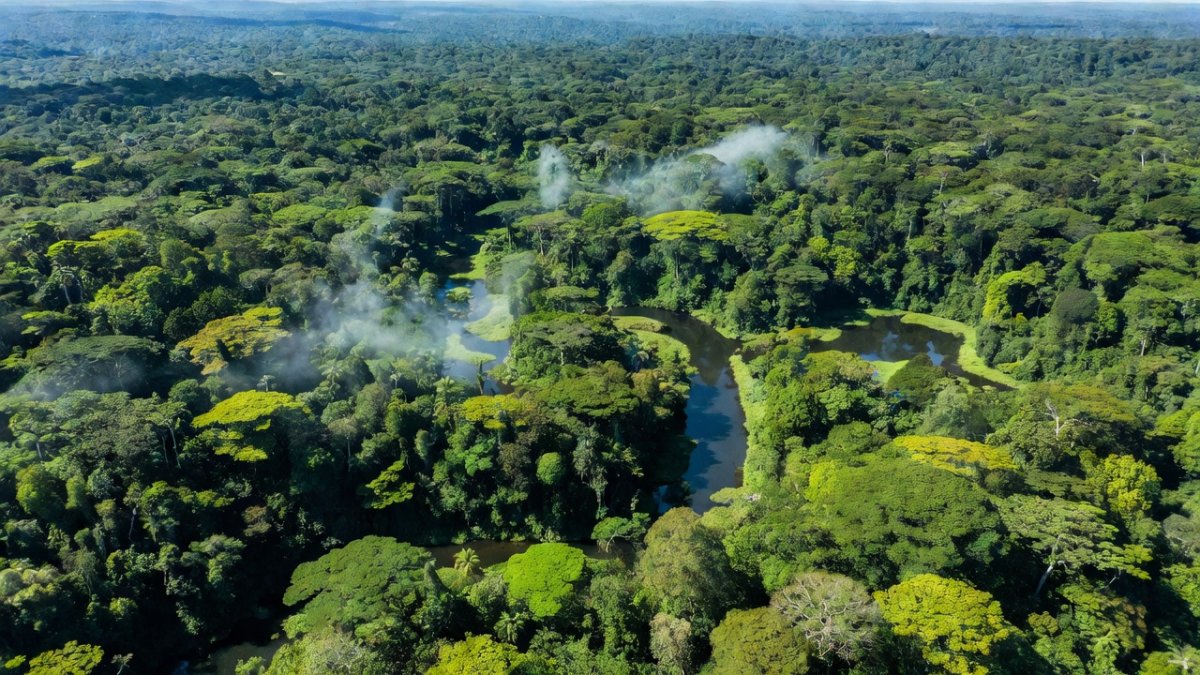
Guyana's Biodiversity Summit and Its Significance for Latin America
The upcoming Global Biodiversity Alliance Summit positions Guyana as a regional beacon amid accelerating Amazon threats. With the Guiana Shield retaining exceptional integrity compared to neighboring territories, Guyana's 85-87 percent forest cover offers a living laboratory for scalable conservation. The summit directly addresses the tipping-point warnings issued by scientists who note that 20-25 percent cumulative Amazon loss could trigger irreversible savanna conversion across vast areas.
Latin America watches closely because Guyana's model integrates Indigenous governance, international standards, and revenue from ecosystem services. Unlike nations experiencing sharp deforestation spikes, Guyana reports one of the lowest annual rates among major rainforest countries according to FAO and Global Forest Watch data. This achievement stems from deliberate policy choices under the Low Carbon Development Strategy that prioritize keeping forests intact. The summit therefore serves not merely as a diplomatic gathering but as a practical demonstration that small nations can shape continental agendas when armed with credible results and inclusive processes.
The Global Biodiversity Alliance Summit: What Happened, Who Attended, the Survey
The Global Biodiversity Alliance Summit convened in Georgetown during June and July 2026, drawing government officials, scientists, and community representatives from across the Guiana Shield. Local coverage from Ignite News in mid-June first announced the event, highlighting its focus on practical conservation solutions. The Global Biodiversity Alliance launched a public survey in late June 2026 to gather input from Indigenous peoples, experts, and local communities, ensuring strategies reflect on-the-ground realities rather than top-down prescriptions.
Participants emphasized jurisdictional-scale approaches that treat entire landscapes as units for protection and finance. Discussions covered enforcement against illegal mining, expansion of protected areas, and integration of traditional knowledge from Makushi and Patamona territories. The survey mechanism allowed stakeholders to shape priorities before final policy recommendations, marking a departure from previous summits that often sidelined community voices. By centering these perspectives, organizers aimed to produce actionable roadmaps that other Amazonian nations could adapt amid rising pressures from cattle ranching, soy expansion, and illicit logging.
UNESCO Biosphere Reserve: Iwokrama, MAB Mission, Roadmap, What It Means
UNESCO conducted a technical assistance mission to Guyana from June 29 to July 3, 2026, advancing the country's first nomination under the Man and the Biosphere Programme. The mission built directly on priorities identified during UNESCO Director-General Audrey Azoulay's March 2026 visit and involved the Government of Guyana, Iwokrama International Centre, University of Guyana, and the Guyana National Commission for UNESCO. A final roadmap for the nomination dossier emerged from these sessions.
Central to the proposal is the Iwokrama Forest Reserve, encompassing 371,000 hectares in central Guyana. Managed by the Iwokrama International Centre, the reserve harbors jaguars, giant otters, harpy eagles, and exceptional tree diversity while operating through formal partnerships with Makushi and Patamona communities. 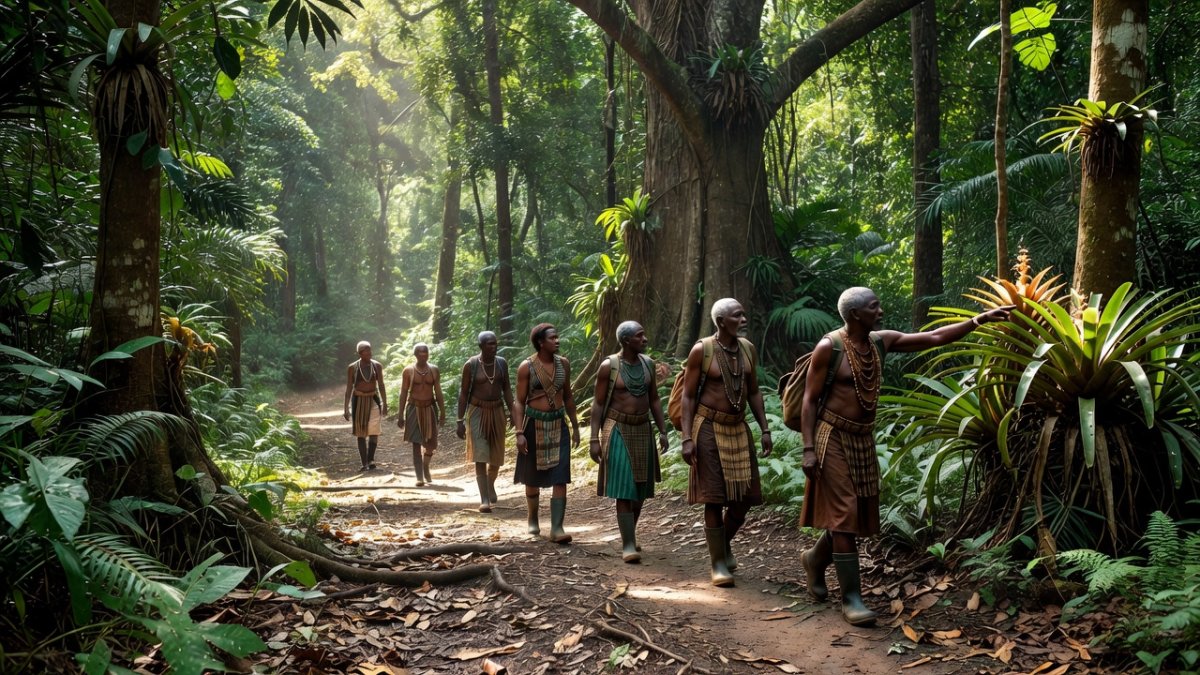 Designation as a UNESCO Biosphere Reserve would embed these collaborative governance structures within an international framework, unlocking additional technical support and visibility. The process underscores Guyana's commitment to demonstrating that large-scale forest protection can incorporate sustainable livelihoods and scientific monitoring simultaneously.
The Iwokrama forest forms part of the larger Guiana Shield ecosystem, which stores an estimated 20 percent of the world's tropical forest carbon outside the Amazon basin proper. Its 371,000 hectares shelter jaguar populations that scientists consider among the healthiest in South America, giant otter families along clearwater rivers, and harpy eagle nesting sites that draw ornithologists from across the hemisphere. The Makushi and Patamona communities have lived within this landscape for generations, maintaining traditional farming systems and forest knowledge that complement scientific monitoring. Their inclusion in the Biosphere Reserve roadmap ensures that local governance structures and customary land-use practices inform zoning decisions, rather than being imposed from Georgetown or Paris. UNESCO's MAB framework explicitly requires community participation as a condition of designation, and Guyana's pre-existing partnership model positions the Iwokrama nomination as a strong candidate for approval.
Carbon Credits and Forest Protection: $353 Million, ART-TREES, LCDS
Guyana secured approximately US$353 million from carbon credit sales by mid-2026, becoming the first country to receive jurisdictional-scale credits under the ART-TREES standard. These revenues flow through the Low Carbon Development Strategy, which channels payments for ecosystem services into climate action, sustainable development projects, and continued forest conservation. Officials project annual inflows could scale toward $200 million as verification expands.
The country's carbon-negative status, where forests absorb more CO2 than national emissions produce, underpins this financial architecture. A January 2026 joint operation with Brazil, French Guiana, and Suriname resulted in nearly 200 arrests targeting illegal mining, smuggling, and organized crime, illustrating enforcement capacity that protects credit integrity. By maintaining low deforestation rates while generating substantial returns, Guyana shows how results-based payments can finance social programs without sacrificing ecological capital, offering a replicable template for other rainforest nations seeking non-extractive revenue streams.
The Low Carbon Development Strategy originated in 2009 under then-President Bharrat Jagdeo and has evolved through multiple iterations to become the backbone of Guyana's forest-finance architecture. Under LCDS 2030, the government allocates carbon revenues to priority sectors including renewable energy infrastructure, school construction, internet connectivity for hinterland communities, and Indigenous land-titling programs. The ART-TREES standard requires independent third-party verification of deforestation baselines and emissions reductions, giving buyer confidence to corporations and sovereign funds seeking high-integrity offsets that carry corresponding adjustment under Article 6 of the Paris Agreement. Guyana's $353 million in cumulative sales positions it as a test case for jurisdictional REDD+ at scale, with the potential to inform similar programs in Colombia, Peru, and the Democratic Republic of the Congo if the model withstands scrutiny during the intensifying El Niño conditions expected through late 2026.
Regional Context: Amazon Tipping Points, Brazil vs Bolivia Trends, El Niño Threat
The Amazon basin confronts acute risks as cumulative forest loss approaches 20-24 percent. Bolivia recorded a 114 percent increase in forest destruction over its previous record during 2026, driven by expanding agricultural frontiers. In contrast, Brazil achieved a 35 percent reduction in Amazon deforestation during the first half of 2026 according to INPE data, supported by Marina Silva's Ministry of Environment deploying 4,385 brigadistas—a 26 percent increase—and boosting helicopter capacity by 133 percent.
These divergent trajectories highlight policy impacts across the region. A forecasted super El Niño for the second half of 2026, with unprecedented +3°C intensity, threatens to intensify fires and droughts, potentially erasing recent gains. Guyana's position within the more intact Guiana Shield provides a buffer, yet regional cooperation remains essential. Cross-border enforcement operations and shared monitoring systems become vital when climate extremes amplify existing pressures from mining and logging syndicates operating across porous frontiers.
President Ali's Vision: Development vs Conservation Balancing Act, Oil Paradox
President Mohamed Irfaan Ali's administration champions conservation alongside oil development, positioning Guyana as evidence that both objectives can advance together. A widely shared July 2026 video captured Ali addressing the BBC, defending forest management practices and arguing that conservation and economic growth need not conflict. Oil revenues are directed toward social programs while the government upholds low-carbon development commitments, creating a dual-track strategy that funds infrastructure without immediate large-scale deforestation.
This approach acknowledges Guyana's small population and historical underdevelopment while leveraging new hydrocarbon income to strengthen environmental institutions. Critics question long-term compatibility, yet measurable outcomes—including $353 million in carbon receipts and sustained low deforestation—provide empirical support for the president's claims. Ali frames the strategy as pragmatic leadership that avoids the false choice between poverty reduction and forest protection, inviting other Latin American nations facing similar resource dilemmas to examine Guyana's results.
The Bottom Line: What Guyana's Model Means for Latin America's Environmental Future
Guyana's 2026 initiatives crystallize a viable pathway for Latin America at a moment when Amazon tipping points loom. By hosting the Global Biodiversity Alliance Summit, advancing the Iwokrama UNESCO nomination, and securing $353 million through ART-TREES credits under the LCDS, the country demonstrates integrated governance that values Indigenous partnerships, rigorous enforcement, and results-based finance. These elements collectively maintain 85-87 percent forest cover while generating revenue that supports broader development goals.
The contrast with Bolivia's 114 percent deforestation surge and Brazil's partial recovery underscores that policy choices determine outcomes more than geography alone. As the super El Niño approaches, Guyana's carbon-negative status and cross-border cooperation offer lessons in resilience. If scaled, this model could help the region avoid irreversible savanna transitions, proving that small nations with disciplined strategies can anchor continental conservation efforts even amid powerful economic and climatic headwinds.
By Elena Vasquez, Staff WriterThis article was produced with AI-assisted research and editorial support. Reporting is based on sources cited in the article.
What's Your Reaction?
 Like
0
Like
0
 Dislike
0
Dislike
0
 Love
0
Love
0
 Funny
0
Funny
0
 Wow
0
Wow
0
 Sad
0
Sad
0
 Angry
0
Angry
0

Latin America Correspondent at Global1.News. Based in Mexico City, covering politics, economics, energy, and culture across the region. Brings an on-the-ground perspective to stories spanning from the Rio Grande to Patagonia.











Comments (0)