
Russia Fuel Crisis: Bashkortostan Energy Heartland Reels from Shortages
The Spark: Drone Strikes and Energy Infrastructure In late spring, Ukrainian drone strikes targeted a Gazprom Neft refinery on the outskirts of Moscow, igniting storage tanks and halting processing for weeks. The attack exposed fragile links in Russia's domestic fuel network, triggering immediate gasoline and diesel shortages that rippled outward to Crimea and central regions.
The Spark: Drone Strikes and Energy Infrastructure
In late spring, Ukrainian drone strikes targeted a Gazprom Neft refinery on the outskirts of Moscow, igniting storage tanks and halting processing for weeks. The attack exposed fragile links in Russia's domestic fuel network, triggering immediate gasoline and diesel shortages that rippled outward to Crimea and central regions. Rather than tapping strategic reserves held for national emergencies, Kremlin planners ordered regional refineries to redirect output toward the capital and annexed territories. This decision created cascading deficits hundreds of kilometers away. An anonymous economist from Bashkortostan, speaking to Idel.Realii, described the logistics failure in stark terms: pipelines and rail schedules had been calibrated for steady-state exports, not sudden internal reallocations. When Moscow demanded priority shipments, smaller terminals in the Volga region lacked spare tanker capacity, forcing ad-hoc trucking that proved both slower and costlier. The economist noted that daily output shortfalls of several thousand tons quickly translated into visible stockouts at civilian pumps. By choosing political optics over reserve drawdowns, federal authorities converted a localized industrial incident into a nationwide distribution crisis whose effects would soon reach farmers, truckers, and remote villages.Bashkortostan: The Reluctant Energy Powerhouse
Bashkortostan operates four major refineries with a combined annual capacity of 34.1 million metric tons, making it one of Russia's largest inland fuel producers. Deputy Prime Minister Alexander Sheldyayev publicly confirmed that the republic's plants had been tasked with safeguarding national energy security after the Moscow refinery losses. Output rose 10 percent year-on-year as operators ran at near-maximum throughput, yet local residents still faced tightening supplies. The paradox stemmed from federal directives that treated Bashkortostan's production as a flexible reserve rather than a regional asset. Railcars once earmarked for Ufa's own depots were rerouted westward, while river barges on the Belaya were commandeered for longer hauls. Industry analysts observed that the republic's sophisticated cracking units could theoretically meet both domestic and national needs, but rigid allocation formulas left no buffer for sudden surges in demand. The result was a growing gap between headline production figures and fuel actually available inside the republic's borders.
Ufa: Queues, Rationing and Closed Stations
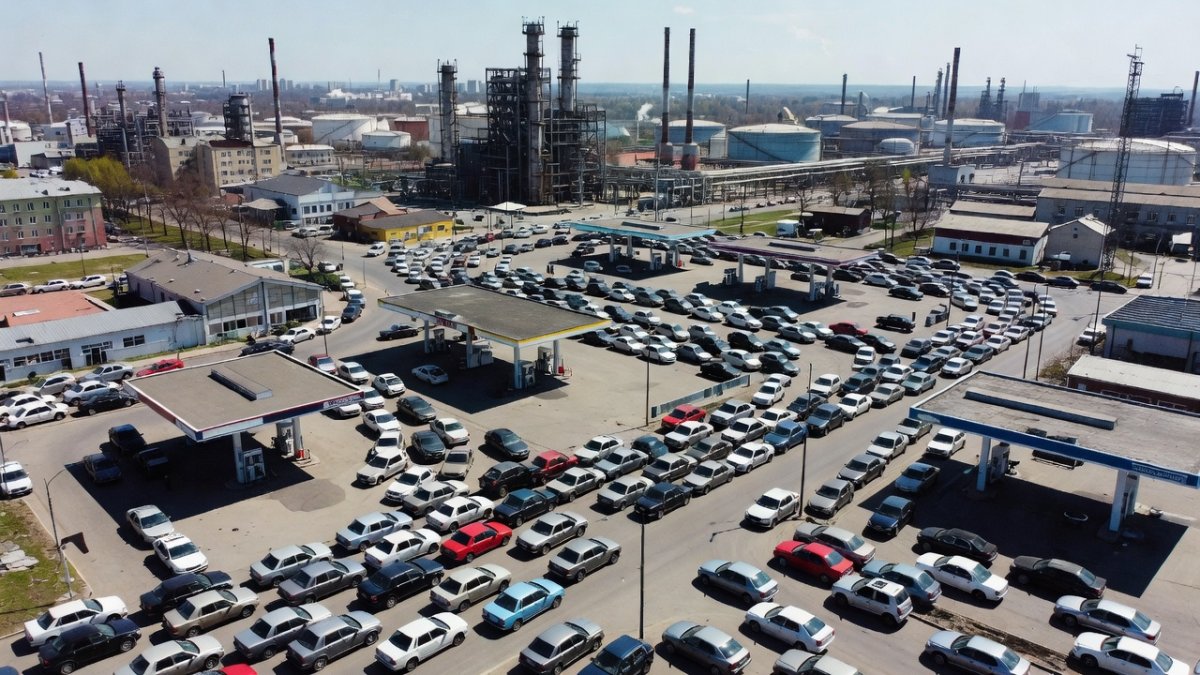
By midsummer, Ufa's streets displayed scenes more typical of wartime austerity than an oil-rich republic. At peak hours, lines stretched to 800 vehicles outside the few stations still operating. A strict 30-liter ration per customer was enforced, and by late afternoon only 170 liters remained at many sites before pumps were shut off. Local journalist Oleg Tyshenko compiled daily statistics showing that average wait times exceeded three hours and that several districts went entirely without fuel for consecutive days. Against this backdrop, the refinery skyline continued to blaze with flare stacks and floodlights, illuminating empty forecourts below. Residents described abandoning personal vehicles for public transport or bicycles, while delivery vans idled for hours awaiting fuel. One Ufa mother recounted driving across three districts before finding diesel for her child's school run, only to be turned away at the final pump. The visual contrast between industrial plenty and civilian scarcity underscored how centralized redirection had severed the link between local production and local consumption.Rural Fallout: Empty Tanks, Rising Prices
In the mountainous southern districts of Bashkortostan, the fuel shortage struck with particular severity. Filling stations remained shuttered for weeks, compelling farmers and villagers to travel 80 kilometers or more for limited supplies. As transport costs climbed, prices for bread, milk, and vegetables rose between 15 and 25 percent within a month. Local sources described how collective-farm tractors sat idle during critical planting windows, forcing reliance on draft animals or manual labor. The cascading effect reached small shops whose weekly deliveries were postponed or canceled when truckers could not secure diesel. Pensioners reported cutting back on heating oil purchases, anticipating winter shortfalls. Community leaders noted that the absence of reliable fuel undermined not only agriculture but also emergency medical services and school bus routes. What began as a metropolitan supply adjustment had become a slow-burning crisis for communities whose economies depend on affordable diesel for both livelihood and survival.Trucking and Transportation: Rates Spike
Russian trucking associations warned that sustained diesel scarcity would drive freight rates sharply higher across multiple sectors. Smaller carriers, lacking fuel contracts or storage, began suspending operations rather than absorb unpredictable costs. Industry data cited by Kommersant showed road freight rates for grain rising 20 to 30 percent in the Volga and southern federal districts. Larger logistics firms passed these increases directly to shippers, while independent owner-operators faced the choice of idling trucks or operating at a loss. The ripple extended beyond agriculture: construction materials, consumer goods, and industrial components all moved more slowly and expensively. Rail alternatives proved insufficient because tank-car allocations had already been prioritized for refinery-to-refinery transfers. Analysts concluded that the trucking sector's contraction would amplify regional price disparities, with remote areas paying the highest premiums for basic commodities.Harvest Under Threat: Farmers Face Fuel Costs
Krasnodar farmers projected an additional 14 billion rubles ($184 million) in fuel expenses for the current season alone. Andrei Sizov of SovEcon observed that larger agro-holdings had stockpiled diesel earlier in the year, shielding themselves from spot-market volatility, while smaller family operations faced immediate cash-flow crises. The cold spring and persistent rains had already compressed the planting calendar; now fuel shortages threatened to delay harvesting and post-harvest drying. In Bashkortostan, the crisis also endangered indigenous agricultural practices that rely on small-scale mechanization for haymaking and livestock feed production. Without affordable diesel, many households risked reverting to labor-intensive methods that reduce both yield and income. The divide between well-capitalized enterprises and traditional smallholders widened, raising questions about long-term rural viability under centralized fuel rationing.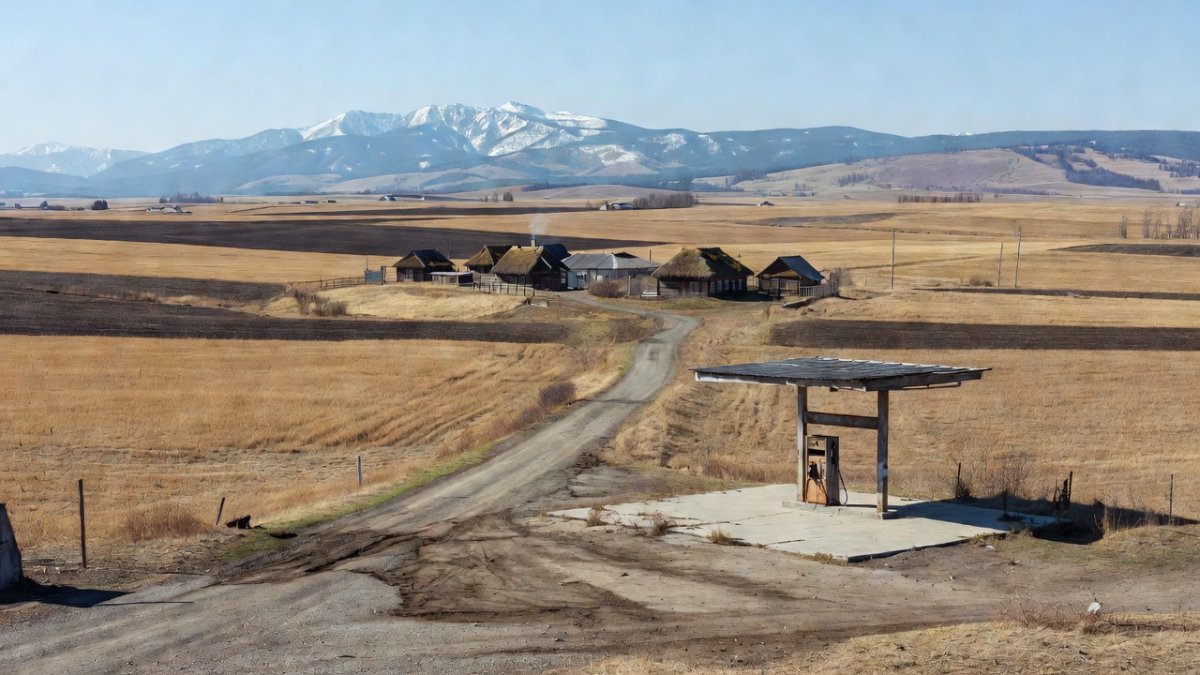
Moscow's Centralized Decision-Making Under Scrutiny
The fuel crisis laid bare the Kremlin's enduring preference for protecting the capital at the expense of peripheral regions. Resource allocation followed a clear hierarchy: Moscow and annexed territories received priority shipments, while producing republics absorbed the shortfall. This capital-first logic was reinforced by the recent "undesirable" designation applied to the Moscow Times, which limited independent scrutiny of federal policy. Observers noted that the same vertical command structure that enabled rapid redirection of refinery output also prevented timely feedback from affected localities. Regional governors lacked authority to retain fuel for their own populations, and federal ministries appeared slow to recalibrate quotas once shortages materialized. The episode illustrated how Russia's governance model concentrates decision-making in Moscow, rendering the system both efficient at serving political priorities and brittle when those priorities diverge from local realities.Analysis and Implications
The summer fuel disruptions signal a structural vulnerability in Russia's energy architecture: domestic infrastructure remains exposed to both external strikes and internal misallocation. With winter approaching, the absence of strategic-reserve releases raises the prospect of heating-oil shortages in rural districts already depleted by summer diversions. Federal authorities possess the technical capacity to adjust distribution formulas, yet political incentives continue to favor visible protection of the capital over equitable regional supply. Unless planners introduce greater flexibility and local buffers, the same pattern — localized disruption followed by centralized redirection — could recur, deepening economic strain and eroding public confidence in the state's ability to manage its own energy wealth.By Irina Volkov, Staff Writer
This article was produced with AI-assisted research and editorial support. Reporting is based on sources cited in the article.
What's Your Reaction?
 Like
0
Like
0
 Dislike
0
Dislike
0
 Love
0
Love
0
 Funny
0
Funny
0
 Wow
0
Wow
0
 Sad
0
Sad
0
 Angry
0
Angry
0

Irina Volkov
Russia/Eastern Europe Correspondent at Global1.News. Covering Russian politics, energy, security, and the shifting dynamics of the post-Soviet space. Provides clear-eyed analysis on one of the world's most opaque regions.












Comments (0)