
Diplomacy on Troubled Waters — Trinidad and Venezuela at Odds Over Gulf of Paria Oil Spill
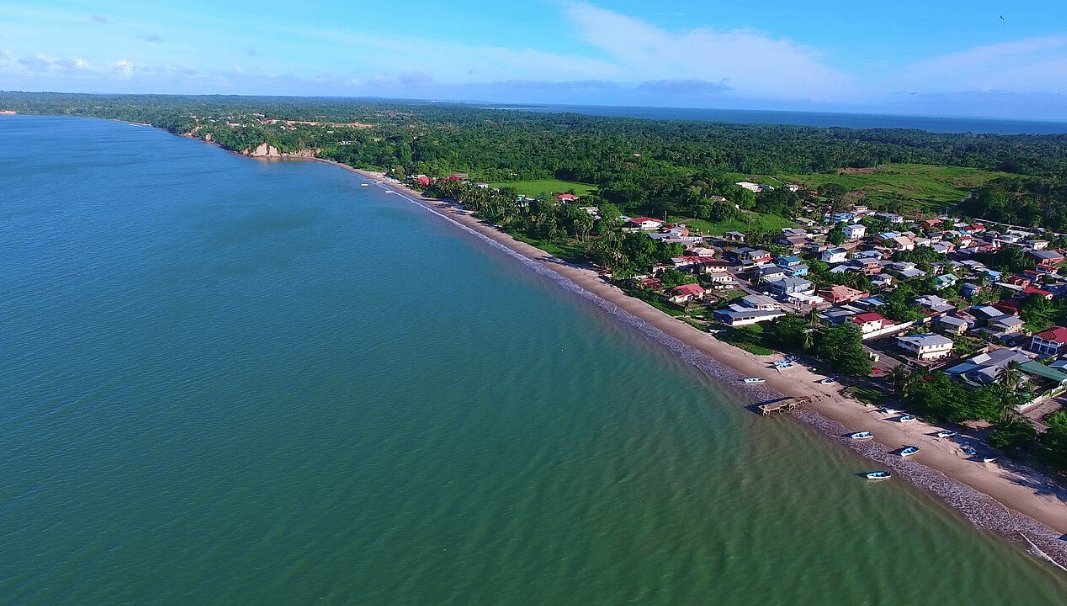
The Spill That Started It All The incident unfolded in the early hours of 1 May 2026 when Heritage Petroleum reported an oil spill at its Main Field installation in the Gulf of Paria. Local crews detected the release around 7:25 a.m. and quickly moved to contain the flow. The company estimated that approximately ten barrels had escaped before the leak was brought under control
The Spill That Started It All
The incident unfolded in the early hours of 1 May 2026 when Heritage Petroleum reported an oil spill at its Main Field installation in the Gulf of Paria. Local crews detected the release around 7:25 a.m. and quickly moved to contain the flow. The company estimated that approximately ten barrels had escaped before the leak was brought under control later that same day. Repairs to the affected infrastructure were completed by 2 May, allowing operations to resume under close monitoring. This swift technical response reflected the operational routines developed over decades in Trinidad and Tobago's offshore energy sector, yet the location of the spill raised immediate concerns about possible movement across shared maritime boundaries.
Trajectory modelling conducted by Trinidadian authorities indicated that untreated hydrocarbons could drift toward the maritime border with Venezuela if left unaddressed. In response, chemical dispersants were applied at points between six and eight nautical miles from the boundary line. Follow-up assessments using drones and vessels confirmed that no visible hydrocarbons remained on the surface after these measures. These actions aligned with established environmental protocols used by Heritage Petroleum, an entity that inherited assets from the former Petrotrin operations. Fishing communities along Trinidad's western coast, particularly those operating small-scale vessels from villages near the Gulf, watched developments closely because their livelihoods depend on the health of these waters.
Local fishermen have long navigated the same currents that carried the dispersants, harvesting fish and shellfish that sustain households across the region. The Gulf of Paria serves as a vital economic corridor where energy infrastructure coexists with traditional marine activities. Any disruption, even on a modest scale, can affect catch volumes and market access for these communities. Heritage Petroleum's containment efforts therefore carried implications beyond the immediate technical fix, touching on the delicate balance between industrial activity and the daily realities of coastal residents who have adapted to the rhythms of shared waters for generations.
A Question of Timing: Who Knew What and When
Venezuelan satellite imagery dated as early as 28 April had already captured signs of a slick originating from the Trinidad side of the Gulf. This preceded the official detection reported by Heritage Petroleum on 1 May by several days. Despite the trajectory modelling and dispersant deployment that followed, neither the company nor the Trinidad and Tobago government issued any public statement until Venezuela brought the matter into the open on 12 May. The twelve-day interval created space for questions about internal reporting chains and decision-making processes within the energy sector and relevant ministries.
Opposition figure Stuart Young called for a formal investigation into who suppressed this information, highlighting the need for clearer accountability mechanisms. The absence of an immediate announcement stood in contrast to the rapid technical response on the water itself. In a region where energy production has historically shaped national development, such delays can erode public confidence, especially among communities whose fishing grounds lie directly in the path of potential contamination. The episode underscored how information flows between state entities, operators and the public remain critical during environmental incidents.
Trinidad and Tobago's energy landscape, built around entities such as Heritage Petroleum and the legacy of Atlantic LNG, has always required careful coordination. When cross-border implications arise, the lack of routine public updates can amplify tensions with neighbouring states. The silence until Venezuela's public statement therefore became a focal point for domestic debate about transparency standards. Residents along the western peninsula, many of whom remember earlier incidents involving Petrotrin, expressed frustration that early awareness might have allowed for additional precautionary steps on their side of the boundary.
Venezuela's Case: 1,625 Square Kilometres at Risk
Foreign Minister Yván Gil publicly demanded information and compensation on 12 May, citing satellite evidence and warning that 1,625 square kilometres stood to be affected. The statement referenced potential damage to twelve wetlands and four national parks, alongside risks to more than five hundred fishermen operating in Sucre and Delta Amacuro states. These claims framed the spill as a transboundary environmental concern requiring formal diplomatic engagement. Acting President Delcy Rodríguez subsequently dispatched an environmental assessment team to evaluate conditions on the Venezuelan side of the Gulf.
Under international law principles governing shared marine spaces, states are expected to notify neighbours of incidents that could cause harm. Venezuela's position emphasised the absence of any pre-agreed cross-border notification framework between the two countries, leaving both sides to manage the aftermath through ad hoc channels. Fishing communities in the affected Venezuelan coastal zones rely on the same Gulf ecosystem that supports Trinidadian livelihoods, creating a shared stake in rapid containment and remediation. The scale cited by Venezuelan officials highlighted how even a relatively small release can generate wider ecological and economic ripples when currents and weather patterns align unfavourably.
The environmental team deployed by Delcy Rodríguez was tasked with documenting impacts on mangroves and marine habitats that serve as nurseries for commercially important species. These areas have sustained generations of fishers whose knowledge of seasonal patterns forms part of the cultural fabric of the region. Trinidad and Tobago authorities maintained that dispersant use and follow-up monitoring had eliminated visible traces, yet Venezuela's public presentation of the issue shifted the conversation toward questions of liability and future preventive measures. The episode illustrated how environmental incidents in the Gulf quickly acquire diplomatic dimensions when they intersect with established maritime boundaries.
Port of Spain's Position — and the Opposition's Challenge
Prime Minister Moonilal moved to arrange bilateral talks with Venezuela, seeking to address the concerns raised by Foreign Minister Yván Gil while presenting Trinidad and Tobago's containment narrative. Government statements emphasised that the leak had been stopped within hours and that modelling plus dispersant application had prevented further spread. This approach aimed to balance domestic energy sector interests with the need to maintain constructive relations across the Gulf. The administration highlighted ongoing cooperation through existing regional mechanisms even as it acknowledged the requirement for clearer communication protocols.
Stuart Young pressed for greater transparency, arguing that an investigation into the decision not to disclose the incident earlier would strengthen institutional trust. The domestic political dimension surfaced as opposition voices questioned whether political considerations had influenced the timing of public statements. In Trinidad and Tobago, where energy revenues remain central to national budgets, such debates often reflect broader concerns about governance in the petroleum sector. Communities dependent on fishing in the Gulf watched these exchanges, aware that their economic security rests on both stable energy operations and healthy marine environments.
The government's diplomatic posture sought to frame the response as technically sound while opening space for dialogue. Yet the opposition's call for scrutiny reflected public expectations that information about environmental risks should reach affected populations promptly. This tension between operational confidentiality and public accountability has surfaced repeatedly in the country's energy history. As talks with Venezuela proceed, the handling of this episode may influence how future incidents are managed and how confidence is maintained among coastal populations on both sides of the maritime boundary.
The Bigger Picture: A Troubled Neighbourhood
Venezuela has periodically advanced territorial claims over portions of Trinidad and Tobago's maritime space, adding layers of complexity to any environmental dispute in the Gulf of Paria. Relations between the two neighbours have fluctuated over decades, shaped by energy interests, migration patterns and shifting political alignments within CARICOM. The current incident occurs against this backdrop, where practical cooperation on shared resources must navigate underlying sensitivities. Historical ties through trade and family connections across the Gulf have created enduring people-to-people links that sometimes outlast official disagreements.
As reported by Caribbean360, Maduro remains in US custody, a development that further complicates direct high-level engagement on bilateral matters. Trinidad and Tobago has maintained a pragmatic stance, focusing on functional issues such as energy infrastructure and fisheries management rather than broader geopolitical disputes. The Gulf itself has served as a corridor for both cooperation and contention, hosting pipelines, shipping lanes and traditional fishing routes that bind the two countries together. Any oil spill therefore carries the potential to test these fragile arrangements.
Regional observers note that environmental incidents in these waters rarely remain purely technical matters. They quickly intersect with questions of sovereignty, resource rights and the capacity of small island developing states to enforce standards against larger neighbours. Trinidad and Tobago's position within CARICOM provides a platform for collective support, yet the immediate response still rests on bilateral channels. The episode therefore serves as a reminder that the Gulf of Paria functions as both an economic lifeline and a zone requiring careful diplomatic stewardship.
Energy Governance in Shared Waters
CARICOM has long advocated for coordinated approaches to marine environmental protection among member states, yet no dedicated cross-border notification framework exists specifically for the Gulf of Paria. The current incident has renewed calls for such mechanisms, drawing on lessons from earlier incidents involving Petrotrin and other operators. Atlantic LNG facilities on Trinidad's western coast underscore the concentration of energy infrastructure in the area, making robust governance essential for both economic and ecological reasons. Climate vulnerability adds urgency, as rising sea temperatures and changing current patterns can influence how spills behave in these tropical waters.
Small island developing states like Trinidad and Tobago face particular challenges in balancing energy development with environmental safeguards. The Gulf of Paria represents a microcosm of these tensions, where legacy infrastructure from earlier eras of production must be maintained alongside newer regulatory expectations. CARICOM forums offer opportunities to share best practices and develop model agreements that could reduce future friction. Fishing communities on both sides of the boundary have voiced support for clearer rules that would allow early warning and joint response capabilities.
Strengthening governance also requires investment in monitoring technology and trained personnel capable of rapid assessment. The absence of standing protocols meant that the May 2026 spill was handled through improvised channels, highlighting gaps that could be addressed through regional cooperation. As energy transitions gather pace globally, the Gulf's role as a shared resource will continue to demand attention from policymakers in Port of Spain and Caracas alike. Effective frameworks would benefit the coastal populations whose daily lives depend on predictable and transparent management of these waters.
What Comes Next for the Gulf of Paria
Diplomatic talks arranged by Prime Minister Moonilal are expected to focus on information sharing, possible compensation mechanisms and the establishment of notification procedures for future incidents. Both governments have signalled willingness to engage, recognising that the Gulf's ecological health underpins livelihoods on either shore. Potential outcomes include joint monitoring programmes and agreed response thresholds that would reduce the scope for public disagreement. Such measures could build confidence among fishing communities who have followed the episode with concern for their catches and long-term resource sustainability.
Governance reforms may emerge from the domestic investigation called for by Stuart Young, particularly around disclosure timelines and inter-agency coordination. These changes would aim to align Trinidad and Tobago's practices with emerging international expectations for transparency in offshore operations. Resilience among fishing communities will depend on continued access to healthy fishing grounds and support for alternative livelihoods if incidents recur. Local knowledge of currents and seasonal patterns remains an underutilised resource that could strengthen future preparedness.
Ultimately, the Gulf of Paria will continue to serve as a shared space where energy production, traditional fishing and diplomatic relations intersect. The May 2026 spill has exposed both the strengths of rapid technical containment and the weaknesses of delayed communication. Moving forward, sustained attention to notification frameworks and community engagement offers the best path toward minimising similar disputes.
By Sharon Sahatoo, Staff WriterThis article was produced with AI-assisted research and editorial support. Reporting is based on sources cited in the article.
What's Your Reaction?
 Like
0
Like
0
 Dislike
0
Dislike
0
 Love
0
Love
0
 Funny
0
Funny
0
 Wow
0
Wow
0
 Sad
0
Sad
0
 Angry
0
Angry
0
Caribbean Correspondent at Global1.News. Based in Port of Spain, Trinidad, covering Caribbean politics, economy, energy, climate, and culture. Amplifying the voices and stories of the Caribbean region.









Comments (0)