
Gulf of Paria widens as Trinidad pours oil on troubled Venezuelan waters
Gulf of Paria widens as Trinidad pours oil on troubled Venezuelan waters The Gulf of Paria: A Shared Treasure Under Threat In the waters that link Trinidad and Venezuela, the Gulf of Paria has long been more than a stretch of sea. It is a place where families on both sides have earned their living from fishing, where ecosystems support countless livelihoods, and where any spill
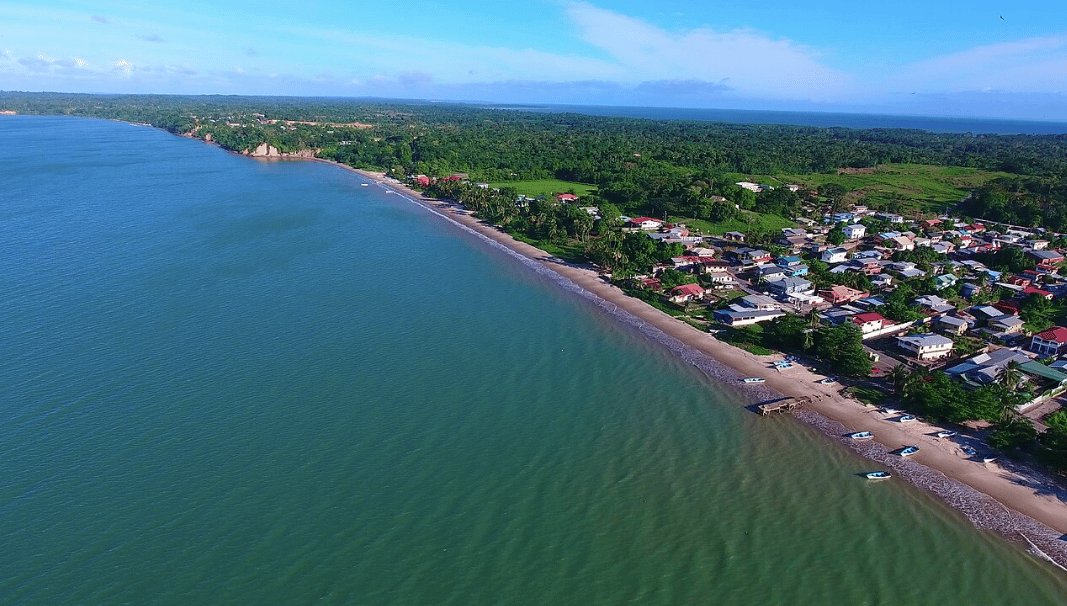
The Gulf of Paria: A Shared Treasure Under Threat
In the waters that link Trinidad and Venezuela, the Gulf of Paria has long been more than a stretch of sea. It is a place where families on both sides have earned their living from fishing, where ecosystems support countless livelihoods, and where any spill carries consequences that ripple through communities. The recent incident has stirred deep concern among neighbours who share this vital body of water, reminding us how closely our fortunes are tied together in the Caribbean.
What happened: the May 1 spill and Heritage Petroleum's response
On May 1, Heritage Petroleum Company Limited detected an oil spill at its offshore Main Field operation in the Gulf of Paria around 7:25 a.m. The company promptly informed Trinidad and Tobago's Ministry of Energy and Energy Industries, the Coast Guard, and the Environmental Management Authority. According to reports from Port of Spain, roughly 10 barrels were released before the leak was stopped the same day. Repairs were completed and the operation returned to service on May 2.
Trinidad's spill trajectory modelling indicated that, if left untreated, the hydrocarbons could have moved across into Venezuelan waters. This led authorities to apply chemical dispersants some six to eight nautical miles from the shared maritime border. Later checks by drone and vessel found no visible hydrocarbons remaining on the surface. Yet the incident itself stayed out of public view until Venezuela brought it to international attention.
Venezuela's formal demand and concerns
Venezuela has formally requested information and compensation from Trinidad and Tobago, stating that the spill originated in Trinidadian waters and poses risks of serious environmental damage to shared Gulf of Paria ecosystems. Caracas points to satellite imagery, including images from April 28, that showed a slick beginning from Trinidad. Foreign Minister Yván Gil made the concerns public on May 12, warning of effects across 1,625 square kilometres that cover 12 strategic wetland systems, four national parks, and the livelihoods of more than 500 fishermen in the states of Sucre and Delta Amacuro.
Acting President Delcy Rodríguez directed a multidisciplinary team of environmental specialists, biologists and naval personnel to assess the affected areas. Venezuela maintains that the spill has caused or risks causing serious damage to wetlands, national parks and fishing communities, and that Trinidad failed to notify its neighbour promptly as required under international conventions.
The diplomatic and environmental dimension
This exchange highlights long-standing challenges in how the two neighbours manage environmental responsibilities in one of the Caribbean's most important shared waters. The Gulf of Paria supports rich biodiversity and economic activity on both sides, yet incidents like this reveal gaps in communication and joint oversight. Trinidad maintains that the spill was minor and quickly contained, while Venezuela emphasises the potential cross-border reach and the need for accountability.
The use of dispersants near the maritime border and the modelling that showed possible movement into Venezuelan territory underscore how quickly matters in these waters can affect communities beyond one country's immediate coastline. Such events touch the daily realities of people who depend on clean seas for their work and sustenance.
Trinidad's political fallout
Within Trinidad and Tobago, the handling of the incident has sparked debate. Former Energy Minister Stuart Young called for an investigation into who suppressed the information, stating: "There must be an investigation now into who suppressed this information of an oil spill since May 1." The opposition has argued that both Heritage Petroleum and the government deliberately withheld details about a significant offshore spill.
These exchanges reflect the tension between operational responses and the public's right to timely information, especially when shared resources and neighbouring relations are involved. The lack of early disclosure has added another layer to discussions about transparency in the energy sector.
A broader Caribbean perspective on shared maritime governance
Across the Caribbean, countries often face similar questions about how to protect shared marine spaces while supporting energy activities and fishing communities. The Gulf of Paria case illustrates the practical difficulties of coordination between neighbours, particularly when environmental incidents cross borders. Regional bodies such as CARICOM have long promoted cooperation on such matters, yet individual incidents test the strength of existing arrangements.
For small island developing states and their mainland neighbours, the balance between economic needs and environmental protection remains delicate. Events in the Gulf of Paria remind communities from Trinidad to Guyana and beyond that effective governance requires clear notification procedures and joint preparedness, especially during periods when tourism recovery and cost-of-living pressures already weigh heavily on households.
What this means going forward
The diplomatic row points to the need for stronger mechanisms to handle future incidents in the Gulf of Paria. Both countries share an interest in preventing damage to wetlands, parks and fishing grounds that sustain families on either side. Improved transparency, earlier cross-border communication and clearer compensation frameworks could help reduce tensions when spills occur.
As the matter develops, residents in Trinidad and the wider region will be watching how the two governments move from dispute toward practical cooperation. The health of the Gulf of Paria affects not only today's fishermen and energy workers but also the environmental legacy passed to the next generation. In our close-knit Caribbean family, what happens in these shared waters ultimately touches us all.
By Sharon Sahatoo, Staff WriterThis article was produced with AI-assisted research and editorial support. Reporting is based on sources cited in the article.
What's Your Reaction?
 Like
0
Like
0
 Dislike
0
Dislike
0
 Love
0
Love
0
 Funny
0
Funny
0
 Wow
0
Wow
0
 Sad
0
Sad
0
 Angry
0
Angry
0

Caribbean Correspondent at Global1.News. Based in Port of Spain, Trinidad, covering Caribbean politics, economy, energy, climate, and culture. Amplifying the voices and stories of the Caribbean region.









Comments (0)