
US Envoys Witkoff and Kushner Travel to Doha for Direct Iran Talks After Hormuz Strikes
In the volatile landscape of the Middle East, where control over the Strait of Hormuz intersects with longstanding US-Iran rivalries and the shadow of nuclear ambitions, the dispatch of high-level American envoys to Doha signals a potential pivot from military confrontation to diplomatic engagement. This move comes on the heels of US strikes, highlighting the delicate balance b
In the volatile landscape of the Middle East, where control over the Strait of Hormuz intersects with longstanding US-Iran rivalries and the shadow of nuclear ambitions, the dispatch of high-level American envoys to Doha signals a potential pivot from military confrontation to diplomatic engagement. This move comes on the heels of US strikes, highlighting the delicate balance between deterrence and dialogue that could reshape alliances across the Gulf and beyond. Regional actors from Riyadh to Tel Aviv are watching closely as these talks may influence everything from energy security to the prospects of further Arab-Israeli normalization.
US Envoys Witkoff and Kushner Travel to Doha for Direct Iran Talks After Hormuz Retaliatory Strikes
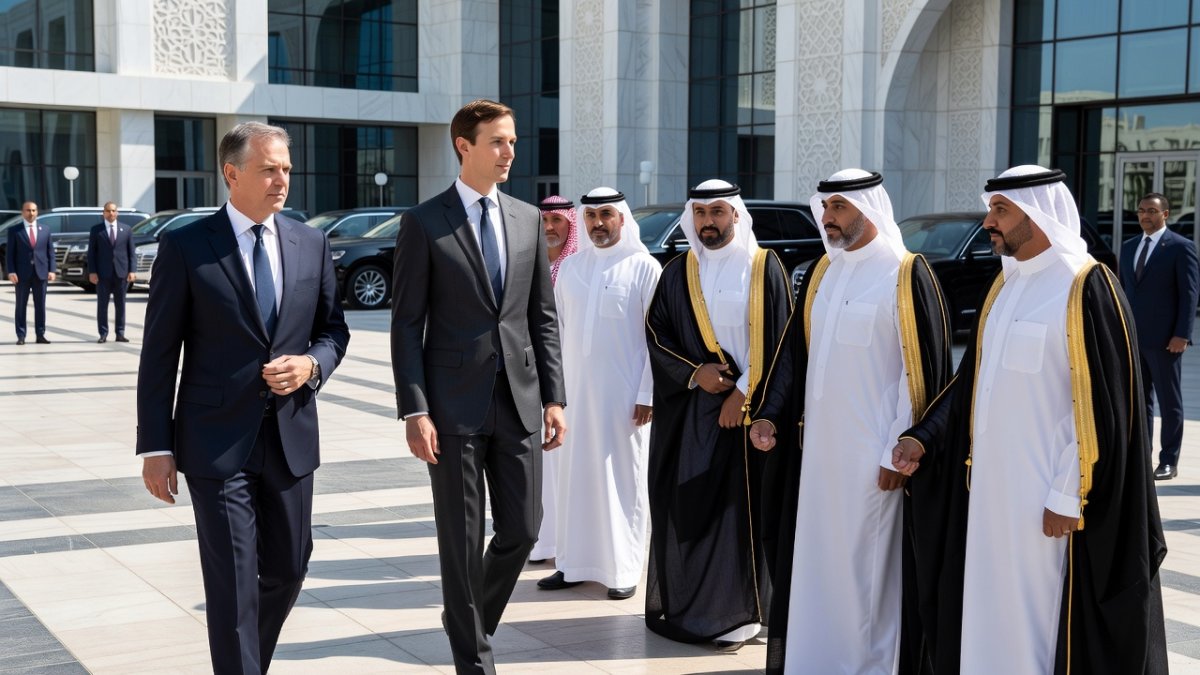
Beirut, Lebanon - June 29, 2026 - White House Press Secretary Karoline Leavitt confirmed that US envoys Steve Witkoff and Jared Kushner will travel to Doha for high-level meetings with Iranian officials. The mission follows US retaliatory strikes on Iranian military targets near the Strait of Hormuz over the weekend. Major outlets including Politico, Reuters, The Jerusalem Post, The Hill, and The Times of Israel reported the development on June 29, 2026.
Background to the Current Crisis
The weekend strikes targeted Iranian positions near the Strait of Hormuz after repeated threats to close the vital waterway. Iran nuclear program remains a core point of contention, with enrichment levels exceeding limits set in previous agreements. The US action aimed to deter further escalation while preserving freedom of navigation for global energy supplies.
Qatar Established Mediation Role
Qatar has hosted multiple rounds of indirect US-Iran discussions in recent years. Its unique position, balancing ties with both Washington and Tehran, makes Doha a practical venue. Qatari officials have facilitated de-escalation channels on issues ranging from prisoner swaps to maritime security protocols.
Kushner Inclusion and Abraham Accords Linkage
Jared Kushner participation signals an effort to embed the current talks within a wider regional framework. His prior work on the Abraham Accords demonstrated an ability to link Gulf states with Israel on security and economic issues. Analysts note that any de-escalation package could include incentives tied to further normalization steps involving Saudi Arabia and other Sunni-led states.

Strategic Calculus of Key Actors
Washington seeks to prevent a sustained closure of the Strait while avoiding a wider conflict that could draw in proxies across the region. Tehran aims to preserve its nuclear leverage and secure sanctions relief without appearing to capitulate. Gulf Arab states, particularly Saudi Arabia and the UAE, want stable energy markets and reduced Iranian influence in Yemen and Iraq. Israel monitors the nuclear dimension closely, weighing whether renewed talks strengthen or weaken its security posture.
Potential Agenda Items in Doha
Discussions are expected to address immediate de-escalation mechanisms around the Strait of Hormuz. Broader talks may revisit elements of Iran nuclear program, including enrichment caps and verification procedures. Qatar role as host allows for discreet exploration of confidence-building measures before any formal multilateral framework emerges.
Regional Ripple Effects and Second-Order Risks
Successful talks could ease pressure on global oil prices and support Gulf diversification plans away from hydrocarbon dependence. Failure risks renewed tanker attacks and heightened Sunni-Shia proxy competition in Iraq and Syria. Great-power competition adds another layer, as Russia and China watch for openings to expand their influence if US-Iran diplomacy stalls.
Outlook for Implementation
If implemented, any agreement would likely require phased steps rather than a single comprehensive deal. Proposed confidence measures include maritime hotlines and limited sanctions easing tied to verifiable nuclear restraints. Expected follow-up meetings in the coming weeks will determine whether this initiative produces concrete results or merely delays further confrontation.
By Malik Hassan, Staff Writer
This article was produced with AI-assisted research and editorial support. Reporting is based on sources cited in the article.
What's Your Reaction?
 Like
0
Like
0
 Dislike
0
Dislike
0
 Love
0
Love
0
 Funny
0
Funny
0
 Wow
0
Wow
0
 Sad
0
Sad
0
 Angry
0
Angry
0
Middle East Correspondent at Global1.News. Based in Beirut, covering politics, conflict, energy, and society across the Middle East. Brings context and depth to a region often reduced to headlines.











Comments (0)