
Tren de Aragua Leader Killed in US-Venezuela Strike
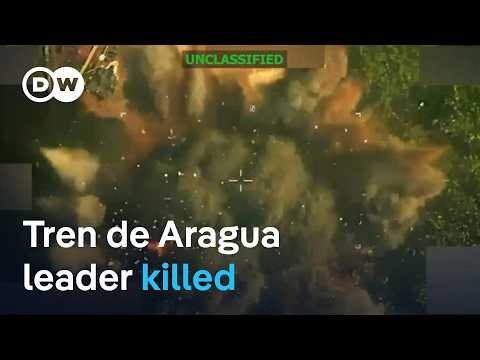
In a dramatic escalation of the campaign against transnational organized crime, the United States and Venezuela have confirmed a joint military operation that killed Nino Guerrero — the elusive leader of the Tren de Aragua gang, one of Latin America's most feared criminal syndicates. A recent DW News report detailed how the strike unfolded, marking a significant turning point i
In a dramatic escalation of the campaign against transnational organized crime, the United States and Venezuela have confirmed a joint military operation that killed Nino Guerrero — the elusive leader of the Tren de Aragua gang, one of Latin America's most feared criminal syndicates. A recent DW News report detailed how the strike unfolded, marking a significant turning point in regional security cooperation and raising urgent questions for Mexican border communities who have felt the group's reach firsthand.
Tren de Aragua Leader Killed in US-Venezuela Strike
Mexico City, Mexico — The operation this week eliminated Héctor Rusthenford Guerrero Flores, better known as Nino Guerrero, the kingpin who transformed a prison-based gang into a transnational crime empire. The Trump administration, which designated Tren de Aragua a foreign terrorist organization earlier this year, confirmed the strike was carried out jointly with Venezuelan authorities. The development represents the first publicly acknowledged military cooperation between Washington and Caracas since the capture of former Venezuelan President Nicolás Maduro in January.
Tren de Aragua's Reach Into Mexican Territory
While Tren de Aragua originated inside Venezuela's Tocorón Prison — where Guerrero famously built a criminal headquarters complete with a zoo, nightclub, and swimming pool before escaping a 2023 military raid — its tentacles have stretched deep into Mexico. Intelligence reports from the Secretaría de Seguridad y Protección Ciudadana have confirmed that Tren de Aragua cells operate in at least five Mexican states, with concentrations in Baja California, Chihuahua, and Sonora.
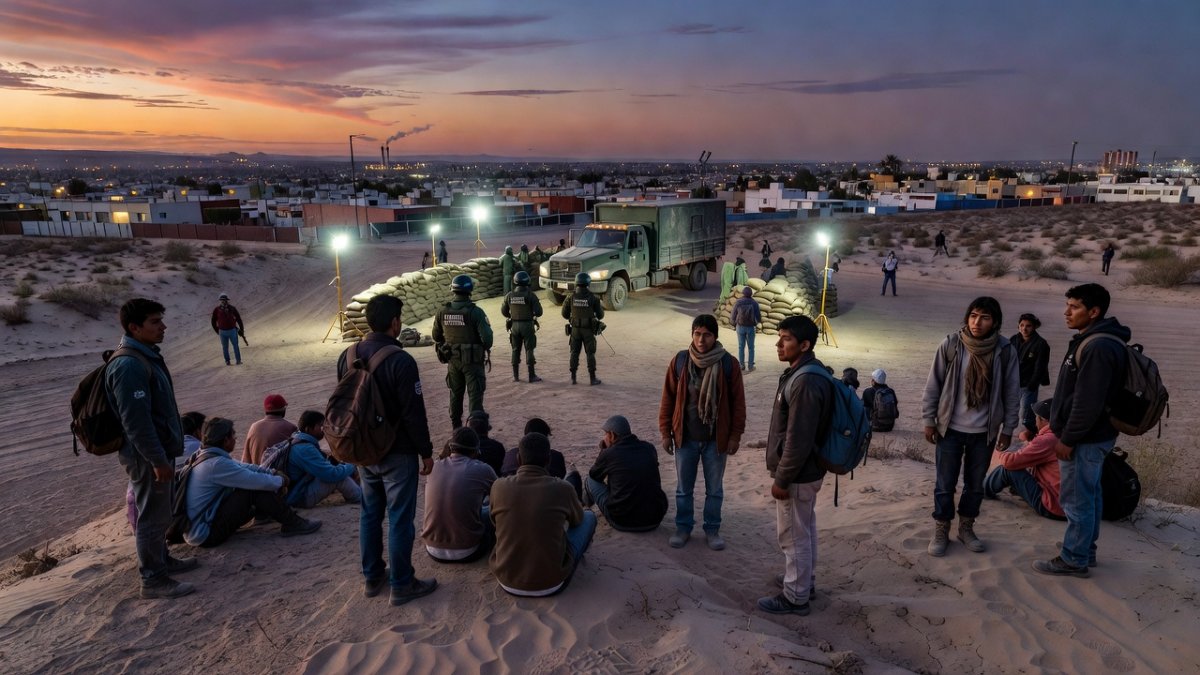
In Tijuana and Ciudad Juárez, the gang has established control over sections of the human smuggling corridors that move thousands of migrants from Central and South America toward the United States each month. Unlike traditional Mexican cartels that focus primarily on drug trafficking, Tren de Aragua has specialized in migrant exploitation — extorting, kidnapping, and forcing migrants into labor or sex work as the price of passage through their territory.
InSight Crime Co-Founder Steven Dudley, interviewed in the DW News report, described how the organization made the strategic leap from Venezuelan prison gang to transnational syndicate by capitalizing on the mass migration exodus from Venezuela. As millions fled the economic collapse under Maduro, Tren de Aragua operatives embedded themselves in the migrant flow, establishing cells all along the route north.
Impact on Mexican Border Communities
For families living in the colonias of Ciudad Juárez, the death of Nino Guerrero brings a mix of cautious hope and deep anxiety. Residents in neighborhoods near the Rio Grande have reported increased extortion demands in recent months, with armed men identifying themselves as members of the Venezuelan gang demanding weekly payments from small business owners. A tortillería owner in the Anapra colonia told local reporters that the payments had doubled since the start of the year.
Maquiladora workers who cross through the area's industrial corridors have altered their commutes, avoiding certain stretches after dark following reports of armed roadblocks. Teachers at schools in the affected colonias have noticed more absences on days when rumors circulate about gang movements through the neighborhoods.
The impact extends beyond the border zone. Migrant shelters in Monterrey and Saltillo have reported that Venezuelan nationals passing through are increasingly reluctant to speak with authorities, fearing retaliation from Tren de Aragua operatives who they say monitor the shelters. Shelter directors have requested additional protection from the Guardia Nacional, though resources remain stretched thin.
Sheinbaum Administration Response
The Sheinbaum administration has moved quickly to assess the implications of Guerrero's death for Mexican security. The Secretaría de Seguridad y Protección Ciudadana, under the direction of SSPC leadership in Mexico City, has ordered increased intelligence-sharing between the Guardia Nacional and state police forces in border states. SEDENA units stationed in Chihuahua and Baja California have been placed on heightened alert.
During the morning mañanera conference at Palacio Nacional, officials emphasized that Mexico's security strategy remains independent but open to coordination with international partners. "The fight against organized crime does not recognize borders," a spokesperson stated, "and neither can our response." The administration has also reached out to Central American governments through the SRE to discuss the potential for increased joint operations against Tren de Aragua cells operating throughout the region.
The Power Vacuum and Potential Fallout
The elimination of Nino Guerrero creates an immediate leadership vacuum within Tren de Aragua — a scenario that security analysts warn could trigger violent internal power struggles. In Mexico, where the gang operates through semi-autonomous cells rather than a centralized command structure, the risk is that factions could splinter and compete for control of lucrative migrant smuggling routes.
Ciudad Juárez, which sits directly across the border from El Paso, Texas, is particularly vulnerable. The city has spent years recovering from the violent cartel wars of the late 2000s and early 2010s, and community leaders fear any resurgence of organized crime violence could undo that progress. Local business associations have called on the SSPC and the Fiscalía General de la República to maintain a visible security presence in the coming weeks.
In Tijuana, where Tren de Aragua has established a foothold near the San Ysidro port of entry — the busiest land border crossing in the Western Hemisphere — law enforcement sources say the gang's local leadership is already jockeying for position. The Guardia Nacional has reinforced checkpoints along the key approaches to the border.
Broader Implications for Regional Security Cooperation
The joint US-Venezuela operation marks a remarkable shift in hemispheric security dynamics. Throughout the Maduro era, Washington and Caracas had virtually no security cooperation, with the Trump administration instead focusing on sanctions and diplomatic pressure. The operation signals that the post-Maduro Venezuelan government — led by the interim administration recognized by the United States — is now a willing partner in fighting the criminal groups that flourished under the previous regime's neglect.
For Mexico, this precedent raises important questions. The Sheinbaum administration has historically maintained a cautious approach to foreign military cooperation, grounding its security policy in Mexican constitutional principles of non-intervention. However, the transnational nature of groups like Tren de Aragua — which operate across Venezuelan, Colombian, Central American, and Mexican territory — may require a more coordinated regional response than any single country can achieve alone.
What to Watch For
In the days and weeks ahead, the key question for Mexican security officials will be whether Tren de Aragua's remaining leadership in Mexico attempts to consolidate power through violence or scatters into smaller, less predictable cells. The SSPC has deployed additional analytical resources to monitor financial flows and communications patterns in border states.
Meanwhile, the FGR is examining whether Guerrero's death opens new avenues for prosecuting Tren de Aragua operatives who may now be willing to cooperate with authorities in exchange for protection. The precedent set by the US-Venezuela joint operation may also encourage similar bilateral initiatives — potentially between Mexico and Central American partners — to target the leadership of other transnational criminal organizations operating across borders.
For the families in Ciudad Juárez's colonias, the migrant shelter workers in Monterrey, and the small business owners in Tijuana who have lived under the shadow of Tren de Aragua's violence, Guerrero's elimination is a significant blow against an organization that has caused immense suffering. But they know from hard experience that removing one kingpin does not end the crime — it simply reshapes it. The work of protecting communities and dismantling the networks that prey on the vulnerable continues.
By Rosa Martinez, Staff Writer
This article was produced with AI-assisted research and editorial support. Reporting is based on sources cited in the article.
What's Your Reaction?
 Like
0
Like
0
 Dislike
0
Dislike
0
 Love
0
Love
0
 Funny
0
Funny
0
 Wow
0
Wow
0
 Sad
0
Sad
0
 Angry
0
Angry
0

Latin America/Andes Correspondent at Global1.News. Based in Bogota, covering politics, environment, energy, and social movements across the Andean region. Passionate about environmental journalism and communities protecting their land.














Comments (0)