
Toronto Consulate Shooting Sparks Charges, Officer Death, and Cross-Border Terrorism Probe
Toronto Consulate Shooting Sparks Charges, Officer Death, and Cross-Border Terrorism Probe The investigation into a March 10 shooting near the Toronto consulate has expanded dramatically, resulting in multiple arrests and revealing alleged ties to an international terrorism network. Canadian authorities have charged an 18-year-old in connection with the incident while a separat
Toronto Consulate Shooting Sparks Charges, Officer Death, and Cross-Border Terrorism Probe
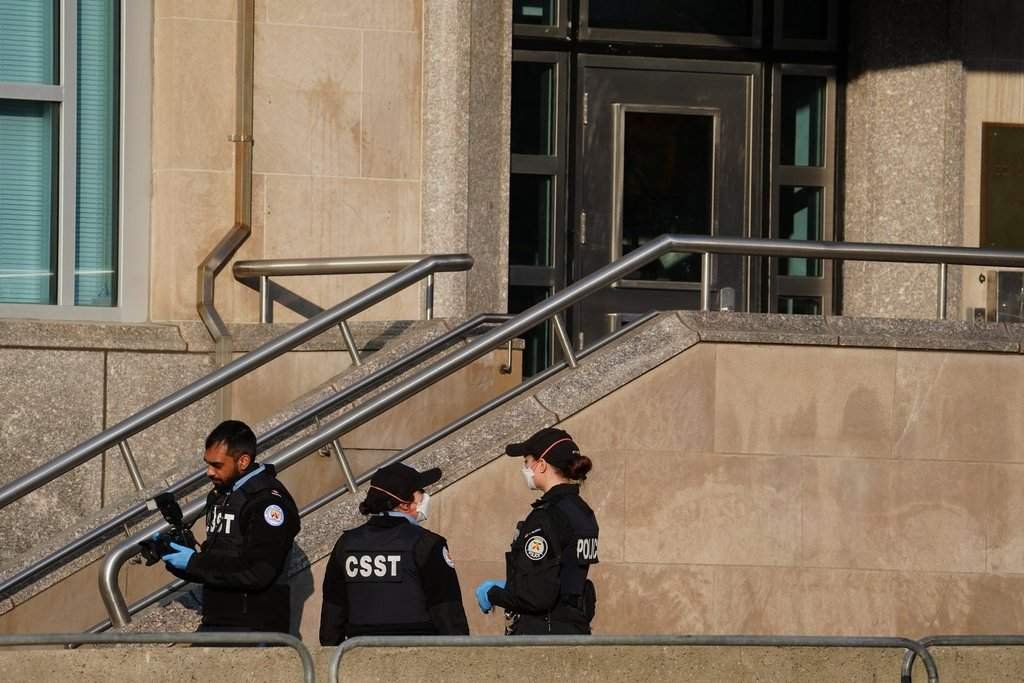
The investigation into a March 10 shooting near the Toronto consulate has expanded dramatically, resulting in multiple arrests and revealing alleged ties to an international terrorism network. Canadian authorities have charged an 18-year-old in connection with the incident while a separate raid claimed the life of a veteran Toronto officer. The case now involves U.S. prosecutors and raises urgent questions about foreign-directed threats on Canadian soil.
The Charges Against Sheldon Tracy-Stewart
Sheldon Tracy-Stewart, 18, faces 11 charges including discharging a firearm with intent, illegal possession of a firearm, and vehicle theft. Prosecutors allege he played a direct role in the March 10 shooting near the Toronto consulate, though the exact sequence of events remains under review. Court documents indicate the charges were laid weeks after the initial incident as forensic evidence and witness statements were analysed.
The timing of the charges reflects the complexity of the probe, which began as a local firearms investigation before broader connections emerged. Toronto Police have confirmed that Sheldon Tracy-Stewart was arrested following a coordinated operation involving multiple units. His alleged involvement centres on the use of a stolen vehicle and the discharge of a weapon during the confrontation.
Defence counsel has not yet entered a plea, and the matter remains before the courts. The case continues to be treated as an active investigation by Toronto Police, with additional forensic work ongoing. Officers are examining ballistic evidence and digital records to determine whether Sheldon Tracy-Stewart acted alone or with others. Canadian spelling rules apply in all legal filings, using terms such as offence rather than offense. The public is reminded that charges are allegations until proven in court.
Constable Marc Pinizzotto: A Veteran Officer Killed in the Line of Duty
Constable Marc Pinizzotto, 43, served 18 years with the Toronto Police Service and was a respected member of the Emergency Task Force. He was killed during a 5:40 a.m. raid on June 11 at 15 Martha Eaton Way near Trethewey and Black Creek drives. The operation targeted suspects linked to multiple shootings, including the consulate incident. Nicholas Bennett, 19, has been charged with first-degree murder while one additional suspect remains at large.
Chief Myron Demkiw stated that the search warrant was connected to several violent incidents, explicitly including the consulate shooting. Colleagues described Pinizzotto as a dedicated officer who had completed numerous high-risk operations over nearly two decades. His death has deeply affected the Toronto Police Service, prompting widespread tributes and an internal review of tactical procedures.
Pinizzotto leaves behind family members who have asked for privacy during this period of mourning. The force has arranged counselling services for officers and support staff. His 18 years of service are being honoured through memorial events planned across the city. The loss underscores the dangers faced by members of specialised units when executing warrants tied to national security matters.
International Dimensions: U.S. Terrorism Charges
Mohammad Baqer Saad Dawood Al-Saadi, an Iraqi national, faces terrorism charges in the United States. U.S. prosecutors allege he helped coordinate the Toronto consulate shooting as part of a wider conspiracy that also targeted a synagogue in Canada. Court filings claim the network planned nearly 20 attacks across Europe in addition to the North American incidents.
Investigators have linked the group to Kata'ib Hizballah and Iran's Islamic Revolutionary Guard Corps. The alleged connections suggest the Toronto operation formed one element of a transnational campaign directed from abroad. Canadian officials have acknowledged receiving intelligence from American partners that helped clarify these overseas dimensions.
The U.S. case has prompted Canadian authorities to re-examine earlier incidents for similar foreign involvement. Prosecutors in both countries continue to share evidence under existing legal assistance treaties. The allegations highlight how local crimes can mask larger ideological or state-sponsored objectives. No Canadian charges have yet been laid against Al-Saadi, though extradition discussions are reportedly underway.
RCMP and National Security Response
The investigation has been formally classified as a national security matter, shifting primary responsibility to the RCMP. This reclassification follows standard procedure whenever foreign actors or transnational networks appear involved. Toronto Police continue to assist but now operate under federal coordination with allied intelligence agencies.
The consulate shooting was initially handled entirely by Toronto Police until evidence pointed to broader international links. RCMP officers have since assumed leadership of the probe, drawing on resources from the Integrated National Security Enforcement Teams. Regular briefings occur between municipal, provincial, and federal partners to ensure consistent information flow.
Canadian authorities emphasise that such handovers protect both public safety and investigative integrity. The RCMP has also engaged Five Eyes partners to trace communications and financial trails connected to the alleged network. This collaborative model has proven effective in previous transnational cases. The public can expect further updates only when operational security permits.
What This Means for Canadian Security
The case exposes gaps in Canada's ability to detect threats that originate abroad yet manifest locally. CSIS has increased monitoring of foreign-directed activities, particularly those potentially linked to state or proxy actors. Questions have arisen about the speed of information sharing within the Five Eyes alliance involving the United States, United Kingdom, Australia, and New Zealand.
Previous incidents on Canadian soil have shown that early intelligence can prevent escalation. The federal government continues to refine its counter-terrorism framework, including updates to the Criminal Code and investment in digital surveillance tools. Parliamentarians have called for additional resources to support both CSIS and the RCMP in tracking evolving threats.
Public safety officials stress that most investigations remain classified to avoid compromising sources. The current matter illustrates how a single shooting can reveal connections spanning multiple continents. Continued vigilance and inter-agency cooperation remain central to the national security strategy.
A Community Mourns and Questions Remain
Residents across Toronto have expressed shock at the violence and grief over Constable Pinizzotto's death. Local community leaders have organised vigils while urging calm as the investigation proceeds. The policing community continues to mourn one of its own, with flags at half-mast at divisions throughout the city.
Broader implications for Canada's approach to international terrorism are still being assessed. No additional charges have been announced, and authorities caution that the probe remains active. Canadian officials continue to monitor potential connections to overseas networks while the consulate operates under enhanced security protocols.
Residents near the raid location have reported heightened police presence in recent weeks. Questions persist about how such plots develop undetected and what preventive measures might be strengthened. The coming months will likely bring further court appearances and possible new disclosures as evidence is tested.
By Alex Thompson, Staff Writer
This article was produced with AI-assisted research and editorial support. Reporting is based on sources cited in the article.
What's Your Reaction?
 Like
0
Like
0
 Dislike
0
Dislike
0
 Love
0
Love
0
 Funny
0
Funny
0
 Wow
0
Wow
0
 Sad
0
Sad
0
 Angry
0
Angry
0
Canada Correspondent at Global1.News. Based in Toronto, covering Canadian politics, energy, trade, and US-Canada relations. Provides the Canadian perspective on North American and global affairs.













Comments (0)