
This doctor is giving life back to female Yazidi victims of Islamic State
The Yazidi Genocide and Its Devastating Toll The events of August 2014 marked a turning point for the Yazidi community in northern Iraq. Islamic State militants seized control of large areas, including Sinjar, and carried out systematic attacks that the United Nations has described as an ongoing genocide against this religious minority. At least 12,000 Yazidis were killed or ki
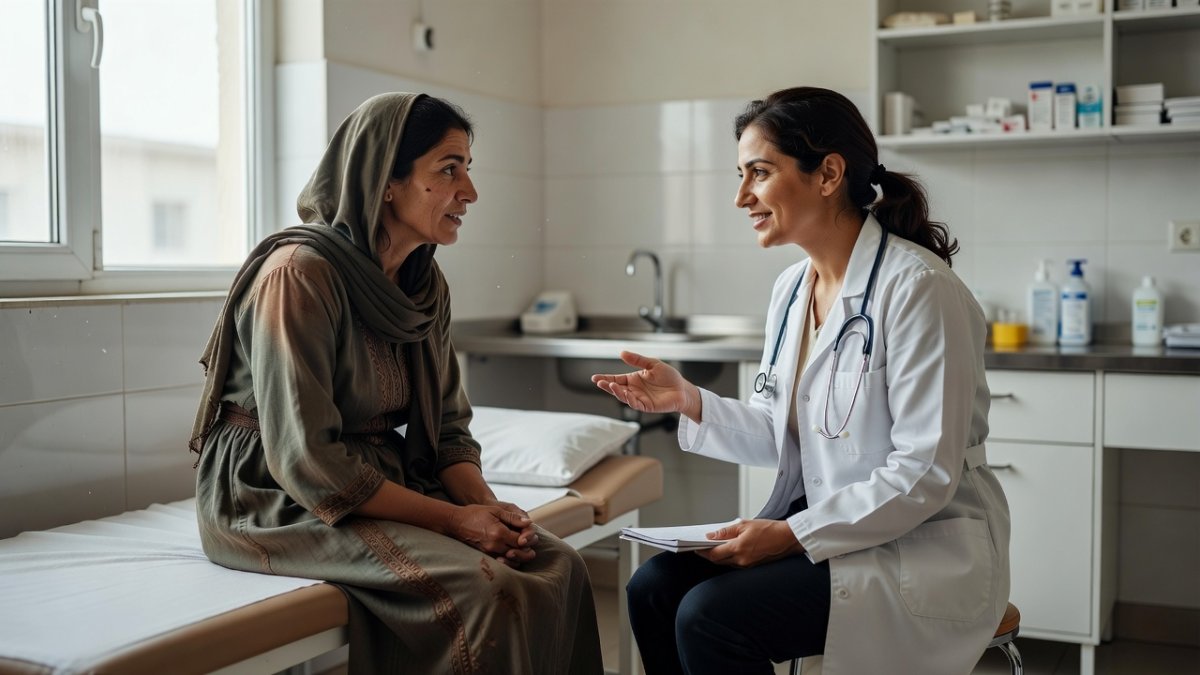
The Yazidi Genocide and Its Devastating Toll
The events of August 2014 marked a turning point for the Yazidi community in northern Iraq. Islamic State militants seized control of large areas, including Sinjar, and carried out systematic attacks that the United Nations has described as an ongoing genocide against this religious minority. At least 12,000 Yazidis were killed or kidnapped during this period, as IS forces targeted villages and towns across the region.
These actions displaced thousands and left families separated, with many individuals unaccounted for years later. The scale of the violence reflected a deliberate campaign against the Yazidi population, resulting in widespread loss and long-term disruption to community structures in affected areas.
Historical patterns of marginalization in Iraq compounded the immediate effects of the 2014 offensive. Yazidi communities had already faced repeated displacements, and the IS advance accelerated these pressures into a crisis that required sustained international attention.
Shireen's Harrowing Experience Under IS Captivity
Shireen was preparing for a high school examination at her home in Sinjar on 3 August 2014 when Islamic State militants entered and took her from her family. At 19 years old, she was sold as a sex slave to a militant in Tal Afar. Three months afterward, she was transferred to Abu Omar in Mosul, where she became his third wife.
Abu Omar maintained separate living arrangements for his other two Iraqi wives, yet Shireen reported that these women subjected her to beatings during their interactions. Her captivity lasted more than two years until Iraqi forces released her during operations to retake Mosul in 2016.
Upon release, Shireen faced severe mental health challenges, including depression and recurring nightmares that disrupted sleep. Several family members had been killed or remained missing, including her uncle, father, and one sister. These losses shaped her initial period of freedom and underscored the personal costs borne by individual survivors.
Dr. Nagham Nawzat's Lifelong Commitment to Women's Health
Dr. Nagham Nawzat, born in 1976 in Mosul to a Yazidi family, pursued medical training with a focus on women's health issues from an early stage. She completed her gynaecology degree at Mosul's Medical College in 2002, fulfilling a long-held ambition to practice medicine amid concerns about gender-based challenges in her community.
By 2016, Dr. Nawzat had received the International Women of Courage Award from then-US Secretary of State John Kerry. The recognition highlighted her efforts to deliver psychological support to Yazidi survivors and address gender-based violence in the aftermath of the IS campaign.
Her approach combined clinical care with attentive listening, allowing patients to share experiences in a structured setting. This method built trust over time and enabled survivors to discuss fears and emotions more openly during consultations.
Healing at the Duhok Survivors' Centre
In 2015, Dr. Nawzat began volunteering at the Duhok Survivors' Centre in Iraq's Kurdish region. The facility, supported by the United Nations Population Fund, operates as the only specialized centre in Iraq dedicated to cases of gender-based violence. It provides both medical examinations and psychological assistance to women who endured IS captivity.
Dr. Nawzat applies a post-traumatic medical framework that starts with a full physical assessment before shifting to discussions of trauma. She positions herself as a consistent source of support, encouraging positive reinforcement during sessions and fostering an environment where survivors can express themselves without immediate judgment.
Her work has reached an estimated 1,200 Yazidi women, according to Hussein al-Qaidi, director of the Kidnapped Affairs department at the Kurdistan Regional Government in Duhok. As of July 2018, official figures recorded 2,023 Yazidi women liberated from IS-held areas, with Dr. Nawzat contributing to care for more than half of those individuals.
The Broader Suffering of Yazidi Women and the Path to Recovery
The IS occupation affected Yazidi women through repeated sales, forced marriages, and isolation from support networks. These experiences extended beyond physical harm to include prolonged separation from relatives and exposure to violence within militant households. Many survivors returned with complex needs that required coordinated medical and emotional responses.
Dr. Nawzat's role at the centre illustrates how individual practitioners can address gaps in services for this population. Her emphasis on building mutual trust allows patients to disclose deeper concerns gradually, which supports incremental progress in managing trauma-related symptoms.
Survivors such as Shireen have credited this care with sustaining their ability to continue daily life. Shireen noted that without Dr. Nawzat's assistance, her recovery would have been significantly more difficult, reflecting the direct impact of consistent professional engagement on individual outcomes.
The Enduring Need for Sustained Support Structures
Even after liberation, many Yazidi survivors continue to navigate missing family members, health complications, and social reintegration. The statistics from 2018 indicate that thousands had been freed, yet the demand for specialized facilities like the Duhok centre remained evident in the volume of cases handled by Dr. Nawzat and her colleagues.
Continued funding and access to trained personnel are required to maintain these services. The centre's model demonstrates how targeted programs can respond to gender-based violence in conflict settings, yet broader regional conditions suggest that similar needs persist across displaced communities.
Efforts to document and address these experiences contribute to wider recognition of the long-term consequences of the 2014 events. Dr. Nawzat's ongoing involvement underscores the value of sustained, community-rooted responses in supporting recovery processes for affected women.
By Fatima Al-Rashid, Staff WriterThis article was produced with AI-assisted research and editorial support. Reporting is based on sources cited in the article.
What's Your Reaction?
 Like
0
Like
0
 Dislike
0
Dislike
0
 Love
0
Love
0
 Funny
0
Funny
0
 Wow
0
Wow
0
 Sad
0
Sad
0
 Angry
0
Angry
0
Gulf/MENA Correspondent at Global1.News. Based in Doha, covering Gulf politics, energy markets, diplomacy, and development across the Middle East and North Africa. Tracks the economic transformation of the Gulf states.












Comments (0)