
Ford Escalates Fight Over Toronto Island Airport, Threatens Support for Rail Project
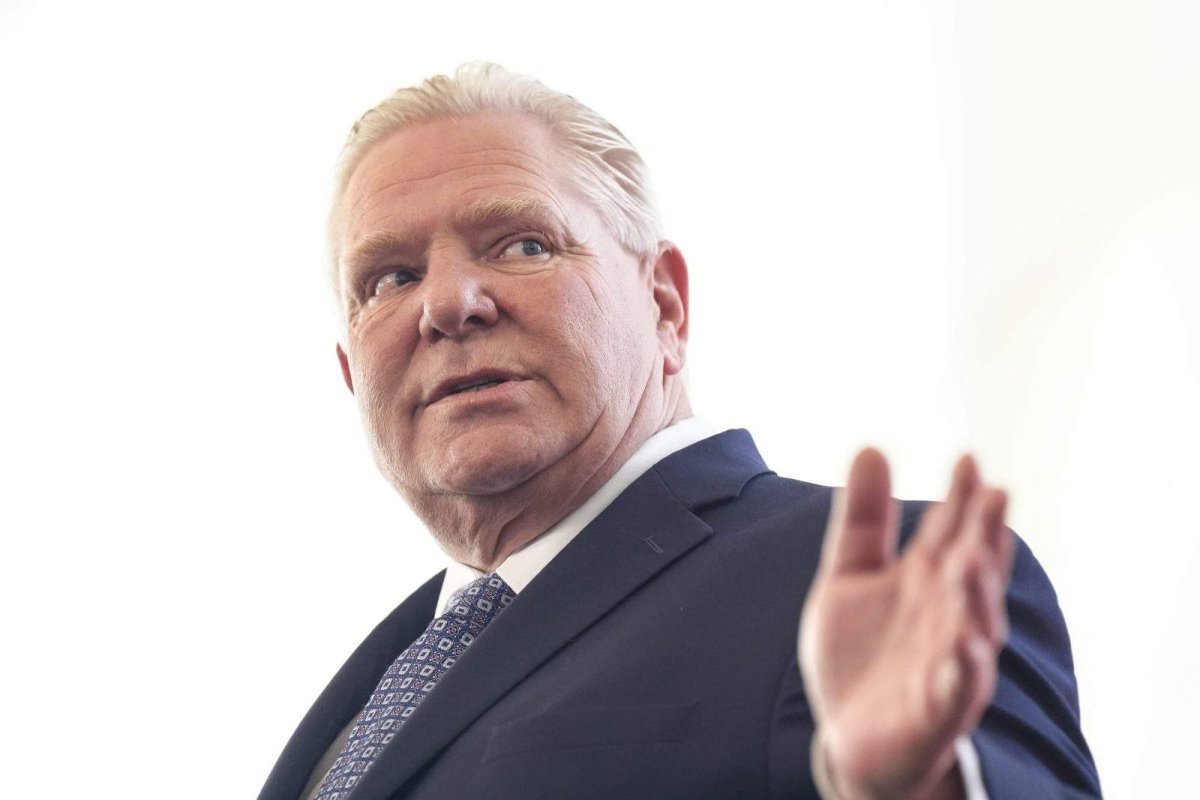
Escalating Infrastructure Fight The Ford government is escalating its infrastructure fight with Ottawa, threatening to rescind support for a federal high-speed rail line after the Carney government blocked expansion of Toronto's island airport. This puts Premier Doug Ford against Prime Minister Mark Carney, Toronto Mayor Olivia Chow, and thousands of waterfront residents. The situation has created a tense standoff involving multiple levels of government and local communities
Ford Escalates Fight Over Toronto Island Airport, Threatens Support for Rail Project
Escalating Infrastructure Fight
The Ford government is escalating its infrastructure fight with Ottawa, threatening to rescind support for a federal high-speed rail line after the Carney government blocked expansion of Toronto's island airport. This puts Premier Doug Ford against Prime Minister Mark Carney, Toronto Mayor Olivia Chow, and thousands of waterfront residents. The situation has created a tense standoff involving multiple levels of government and local communities who have voiced strong opinions on the future of the waterfront area.
Federal Transportation Minister Steven MacKinnon said the government will not pursue plans that "infringe on treasured public spaces." The Ford government fired back, calling it a capitulation to a "fringe group." Officials from the province have made it clear that they view the federal decision as a significant setback for regional development plans that were previously discussed at high levels.
The tripartite agreement governing Billy Bishop Toronto City Airport, originally struck among the federal government, the City of Toronto, and the Toronto Port Authority, has long restricted operations to turboprop aircraft such as Porter Airlines’ Q400 fleet. This framework, rooted in decades-old waterfront planning, explicitly capped jet operations to protect residential neighbourhoods from noise and safety risks. Recent provincial legislation in 2025 effectively supplanted the city’s role, shifting leverage toward Queen’s Park and opening the door for modernisation that could accommodate jets and expand annual passenger volumes to ten million.
Modernisation would require fresh environmental assessments, updated noise studies, and navigation of Canada Shipping Act protections for the harbour. Proponents argue the changes would boost economic activity through increased connectivity, yet critics highlight irreversible impacts on the waterfront ecosystem and property values. The shift from a city-led model to provincial oversight underscores how infrastructure decisions increasingly reflect partisan priorities rather than collaborative urban planning.
The Handshake Deal
Sources say Ford and Carney had a handshake deal: province would support the Alto high-speed rail line (Quebec City-Montreal-Ottawa-Toronto) in exchange for federal support of expanding Billy Bishop airport. Ford was upset and disappointed by the rejection. This agreement was seen as a key step toward advancing major transportation initiatives across the region, but the breakdown has left both sides reconsidering their positions on future collaborations.
Ford said: "If Prime Minister Carney and his team want to … if this is how they're going to treat bigger projects, I don't think you'll get much built." Provincial Transportation Minister Prabmeet Sarkaria said the province has "no intention to repeal" legislation that expropriated Toronto lands and replaced the city's position in the tripartite airport agreement. The premier's comments highlight growing frustration with how negotiations have unfolded between the two governments.
Billy Bishop runways are too short for jets. A full modernization plan from the Toronto Port Authority is forthcoming. Provincial officials continue to emphasize that they remain committed to moving forward with airport improvements despite the current federal stance.
The proposed ALTO high-speed rail corridor, projected to cost several billion dollars, would link Quebec City, Montreal, Ottawa, and Toronto at speeds of 300 kilometres per hour, promising transformative reductions in travel time and greenhouse-gas emissions from short-haul flights. The collapsed handshake between Premier Doug Ford and Prime Minister Mark Carney tied airport expansion approval to continued provincial backing for ALTO, illustrating how major projects are now routinely bundled in intergovernmental negotiations.
Should federal-provincial cooperation fracture, both initiatives risk prolonged delays or outright cancellation, with ripple effects on supply chains, tourism revenues, and construction employment across central Canada. The breakdown also signals eroding trust that could deter private investment in future corridors, amplifying economic uncertainty in an already strained infrastructure pipeline.
Statement from 11 PC MPPs
11 Progressive Conservative MPPs from eastern Ontario issued a statement: "Public confidence in major infrastructure projects depends on meaningful consultation. In the case of ALTO, too many questions remain unanswered." They include Nolan Quinn, David Piccini, Steve Clark, John Jordan, Tyler Allsopp, George Darouze, Billy Denault, Laurie Scott, Stephane Sarrazin, Ric Bresee, and Dave Smith. The group has called for greater transparency in how such large-scale projects are planned and executed.
The MPPs said: "If ALTO is to proceed, local voices impacted by this project deserve to see their feedback reflected in the project's planning, route selection and delivery. The federal government must ensure that any potential future rail project minimizes impacts on farmland." Farmers, municipalities and landowners have protested Alto on Parliament Hill. Their concerns focus on how the rail line could affect agricultural lands and local communities along the proposed route.
MacKinnon responded that Ottawa will work with Ontario and Quebec and remain "sensitive" to concerns. He called Alto "a project that makes Canadians dream, that will improve their lives." Federal representatives have stressed the importance of balancing project benefits with input from affected areas.
Eleven Progressive Conservative members from eastern Ontario have publicly voiced concerns that ALTO’s route would necessitate extensive farmland expropriation, threatening agricultural viability and rural livelihoods in ridings already sensitive to land-use changes. This internal caucus dissent, unusual within a majority government, exposes fractures between urban-focused growth strategies and the interests of hinterland representatives who fear electoral backlash.
Policy analysts note that such divisions could force Premier Ford to recalibrate his negotiating stance, potentially softening demands on the airport file to preserve party unity. The episode also illustrates how high-speed rail planning must contend with competing regional priorities, where economic benefits concentrated in the Greater Toronto Area may clash with localised costs borne by agricultural communities.
Mayor Chow vs Province
Toronto Mayor Olivia Chow: "Ultimately, who makes the final decision, the federal government and they've said no. The province can imagine whatever they want to… but for us, it's a no because the people have spoken." Chow has aligned her position with the results of public input gathered during consultations on the airport expansion proposal.
Sarkaria said the province will continue pursuing expansion and the legislation stays in place. The federal public consultation showed 87% of 87,000 respondents opposed expansion. The province dismissed that as a "fringe group." This difference in interpretation has further widened the gap between municipal and provincial approaches to the issue.
Federal-Provincial Context
The dispute highlights ongoing federal-provincial tensions over infrastructure priorities. The multi-sided fight — Ford vs Carney, Chow, and waterfront residents — illustrates the complex governance challenges in major urban projects. Both sides have expressed disappointment over the lack of progress on initiatives that were once viewed as mutually beneficial.
The collapse of the reported handshake deal leaves both Alto and the airport modernization in uncertainty. MacKinnon expressed confidence in Alto while acknowledging controversy ahead. Discussions between the governments are expected to continue amid these unresolved differences.
Canada’s history of federal-provincial friction over infrastructure reveals recurring patterns, from disputes over transit funding formulas to the housing accelerator fund and carbon pricing mechanisms. Ontario’s resistance to certain federal conditions has repeatedly stalled projects, forcing Ottawa to explore alternative delivery models or withhold contributions, which in turn inflates costs and extends timelines for critical works.
These tensions carry significant economic implications, including higher borrowing expenses for delayed projects and diminished investor confidence in Canadian supply-chain reliability. The current airport-ALTO standoff exemplifies how policy misalignment can transform ostensibly technical decisions into broader tests of intergovernmental relations, ultimately affecting productivity and regional competitiveness.
What Happens Next
Sarkaria confirmed a full Billy Bishop modernization plan from the Toronto Port Authority is forthcoming. The province has not backed down on either the airport or the rail threats. Officials have indicated they will monitor developments closely as plans are refined in the coming months.
The outcome will affect how future federal-provincial infrastructure projects are negotiated. For now, both levels of government remain at an impasse. The situation underscores the difficulties in aligning priorities across different jurisdictions on large transportation developments.
The Toronto Port Authority’s forthcoming expansion plan will test whether environmental and regulatory hurdles can be cleared without renewed tripartite consensus. Should the province proceed unilaterally, legal challenges from the city and waterfront residents appear likely, potentially entangling the project in years of litigation that would further complicate ALTO timelines.
Longer term, the episode may accelerate calls for formal dispute-resolution mechanisms in federal-provincial infrastructure agreements, reducing the scope for handshake diplomacy. Failure to resolve the impasse risks entrenching a cycle of retaliatory project cancellations that undermines both economic growth and public trust in Canadian governance institutions.
By Alex Thompson, Staff Writer
This article was produced with AI-assisted research and editorial support. Reporting is based on sources cited in the article.
What's Your Reaction?
 Like
0
Like
0
 Dislike
0
Dislike
0
 Love
0
Love
0
 Funny
0
Funny
0
 Wow
0
Wow
0
 Sad
0
Sad
0
 Angry
0
Angry
0
Canada Correspondent at Global1.News. Based in Toronto, covering Canadian politics, energy, trade, and US-Canada relations. Provides the Canadian perspective on North American and global affairs.












Comments (0)