
Taiwan Drone Defense: US Pushes Hornet's Nest Strategy
**Keywords:** Taiwan drone defense, Raymond Greene AIT, hornet's nest strategy, Japan Taiwan security, asymmetric warfare Ukraine, Taiwan arms spending 2026, US arms sale delays, Kawasaki Mitsubishi drones, Taiwan Strait energy imports, Japan defense exports 2026, Lai Ching-te defense, trilateral drone cooperation, Taiwan legislative hurdles US Diplomat Makes the Case for Drone
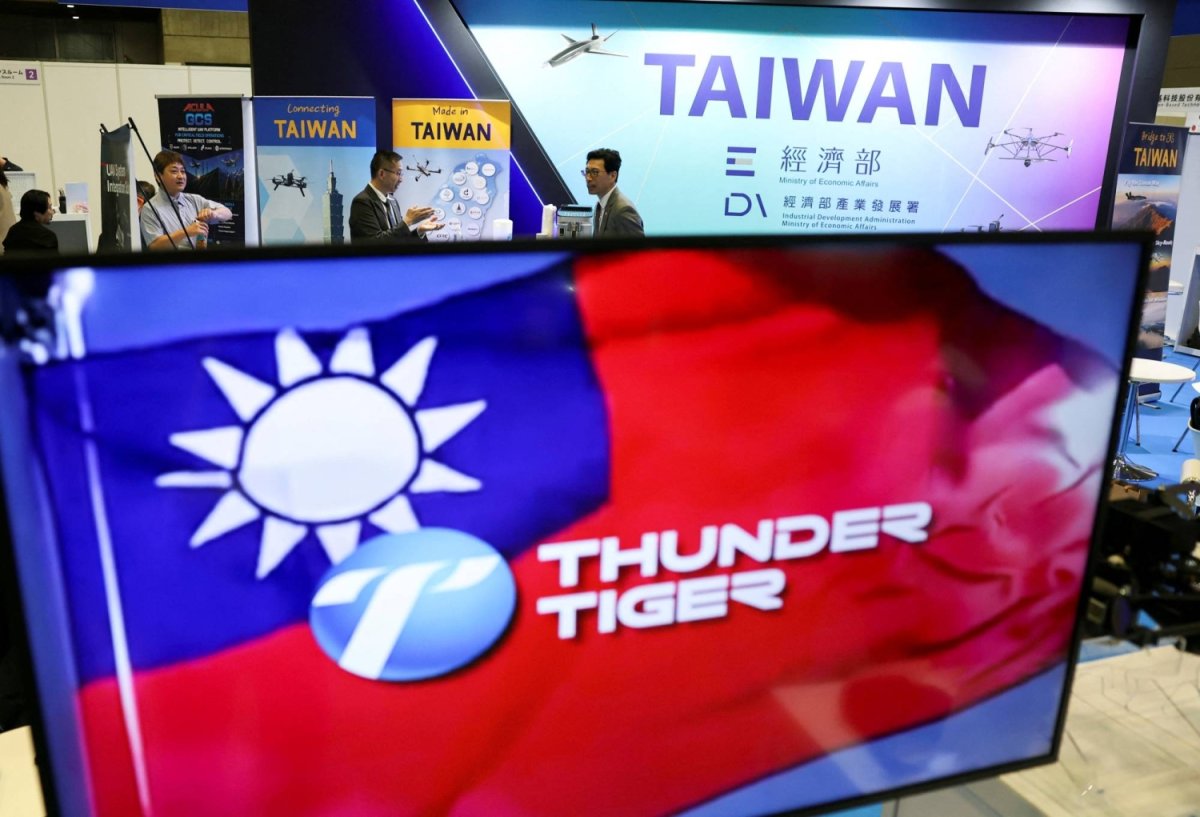
US Diplomat Makes the Case for Drone-Centric Defense
Raymond Greene, director of the American Institute in Taiwan, addressed a drone forum in Taichung on July 2, 2026, where he argued that nothing would deter conflict more effectively than turning Taiwan into a hornet's nest of air, surface, and subsurface drones. He described drones as a game-changing opportunity for Taiwan's security and stressed the importance of democratic drone production chains that avoid reliance on authoritarian suppliers. From Japan's perspective, these remarks align closely with Tokyo's 2026 Defense White Paper, which identifies Taiwan as a key factor shaping Japan's security environment and notes that stability across the Taiwan Strait directly affects Japanese energy imports passing through regional sea lanes.
Greene's emphasis on distributed drone systems reflects a broader shift toward low-cost, high-volume capabilities that could complicate adversary planning. Analysts in Tokyo observe that such an approach would raise operational costs for any potential blockade or invasion scenario, thereby supporting Japan's interest in maintaining open maritime routes. The focus on democratic supply chains also resonates with Japan's own efforts to diversify defense procurement away from concentrated sources, reducing vulnerability in critical technology sectors.
Japanese officials have monitored these developments because any disruption in the Taiwan Strait would immediately threaten energy security, given that a substantial portion of Japan's imported oil and liquefied natural gas transits nearby waters. Greene's public statements therefore provide Tokyo with additional context for assessing how asymmetric drone deployments might contribute to regional deterrence without requiring large-scale conventional forces.
Ukraine War Lessons Shape Taiwan's Asymmetric Strategy
Greene explicitly drew lessons from the Ukraine war, noting that drones enable smaller forces to challenge larger militaries through persistent surveillance and precision strikes. This observation mirrors Taiwan President Lai Ching-te's repeated statements that building asymmetric combat capabilities is a national defence project that constitutes a race against time, a point he reiterated at a Democratic Progressive Party meeting on Wednesday. Japan's decision to lift arms export restrictions in 2026 has created new possibilities for technology cooperation that could support these asymmetric efforts across the region.
Companies such as Kawasaki Heavy Industries and Mitsubishi Heavy Industries maintain active drone programs focused on maritime applications, offering potential synergies with Taiwan's emerging requirements. From Tokyo's viewpoint, integrating lessons from Ukraine strengthens the case for joint research that enhances collective deterrence while respecting Japan's constitutional constraints on defense exports. The analytical connection lies in how low-cost unmanned systems demonstrated effectiveness in contested environments, a factor that Japanese defense planners now weigh when evaluating Taiwan Strait contingencies.
These developments encourage Tokyo to explore calibrated technology transfers that bolster Taiwan's resilience without escalating regional tensions. Japanese analysts note that the Ukraine experience underscores the value of rapid production cycles and distributed assets, principles that align with Japan's updated defense planning documents released in 2026.
Taiwan's Drone Investment Plans Face Legislative Hurdles
Taiwan's government proposed T$210 billion, equivalent to US$6.59 billion, for surveillance, coastal attack, and small surface drones through the end of 2031, yet legislative approval remains uncertain. In May 2026 the opposition-controlled parliament approved only two-thirds of a requested US$40 billion increase in extra defense spending, forcing revisions to the overall timeline. The opposition Kuomintang countered with its own proposal of T$240 billion, or US$7.5 billion, spread over six years and capped at T$40 billion annually, creating competing frameworks that complicate multi-year procurement.
From Japan's perspective, these legislative delays hinder coordinated planning with partners such as Tokyo, where defense manufacturers require predictable schedules to align research and development investments. Prolonged uncertainty risks fragmenting supply chains that Japanese firms might otherwise support following the 2026 easing of export rules. Analysts in Tokyo emphasize that stable funding commitments are essential for building interoperable drone systems capable of contributing to shared maritime awareness in the region.
The budgetary impasse also affects Japan's assessment of Taiwan's ability to meet self-defense milestones within the timeframe outlined in Tokyo's 2026 Defense White Paper. Without clearer legislative consensus, opportunities for trilateral technology collaboration may remain underutilized, limiting the speed at which asymmetric capabilities can be fielded.
US Arms Sale Delays Drive Domestic Production Push
A senior US military official placed a US$14 billion Taiwan arms sale on hold in May 2026 to preserve munitions for the US-Israel conflict with Iran, accelerating Taiwan's pivot toward indigenous drone manufacturing. This shift has opened space for Japan's eased export restrictions to facilitate potential trilateral arrangements involving components and joint development. Japanese defense firms now evaluate how their participation could strengthen overall supply chain resilience while supporting Taiwan's accelerated timeline.
Tokyo views these delays as a catalyst that reinforces the strategic logic behind its 2026 policy adjustments, allowing Japanese companies to engage earlier in drone-related projects. The resulting arrangements could reduce single-point dependencies that previously characterized Taiwan's defense acquisitions. Analysts note that such diversification aligns with Japan's broader goal of enhancing regional stability through reliable technology partnerships.
By prioritizing domestic and allied production, Taiwan reduces exposure to external scheduling constraints, a development that Japanese planners regard as beneficial for maintaining credible deterrence across the strait. The episode illustrates how short-term disruptions can produce longer-term structural changes in defense industrial cooperation involving Tokyo.
Japan's Defense Cooperation Opportunities Expand
Japan's 2026 Defense White Paper explicitly linked Taiwan Strait stability to Japanese security, citing the importance of shipping lanes that carry critical energy imports and trade. The lifting of arms export restrictions in 2026 created new defense technology collaboration avenues, particularly in maritime surveillance and strike drones developed by Kawasaki Heavy Industries and Mitsubishi Heavy Industries. These programs now position Japanese industry to contribute to trilateral Japan-Taiwan-US drone cooperation that previously faced regulatory barriers.
From Tokyo's standpoint, expanded cooperation offers a practical means to support asymmetric capabilities that raise the cost of any sustained crisis without direct Japanese involvement in frontline operations. The White Paper's analysis underscores that open sea lanes remain indispensable for Japan's economic continuity, making Taiwan's drone investments a shared interest. Japanese officials therefore assess how calibrated technology exchanges can reinforce deterrence while remaining consistent with domestic legal frameworks.
Successful integration of Japanese drone systems into regional architectures could provide persistent coverage that complements US and Taiwanese assets. This layered approach reflects Tokyo's preference for indirect contributions that enhance collective resilience across the first island chain.
Strategic Implications for the Taiwan Strait
China's increased military pressure continues to shape the operational environment, prompting greater attention to asymmetric options such as the hornet's nest strategy. Persistent drone coverage would raise the cost of a blockade or invasion by complicating adversary movements across multiple domains. Japan would likely serve as a first responder to any sustained crisis affecting sea lanes, given its geographic proximity and dependence on uninterrupted energy supplies.
Energy security and trade continuity for Japan hinge on the Taiwan Strait remaining open, a reality highlighted in the 2026 Defense White Paper. Successful development of asymmetric capabilities could alter risk calculations for all regional actors by demonstrating that high-volume unmanned systems can offset numerical disadvantages. Tokyo therefore monitors Taiwan's legislative and production progress as an indicator of future stability.
Japanese analysts conclude that coordinated drone initiatives involving democratic partners offer a measured pathway to deterrence that avoids unnecessary escalation. The cumulative effect of these efforts may encourage more cautious behavior by potential adversaries while reinforcing Japan's own defense posture in the coming decade.
Tags: Taiwan, drones, Japan, security, asymmetric warfare, defense spending, US-Taiwan relations, energy security
By Kenji Tanaka, Staff Writer
This article was produced with AI-assisted research and editorial support. Reporting is based on sources cited in the article.
What's Your Reaction?
 Like
0
Like
0
 Dislike
0
Dislike
0
 Love
0
Love
0
 Funny
0
Funny
0
 Wow
0
Wow
0
 Sad
0
Sad
0
 Angry
0
Angry
0

Japan Correspondent at Global1.News. Tokyo-based voice covering Japanese politics, technology, economy, and culture. Tracks the intersection of tradition and innovation in one of the world's most dynamic societies.















Comments (0)