
Autonomous Fighter Jets: US Race Reshapes Global Defense
Landscape The United States Air Force is accelerating toward a future where autonomous uncrewed fighter jets operate alongside piloted aircraft, with companies including General Atomics, Anduril Industries, and Shield AI making rapid progress on the Pentagon's Collaborative Combat Aircraft program.
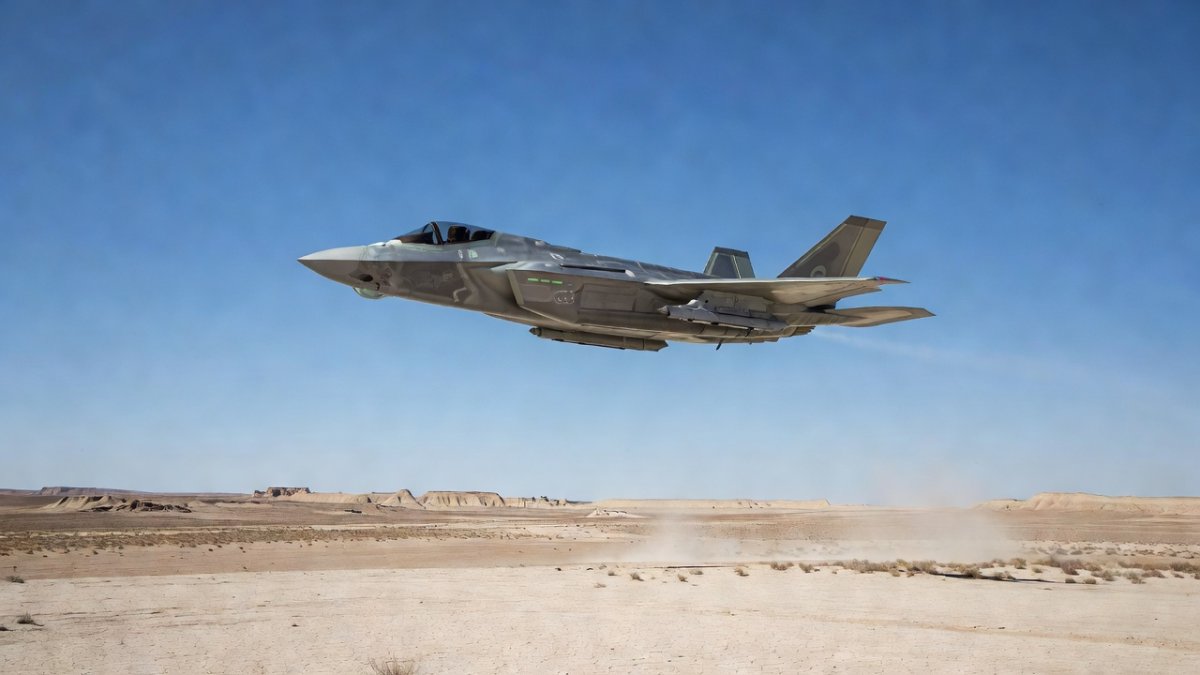
Autonomous Fighter Jets: US Race Reshapes Global Defense Landscape
The United States Air Force is accelerating toward a future where autonomous uncrewed fighter jets operate alongside piloted aircraft, with companies including General Atomics, Anduril Industries, and Shield AI making rapid progress on the Pentagon's Collaborative Combat Aircraft program. The initiative, which aims to procure approximately 1,000 semi-autonomous aircraft at a fraction of the cost of crewed fighters, carries significant implications for Japan's own defense modernization efforts and the trilateral Global Combat Air Programme with the United Kingdom and Italy.
Tags: autonomous fighter jets, CCA program, General Atomics FQ-42A, Anduril YFQ-44A, Collaborative Combat Aircraft, Japan GCAP, uncrewed combat aircraft, US Air Force, Shield AI, Japan defense industry
US Air Force Awards Landmark Production Contract to General Atomics
In June 2026, the US Air Force awarded a landmark production contract to General Atomics Aeronautical Systems for the manufacture of the FQ-42A Collaborative Combat Aircraft, marking the formal transition of autonomous airpower concepts into active manufacturing. The contract represents a pivotal shift in Pentagon procurement strategy, compressing what traditionally required decades of aerospace development into an aggressive timeline measured in months rather than years.
The FQ-42A advanced from its initial contract award to its maiden flight in just 15 months — one of the fastest design-to-flight turnarounds for a new fighter class in modern aviation history. The aircraft functions as a purpose-built, uncrewed platform utilizing an advanced modular design that facilitates rapid integration of interchangeable mission systems and specialized payload options. Its proprietary software architecture enables fluid, real-time human-machine teaming, allowing uncrewed assets to coordinate tactics directly alongside piloted aircraft in contested combat zones.
"This historic production order rewards extensive internal capital investments and cements a deepening strategic partnership between the defense contractor and federal defense planners," the company stated in its announcement. The Air Force has indicated that it expects CCA aircraft to cost approximately one-third — or less — of the price of an F-35 Lightning II fighter jet, which carries a per-unit price tag of $80 million or more depending on configuration.
Anduril's YFQ-44A and the Competitive Landscape
Anduril Industries, the Los Angeles-based defense technology company, successfully flew its YFQ-44A jet-powered combat drone for the first time in October 2025, marking a significant milestone in the race to field autonomous "loyal wingman" aircraft. The aircraft went from clean-sheet design to first flight in 556 days, reflecting the Air Force's push to field CCA platforms using streamlined acquisition processes that bypass traditional defense procurement bureaucracy.
The YFQ-44A flew semi-autonomously, managing its own flight controls and throttle adjustment without human command, with the ability to land at the push of a button. "There is no operator with a stick and throttle flying the aircraft behind the scenes," said Jason Levin, Anduril's engineering executive, emphasizing the aircraft's autonomous capabilities from its very first flight. The Air Force has designated the aircraft YFQ-44A, with "Y" indicating prototype status, "F" signifying fighter mission, and "Q" denoting unmanned operation.
Shield AI, a San Diego-based autonomy software company, has also been selected as a mission autonomy provider for the CCA program following a competitive Technology Maturity and Risk Reduction evaluation in February 2026.
Japan's GCAP Program and the Autonomous Fighter Question
The rapid advancement of US autonomous fighter technology has direct implications for Japan's defense strategy and its participation in the Global Combat Air Programme alongside the United Kingdom and Italy. GCAP, the trilateral next-generation stealth fighter program, has been progressing with Japan's Mitsubishi Heavy Industries playing a leading role in airframe development, while UK-based BAE Systems contributes advanced sensor integration and Italy's Leonardo provides electronic warfare capabilities.
In a development that underscores the program's growing international relevance, Canada formally joined GCAP as an observer nation on July 21, 2026, gaining early insight into sixth-generation fighter technology as it moves to diversify from sole reliance on US platforms. The United Kingdom has committed approximately £6 billion (about ¥1.1 trillion) to the program, paving the way for multi-year industry contracts that extend through 2027.
The emergence of the US CCA program, however, raises strategic questions about whether GCAP should incorporate autonomous uncrewed variants into its own development roadmap. While GCAP has been primarily conceived as a crewed sixth-generation fighter, the trajectory of US programs suggests that manned-unmanned teaming will be a defining characteristic of next-generation air combat. Japan's Ministry of Defense and Acquisition, Technology & Logistics Agency have been closely monitoring CCA developments, and industry sources indicate that autonomous or optionally-crewed variants of the GCAP platform are under study for future capability blocks.
Cost Dynamics and the Economics of Autonomous Air Combat
Perhaps the most transformative aspect of the CCA program is its cost structure. At roughly one-third the cost of an F-35 — or approximately $25-30 million per aircraft — the economics of autonomous fighters allow for procurement at a scale that would be prohibitive for crewed aircraft. The Air Force has stated it aims to field more than 150 CCA units within five years as part of a broader goal to deploy over 1,000 Collaborative Combat Aircraft across multiple mission sets.
For Japan, which operates a fleet of 105 F-35s on order alongside its domestically developed Mitsubishi F-2 and F-15J modernization programs, the cost calculus is particularly relevant. Japan's defense budget for fiscal 2026 stands at approximately ¥8.9 trillion ($59 billion), representing 2% of GDP for the first time in the nation's postwar history. The ability to field large numbers of lower-cost autonomous aircraft could significantly alter how the Japan Air Self-Defense Force approaches force structure planning, particularly given the challenges of pilot training and retention that affect all modern air forces.
Modular Design and Industrial Base Implications for Japan
The modular design philosophy underlying the FQ-42A — enabling rapid swapping of mission systems, sensors, and weapons payloads — aligns with emerging trends in Japan's own defense industrial base. Companies such as Mitsubishi Heavy Industries, IHI Corporation, and Kawasaki Heavy Industries have extensive experience in weapons system integration and could potentially contribute to or benefit from autonomous aircraft development.
Japan's defense industry has been undergoing a period of transformation, with the government easing arms export restrictions in 2023 and establishing new frameworks for international defense cooperation. The GCAP program represents the most significant manifestation of this policy shift, but autonomous aircraft technology could open additional avenues for collaboration. Japanese sensor and electronics manufacturers, including Mitsubishi Electric and NEC Corporation, possess relevant technologies in radar, electronic warfare, and communications that could find applications in autonomous platforms.
Operational Implications for the Indo-Pacific Theater
The Pentagon has explicitly framed the CCA program in the context of potential conflict in the Pacific, where autonomous systems could provide critical advantages against sophisticated air defenses. The ability to operate in contested environments too dangerous for crewed aircraft gives autonomous fighters particular relevance in the Indo-Pacific theater, where China's increasingly capable integrated air defense systems pose growing risks to piloted platforms.
For Japan, which faces its own air defense challenges across the East China Sea and around the Nansei Islands, autonomous "loyal wingman" aircraft could augment the JASDF's existing fleet by providing additional sensor platforms, electronic attack capabilities, and missile magazines without expanding pilot requirements. The US Air Force has been operating autonomous aircraft alongside Japanese forces in exercises such as Cope Japan and Keen Sword, providing the JASDF with direct exposure to the operational concepts that will define future air combat.
What to Watch For
The autonomous fighter jet race is entering a critical phase over the next 12-18 months. The US Air Force is expected to announce a production decision for one or both CCA designs in fiscal 2026, which will set the procurement trajectory for the program. Anduril's Arsenal-1 production facility in Columbus, Ohio — a $900 million, 5-million-square-foot advanced manufacturing plant — is expected to begin operations in the second half of 2026, capable of producing autonomous aircraft at unprecedented scale using AI-powered manufacturing systems.
For Japan, the key developments to monitor include whether the GCAP partnership formally incorporates autonomous or optionally-crewed capabilities into its development roadmap, and whether Japanese defense contractors seek to participate in the US CCA supply chain. The Ministry of Defense's next five-year defense buildup plan, expected in late 2026 or early 2027, will provide the clearest signal of Japan's autonomous air combat ambitions.
The race to deliver autonomous fighter jets represents not merely a technological competition but a fundamental reshaping of military aviation economics and strategy. For Japan, a nation with world-class electronics and manufacturing capabilities but structural constraints on defense spending and personnel, the autonomous fighter revolution offers both strategic challenges and industrial opportunities that will define its air power posture for decades to come.
By Kenji Tanaka, Staff Writer
This article was produced with AI-assisted research and editorial support. Reporting is based on sources cited in the article.
What's Your Reaction?
 Like
0
Like
0
 Dislike
0
Dislike
0
 Love
0
Love
0
 Funny
0
Funny
0
 Wow
0
Wow
0
 Sad
0
Sad
0
 Angry
0
Angry
0

Japan Correspondent at Global1.News. Tokyo-based voice covering Japanese politics, technology, economy, and culture. Tracks the intersection of tradition and innovation in one of the world's most dynamic societies.














Comments (0)