
Canada Braces for CUSMA Review as Trump Dismisses Trade Dependence
On June 14, 2026, CBC News aired an 18-minute-49-second segment hosted by Rosemary Barton featuring former Canadian ambassador to the United States Kirsten Hillman and Ontario Minister of Economic Development Vic Fedeli. The discussion examined U.S. President Donald Trump’s recent remarks on bilateral trade and the upcoming mandatory review of the Canada-United States-Mexico Ag
On June 14, 2026, CBC News aired an 18-minute-49-second segment hosted by Rosemary Barton featuring former Canadian ambassador to the United States Kirsten Hillman and Ontario Minister of Economic Development Vic Fedeli. The discussion examined U.S. President Donald Trump’s recent remarks on bilateral trade and the upcoming mandatory review of the Canada-United States-Mexico Agreement. For millions of Canadians whose jobs depend on cross-border commerce, the exchange underscored immediate stakes in energy corridors, automotive assembly lines and softwood lumber shipments.
Canada Braces for CUSMA Review as Trump Dismisses Trade Dependence
Ottawa, Ontario – June 15, 2026 — Canadians watching the June 14 broadcast heard Hillman describe Trump’s June 10 Oval Office statement that “We don’t need anything that Canada has” as partly standard negotiation posturing. The comment arrived five days before the July 1, 2026 mandatory review date for CUSMA, the successor to NAFTA signed in 2018. With 75 percent of Canadian exports directed to the United States, the remarks triggered renewed scrutiny of supply chains running from Windsor assembly plants to Alberta energy terminals.
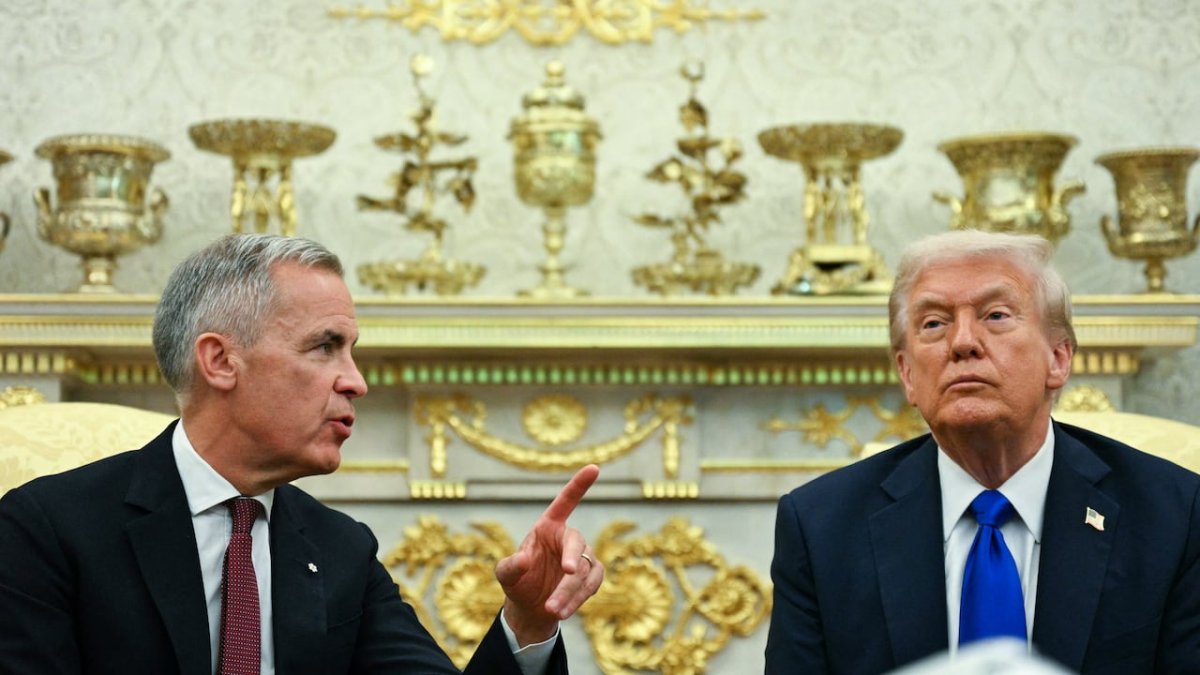
Section 1 — The Story — Trump's Posturing and the CUSMA Review
President Trump first labelled CUSMA “irrelevant” during a January 2026 visit to a Ford plant in Michigan, setting the tone for the July 1 review. On June 10 he repeated the claim in the Oval Office, stating the United States required neither Canadian nor Mexican goods. Hillman, who served as ambassador from 2019 until early 2026, told Barton that such language mirrors tactics used during the original 2017-2018 renegotiation when tariffs on steel and aluminium were threatened before being rolled back.
Ontario Minister Vic Fedeli noted that the province’s automotive sector, which shipped 1.4 million vehicles to the United States in 2025, would face immediate disruption if new duties were imposed. He pointed to the 2018-2019 period when GM’s Oshawa plant idled 2,500 positions amid tariff uncertainty. Hillman added that Mexico’s 2025 exports of 3.2 million vehicles to the same market give Ottawa additional leverage because any broad tariff would also hit U.S. parts suppliers integrated across the three countries.
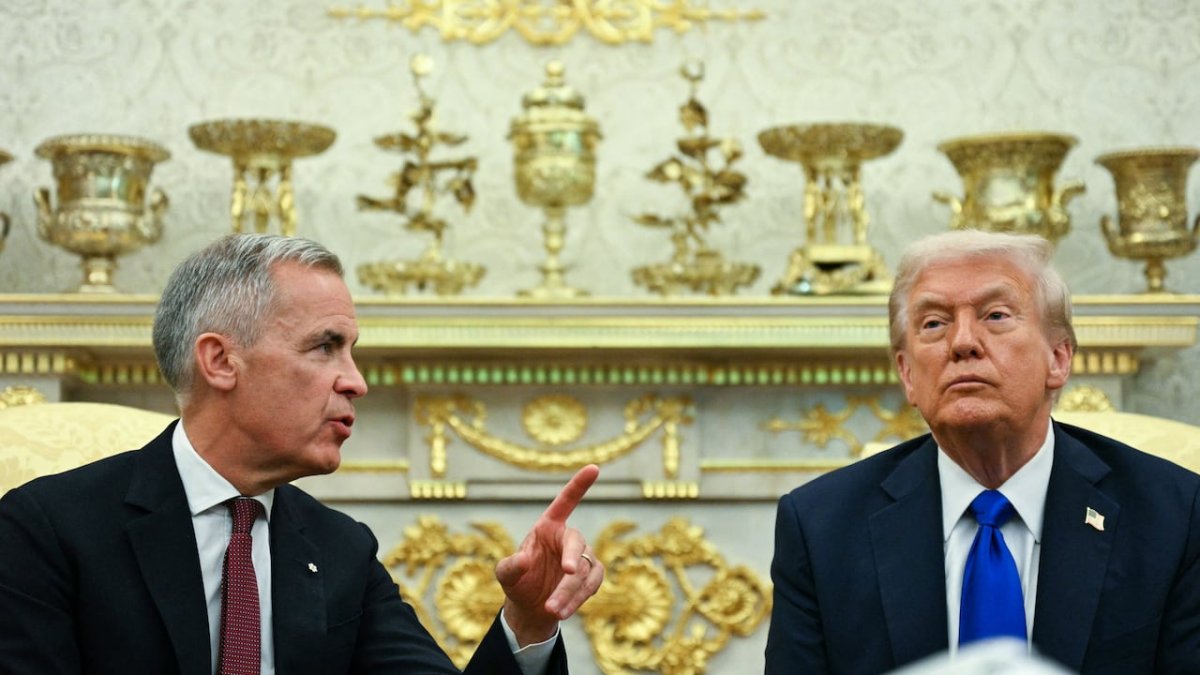
Section 2 — Leverage and Strategy — Canada's Negotiating Position
Hillman outlined three concrete Canadian advantages: integrated automotive production valued at $120 billion annually, Alberta and Saskatchewan crude exports averaging 4.1 million barrels per day, and Quebec and British Columbia hydroelectric sales exceeding 30 terawatt-hours yearly. She argued these flows cannot be replaced quickly by domestic U.S. sources without raising costs for American manufacturers and consumers. Fedeli reinforced the point by citing the 2025 Ontario-Pennsylvania memorandum of understanding on joint infrastructure and manufacturing projects signed in Harrisburg on March 12.
The minister stated that the MOU already includes commitments for a $2.8-billion rail corridor linking Toronto-area parts makers to Pennsylvania assembly plants. Hillman noted that any U.S. attempt to exclude Canadian energy would require the construction of new pipelines from Texas shale fields, a process that historically takes seven to ten years and faces regulatory hurdles in multiple states. Both guests emphasised that Canada’s dairy and softwood lumber sectors, while smaller, remain protected under CUSMA side letters that expire only if all three parties agree to terminate the agreement.
Section 3 — Provincial Engagement — The Team Canada Approach
Fedeli described weekly calls among the premiers of Ontario, Quebec, Alberta and British Columbia that began on January 22, 2026, immediately after Trump’s Michigan remarks. The calls coordinate positions on digital services taxes, dairy tariff-rate quotas and softwood lumber export volumes. Ontario alone accounts for 38 percent of Canada’s total merchandise exports to the United States, while Alberta’s energy shipments represent 22 percent of the national total.
Quebec Premier François Legault and British Columbia Premier David Eby joined the June 9 virtual meeting that finalised a joint brief to be presented to federal negotiators before the July 1 review. The document lists 47 specific tariff lines where Canadian concessions would harm U.S. downstream industries, including aerospace components from Mirabel and specialty lumber from Prince George. Fedeli confirmed that the four provinces have also agreed to share legal costs for any dispute-settlement proceedings under CUSMA Chapter 31.
Section 4 — Carney's European Diplomacy
Prime Minister Mark Carney arrived in Brussels on June 11, 2026, for meetings with European Commission President Ursula von der Leyen and German Chancellor Olaf Scholz. The itinerary includes stops in Paris and The Hague before the G7 summit scheduled for June 26-28 in Munich. Carney’s office released a statement indicating that Canada seeks to expand the Comprehensive Economic and Trade Agreement with the European Union to cover digital services and critical minerals not fully addressed in the 2017 text.
During a June 12 press conference in Berlin, Carney cited 2025 Statistics Canada data showing that Canadian merchandise exports to the EU grew 14 percent year-over-year to $48 billion. He emphasised that new liquefied natural gas contracts with Germany, signed in February 2026, already divert 12 percent of previously U.S.-bound volumes. Hillman told Barton that these diversification efforts provide Ottawa with credible alternatives should the CUSMA review stall.
Section 5 — Impact on Canadian Workers and Families
Statistics Canada reported in May 2026 that 1.9 million Canadian jobs are directly tied to exports to the United States. In Windsor, Ontario, the Unifor local representing 8,400 Stellantis workers held a town-hall meeting on June 8 to discuss potential shift reductions if new tariffs materialise. Similar briefings occurred at Edmonton refineries and Vancouver port terminals where 22,000 longshore workers handle containers destined for U.S. distribution centres.
Economists at the Conference Board of Canada estimate that a 10 percent across-the-board tariff would reduce national GDP by 1.8 percent within 18 months and raise the average household grocery bill by $420 annually due to higher dairy and produce prices. Fedeli noted that the Ontario government has already earmarked $340 million in its March 2026 budget for worker retraining programs focused on electric-vehicle battery plants in the Kitchener-Waterloo corridor.
Section 6 — What Happens Next
Negotiators from Global Affairs Canada are scheduled to meet their U.S. counterparts in Washington on June 24, 2026, two days before the G7 summit. Hillman predicted that the first formal exchange will focus on procedural timelines rather than substantive concessions, with both sides likely to request extensions beyond the July 1 statutory date. Fedeli added that Ontario will host a virtual industry roundtable on June 20 to gather updated data from the automotive and steel sectors.
Carney’s office indicated that any bilateral agreement reached before the G7 will be presented to Parliament in the fall session, while provincial premiers have requested a first ministers’ meeting in Calgary on July 15 to align positions on potential retaliatory measures. Observers expect the review process to extend into 2027, mirroring the 18-month timeline of the original NAFTA renegotiation completed in 2018.
By Alex Thompson, Staff Writer
This article was produced with AI-assisted research and editorial support. Reporting is based on sources cited in the article.
What's Your Reaction?
 Like
0
Like
0
 Dislike
0
Dislike
0
 Love
0
Love
0
 Funny
0
Funny
0
 Wow
0
Wow
0
 Sad
0
Sad
0
 Angry
0
Angry
0

Canada Correspondent at Global1.News. Based in Toronto, covering Canadian politics, energy, trade, and US-Canada relations. Provides the Canadian perspective on North American and global affairs.













Comments (0)