
Can China Cheat Its Way to AI Supremacy? US Tech War
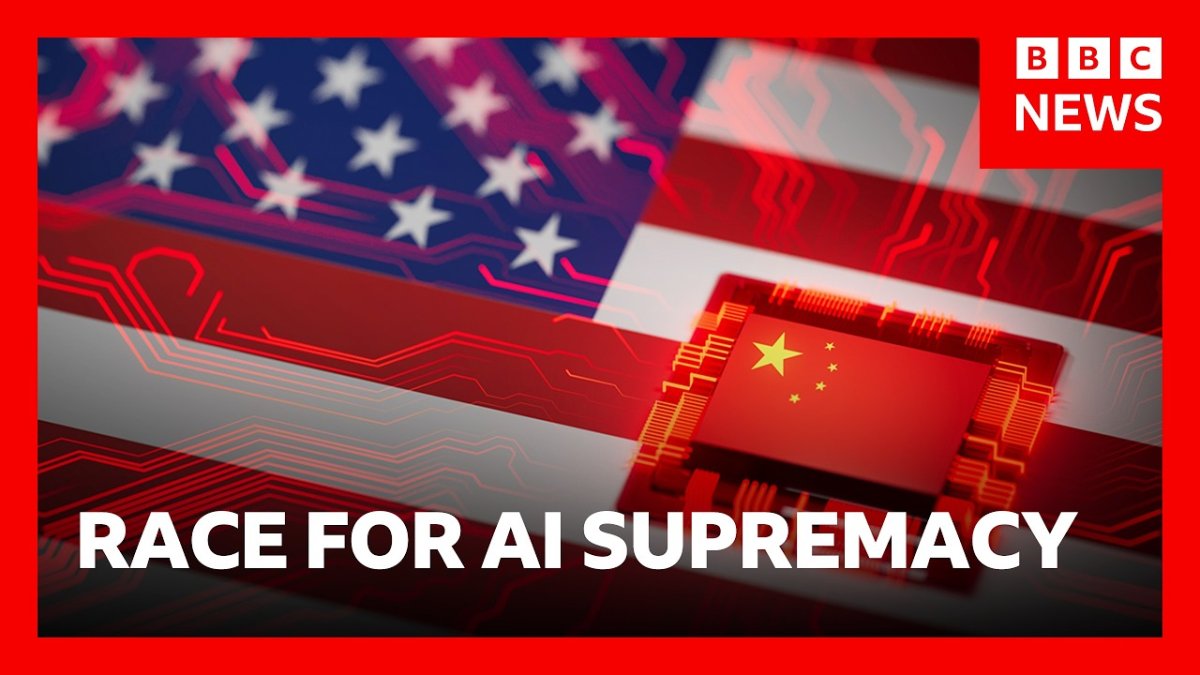
In a recent BBC News investigation titled "Can China cheat its way to AI supremacy?", the programme examined the escalating technological rivalry between Washington and Beijing, focusing on allegations that Chinese AI firms are using model distillation and intellectual property theft to close the gap with American frontier models. Can China Cheat Its Way to AI Supremacy? Inside
In a recent BBC News investigation titled "Can China cheat its way to AI supremacy?", the programme examined the escalating technological rivalry between Washington and Beijing, focusing on allegations that Chinese AI firms are using model distillation and intellectual property theft to close the gap with American frontier models.
Can China Cheat Its Way to AI Supremacy? Inside the US-China Tech War
London – 5 July 2026 — The race for artificial intelligence dominance between Washington and Beijing has entered a new and contentious phase, with allegations of industrial-scale model theft, export control battles, and a legislative push to classify AI distillation as economic espionage reshaping the technological landscape.
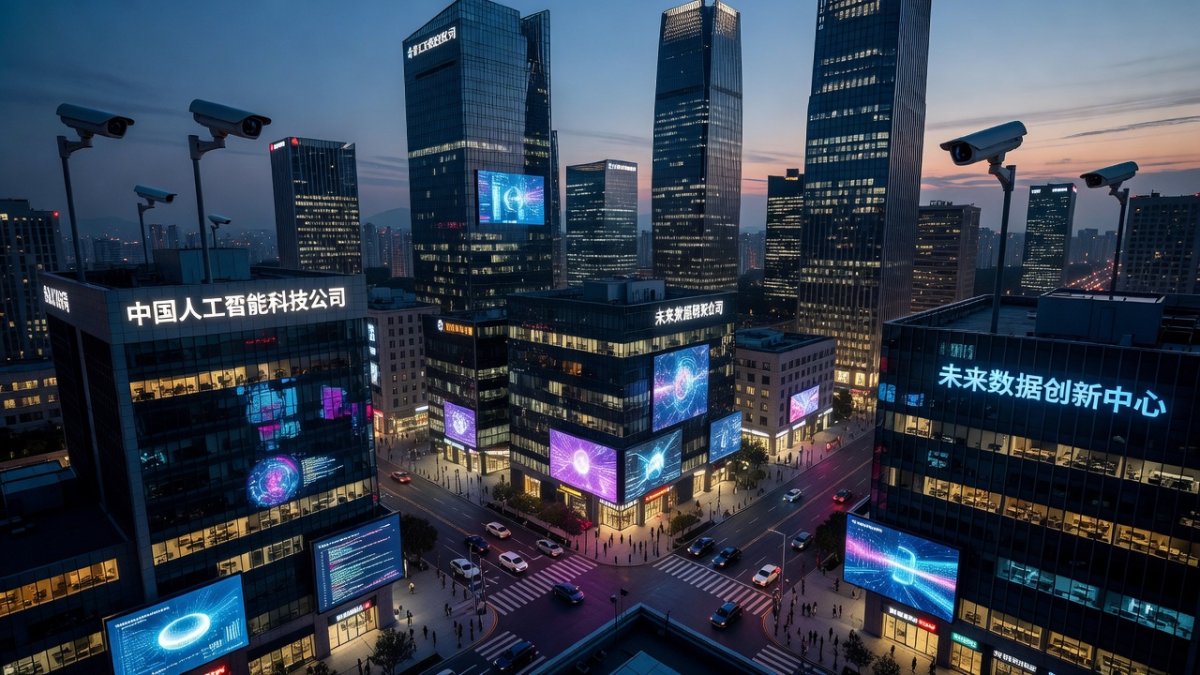
The Distillation Dilemma: How China's AI Firms Are Accused of Copying American Models
Model distillation involves using outputs from frontier AI models to train smaller, cheaper competitor models. This technique allows developers to replicate advanced capabilities without building systems from scratch. Anthropic discovered 24,000 fake accounts that harvested 16 million Claude exchanges, highlighting the scale of such operations. White House AI and Crypto Czar David Sacks stated, "There's substantial evidence that what DeepSeek did here is they distilled the knowledge out of OpenAI's models." The April 2026 White House memo accused China of "industrial-scale" AI technology theft. Firms including DeepSeek, Moonshot AI, and MiniMax were named as targets in ongoing investigations.
US officials argue these practices undermine American innovation incentives. Chinese representatives counter that distillation represents standard industry practice seen across global laboratories. They point to similar techniques employed by Western companies when accessing open-source datasets. The debate centers on whether distillation crosses into unauthorized extraction when it relies on proprietary model outputs rather than public data.
From an interpretive standpoint, the distillation controversy reveals deeper asymmetries in how technological power is projected across borders. Beijing's perspective frames these practices as pragmatic responses to external constraints, allowing Chinese developers to accelerate progress despite hardware limitations imposed from abroad. In contrast, Washington interprets the same activities as erosions of the foundational advantages that have long underpinned US leadership in frontier AI. This divergence in viewpoints amplifies mutual suspicions, turning routine technical exchanges into flashpoints that could influence future investment flows and collaborative research agreements worldwide.
DeepSeek's Rise: A Wake-Up Call for Silicon Valley
DeepSeek's emergence in January 2025 stunned Silicon Valley. The company claimed to rival ChatGPT at a fraction of the cost. OpenAI complained that Chinese rivals were using its work without authorization. Microsoft investigated whether OpenAI data had been accessed without proper consent. White House Press Secretary Karoline Leavitt said President Donald Trump called DeepSeek a "wake-up call" for US tech leadership. The US Navy banned DeepSeek over security and ethical concerns, restricting its use across naval systems.
Silicon Valley executives expressed alarm at the speed of DeepSeek's progress. Jensen Huang, Nvidia CEO, noted that hardware constraints had not prevented rapid Chinese model advancement. American firms now face pressure to accelerate their own efficiency improvements. The episode shifted industry focus toward protecting training data and monitoring API usage more closely.
Interpreting these events through a geopolitical lens highlights how DeepSeek's trajectory has recalibrated expectations about the pace of catch-up in AI. For China, the episode reinforces narratives of resilience and ingenuity under pressure, bolstering domestic confidence in state-directed innovation strategies. From the Russian vantage point, such developments serve as cautionary signals about the risks of over-reliance on any single technological ecosystem, prompting Moscow to diversify its own partnerships while carefully weighing the costs of alignment with either major power.
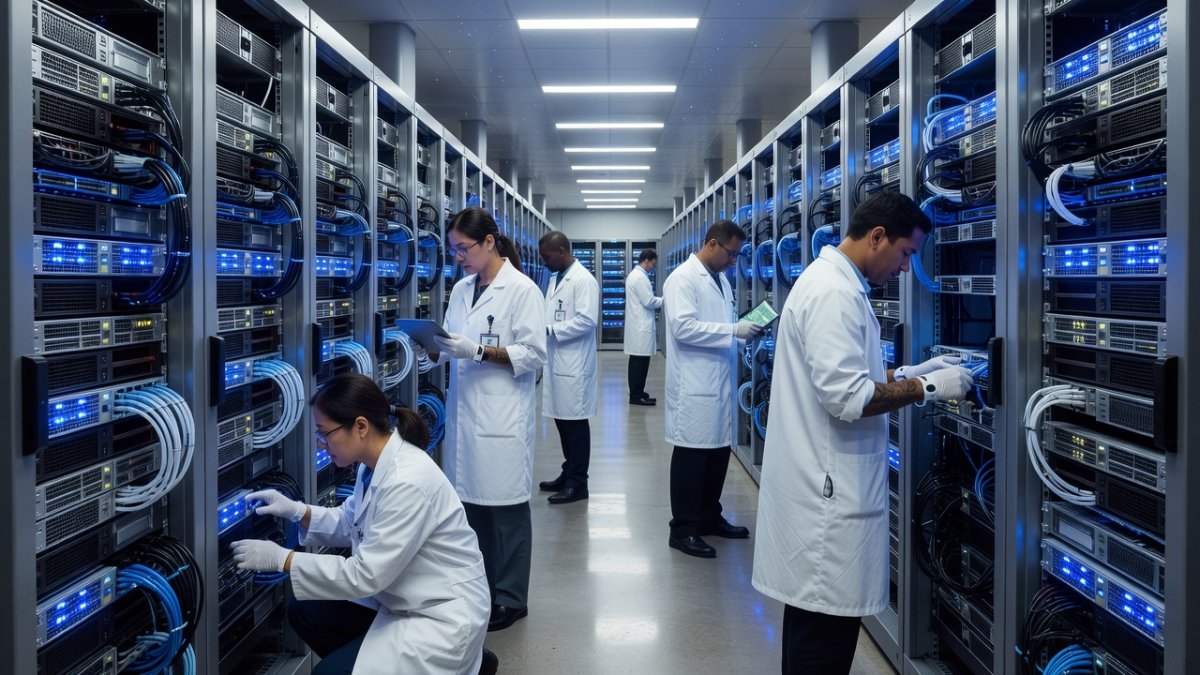
Export Controls and the Chip War: A Game of Cat and Mouse
US export controls began with an initial ban on advanced AI chips to China. The H20 chip was later resumed in July 2025 under strict conditions. The H200 received approval in December 2025 but carried a 25 percent fee on all sales to Chinese buyers. Commerce Secretary Howard Lutnick described the situation as "whack-a-mole," acknowledging the difficulty of preventing circumvention. China is investing $1.4 trillion over 15 years to achieve technological self-reliance. President Xi Jinping declared "technological self-reliance" a key national goal, directing resources toward domestic semiconductor development.
Chinese firms responded by accelerating work on alternative chip architectures. Nvidia faced reduced revenue from the Chinese market while seeking new customers elsewhere. Washington maintains that controls protect national security rather than stifle competition. Beijing views the measures as deliberate attempts to contain China's rise in critical technologies.
Broader economic implications emerge when viewing the chip restrictions as instruments of strategic competition rather than isolated regulatory tools. The ongoing cat-and-mouse dynamic risks fragmenting global supply chains, raising costs for downstream industries from consumer electronics to advanced manufacturing. China's emphasis on self-reliance, articulated at the highest levels, signals a long-term reorientation of capital toward indigenous capabilities, while US policy seeks to preserve qualitative edges that underpin both commercial and defense advantages. These maneuvers carry ripple effects for third countries seeking stable access to critical components.
The chip restrictions compel Russia to intensify its semiconductor ambitions along a parallel development path. This entails heightened investment in indigenous production capabilities and strategic ties with alternative global suppliers to mitigate external dependency risks.
The Stop AI Model Theft Act: Legislation as a Weapon
The Stop AI Model Theft Act was introduced in April 2026. The legislation would classify model distillation as economic espionage under US law. It names DeepSeek, Moonshot AI, and MiniMax specifically for proposed Entity List action. This marks the first time the US government has publicly attributed specific Chinese AI labs to model extraction operations. Bipartisan support in Congress reflects a growing consensus on the need to protect American AI assets.
Supporters argue the bill closes legal gaps that currently allow distillation to proceed unchecked. Critics within the technology sector warn that overly broad definitions could hinder legitimate research collaborations. The proposed measures would impose severe penalties on any entity found engaging in unauthorized knowledge transfer from US models.
Analysts interpret the legislative push as an attempt to codify technological boundaries in an era where knowledge flows across borders with increasing fluidity. For Beijing, such measures represent escalatory steps that could further isolate Chinese firms from global AI ecosystems. Russian observers, meanwhile, note parallels to their own experiences with sanctions regimes, underscoring how legal instruments are increasingly deployed to shape competitive landscapes in emerging technologies.
China's AI Ecosystem: Beyond the Copycat Narrative
China has more than 4,500 firms developing and selling AI products and services. Beijing plans to invest 10 trillion yuan, equivalent to $1.4 trillion, in the sector. DeepSeek CEO Liang Wenfeng became a national hero after the company's rapid rise. Chinese firms such as SenseRobot and Whalesbot are producing innovative consumer robotics products. Domestic chip limitations nevertheless remain a significant bottleneck for scaling frontier models. State media warned against "AI triumphalism," noting that China remains in "catch-up mode" despite recent gains.
China's "six little dragons" — DeepSeek, Unitree Robotics, Deep Robotics, BrainCo, Game Science, and Manycore Tech — illustrate the breadth of activity beyond large language models. Privacy concerns have led South Korea to ban DeepSeek downloads. Taiwan and Australia have barred the application from government devices. These restrictions show that security worries extend beyond the United States.
Placing these developments in wider context reveals China's multifaceted approach to AI advancement, encompassing both large-scale state investment and grassroots entrepreneurial activity. The caution against triumphalism from domestic sources suggests an awareness of persistent structural challenges, particularly in foundational hardware. International restrictions on DeepSeek underscore how concerns over data security and model provenance are reshaping adoption patterns far beyond bilateral US-China dynamics.
Global Implications: What the AI Race Means for the Rest of the World
Other nations find themselves caught between the United States and China in this technological contest. Europe is developing its own AI regulatory framework to balance innovation with oversight. India and Southeast Asian countries are watching developments closely while seeking to attract investment from both sides. The outcome of the race will shape not only technological leadership but also the global balance of economic and military power.
Russia is monitoring the US-China tech rivalry closely as it seeks to develop its own AI capabilities. Moscow faces restricted access to advanced Western chips and must navigate partnerships that avoid secondary sanctions. The rivalry influences technology transfer policies worldwide and affects how smaller nations position their research institutions. Analysts suggest this competition will determine which standards and governance models prevail in international AI deployment for decades to come.
Interpreting the wider ramifications, the contest between Washington and Beijing is reshaping the strategic calculus for capitals worldwide, including Moscow's efforts to carve out autonomous technological pathways amid constrained options. The emphasis on self-reliance in China mirrors certain Russian priorities, yet the latter must balance proximity to Beijing with avoidance of measures that could trigger additional external pressures. Ultimately, the standards and governance frameworks that emerge victorious will influence everything from data flows to defense applications, setting precedents that smaller economies and research communities will confront for generations.
The US-China rivalry creates opportunities for smaller nations to position themselves as neutral AI hubs. By maintaining balanced policies, they can attract investments from both sides and develop independent innovation centers emphasizing multilateral cooperation and standards.
By Irina Volkov, Staff Writer
This article was produced with AI-assisted research and editorial support. Reporting is based on sources cited in the article.
What's Your Reaction?
 Like
0
Like
0
 Dislike
0
Dislike
0
 Love
0
Love
0
 Funny
0
Funny
0
 Wow
0
Wow
0
 Sad
0
Sad
0
 Angry
0
Angry
0

Russia/Eastern Europe Correspondent at Global1.News. Covering Russian politics, energy, security, and the shifting dynamics of the post-Soviet space. Provides clear-eyed analysis on one of the world's most opaque regions.












Comments (0)