
The Democratic Dilemma in South Korea's Local Election Ballot Shortage
The Democratic Dilemma in South Korea's Local Election Ballot Shortage The Immediate Administrative Shortfall on June 3 The June 3 local elections exposed a clear mismatch between planning assumptions and operational delivery at polling stations across South Korea. Ballots proved insufficient at 50 of the 14,288 stations, with voting disrupted at 22 of them. The National Electi
The Immediate Administrative Shortfall on June 3
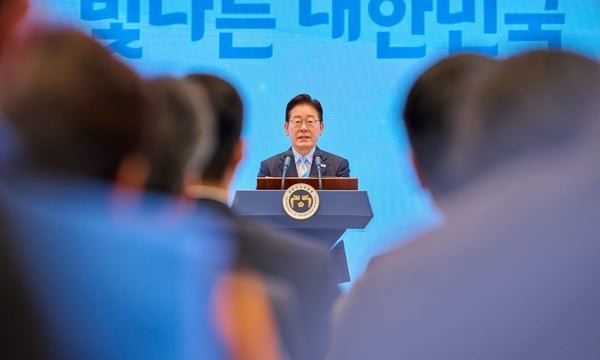
The June 3 local elections exposed a clear mismatch between planning assumptions and operational delivery at polling stations across South Korea. Ballots proved insufficient at 50 of the 14,288 stations, with voting disrupted at 22 of them. The National Election Commission had prepared supplies covering 110 percent of registered voters, yet a post-presidential-election guideline permitted district offices to print as few as half that number. Uneven allocation between stations compounded the problem, and emergency redistribution of spare ballots proved inadequate. Queues formed disproportionately in conservative districts of southern Seoul, intensifying partisan scrutiny of the process.
Partisan Responses and Institutional Demands
People Power Party leader Jang Dong-hyeok immediately characterized the Seoul results as tainted and called for suspension of the count. Floor leader Song Eon-seok invoked Article 196 of the election law to request postponement of tallying on grounds of unforeseen circumstances. By late on voting day, Jang escalated to a nationwide demand that counting cease and that preparations begin for an annulment suit. Within two days these positions crystallized into concrete proposals: a parliamentary investigation, appointment of a special counsel, resignation of all National Election Commission members with impeachment proceedings if necessary, and creation of a standing reform committee in the National Assembly.
Constitutional Independence and Accountability Tensions
The National Election Commission operates under explicit constitutional protection of independence, a design intended to insulate electoral administration from executive or legislative interference. This same insulation, however, limits external oversight. Earlier management shortcomings during the 2022 early-voting period, including reports of ballots from quarantined voters collected in plastic baskets and paper bags, had already drawn criticism. A 2023 personnel scandal involving preferential hiring of senior officials' children prompted the Board of Audit and Inspection to initiate a review. The commission contested the audit's jurisdiction, filing a competence dispute that reached the Constitutional Court. In February 2025 the Court ruled unanimously that the audit infringed on the commission's independence, thereby preserving institutional autonomy while leaving questions of operational accountability unresolved.
Historical Precedents and Persistent Fraud Narratives
Claims of systemic electoral manipulation have circulated among some conservative circles since the April 2020 general election. Those narratives centered on early voting procedures, QR codes, counting machines, and alleged external interference. Of the 126 lawsuits filed after that contest, none succeeded, and the Supreme Court dismissed the principal case in 2022 following a recount that uncovered no irregularities. Despite these judicial outcomes, polling conducted last year indicated that one-fifth of Koreans viewed the 2024 general election as rigged, with nearly four in ten young conservatives expressing similar doubts about the 2025 presidential contest won by Lee Jae-myung. The June 3 ballot shortages supplied fresh material for these long-standing assertions, even though the commission attributed the shortages to logistical misallocation rather than deliberate interference.
Impact on the Administration's Democratic Narrative
President Lee Jae-myung had repeatedly positioned South Korea's democratic resilience as a central element of national identity, most visibly when he addressed the United Nations General Assembly eight months earlier and highlighted the "Revolution of Light" that countered the imposition of martial law. The polling-station failures directly challenged that framing by demonstrating that citizens seeking to exercise the franchise were turned away or forced to wait beyond closing time. The commission issued a public apology on election night, and both its secretary-general and chairman submitted resignations. An external task force was subsequently established, although further accountability measures remain pending. Lee directed agencies to apply the full scope of executive authority in determining responsibility, yet any such measures risk being interpreted by critics as validation of preexisting fraud claims.
Strategic Implications for Electoral Governance
The episode illustrates the inherent trade-off between safeguarding the National Election Commission's autonomy and ensuring transparent operational performance. Because the commission's constitutional status restricts routine executive-branch audits, future reforms must navigate carefully between strengthened internal controls and external review mechanisms that do not compromise independence. The concentration of shortages in particular districts also underscores the need for more granular, real-time monitoring of ballot distribution rather than reliance on aggregate national targets. For the Lee administration, the challenge lies in restoring public confidence without inadvertently legitimizing narratives that have repeatedly failed judicial scrutiny. How these tensions are managed will shape both the immediate credibility of the June 3 results and the longer-term institutional reputation of South Korea's electoral authorities. By Prof. David Park, Staff Writer
This article was produced with AI-assisted research and editorial support. Reporting is based on sources cited in the article.
What's Your Reaction?
 Like
0
Like
0
 Dislike
0
Dislike
0
 Love
0
Love
0
 Funny
0
Funny
0
 Wow
0
Wow
0
 Sad
0
Sad
0
 Angry
0
Angry
0

East Asia/Technology Correspondent at Global1.News. Seoul-based voice covering Korean politics, technology, business, and culture. Analyzes how technology and geopolitics intersect across East Asia.














Comments (0)