
Pakistan-Afghanistan conflict escalates again after airstrikes kill at least 13 people
Latest Airstrikes Strike Afghan Provinces The latest Pakistani airstrikes have once again plunged the fraught relationship between Pakistan and Afghanistan into renewed violence, with at least 13 people killed in strikes that targeted the provinces of Khost, Kunar and Paktika. Among the dead were 11 children, one woman and an elderly man, according to Afghan government spokespe
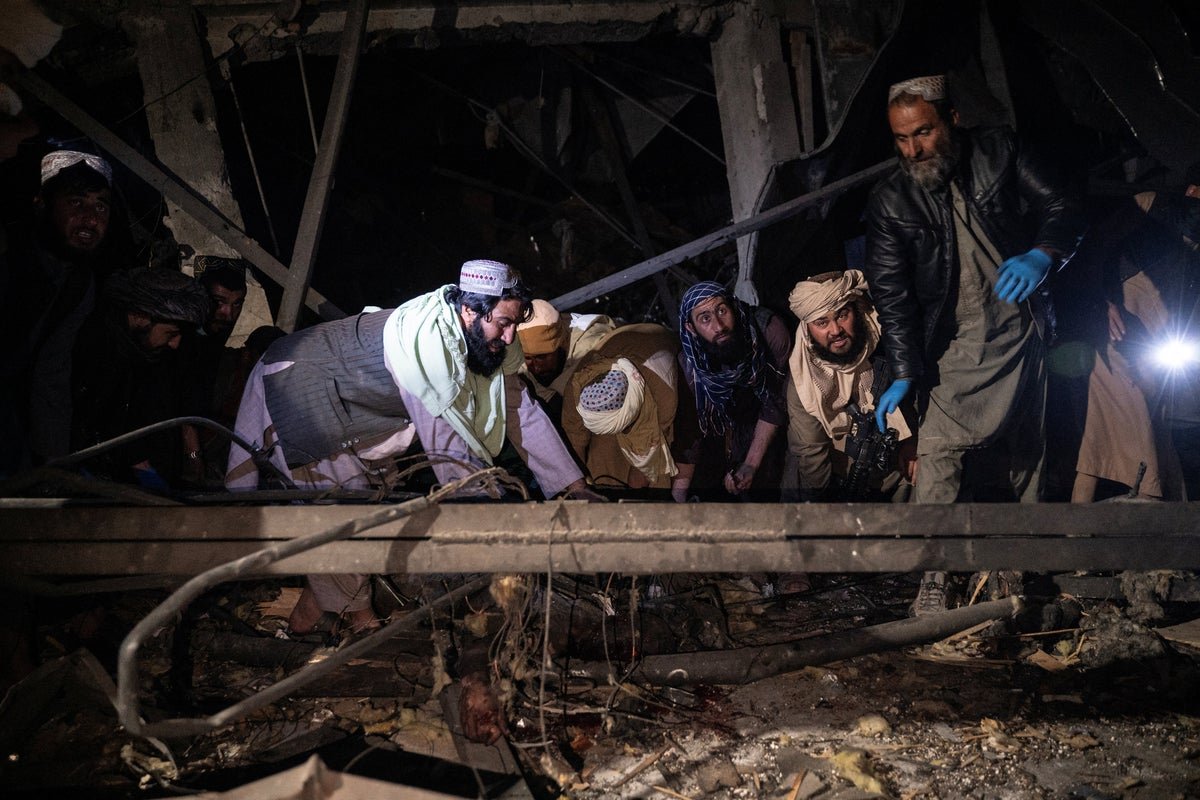
Latest Airstrikes Strike Afghan Provinces
The latest Pakistani airstrikes have once again plunged the fraught relationship between Pakistan and Afghanistan into renewed violence, with at least 13 people killed in strikes that targeted the provinces of Khost, Kunar and Paktika. Among the dead were 11 children, one woman and an elderly man, according to Afghan government spokesperson Zabihullah Mujahid, whose measured yet pointed statement underscored the human cost of operations that struck civilian areas. The attacks, carried out on Wednesday, have revived a cycle of retaliation that has already claimed hundreds of lives and forced thousands from their homes along the porous frontier. Kabul has offered no immediate indication of its next move, though past patterns suggest the possibility of strikes against Pakistani positions. Islamabad has remained silent on the matter, offering neither confirmation nor denial, a silence that speaks volumes amid the mounting pressure on both sides to de-escalate. These strikes arrive against a backdrop of sustained border clashes that have displaced communities and crippled trade since the frontier was sealed to bilateral commerce last October. The involvement of children among the fatalities has drawn particular outrage in Kabul, highlighting how the conflict continues to exact its heaviest toll on the most vulnerable. Regional observers note that such incidents risk drawing in wider actors, yet for now the immediate focus rests on verifying the casualty figures and gauging whether this latest episode will trigger a broader military response from Afghan forces.
The Triggering Incident in Khyber Pakhtunkhwa
The airstrikes followed swiftly upon a deadly assault by suspected Pakistani Taliban militants on a security post in the Hasan Khel area of Khyber Pakhtunkhwa province. Six personnel from the Federal Constabulary lost their lives during an intense gunbattle that also left many others wounded, according to Pakistan’s interior ministry. Authorities reported that security forces responded with force, killing eight of the attackers and preventing what appeared to be a coordinated attempt to overrun the checkpoint. The incident, which unfolded on Tuesday, has been cited by Pakistani officials as justification for the subsequent cross-border action. Interior minister Mohsin Naqvi travelled to Peshawar to attend the funeral prayers for the fallen personnel, where he paid tribute to their service and extended condolences to grieving families. Mr Naqvi emphasised that the sacrifices would not be forgotten and reaffirmed Pakistan’s commitment to intensifying operations against groups that threaten national peace and security. The attack has heightened domestic pressure on the government to demonstrate resolve, particularly as militant incidents have surged in recent months. Local communities in the northwest remain on edge, with residents recalling previous cycles of violence that have devastated the region. The ministry’s account of the engagement suggests a well-planned incursion, raising questions about the militants’ ability to operate from across the border despite Afghan assurances to the contrary.
Months of Escalation Along the Frontier
Relations between the two neighbours have deteriorated sharply since late February, when Afghan forces launched a cross-border attack in response to earlier Pakistani airstrikes. Islamabad subsequently declared itself in open war with Afghanistan following a wave of militant attacks on civilians and security personnel inside Pakistan. The conflict has already produced a grim humanitarian toll, with hundreds killed and many more displaced from villages along the frontier. In March, Afghanistan claimed that a Pakistani airstrike struck a drug-treatment centre in Kabul, killing more than 400 people, though the figure could not be independently verified and Pakistan strongly disputed the allegation, insisting it had targeted an ammunition depot instead. The border closure since October has severed vital trade routes, compounding economic hardship for communities on both sides. Diplomatic efforts have faltered amid mutual accusations, with Kabul denying that it harbours militants responsible for attacks in Pakistan. The pattern of strike and counter-strike has left little room for dialogue, even as ordinary citizens bear the brunt of the instability. International observers have warned that prolonged fighting could further destabilise an already fragile region, potentially creating new refugee flows and opportunities for extremist groups to exploit the chaos.
The UK Angle: Diaspora Concerns and Whitehall Calculations
Britain’s substantial Pakistani diaspora, numbering around 1.6 million people, has watched the escalating conflict with deep concern, particularly communities in Birmingham, Bradford, Manchester and London where family ties across the border remain strong. The Foreign, Commonwealth and Development Office has issued standard travel advice while monitoring developments closely, aware that any further deterioration could affect British nationals in the region. Whitehall officials are particularly alert to the implications for regional stability, recognising that unchecked violence between Pakistan and Afghanistan could create conditions conducive to renewed terrorist activity. Counter-terrorism cooperation with Pakistan has long been a cornerstone of UK security policy, and ministers are anxious that the current tensions might divert Islamabad’s attention from joint operations against shared threats. The Foreign Secretary has reiterated Britain’s support for diplomatic solutions, urging both sides to exercise restraint and return to talks. For British policymakers, the stakes extend beyond humanitarian considerations to questions of domestic security, given the potential for radicalisation or recruitment if militant networks gain renewed foothers. Community leaders in the UK have called for calm and for greater international engagement, fearing that the conflict could inflame tensions within diaspora populations already navigating complex identities. The situation also tests Britain’s broader foreign policy posture in South Asia, where it seeks to balance historic relationships with the need to promote stability and counter extremism.
Regional Dynamics and the Durand Line Legacy
China’s earlier hosting of peace talks in Urumqi represented a significant diplomatic intervention, with Beijing announcing that both parties had agreed not to escalate the conflict and to explore peaceful solutions. Yet the latest strikes suggest those commitments have not held. India, which maintains its own tense relationship with Pakistan, has observed the developments warily, conscious that instability along the Durand Line could have ripple effects across South Asia. Iran, sharing a border with both countries, has expressed its own concerns about cross-border militancy and the risk of refugee movements. The Durand Line itself remains a contentious legacy of colonial-era demarcation, never fully accepted by successive Afghan governments and serving as a persistent source of friction. Neighbouring states fear that prolonged fighting could empower non-state actors and undermine efforts to secure trade corridors vital to regional economies. Beijing continues to encourage dialogue, viewing stability as essential to its Belt and Road investments, while other powers weigh the risks of deeper involvement. The interplay of these interests complicates any straightforward resolution, as each actor brings distinct strategic priorities to the table.
Analyst View: The Akhundzada Decree and the TTP Question
Security analyst Masood Khan, based in Islamabad, has argued that Pakistan’s overriding priority remains ending attacks by the Tehrik-e-Taliban Pakistan, known as the Pakistani Taliban, which is widely suspected of operating from Afghan territory. Mr Khan maintains that a lasting solution hinges on the enforcement of a decree issued by Taliban leader Mullah Haibatullah Akhundzada ordering the Pakistani Taliban to cease operations against the neighbouring country. “That decree must be implemented sincerely and faithfully,” he stated, highlighting the gap between pronouncements and practical action on the ground. The distinction between the Pakistani Taliban and the Afghan Taliban, though allied, is crucial: the former focuses its efforts on Pakistan while the latter governs Afghanistan. Kabul continues to deny harbouring militants, yet the persistence of cross-border raids suggests enforcement remains inconsistent. Analysts note that without credible mechanisms to verify compliance, trust between the two capitals will remain elusive. The decree offers a potential diplomatic off-ramp, but its implementation requires political will that has so far been lacking amid mutual recriminations.
What Comes Next for the Fractured Border Region
The border has stayed closed to bilateral trade since October, depriving communities on both sides of essential economic lifelines and increasing the risk of further humanitarian strain. With tensions running high, the possibility of Afghan retaliation against Pakistani posts cannot be discounted, potentially triggering another round of escalation. Diplomatic channels remain open, albeit strained, with China and other friendly nations continuing to press for an agreement that delivers durable peace. The coming weeks will test whether both governments can step back from the brink or whether domestic pressures will drive further military action. For the wider region, the stakes are considerable: renewed fighting threatens to destabilise fragile post-conflict arrangements and could embolden extremist networks seeking to exploit the vacuum. Observers emphasise the need for sustained international engagement to prevent the conflict from spiralling beyond control, while recognising that any settlement must address the underlying grievances over militancy and border security. Without meaningful progress, the cycle of airstrikes and reprisals looks set to continue, with civilians once again bearing the heaviest cost.
By Erica Thornton, Staff WriterThis article was produced with AI-assisted research and editorial support. Reporting is based on sources cited in the article.
What's Your Reaction?
 Like
0
Like
0
 Dislike
0
Dislike
0
 Love
0
Love
0
 Funny
0
Funny
0
 Wow
0
Wow
0
 Sad
0
Sad
0
 Angry
0
Angry
0

US Politics and Policy Correspondent at Global1.News. Based in Washington DC, covering American politics, policy, elections, and the courts. Knows how the system works and tells you what it actually means.














Comments (0)