
US and Iran Face Return to All-Out War as Conflict Escalates
In a recent BBC News report, the world watched as the United States and Iran entered their 11th consecutive day of direct military strikes, pushing the Middle East back toward all-out war just weeks after a fragile ceasefire collapsed. US and Iran Face Return to All-Out War as Conflict Escalates Washington D.C.
In a recent BBC News report, the world watched as the United States and Iran entered their 11th consecutive day of direct military strikes, pushing the Middle East back toward all-out war just weeks after a fragile ceasefire collapsed.
US and Iran Face Return to All-Out War as Conflict Escalates
Washington D.C. — 22 July 2026 — The United States and Iran have entered their 11th consecutive day of exchanging direct military strikes, threatening a return to full-scale war after the collapse of a June ceasefire agreement. With the Strait of Hormuz at the centre of the confrontation, both sides have expanded their targeting to include civilian infrastructure in Gulf states, raising fears of a wider regional conflict that could draw in neighbouring powers and disrupt global energy markets. Mediation efforts by Qatar, Egypt and Pakistan have so far failed to secure a truce, as US President Donald Trump declared he has "no interest" in further talks with Tehran.
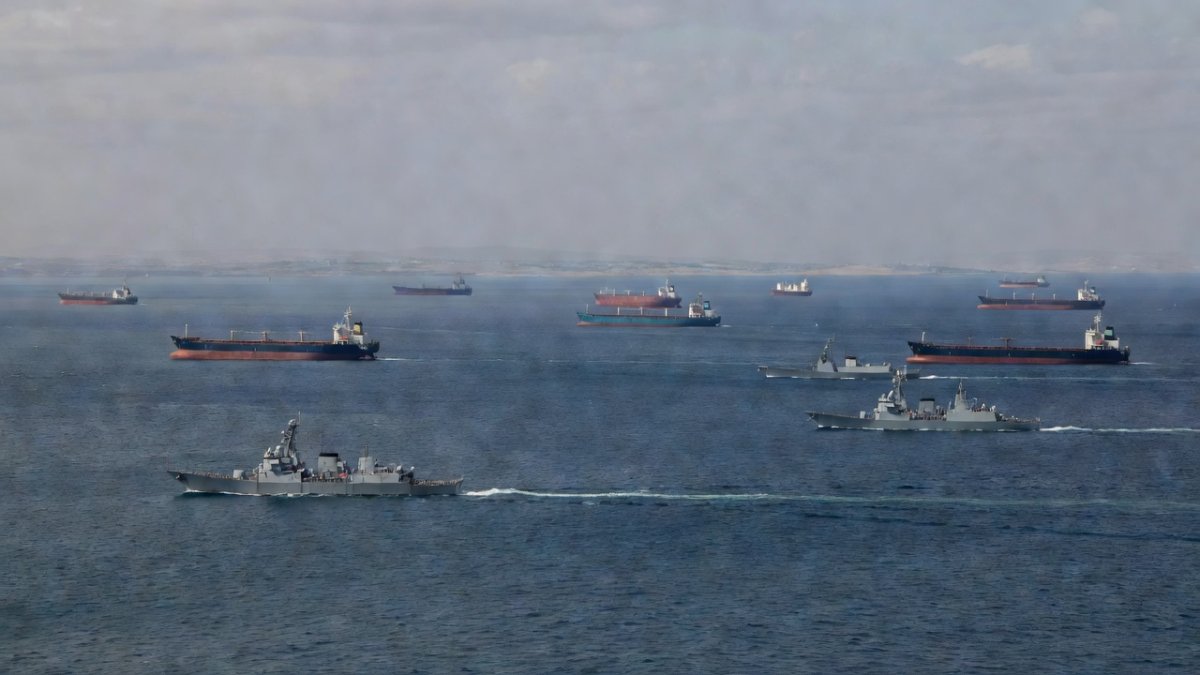
From Ceasefire to All-Out War: How the June MoU Collapsed
The current escalation marks a dramatic reversal from June 2026, when the United States and Iran signed a Memorandum of Understanding — mediated by Pakistan — to halt military operations, reopen the Strait of Hormuz, and begin 60 days of negotiations toward a permanent end to the war. The MoU was hailed as a breakthrough after four months of devastating conflict that began on 28 February 2026, when US and Israeli airstrikes killed several Iranian officials including Supreme Leader Ayatollah Ali Khamenei.
But the ceasefire proved fragile. Within three weeks of signing, US President Donald Trump declared the agreement "over" after Iran launched attacks on commercial shipping in the Strait of Hormuz. Both sides accused each other of violations, and the cycle of strikes resumed with greater intensity than before.
Speaking on Tuesday, Trump told reporters that the United States had "wasted time" negotiating with Iran and suggested that further military pressure — not diplomacy — would determine the outcome. "We're not finished at all," Trump said after meeting with Lebanese President Joseph Aoun at the White House, the first visit by a Lebanese head of state since 2009.
The Strait of Hormuz: Iran's Leverage and Washington's Red Line
At the heart of the renewed conflict is the Strait of Hormuz, the narrow waterway through which roughly a fifth of the world's crude oil and natural gas passed before the war. Iran has weaponised the strait, attacking commercial shipping and using the threat of closure as leverage against the United States and its Gulf allies.
In a detailed analysis, BBC Persian's Amir Azimi outlined the three strategic options facing Tehran's leadership. The first is to concede to Washington's demands — guaranteeing safe passage through Hormuz, restricting Iran's nuclear programme, and accepting international inspections — in exchange for sanctions relief and an end to the US naval blockade. This would be the least costly option militarily, but the costliest politically, potentially undermining the ideological foundations of the Islamic Republic.
The second option is escalation: intensifying attacks on American bases, shipping, and critical infrastructure in Gulf Arab states in hopes that rising energy prices and regional instability would force Washington to compromise. This carries the highest military risk, particularly if an attack causes mass casualties or severe damage that draws Iran's neighbours directly into the conflict.
The third option — which analysts suggest best fits the Islamic Republic's established thinking — is to preserve the current state of calibrated instability: enough pressure on shipping and energy markets to retain leverage, but not enough to trigger a full return to all-out war. Iran does not need to defeat a stronger enemy, this reasoning goes, if it can outlast that enemy's willingness to fight.
Human Cost: Three US Soldiers Killed, Dozens Wounded
The human toll of the renewed escalation has been significant. The Pentagon confirmed this week that three US service members have been killed in action during the latest round of hostilities, with nearly 100 others wounded across multiple attacks on American positions in the region. One soldier was killed in a controlled detonation of a downed Iranian drone, while two others died in an Iranian strike on a US facility in Jordan.
Defense Secretary Pete Hegseth testified before Congress that the Iran war has cost the United States approximately $37.5 billion so far, and the Pentagon is seeking billions more in additional funding. Democrats in Congress have pushed back strongly, arguing that the conflict is a war of choice rather than necessity.
Iran, too, has suffered significant casualties and infrastructure damage. US strikes have targeted bridges, telecommunications towers, and military facilities across southern Iran. The disruption to water supplies has affected at least 10,000 residents, according to Iranian officials, while power and water cuts are affecting daily life in major cities including Tehran.
Iran's Leadership in Flux: Who Makes the Decisions?
A complicating factor in the crisis is the uncertainty surrounding Iran's decision-making structure following the death of Ayatollah Ali Khamenei in the initial February strikes. Under Khamenei, who had ruled Iran for 36 years, disputes between elected politicians, clerical institutions, and the Islamic Revolutionary Guard Corps were ultimately settled by the supreme leader. His successor, his son Mojtaba Khamenei, has not yet established the same authority.
President Masoud Pezeshkian and his diplomatic team are believed to favour a settlement to ease the immense economic pressure on Iran, restore stability, and end the cycle of attacks. But hardliners in parliament, powerful unelected institutions, and conservative media outlets may view major concessions as a betrayal of the revolution's core principles.
The most significant unknown remains the stance of the Revolutionary Guards, whose influence is tied directly to Iran's missile programme, its regional proxy networks, and its ability to project power through the Strait of Hormuz. It remains unclear how much weight IRGC commanders carry in decisions over escalation and negotiations under the new leadership structure.
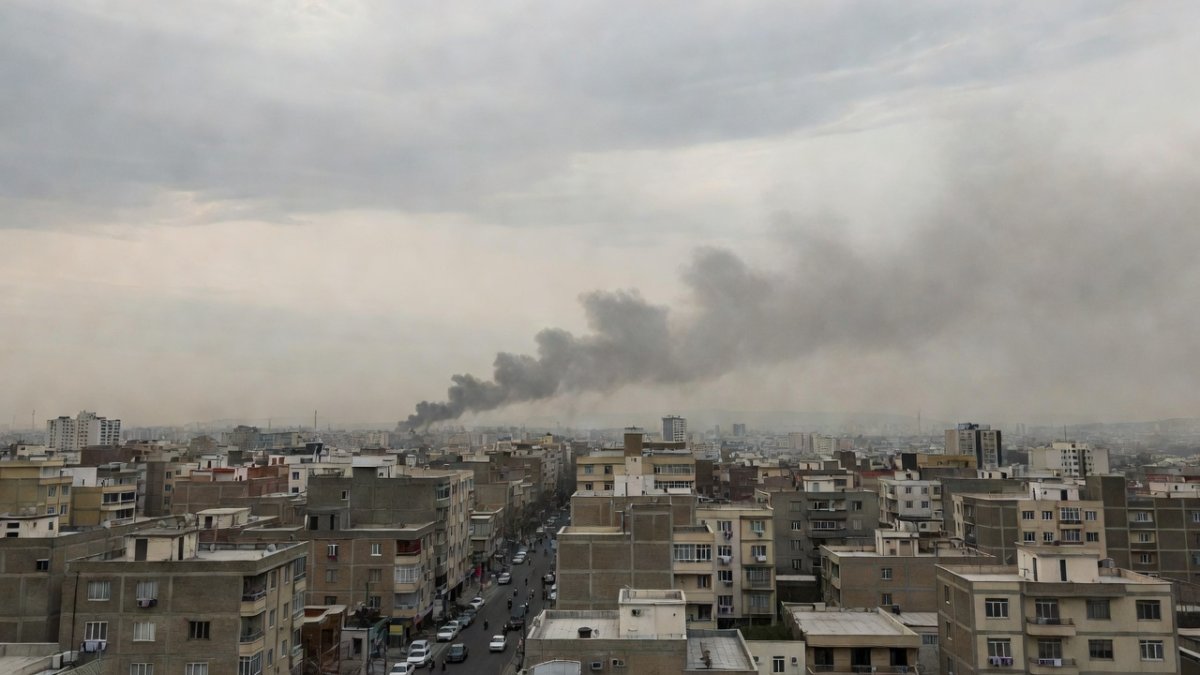
Regional Fallout: Kuwait, Bahrain, and the Houthi Factor
The conflict has drawn in Iran's neighbours in ways that threaten to expand the war beyond the US-Iran dyad. Iran struck a power and water desalination plant in Kuwait last week, an attack that Kuwait condemned as a serious escalation. Iran has also targeted US military assets in Kuwait, Jordan, Bahrain, and Oman.
Meanwhile, Yemen's Houthi movement — an Iran-backed group that has been fighting a Saudi-led coalition since 2014 — announced a "maritime embargo" on Saudi Arabia, threatening shipping in the Red Sea. The Houthis said the embargo was a response to a Saudi blockade of Yemeni ports and airports, but the announcement further complicates an already volatile maritime security environment.
The Houthi threat adds a new dimension to the crisis, potentially disrupting the Bab el-Mandeb strait — another critical chokepoint for global maritime trade — on top of the Strait of Hormuz closure. Analysts warn that a two-waterway blockade could send oil prices skyrocketing and trigger a broader economic crisis that would be felt far beyond the Middle East.
Global Energy Markets Under Strain
Energy analysts note that sustained disruption through the Strait of Hormuz has already driven benchmark crude prices above 120 dollars per barrel in recent trading sessions. European and Asian importers have begun rerouting tankers around the Cape of Good Hope, adding weeks to delivery times and increasing insurance premiums. Gulf producers such as Saudi Arabia and the United Arab Emirates have activated spare capacity, yet officials in Riyadh have privately warned that any further Iranian strikes on their export terminals would force production cuts. The resulting volatility has prompted the International Energy Agency to convene an emergency meeting in Paris this week, where member states discussed coordinated releases from strategic reserves. For Russia, which benefits from higher global prices for its own crude exports, the turmoil offers short-term revenue gains but risks long-term market fragmentation if buyers accelerate the shift to non-Hormuz supply routes.
Russia's Strategic Position in the Crisis
From the Kremlin perspective, the renewed US-Iran confrontation reshapes several longstanding calculations. Russian officials have maintained public neutrality while quietly expanding diplomatic contacts with both Tehran and Gulf capitals. Energy politics play a central role: sustained high oil prices strengthen Russia's fiscal position amid Western sanctions, yet Moscow fears that an uncontrolled escalation could destabilise the Caspian energy corridor and complicate its own naval access through the region. Kremlin power structures, particularly the Security Council and the Foreign Ministry under Sergei Lavrov, have emphasised the need for multilateral mediation that includes Russia, China and India. Analysts suggest this approach signals Moscow's desire to position itself as an indispensable broker, thereby offsetting Western isolation and reinforcing its influence within the Shanghai Cooperation Organisation. Geopolitically, prolonged conflict weakens US force projection in both Europe and the Indo-Pacific, a development Russian strategists view as advantageous provided the fighting remains contained.
Prospects for De-escalation
Neither Washington nor Tehran appears willing to make the concessions necessary for a lasting ceasefire. Trump has ruled out further talks, while Iran's fractured leadership struggles to settle on a coherent strategy. The mediation track — led by Pakistan, Qatar, and Egypt — continues to propose short-term truces, including a 10-day ceasefire that would allow humanitarian corridors and a cooling-off period. But neither side has accepted.
The core dilemma for Iran is structural: the more it uses the Strait of Hormuz as a weapon, the more it incentivises the world to find alternative energy routes and reduce dependence on the waterway. Parliament speaker Mohammad Bagher Ghalibaf has acknowledged this paradox, arguing that the value of Hormuz lies in increasing shipping volume through it rather than reducing it. Yet the political logic of escalation may override long-term strategic calculation.
For Washington, the path forward is equally uncertain. Widening the war risks drawing in more regional actors and increasing American casualties. Continuing the current pressure campaign maintains the status quo but at immense financial and human cost. Accepting a settlement would require the Trump administration to compromise on its maximalist demands — a politically difficult move.
The confrontation could continue for months through cycles of attacks, mediation attempts, and temporary ceasefires. The decisive question, as BBC Persian's analysis suggests, is how long Iran's leadership can preserve the Strait of Hormuz as leverage without provoking an all-out war, renewed domestic unrest, or the construction of alternative energy routes that permanently reduce the waterway's strategic importance.
For ordinary Iranians, the burden is already unsustainable. "No-one is hiring because nobody knows what will happen," one woman in Tehran told BBC Persian. With a doctorate and 17 years of experience, she has been unemployed for four months. Soaring prices, power cuts, water shortages, and the sound of gunfire at night have become the new normal — the human cost of a war that shows no sign of ending.
By Irina Volkov, Staff Writer
This article was produced with AI-assisted research and editorial support. Reporting is based on sources cited in the article.
What's Your Reaction?
 Like
0
Like
0
 Dislike
0
Dislike
0
 Love
0
Love
0
 Funny
0
Funny
0
 Wow
0
Wow
0
 Sad
0
Sad
0
 Angry
0
Angry
0
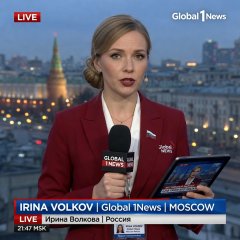
Russia/Eastern Europe Correspondent at Global1.News. Covering Russian politics, energy, security, and the shifting dynamics of the post-Soviet space. Provides clear-eyed analysis on one of the world's most opaque regions.









Comments (0)