
Bangkok Community Walking Tour Highlights 200 Years of Multicultural Heritage
A community walking tour through one of Bangkok's most historically rich neighborhoods is offering residents and visitors a rare glimpse into the capital's 200-year urban evolution. The Mahacharoen: Past to Present route, organized by Yip In Tsoi in partnership with the walking platform WABU, winds through Maha Phruettharam Temple, Talat Noi, and Charoen Krung — tracing Bangkok
A community walking tour through one of Bangkok's most historically rich neighborhoods is offering residents and visitors a rare glimpse into the capital's 200-year urban evolution. The Mahacharoen: Past to Present route, organized by Yip In Tsoi in partnership with the walking platform WABU, winds through Maha Phruettharam Temple, Talat Noi, and Charoen Krung — tracing Bangkok's transformation from a water-based trading post to a modern Southeast Asian metropolis.
Community Walking Tour Showcases Bangkok's Multicultural Heritage and 200 Years of Architectural History
Bangkok, Thailand – July 7, 2026 —
The Launch of the Mahacharoen Walking Tour
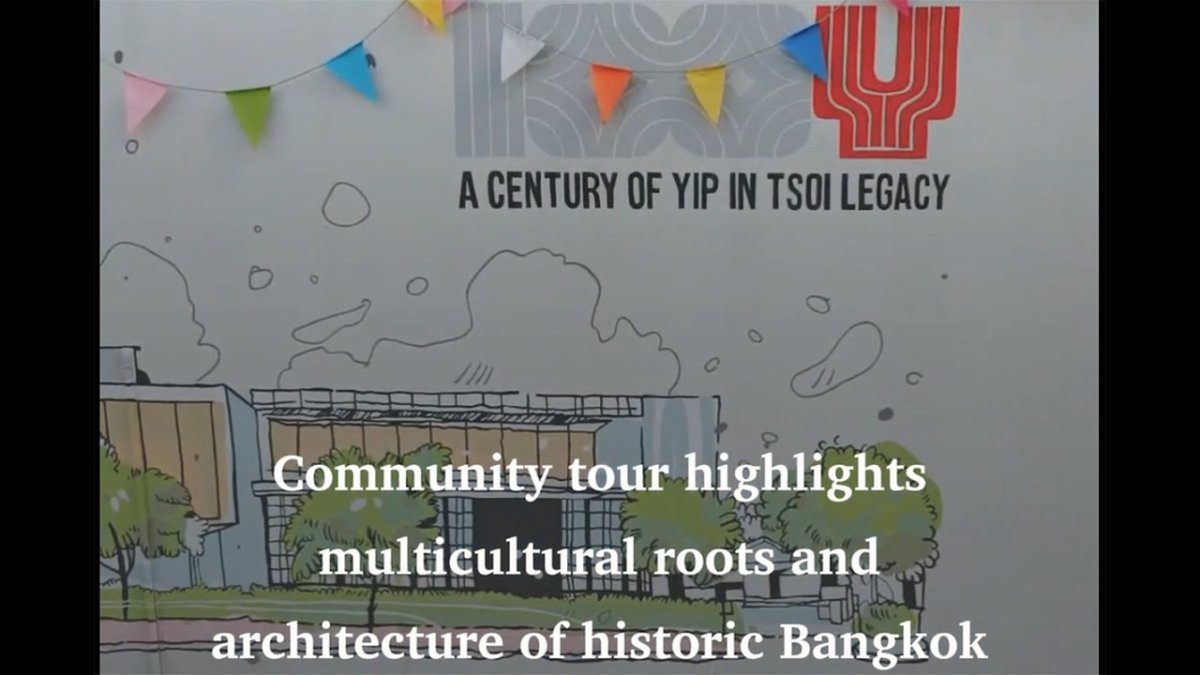
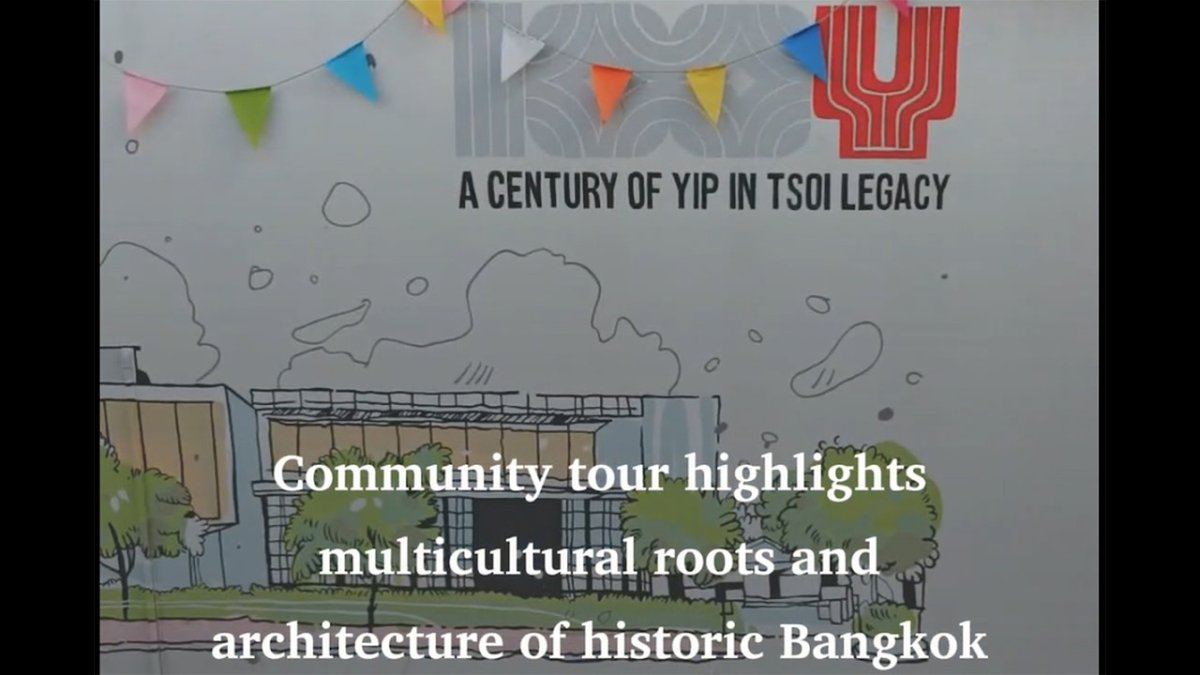
The community walking tour titled Mahacharoen: Past to Present began this week in Bangkok's historic core. Yip In Tsoi, the Thai company celebrating its 100th anniversary, partnered with the walking tour platform WABU to organize the event. Assoc. Prof. Dr. Pirasri Povatong from the Faculty of Architecture at Chulalongkorn University led the three-hour route that starts near Maha Phruettharam Road and Charoen Krung Road.
The neighborhood name Mahacharoen merges the two road names and highlights the area's layered development. Participants gathered near Maha Phruettharam Temple under the morning sun as the guide explained Bangkok's shift from a water-based city to a land-based urban grid. The tour drew local residents and visitors interested in the capital's 200-year architectural record.
Yip In Tsoi selected this route to mark its centennial while supporting neighborhood preservation. WABU handled logistics for the group that moved on foot through narrow lanes and shaded courtyards. The event forms part of wider efforts by Thai companies to connect corporate milestones with cultural education.
Buddhist Temples and the First Stops on the Route
The tour opened at Maha Phruettharam Temple, a Buddhist temple that anchors the southern end of the neighborhood. Its ordination hall features traditional Thai rooflines and intricate gables that date to the early Rattanakosin period. Monks in saffron robes moved quietly through the compound while participants noted the contrast between the temple's calm and the surrounding traffic on Maha Phruettharam Road.
From the temple the group walked to Ear Sair Pharmacy, a historic Chinese pharmacy that still operates in its original shophouse. Wooden cabinets line the interior walls and hold rows of herbal medicines that reflect generations of Chinese-Thai medical practice. The pharmacy's location beside the temple illustrates the daily coexistence of Thai Buddhist and Chinese merchant communities in Talat Noi.
Next came Uphai Rat Bamrung Temple, another Buddhist temple in the area that preserves wooden structures from the nineteenth century. Its courtyard contains stone inscriptions that record donations from local traders. The guide pointed out how both temples sit within walking distance of Chinese shrines, showing the dense layering of religious sites that defines Mahacharoen.
Historic Mansions and Chinese Architectural Heritage
Vanich House stands as a preserved shophouse that once belonged to a prominent Chinese trading family. Its narrow facade opens onto a long interior courtyard where light filters through carved wooden screens. Residents still occupy upper floors while ground-level spaces display faded signage from earlier commercial uses.
So Heng Tai Mansion represents one of the finest surviving Chinese-style mansions in Talat Noi. Built with thick brick walls and tiled roofs, the mansion features an inner courtyard surrounded by halls used for family ceremonies. The structure demonstrates how wealthy Chinese merchants adapted southern Chinese courtyard designs to Bangkok's tropical climate during the reign of King Rama V.
Hon Wong Kung Shrine lies a short distance away and serves as a focal point for the neighborhood's Teochew Chinese community. Incense smoke drifts from its altar during daily offerings, and red lanterns hang above the entrance year-round. The shrine's presence beside Buddhist temples underscores the multicultural fabric that has characterized Talat Noi since the mid-1800s.
Bank Buildings, Churches, and Western Influences
The Siam Commercial Bank Talat Noi Branch occupies a historic building constructed in the early twentieth century. Its arched windows and solid masonry reflect the colonial architectural vocabulary introduced along Charoen Krung Road. The bank continues limited operations while the exterior remains a landmark for walkers tracing the area's commercial history.
Holy Rosary Church, also known as Kalawar, rises nearby as one of Bangkok's oldest Catholic churches. Portuguese and Thai parishioners established the church in the nineteenth century, and its white steeple remains visible from several points along the route. The building's interior contains wooden pews and stained-glass windows that record the Portuguese Catholic presence in the riverfront district.
Captain Bush Lane branches off Charoen Krung Road and carries the name of a British naval officer who once lived in the area. The narrow lane passes old warehouses and residences that show British and European commercial influence during the height of Bangkok's river trade. The lane ends near the river, where participants could hear the sound of long-tail boats on the Chao Phraya.
The Final Stop and Lasting Multicultural Legacy
The route concluded at the Old Nai Lert Store Building, a historic commercial structure that once supplied goods to river traders. Its wide veranda and iron columns mark the transition from water-based to land-based commerce along Charoen Krung. The building now houses small businesses that continue the area's trading tradition.
Throughout the three-hour walk, the guide highlighted how Chinese, Portuguese, Western, and Thai influences appear side by side in Talat Noi. The neighborhood remains one of Bangkok's oldest Chinese communities, yet it also contains a Catholic church and British-named lanes within a few blocks. This mixture continues to shape daily life for current residents.
The tour matters for Thai readers because it demonstrates practical ways to preserve Bangkok's multicultural record while supporting local tourism. Similar routes in other ASEAN cities have increased visitor spending in historic districts without displacing residents. Yip In Tsoi and WABU plan additional walks that will extend the model to other neighborhoods along the Chao Phraya.
Implications for Bangkok Preservation and Regional Tourism
The Mahacharoen tour arrives at a moment when Bangkok faces pressure to balance development with heritage protection. The Election Commission of Thailand and the Bangkok Metropolitan Administration have both issued statements this year encouraging community-led cultural projects. Such initiatives help maintain the city's distinct identity as it competes with newer regional hubs.
For Southeast Asian audiences the event illustrates how private companies can support public heritage goals. Yip In Tsoi's centennial project shows one model for corporate involvement that avoids large-scale commercialization. The three-hour format keeps groups small enough to respect temple and shrine protocols while still reaching a growing number of domestic and regional visitors.
Participants left the tour with maps and contact details for future walks organized by WABU. The route's success suggests that Bangkok's historic neighborhoods can attract sustained interest when tours combine architectural detail with living community stories. This approach strengthens Thailand's position within ASEAN cultural tourism networks.
This article was produced with AI-assisted research and editorial support. Reporting is based on sources cited in the article.
What's Your Reaction?
 Like
0
Like
0
 Dislike
0
Dislike
0
 Love
0
Love
0
 Funny
0
Funny
0
 Wow
0
Wow
0
 Sad
0
Sad
0
 Angry
0
Angry
0

Southeast Asia Correspondent at Global1.News. Based in Bangkok, covering Thai and Southeast Asian politics, economy, technology, and culture. Deep regional perspective on one of the world's most dynamic regions.















Comments (0)