
Seoul Digital Centers Bridge Tech Gap for Korean Seniors
Seoul Digital Centers Bridge Tech Gap for Korean Seniors Seoul Digital Learning Centers help seniors aged 65+ master smartphones and kiosks as South Korea's elderly population grows. Lessons for Japan's Digital Agency. Seoul Digital Learning Centers, Silver Informatics, South Korea elderly digital divide, MSIT digital literacy, Japan Digital Agency, Society 5.0, senior tech tra
Seoul's Hands-On Digital Training Centers
NHK WORLD-JAPAN correspondent Kim Chan-ju recently observed operations at a Seoul Digital Learning Center where participants aged 65 to 85 receive structured instruction in smartphone operation. The sessions emphasize foundational skills such as navigating applications, completing kiosk transactions, and conducting video calls with family members. Instruction follows the Silver Informatics curriculum, which prioritizes repetition and measured pacing to accommodate varying levels of prior exposure to technology.
The Silver Informatics curriculum structures learning around small group sessions of six to eight participants, allowing instructors to adjust explanations based on individual questions and to repeat demonstrations until learners demonstrate independent execution. Practical scenarios include guiding seniors through medication refill processes via pharmacy applications and accessing public service portals for pension inquiries or appointment bookings. These exercises replicate real-world tasks that many older residents encounter when managing health and administrative needs without family assistance nearby.
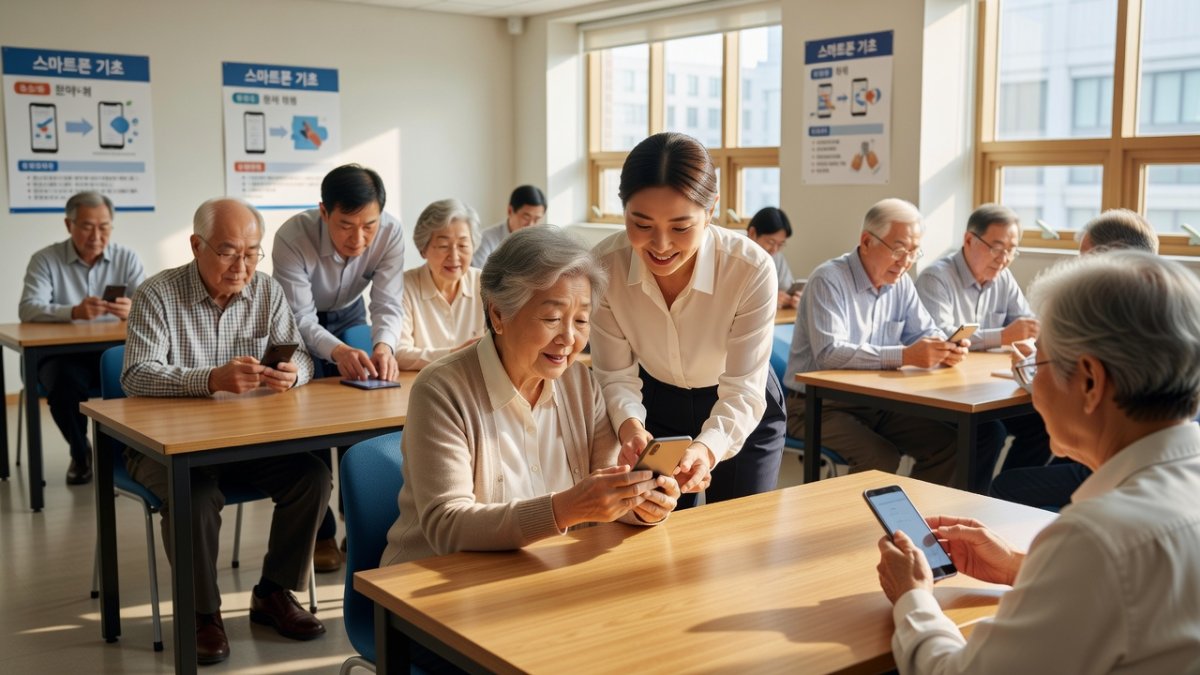
Open enrollment policies permit walk-in learners to join sessions on any weekday, removing the barrier of advance registration that can discourage those with limited digital familiarity. Centers maintain flexible schedules with morning and afternoon blocks, enabling participants to attend at their own pace rather than committing to a fixed multi-week sequence. Instructors document progress through simple checklists that track mastery of each module, reinforcing incremental confidence gains without formal testing pressure.
Slow-paced instruction deliberately allocates extra time for questions and hands-on practice, with facilitators using enlarged visual aids and verbal step-by-step narration. This approach builds confidence by celebrating small successes, such as successfully completing a single transaction or initiating a video call. Over repeated visits, learners report greater willingness to attempt new applications independently, reducing reliance on younger relatives for routine digital tasks.
Accessibility Standards and Inclusive Design
Seoul Digital Foundation guidelines mandate interface adjustments such as larger default fonts, integrated voice assistance options, and minimum contrast ratios that improve readability for users with age-related vision changes. These standards apply across public kiosks and municipal websites, ensuring consistent navigation patterns that seniors encounter in daily routines. Implementation occurs through phased updates coordinated with software vendors serving government services.
Redesigned kiosks now incorporate a dedicated senior mode activated by a prominent button that simplifies menus and enlarges touch targets. Bank branches located near training centers have recorded fewer requests for staff assistance with digital terminals following the rollout of these features. Error messages appear in plain language accompanied by optional audio playback, reducing frustration when users encounter unexpected prompts during transactions.
Feedback loops between centers and the Seoul Digital Foundation allow instructors to report recurring difficulties, prompting iterative refinements to interface elements. This ongoing collaboration ensures that accessibility measures reflect actual usage patterns observed in training environments rather than assumptions made during initial development.
National Coordination Through MSIT
The Ministry of Science and ICT oversees nationwide expansion of similar digital literacy programs through partnerships with community welfare centers that host additional training sites beyond Seoul. These collaborations extend curriculum delivery to smaller cities and towns, maintaining consistent instructional quality via shared trainer resources and standardized lesson modules. Simplified tablet distribution initiatives supply devices preloaded with essential applications to participants who complete introductory sessions.
Program administrators track indicators such as increases in online tax filings and telemedicine consultations among registered seniors to measure practical outcomes. Registration numbers have shown steady growth as awareness spreads through local government channels and word-of-mouth referrals from prior participants. Coordination with the Ministry of Health and Welfare further integrates digital training into broader senior support frameworks.
MSIT continues to refine evaluation metrics that capture both skill acquisition and sustained usage after program completion. Reports indicate that participants who attend multiple sessions demonstrate higher rates of independent portal access for routine government services compared with those who receive only one-time orientation.
South Korea's Demographic Pressures
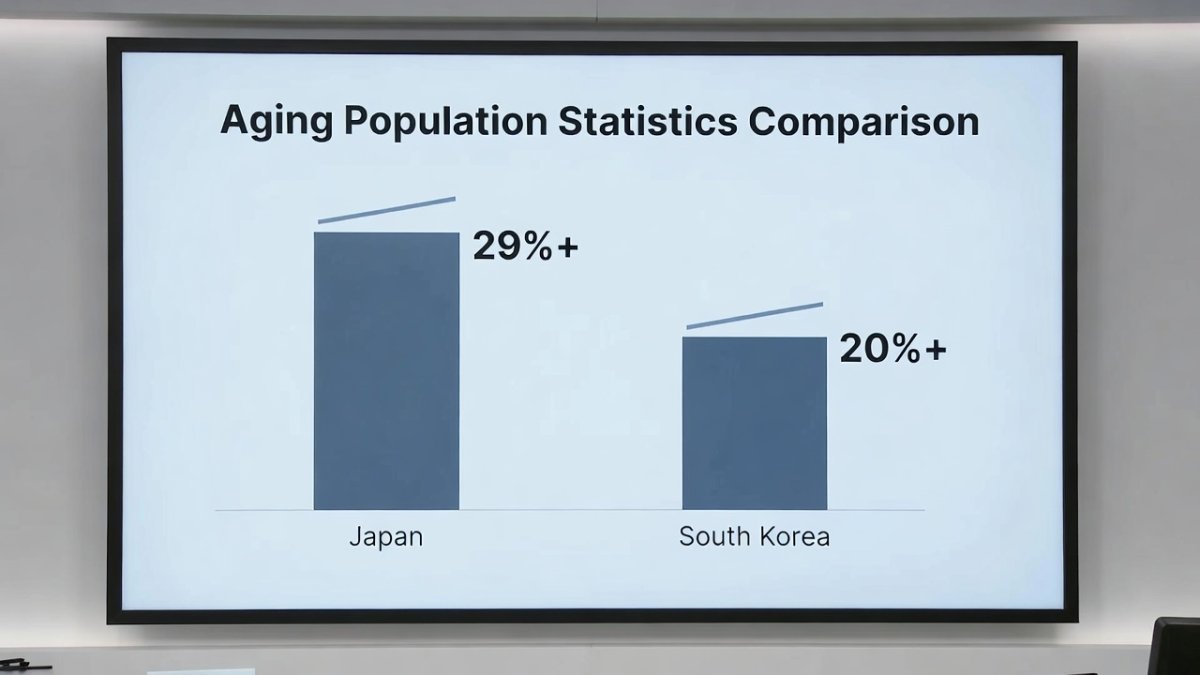
Approximately 20 percent of South Korea's population is now aged 65 and older, reflecting accelerated aging that places unique demands on public service delivery systems. This demographic shift amplifies the consequences of digital exclusion, as many essential services migrate online while a substantial segment of citizens lacks the skills to navigate them independently. Isolation can intensify when seniors cannot access telemedicine portals or digital banking without assistance.
Cross-ministerial policy integration seeks to align digital inclusion efforts with housing, transportation, and healthcare strategies so that technology access supports broader quality-of-life goals. Rural versus urban access gaps remain a persistent concern, with metropolitan centers like Seoul benefiting from denser facility networks while provincial areas rely more heavily on mobile training units and volunteer outreach.
Policy documents emphasize that addressing digital exclusion forms part of a comprehensive response to population aging, requiring sustained budget allocations and inter-agency cooperation. Continued monitoring of participation rates helps identify regions where additional centers or adapted curricula may be needed to close remaining disparities.
Japan's Digital Agency and Society 5.0 Response
Japan faces a comparable challenge with more than 29 percent of its population aged 65 and older, prompting the Digital Agency to develop targeted programs that mirror aspects of South Korea's center-based model. The Society 5.0 framework positions digital inclusion as a core component of human-centered technological advancement, guiding investments in accessible interfaces and community training infrastructure. Bilateral exchanges between Japanese and South Korean officials facilitate sharing of curriculum design and instructor training protocols.
Volunteer instructor models in Japan recruit retired professionals to deliver sessions at municipal facilities, supplementing paid staff and extending reach into rural prefectures where staffing shortages can limit program frequency. These volunteers receive standardized orientation on the same slow-paced, repetition-focused methods employed in Seoul centers. Rollout in prefectures such as Akita and Shimane has prioritized tablet lending libraries alongside in-person instruction.
Accessibility benchmarks established by Japan's Digital Agency include mandatory testing with senior user panels before public service applications receive final approval. Comparative reviews of Japanese and South Korean implementations highlight shared emphasis on plain-language error messaging and voice guidance, while noting differences in tablet distribution scale and integration with national health insurance portals.
Japanese policymakers continue to study enrollment trends from Seoul programs to inform adjustments in their own rural outreach strategies. Joint workshops held under Society 5.0 auspices have produced recommendations for harmonizing accessibility standards across both countries, supporting smoother cross-border knowledge transfer on effective senior training techniques.
Wider Asia Pacific Implications
Taiwan, Thailand, Singapore, and China have launched pilot programs adapting elements of the Seoul model, including small-group smartphone workshops and simplified kiosk interfaces tailored to local languages and administrative systems. Early evaluations suggest these initiatives contribute to measurable reductions in healthcare costs by enabling seniors to schedule appointments and review records online rather than through in-person visits alone.
Regional accessibility standards forums organized by ASEAN digital economy working groups provide platforms for exchanging best practices on font sizing, contrast requirements, and voice-assistance integration. Participating governments use these meetings to align procurement guidelines so that vendors develop interfaces compatible with multiple national senior populations.
Knowledge-sharing platforms hosted by international development organizations catalog curriculum materials and outcome metrics from each country's programs, allowing administrators to identify scalable components without duplicating initial design efforts. Continued collaboration across the Asia Pacific region supports refinement of training approaches as demographic aging advances in additional economies.
What to Watch For
The expansion of Seoul's Digital Learning Center network into additional districts during 2026 and 2027 will provide further data on scalability. Japan's Digital Agency is expected to release updated accessibility benchmarks for public service applications later this year, reflecting insights from bilateral exchanges with South Korean counterparts. Regional forums under ASEAN's digital economy framework may produce the first cross-border accessibility standards harmonizing font sizes, contrast requirements, and voice-assistance protocols for senior users.
For Japanese readers, the Seoul model offers a concrete reference point as Japan's own elderly population continues to grow. The trajectory suggests that sustained investment in center-based digital training, combined with accessibility standards enforcement and cross-border knowledge sharing, will remain central to technology policy in aging societies across the Asia Pacific.
By Kenji Tanaka, Staff Writer
This article was produced with AI-assisted research and editorial support. Reporting is based on sources cited in the article.
What's Your Reaction?
 Like
0
Like
0
 Dislike
0
Dislike
0
 Love
0
Love
0
 Funny
0
Funny
0
 Wow
0
Wow
0
 Sad
0
Sad
0
 Angry
0
Angry
0

Japan Correspondent at Global1.News. Tokyo-based voice covering Japanese politics, technology, economy, and culture. Tracks the intersection of tradition and innovation in one of the world's most dynamic societies.















Comments (0)