
Mindanao Earthquake: 38 Missing as Rescue Ops Continue
Mindanao Earthquake: Missing Persons Rise to 38 as Rescue Operations Continue in Hard-to-Reach Areas (Global 1 News) The Rising Toll and Validation Efforts The number of people missing after the magnitude 7.8 earthquake that devastated parts of Mindanao rose from 31 to 38 overnight, while the death toll remained at 47 as of Thursday evening, according to the Office of Civil Def
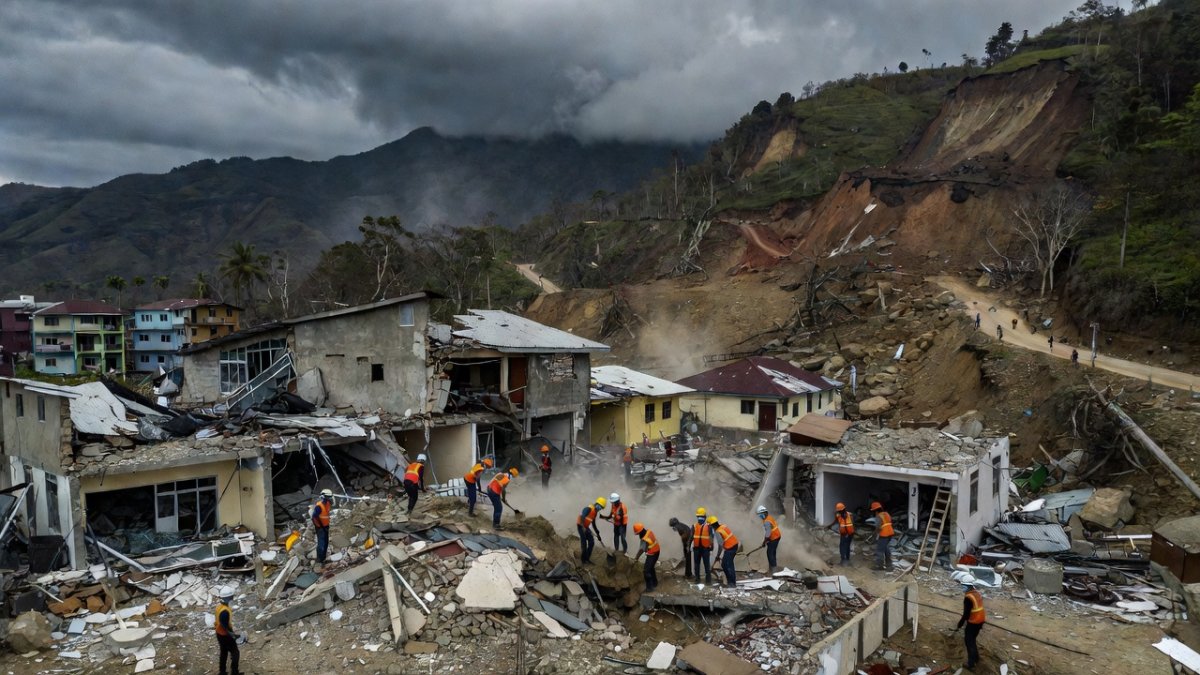
Mindanao Earthquake: Missing Persons Rise to 38 as Rescue Operations Continue in Hard-to-Reach Areas
(Global 1 News)
The Rising Toll and Validation Efforts
The number of people missing after the magnitude 7.8 earthquake that devastated parts of Mindanao rose from 31 to 38 overnight, while the death toll remained at 47 as of Thursday evening, according to the Office of Civil Defense. Civil Defense Deputy Administrator Bernardo Rafaelito Alejandro IV explained that the increase in missing persons came after new reports arrived from Glan in Sarangani and General Santos City. The death toll continues under validation by the Department of Health and the Department of the Interior and Local Government.
This careful process of double-checking matters deeply to families across Mindanao who wait anxiously for news of loved ones. In barangays where neighbors know each other by name, every missing count represents a kapitbahay whose absence leaves a hole in daily life. The Office of Civil Defense has coordinated with the Bureau of Fire Protection to review figures and avoid double-counting, ensuring that reports reflect reality rather than rushed on-the-spot tallies.
Reaching Isolated Communities Amid Landslides
Coastal communities in Glan, Sarangani, Jose Abad Santos in Davao Occidental, and Balut Island remain difficult to reach because of quake-induced landslides blocking highways. Clearing operations by the Department of Public Works and Highways continue, yet the OCD has turned to helicopters and sea vessels to deliver resources to these areas. Glan, Jose Abad Santos, and General Santos City have recorded large numbers of casualties and damage, leading authorities to declare them areas of concentration for search, rescue, and clearing work.
For families in these remote spots, the blocked roads mean more than inconvenience. Jeepney drivers and tricycle operators who once carried goods to sari-sari stores now find their routes cut off, leaving households without fresh supplies. The spirit of bayanihan still shines as communities pool what little they have, but the physical barriers test even the strongest bonds of neighborly support.
Urgent Needs for Shelter and Water
While food supplies remain sufficient for quake survivors, affected areas urgently need water, shelter repair kits, and tents. More than 19,000 houses have been damaged, with about 3,500 totally destroyed. Families whose homes collapsed now face the reality of sleeping under tarps or in makeshift shelters as the rainy season approaches.
Ordinary Filipinos feel this hardship most keenly. A mother in General Santos City who once prepared meals in her kitchen must now line up for water while watching over children who lost their schoolbooks in the rubble. The OCD has made clear that shelter repair kits and tents must be pushed forward immediately so families can begin rebuilding their daily routines.
Government Aid and Financial Support
President Ferdinand Marcos Jr. announced on June 11 that affected families would receive P50,000 in financial assistance. The National Housing Authority suspended amortization payments across Mindanao for June and plans to distribute P30,000 in cash assistance to at least 2,000 families in General Santos City. These measures aim to ease the immediate burden on households already stretched thin by lost livelihoods.
Local government units and barangay captains play a vital role in getting this help to the right people. In places where OFWs send remittances home, the sudden loss of a house or a small business can cut off an entire family's lifeline. The assistance offers a starting point, yet residents know that true recovery will take time and sustained community effort.
Looking Ahead: Building Codes and Possible No-Build Zones
Science-related government agencies will examine whether some affected areas should become no-build zones, though stronger enforcement of building codes appears more likely. Civil Defense Deputy Administrator Alejandro noted that engineering interventions could allow safer rebuilding in many locations. The focus remains on protecting lives while respecting the deep ties people have to their ancestral lands.
For farmers and fisherfolk whose homes sit near the coast, any decision about no-build zones will shape their future. They have already endured the quake's fury; now they must weigh the safety of new construction against the pull of the only place they have ever called home. The Department of the Interior and Local Government continues its validation work so that any future rules rest on accurate information.
Community Resilience in the Face of Disaster
Across Mindanao, the earthquake has reminded everyone of the strength found in shared struggle. From the coastal barangays of Sarangani to the streets of General Santos City, people continue to support one another even as rescue teams assess whether to shift from search and rescue to retrieval operations in the coming days. The process will depend on conditions on the ground and the safety of responders.
Students who lost classrooms, workers whose tools lie buried, and elders who have seen too many storms already all carry the weight of this event. Yet the same culture of mutual aid that defines Philippine life offers hope. As helicopters deliver tents and repair kits, and as local officials coordinate with national agencies, the path forward will be walked together — one barangay at a time.
By Bella Reyes, Staff Writer
This article was produced with AI-assisted research and editorial support. Reporting is based on sources cited in the article.
What's Your Reaction?
 Like
0
Like
0
 Dislike
0
Dislike
0
 Love
0
Love
0
 Funny
0
Funny
0
 Wow
0
Wow
0
 Sad
0
Sad
0
 Angry
0
Angry
0

Philippines/Southeast Asia Correspondent at Global1.News. Manila-based journalist covering Philippine politics, environment, maritime security, and social issues. Passionate about marine conservation and the communities protecting the Philippines' natural heritage.












Comments (0)