
Senegal Celebrates Cultural Richness During 3rd Dakar Carnival
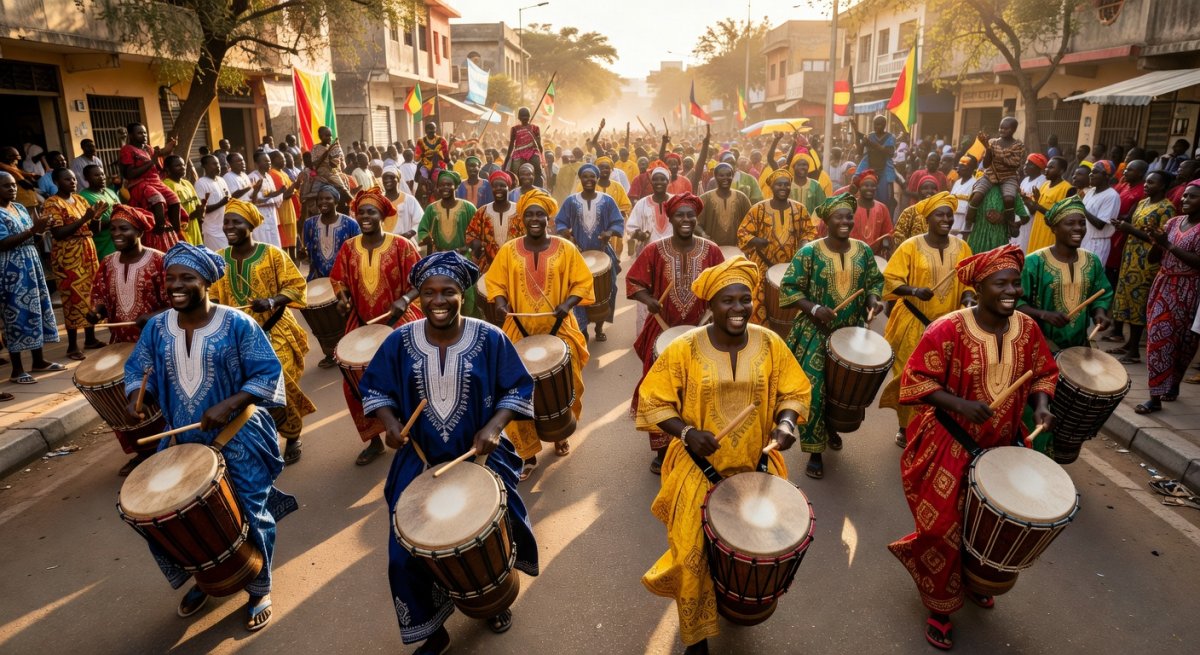
The streets of Dakar pulsed with energy as hundreds of participants from Senegal's diverse ethnic groups marched through the capital's central avenues, their vibrant boubous and ceremonial costumes catching the afternoon sun during the third edition of the Dakar Carnival. Sabar drums thundered in rhythmic bursts while dancers performed fluid hip movements and acrobatic spins, d
The streets of Dakar pulsed with energy as hundreds of participants from Senegal's diverse ethnic groups marched through the capital's central avenues, their vibrant boubous and ceremonial costumes catching the afternoon sun during the third edition of the Dakar Carnival. Sabar drums thundered in rhythmic bursts while dancers performed fluid hip movements and acrobatic spins, drawing crowds that included families from the Wolof, Serer, and Fulani communities. This spectacle, unfolding on a warm Saturday in early 2025, immediately showcased the Teranga spirit of hospitality that defines Senegalese gatherings.
Senegal Celebrates Cultural Richness During 3rd Dakar Carnival
Dakar, Senegal — The third edition of the Dakar Carnival brought together participants from multiple ethnic groups including the Wolof, Serer, Fulani/Peul, Diola, Mandinka, and Soninke, who paraded through central Dakar neighborhoods such as Plateau and Medina. Initiated in 2019, the event has become a fixed date in the capital's cultural calendar, with this year's procession featuring elaborate floats, traditional masks, and stilts that highlighted regional customs from the Casamance. Organizers emphasized themes of heritage, diversity, and tourism, aligning the carnival with Senegal's broader push to position Dakar as a West African cultural hub ahead of the 2026 Youth Olympic Games.
A Vibrant Parade of Cultures
The parade opened with Wolof dancers in bright indigo boubous leading a procession that wound past the Dakar Grand Mosque, followed closely by Serer groups carrying symbolic agricultural tools that referenced their historical farming traditions in the Sine-Saloum region. Fulani/Peul herders displayed embroidered tunics and cattle-horn accessories, while Diola participants from the Casamance introduced elements of the Karahay ceremony, including sacred generational dance steps performed on stilts. Mandinka and Soninke contingents added layered headwraps and metallic jewelry, creating a living map of Senegal's ethnic diversity that drew an estimated 5,000 spectators along the route.
Costume designers incorporated fabrics sourced from local markets in Tilene and Colobane, blending traditional wax prints with modern embroidery techniques that paid homage to griot storytelling lineages. Several floats depicted scenes from Wolof oral histories, complete with tama talking drums mounted on mobile platforms that allowed musicians to perform while moving. The Diola Karahay segment featured masked performers executing precise call-and-response choreography that has been preserved through community elders in Ziguinchor since the 19th century.
Community leaders from each ethnic association coordinated the order of march to ensure respectful representation, with the Serer delegation incorporating fire-dance elements rarely seen outside rural festivals in Foundiougne. Spectators noted the absence of commercial branding, keeping the focus on cultural authenticity rather than sponsorship displays common in other urban events.
Security personnel from the Dakar police maintained orderly flow while allowing spontaneous interactions between paraders and onlookers, reinforcing the Teranga principle of openness that encourages visitors to join the celebration.
Music and Dance at the Heart of the Celebration
Sabar drumming ensembles from the Medina neighborhood set the tempo for the entire procession, with lead drummers executing rapid-fire patterns that have defined Wolof performance since the era of the 19th-century ceddo warriors. Dancers responded with synchronized hip isolations and acrobatic leaps that echoed the mbalax style first popularized by Youssou N'Dour in the 1980s through his fusion of sabar rhythms with Afro-Cuban and jazz influences. Baaba Maal's Fulani-inspired melodies floated from side stages, where vocalists performed traditional praise poetry accompanied by the one-string riti fiddle.
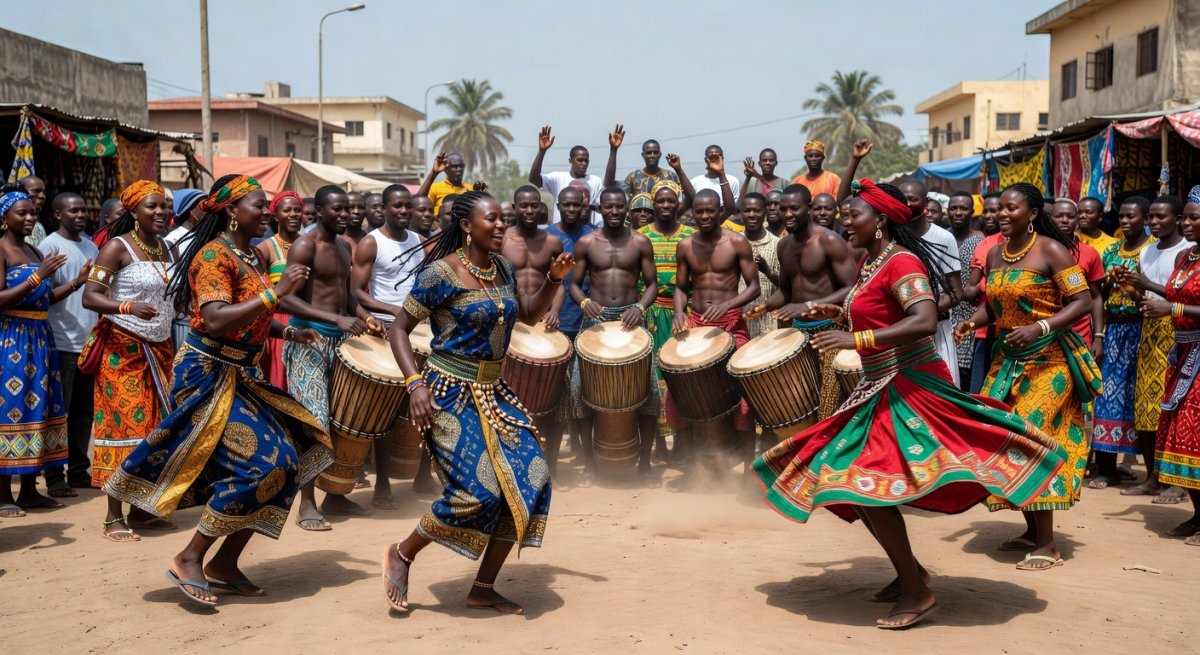
Orchestra Baobab alumni joined younger musicians for a brief tribute set that revisited their 1970s Dakar nightclub repertoire, blending Latin brass with Senegalese percussion in front of the National Theatre Daniel Sorano. Griot families from the Thiam lineage recited genealogies of participating ethnic groups, their spoken-word performances recorded by local radio stations for later broadcast. Women's dance circles performed fluid waist movements that highlighted both grace and communal strength, drawing direct lineage from Casamance Diola Karahay traditions.
Contemporary hip-hop crews incorporated sabar breaks into their sets, creating call-and-response moments that bridged generations and attracted university students from Cheikh Anta Diop University. The music program avoided amplification in residential stretches to respect neighborhood customs while still reaching an audience estimated at over 10,000 along the full route.
Evening stages featured extended sabar jam sessions that lasted past midnight, with master drummers passing the lead in a rotating format that has been a hallmark of Wolof communal music for centuries.
The Carnival's Role in Senegal's Cultural Calendar
The Dakar Carnival now sits alongside the Saint-Louis Jazz Festival, which celebrated its 33rd edition in 2025, and the Dak'Art Biennale, whose 16th edition is scheduled for May 2026, forming a year-round circuit that attracts international curators and musicians. Festival Urbanoiz, running June 3-13 2026, will incorporate carnival-style street performances into its urban culture workshops, while the third Dakar Creative Pop Up on June 7 2026 will showcase fashion collections inspired by the boubous seen in this year's parade.
Organizers have aligned the carnival date with preparations for the 2026 Youth Olympic Games, using the event to train volunteer cultural ambassadors who will greet athletes from across Africa. The integration reflects a deliberate strategy to embed traditional practices such as griot storytelling into modern sporting diplomacy.
Local media outlets including RTS and radio stations in Kaolack broadcast live segments, expanding the audience beyond physical attendees to rural communities that maintain strong ties to Diola and Mandinka heritage.
City officials have committed to annual funding increases, citing the carnival's role in preserving intangible heritage listed by UNESCO in related Senegalese traditions.
Pan-African Significance of the Dakar Carnival
The Dakar Carnival draws explicit parallels with Nigeria's Calabar Carnival, both events using street parades to celebrate multi-ethnic national identities while fostering cross-border artistic exchanges. Senegalese organizers have invited Nigerian costume designers for future editions, anticipating collaborations that could merge Nollywood-inspired theatrical elements with local griot narratives.
Afrobeats and Amapiano rhythms from Ghana and South Africa appeared in after-parties, where DJs mixed these continental sounds with mbalax classics by Youssou N'Dour, demonstrating the fluid movement of popular music across West and Southern Africa. Baaba Maal's participation underscored Fulani cultural links that extend from Senegal into Mali and Niger.
The event positions Senegal as a counterpoint to more commercialized carnivals elsewhere on the continent, emphasizing community-led organization over corporate sponsorship models.
Delegations from Burkina Faso and Côte d'Ivoire attended as observers, signaling potential for a regional network of West African cultural festivals in coming years.
Creative Voices Driving Dakar's Cultural Scene
Emerging designers from the Dakar Creative Pop Up collective created limited-edition headwraps and accessories sold during the carnival, channeling proceeds into training programs for young artisans in the Medina quarter. Musicians affiliated with the Saint-Louis Jazz Festival contributed original compositions that fused sabar with contemporary jazz, performed live on mobile stages.
Griot collectives from the Kaolack region documented the parade through oral poetry that will be archived at the National Archives in Dakar, ensuring transmission of the event's significance to future generations. Visual artists preparing for the 2026 Dak'Art Biennale used carnival imagery in preliminary sketches that explore themes of migration and belonging.
Hip-hop collectives from the Yoff neighborhood incorporated spoken-word segments referencing Teranga, creating a bridge between street culture and traditional hospitality values.
These voices collectively push Dakar toward recognition as a UNESCO Creative City, with applications supported by data from the 2025 carnival attendance figures.
Impact on Tourism and Creative Economy
Hotel occupancy in Dakar rose 18 percent during carnival weekend according to figures from the Senegalese Tourism Office, with visitors from France, the United States, and neighboring Mali filling establishments in the Point E and Almadies districts. Local restaurants reported increased demand for thieboudienne and yassa dishes prepared with ingredients sourced from the Saint-Louis region.
The creative economy benefited directly as costume makers and instrument builders received commissions that will sustain workshops through the dry season. Links to the 2026 Youth Olympic Games are expected to multiply these effects, with carnival infrastructure serving as a model for cultural programming during the sporting event.
International media coverage, including the Africanews broadcast that reached 995 documented views within the first day, amplified Senegal's profile ahead of the Dak'Art Biennale and Festival Urbanoiz.
Small businesses selling traditional boubous and sabar recordings noted a 30 percent sales increase, illustrating how the carnival channels tourist spending into artisan communities rather than large hotel chains.
What to Watch For
The 2026 edition is expected to expand the route to include the newly developed cultural corridor near the future Youth Olympic Village, incorporating performances that preview the Games' opening ceremony. Organizers have announced plans to invite delegations from the Calabar Carnival for joint choreography workshops.
Festival Urbanoiz and Dakar Creative Pop Up will feature dedicated carnival-inspired programming in June 2026, creating a continuous cultural season that runs from the parade through the Biennale. New commissions for mbalax-orchestra fusions are already in development with input from Youssou N'Dour's production team.
Community leaders anticipate greater Diola Karahay representation from Casamance, with additional masked dance segments planned to highlight environmental themes tied to the region's mangrove conservation efforts.
Digital archives of griot recitations from this year's event will be released online, ensuring that the Teranga values demonstrated during the parade reach Senegalese diaspora communities worldwide.
By Amara Diop, Staff Writer
This article was produced with AI-assisted research and editorial support. Reporting is based on sources cited in the article.
What's Your Reaction?
 Like
0
Like
0
 Dislike
0
Dislike
0
 Love
0
Love
0
 Funny
0
Funny
0
 Wow
0
Wow
0
 Sad
0
Sad
0
 Angry
0
Angry
0
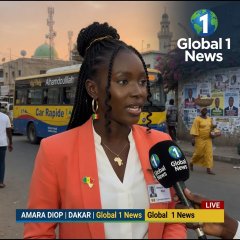
West Africa/Sahel Correspondent at Global1.News. Dakar-based journalist covering politics, security, climate, and development across Francophone and Anglophone West Africa. Tells the stories of a region undergoing profound transformation.









Comments (0)