
Saudi-Greece Strategic Partnership: Defense, Trade, and Regional Alignment
Defense Cooperation: The Yanbu Interception Milestone The Greek Patriot missile defense battery deployed near Yanbu intercepted two Iranian ballistic missiles on March 19, 2026. This event marked the first operational success of the Hellenic Force in Saudi Arabia (ELDYSA) since its arrival. The roughly 120-130 personnel drawn from the 114th Combat Wing at Tanagra have operated
Defense Cooperation: The Yanbu Interception Milestone
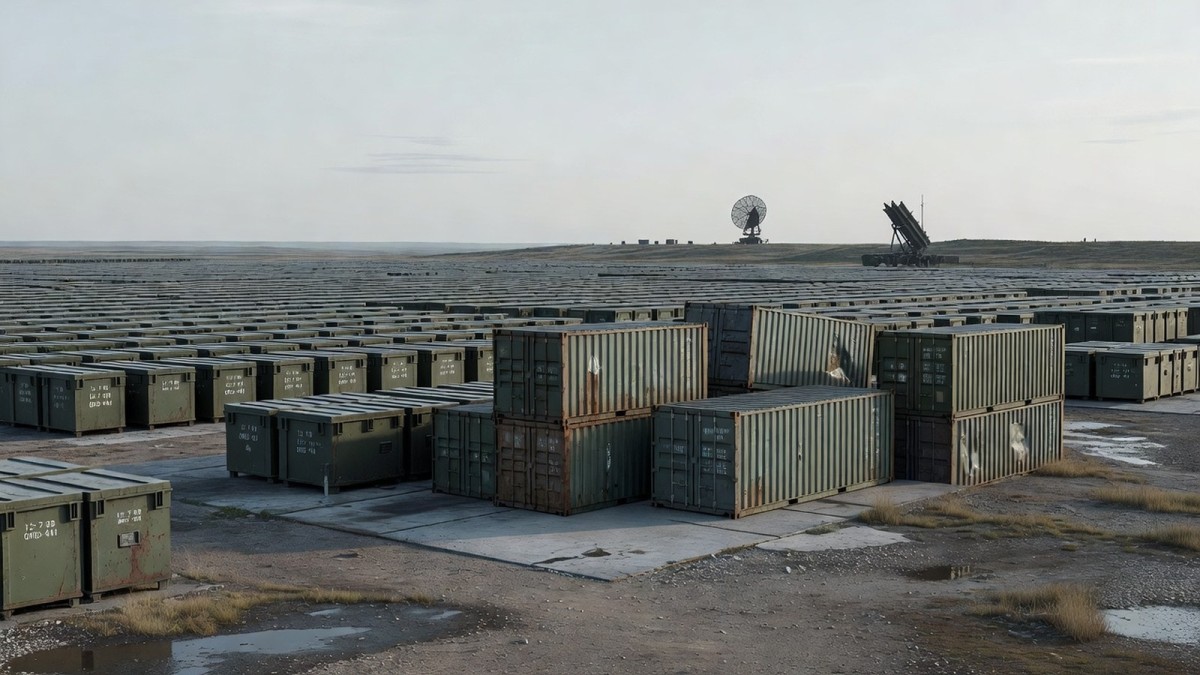
The Greek Patriot missile defense battery deployed near Yanbu intercepted two Iranian ballistic missiles on March 19, 2026. This event marked the first operational success of the Hellenic Force in Saudi Arabia (ELDYSA) since its arrival. The roughly 120-130 personnel drawn from the 114th Combat Wing at Tanagra have operated the system continuously since September 2021.
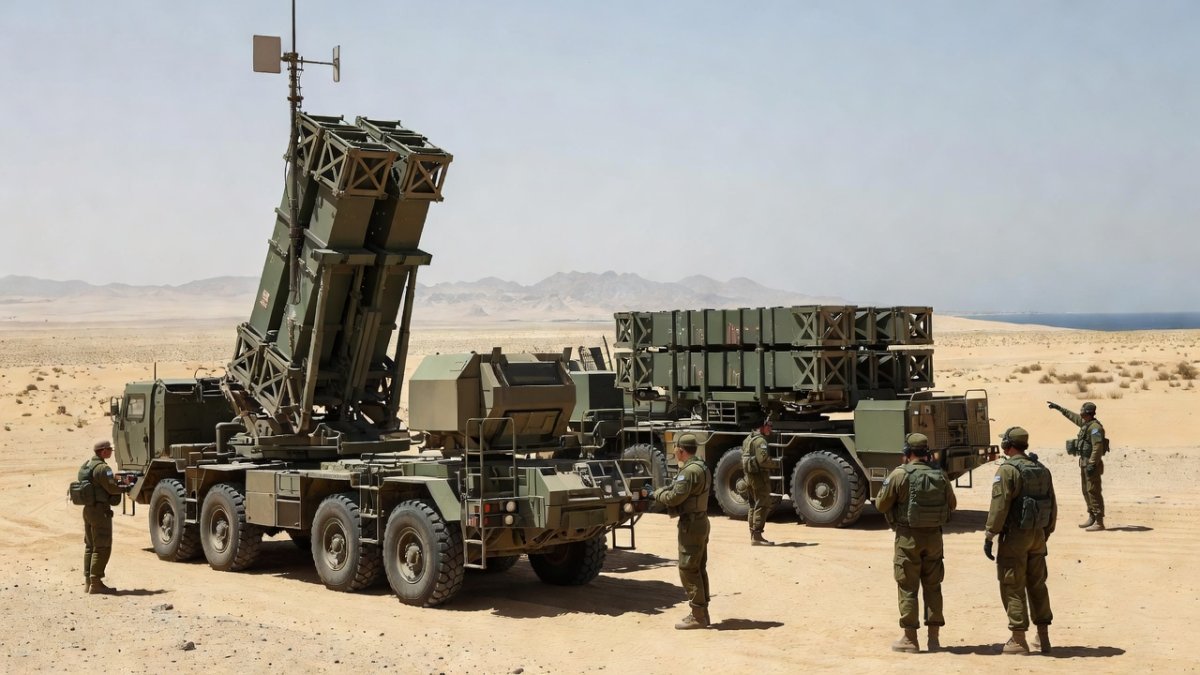
Analysis suggests Riyadh views this deployment as a concrete hedge against Iranian missile proliferation. Greece gains operational experience in a high-threat environment while reinforcing its role inside NATO’s southern flank strategy.
Origins of the 2021 Defense Agreement
The bilateral defense agreement was signed in Riyadh in April 2021 by Greek Foreign Minister Nikos Dendias and Defense Minister Nikos Panagiotopoulos. It responded directly to the 2019 Turkey-Libya maritime memorandum that challenged Greek maritime claims. Saudi officials sought European partners less constrained by U.S. congressional oversight on arms transfers.
The pact enabled Saudi F-15 pilots to participate in Greece’s Iniohos exercises while Greek F-16s conduct training in Saudi airspace. Both sides extended the ELDYSA mandate repeatedly, with current planning projecting operations through at least November 2026.
Economic Ties Reaching Two Billion Dollars
Bilateral trade approached US$2 billion by the third quarter of 2024, reflecting 18.3 percent year-on-year growth. Saudi exports center on metal products and plastics, while Greek shipments focus on metals, iron, and steel. These figures remain modest compared with Gulf-Asian corridors yet demonstrate steady diversification away from traditional European suppliers.
Riyadh’s Public Investment Fund and associated entities treat Greece as a stable entry point into EU markets. Athens, meanwhile, seeks Gulf capital to offset chronic fiscal pressures and fund infrastructure modernization.
Saudi Capital in Greek Renewables and Energy Grids
Saudi investment in Greek renewable energy projects has surpassed €400 million. Saudi Investment Minister Khalid A. Al-Falih has led talks on electricity interconnection cables linking the kingdom’s emerging solar capacity with European grids via Greece. These discussions align with Saudi Vision 2030 goals of exporting green electrons rather than solely crude oil.
Regional analysts note that successful interconnection would reduce Europe’s dependence on Russian and North African gas while giving Riyadh leverage in future carbon-border adjustment mechanisms.
Diplomatic Engagements and National Security Advisors
Dr. Thanos Dokos, National Security Advisor to the Greek Prime Minister since October 2020, has emerged as the central interlocutor. His participation in the NATO Expert Group on the southern neighbourhood gives Athens a direct channel into GCC deliberations. In October 2025, Dokos met GCC Secretary-General Jasem Albudaiwi at the Munich Security Conference Leaders’ Meeting held in AlUla.
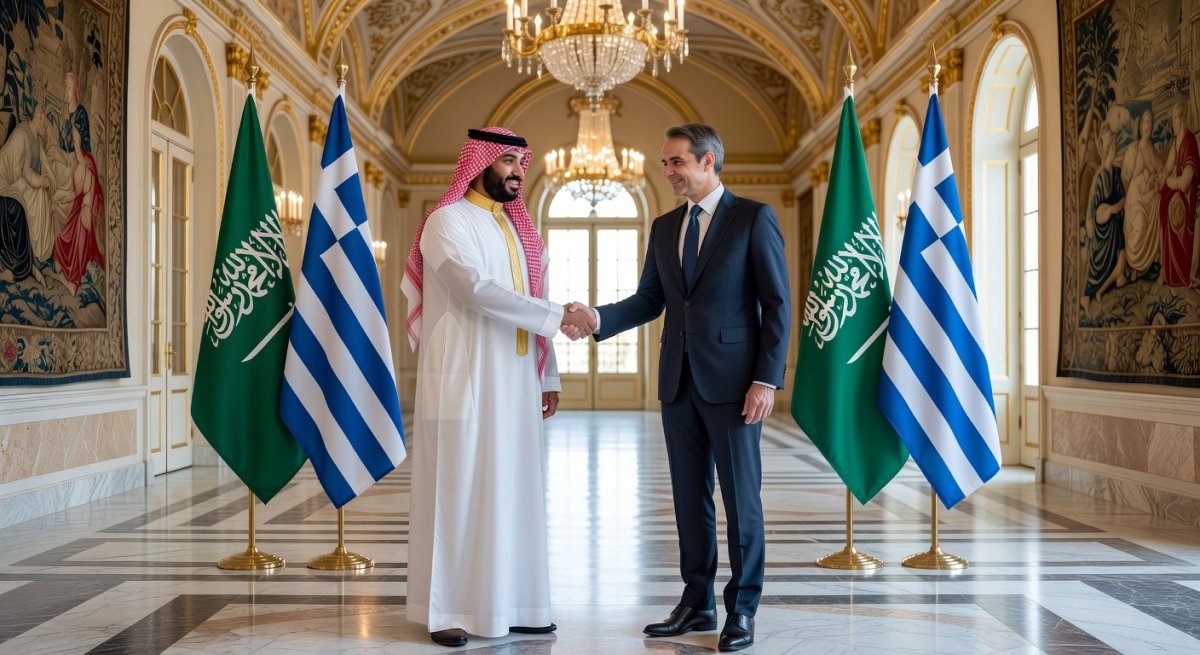
Such meetings allow both capitals to coordinate positions ahead of wider Arab and European summits without requiring constant high-profile visits by heads of government.
Countering Iranian Missile and Nuclear Ambitions
The Yanbu interception occurred against the backdrop of stalled JCPOA revival talks and Iran’s continued ballistic-missile development. Saudi planners calculate that visible Greek-NATO hardware on Saudi soil raises the political cost for Tehran of any direct strike on energy infrastructure. Greece, for its part, demonstrates alliance solidarity while avoiding direct entanglement in U.S.-Iran shadow conflicts.
Second-order effects include heightened Saudi confidence in European security guarantees, potentially easing Riyadh’s pursuit of its own civilian nuclear program under stricter IAEA scrutiny.
Navigating Turkey’s Regional Assertiveness
The 2019 Turkey-Libya maritime deal remains a core driver of Greek-Saudi alignment. Ankara’s simultaneous courtship of Qatar and outreach to select Muslim Brotherhood-linked movements contrasts with Riyadh’s post-2017 Gulf reconciliation posture. Joint Greek-Saudi air exercises therefore serve as quiet signaling to Ankara that its eastern Mediterranean claims face coordinated pushback.
Turkish officials have so far responded with calibrated rhetoric rather than escalation, aware that Saudi financial markets and Greek NATO veto power both represent meaningful constraints.
Energy Markets and Broader Great-Power Competition
Gulf sovereign wealth funds totaling roughly US$3 trillion continue to scan European energy assets. Greece offers regulatory predictability and access to EU grids that direct Saudi-Chinese partnerships cannot replicate. Washington and Brussels watch these moves closely, recognizing that Saudi-Greek electricity links could alter future LNG and hydrogen trade patterns.
Beijing’s Belt and Road presence in Piraeus port adds another layer: Riyadh seeks to balance Chinese infrastructure influence with Western defense technology.
Implications for Arab-Israeli Normalization
Greek-Saudi military cooperation occurs parallel to ongoing Abraham Accords implementation. Athens maintains full diplomatic relations with Israel while Riyadh proceeds cautiously toward any formal recognition. Joint training in Saudi airspace could eventually facilitate trilateral intelligence sharing on Iranian activities without requiring immediate political breakthroughs.
Israeli analysts view the Greek presence as a useful auxiliary layer that complicates Iranian targeting calculations across the Red Sea and eastern Mediterranean.
Outlook Toward a Century of Diplomatic Relations
Both governments will mark one hundred years of diplomatic relations in 2026. The Saudi Hellenic Round Table Meeting held in Riyadh has already begun preparing commemorative economic and cultural initiatives. Sustained defense deployments, renewable-energy financing, and regular national-security dialogue suggest the partnership has moved beyond transactional arms deals into a durable strategic alignment.
Whether this alignment survives leadership transitions in either capital will depend on continued convergence of threat perceptions regarding Iran and Turkey, as well as tangible progress on energy-interconnection projects that deliver measurable commercial returns.
By Malik Hassan, Staff Writer
This article was produced with AI-assisted research and editorial support. Reporting is based on sources cited in the article.
What's Your Reaction?
 Like
0
Like
0
 Dislike
0
Dislike
0
 Love
0
Love
0
 Funny
0
Funny
0
 Wow
0
Wow
0
 Sad
0
Sad
0
 Angry
0
Angry
0
Middle East Correspondent at Global1.News. Based in Beirut, covering politics, conflict, energy, and society across the Middle East. Brings context and depth to a region often reduced to headlines.













Comments (0)