
Sara Duterte Set to Become First PH Vice President to Face Impeachment Trial
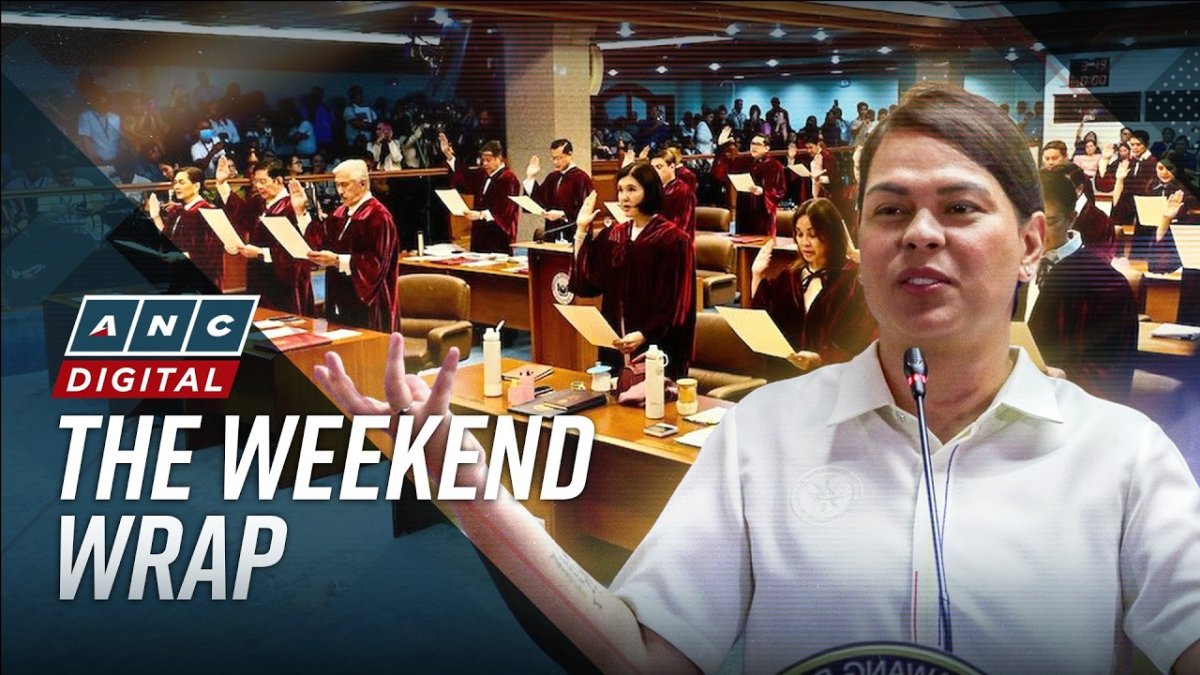
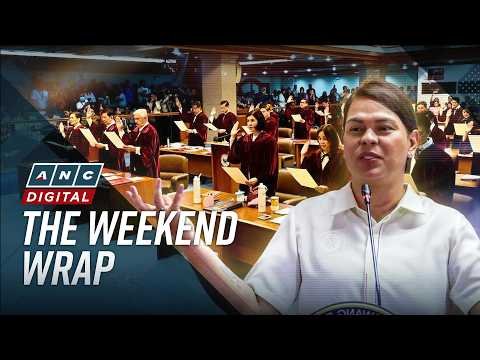
In a recent ANC 24/7 Weekend Wrap report from the Senate building in Pasay City, crews captured Senate President Sherwin Gatchalian walking through the plenary hall as staff arranged seating for the 24 senator-judges ahead of the impeachment trial of Vice President Sara Duterte. The broadcast showed workers installing additional security barriers and testing the public address
In a recent ANC 24/7 Weekend Wrap report from the Senate building in Pasay City, crews captured Senate President Sherwin Gatchalian walking through the plenary hall as staff arranged seating for the 24 senator-judges ahead of the impeachment trial of Vice President Sara Duterte. The broadcast showed workers installing additional security barriers and testing the public address system for the proceedings that begin this Monday.
Sara Duterte Set to Become First PH Vice President to Face Impeachment Trial as Senate Opens Historic Proceedings Monday
Manila, Philippines – July 4, 2026 — The Senate impeachment court has summoned Vice President Sara Duterte to appear at the opening of her trial on Monday, July 6, 2026, making her the first Philippine vice president to face an impeachment trial in the nation’s history. Senate President Sherwin Gatchalian will serve as presiding officer over the 24 senator-judges who will hear the four consolidated articles of impeachment transmitted by the House of Representatives in May 2026.
The Historic Trial
The impeachment trial of Vice President Sara Duterte begins on July 6, 2026, inside the Senate chamber in Pasay City with Senate President Sherwin Gatchalian serving as presiding officer over the 24-member Senate acting as the impeachment court. This proceeding follows the House of Representatives' approval of four consolidated articles in May 2026 and represents the first instance in Philippine history that a sitting vice president faces such a trial, distinguishing it from the archived February 2025 complaint that never advanced to hearings.
Gatchalian conducted a final walkthrough of the plenary on July 4, 2026, confirming arrangements for 92 trial days and the presence of 17 shared witnesses who will testify under oath. The trial schedule overlaps with preparations for the 2028 national elections, creating a constitutional process that will unfold in full public view with daily gallery access limited to 150 visitors under PNP security protocols.
The Charges Against the Vice President
The four consolidated articles of impeachment center on betrayal of public trust, culpable violation of the Constitution, misuse of confidential funds totaling P125 million from the Office of the Vice President and the Department of Education, and allegations of unexplained wealth. These charges stem from documented fund transfers and expenditure reports that House prosecutors presented during the May 2026 plenary sessions before transmitting the articles to the Senate.
Additional allegations include reported assassination threats directed at President Ferdinand Marcos Jr., First Lady Liza Araneta-Marcos, and House Speaker Martin Romualdez, which prosecutors tied to internal political tensions that fractured the once-united Marcos-Duterte alliance. The misuse of confidential funds specifically references P125 million allocated during Duterte’s concurrent roles, with detailed ledgers showing disbursements that remain unaccounted for in official audits.
The unexplained wealth component draws from lifestyle and asset declarations that contrast with Duterte’s declared income, prompting Senate investigators to subpoena bank records and property documents ahead of the July 6 opening. These charges collectively position the trial as the most closely watched constitutional proceeding in the Philippines in over a decade.
The Pre-Trial Proceedings
The pre-trial conference concluded on June 25, 2026, after five sessions held between June 18 and June 25, during which both prosecution and defense teams finalized witness lists and evidence protocols under the supervision of Senate President Gatchalian. Vice President Duterte received a formal summons to appear in person or through counsel starting July 6, with the court granting her legal team access to all 17 shared witness statements in advance.
Separately, the Ombudsman filed a plunder case against Senator Rodante Marcoleta, who will serve as a senator-judge in the trial, over undisclosed campaign funds from previous elections. This development prompted the Iglesia Ni Cristo to organize a three-day rally in support of Marcoleta outside the Senate grounds in Pasay City, drawing thousands of members who voiced concerns about political targeting ahead of the proceedings.
Political Implications for the Marcos-Duterte Alliance
The breakdown of the Marcos-Duterte alliance, once cemented during the 2022 elections, now plays out in the Senate chamber where former allies must navigate their roles as judges and witnesses. The trial’s timing, stretching potentially up to eight months, directly intersects with 2028 election preparations, forcing political parties to recalibrate alliances in regions such as Davao City and Metro Manila where both families maintain strong bases.
Senate President Gatchalian’s leadership in organizing the closed-door caucus on July 4, 2026, underscores the chamber’s commitment to procedural fairness amid these shifting dynamics. Observers note that the outcome could reshape coalition strategies for local government units across Mindanao and the Visayas, where Duterte influence remains significant in barangay-level governance and community programs.
Impact on Ordinary Filipinos
Teachers across public schools in the National Capital Region and Davao Region face direct consequences from the P125 million confidential fund misuse allegations involving the Department of Education, as budget delays have already affected classroom construction projects in Quezon City and Davao City for the 2026-2027 school year. Families in these areas report uncertainty over scholarship programs previously supported through OVP allocations, with parents in commuter-heavy districts like Pasay and Parañaque expressing concern that political proceedings may further stall education funding releases.
Commuters relying on daily transport along EDSA and the South Luzon Expressway encounter heightened PNP security deployments around the Senate in Pasay City, leading to adjusted traffic patterns and extended travel times during trial days. These disruptions affect thousands of workers from Cavite and Laguna who depend on timely arrivals for jobs in Makati and Ortigas, illustrating how the constitutional process ripples into everyday routines of Filipino households.
Public Access, Media, and Security
The Senate has opened the trial to the public with 150 visitors permitted daily in the gallery, requiring advance registration through the Senate’s official website and valid government-issued identification. PNP personnel coordinate with Senate security to maintain order, ensuring that media crews from major networks receive designated press areas equipped for live broadcasts throughout the 92 scheduled trial days.
Local government units in Pasay City have coordinated with the Senate to manage crowd control and provide shuttle services for registered visitors, reflecting community efforts to balance transparency with public safety. This setup allows ordinary citizens from nearby barangays to witness the proceedings firsthand, fostering greater civic engagement in a process that directly shapes national leadership accountability.
What to Watch For
Key developments to monitor include the initial appearance of Vice President Duterte or her counsel on July 6, 2026, and the first cross-examinations of the 17 shared witnesses, whose testimonies will address specific fund disbursements and alleged threats. Senate President Gatchalian’s rulings on procedural motions will set precedents for how evidence on the P125 million confidential funds is presented and contested over the coming months.
The ongoing plunder case against Senator Marcoleta may influence his participation as a senator-judge, particularly as the Iglesia Ni Cristo continues advocacy efforts following their three-day rally. Analysts will also track how trial developments affect 2028 election alignments, especially in provinces where Duterte-backed candidates hold local positions.
Further attention centers on public reaction in Davao City, where community leaders have organized forums to discuss the trial’s implications for regional autonomy and education budgets. These local discussions connect national proceedings to grassroots concerns about governance and resource allocation.
As the Senate convenes on July 6, 2026, the impeachment trial of Vice President Sara Duterte stands as a defining moment for Philippine democratic institutions, testing the balance between political accountability and institutional stability. The verified facts of P125 million in questioned funds, 92 trial days, and 17 witnesses provide a concrete framework for examining allegations that touch education, security, and public trust across the archipelago.
Filipino families, teachers, and commuters will continue to feel the effects through delayed projects and adjusted daily routines, underscoring the human stakes embedded in this constitutional process. The outcome will shape not only the immediate political landscape but also long-term public confidence in leadership from the Senate chamber in Pasay City to barangay halls nationwide.
By Bella Reyes, Staff Writer
This article was produced with AI-assisted research and editorial support. Reporting is based on sources cited in the article.
What's Your Reaction?
 Like
0
Like
0
 Dislike
0
Dislike
0
 Love
0
Love
0
 Funny
0
Funny
0
 Wow
0
Wow
0
 Sad
0
Sad
0
 Angry
0
Angry
0

Philippines/Southeast Asia Correspondent at Global1.News. Manila-based journalist covering Philippine politics, environment, maritime security, and social issues. Passionate about marine conservation and the communities protecting the Philippines' natural heritage.














Comments (0)