
Hondurasgate Leaks Expose Targeting of Sheinbaum
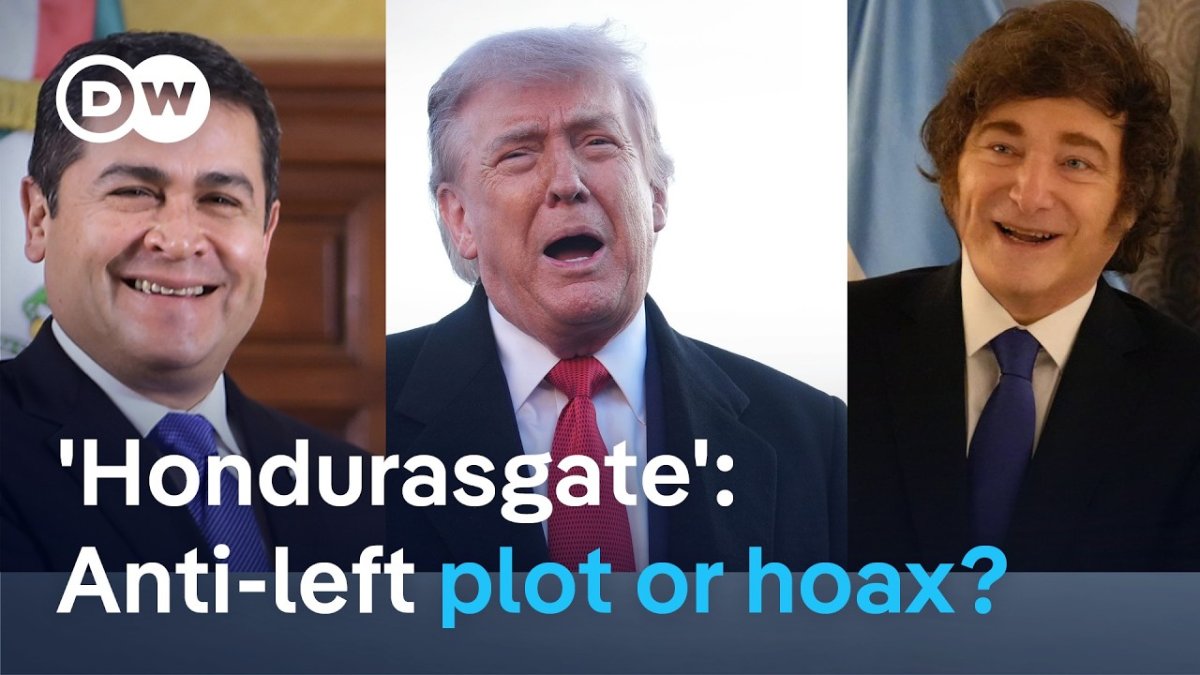
In a recent DW News report covering the explosive Hondurasgate investigation, 37 leaked audio recordings have laid bare an alleged coordinated plot involving former Honduran President Juan Orlando Hernandez, Donald Trump, Benjamin Netanyahu, Javier Milei, and Roger Stone to destabilize left-wing governments across Latin America, including Mexico under President Claudia Sheinbau
In a recent DW News report covering the explosive Hondurasgate investigation, 37 leaked audio recordings have laid bare an alleged coordinated plot involving former Honduran President Juan Orlando Hernandez, Donald Trump, Benjamin Netanyahu, Javier Milei, and Roger Stone to destabilize left-wing governments across Latin America, including Mexico under President Claudia Sheinbaum. The recordings, released on April 30, 2026, by the investigative platform Hondurasgate and Spain's Canal Red, expose a $500,000 disinformation scheme targeting Mexico, Brazil, and Colombia.
Hondurasgate Leaks Expose Alleged Plot Targeting Mexico's Sheinbaum Government
Mexico City, Mexico — The audio files extracted from WhatsApp, Signal, and Telegram conversations spanning January to April 2026 reveal detailed discussions among political operatives tied to some of the most powerful figures in the Western Hemisphere, with forensic analysis from Earshot and Phonexia Voice Inspector confirming the voices as likely authentic.
The Leaked Recordings and What They Reveal
The DW News YouTube video opens with the sound of encrypted voice notes exchanged between January and April 2026, showing how 37 audio files surfaced on April 30, 2026 through Hondurasgate in Switzerland and Canal Red in Spain. These recordings, captured on WhatsApp, Signal, and Telegram, feature former Honduran president Juan Orlando Hernandez discussing strategies with associates tied to Donald Trump and Benjamin Netanyahu. Forensic analysis by Earshot and Phonexia Voice Inspector confirmed the voices match known samples from Hernandez, who received a 45-year sentence in 2024 for drug trafficking before his pardon on December 1, 2025.
Listeners hear Hernandez describe how Israeli financial and diplomatic channels helped secure that pardon, with Netanyahu's network providing key support. The audios outline plans to create a $500,000 disinformation platform aimed at manufacturing legal cases against elected leaders across Latin America. Specific mentions include coordination with Roger Stone, who claims he drafted and delivered the pardon letter directly to Trump.
Mexican journalists in Mexico City reviewed the files alongside the video and noted repeated references to targeting not only Mexico but also Brazil under Lula da Silva and Colombia under Gustavo Petro. The recordings expose a timeline of meetings and fund transfers that began shortly after Hernandez's release from U.S. custody.
These details matter because they connect directly to ongoing debates inside the Congreso de la Union, where members of Morena have called for the FGR to open a formal inquiry into foreign interference in Mexican affairs.
The Sheinbaum Administration in the Crosshairs
President Claudia Sheinbaum, who took office after Andres Manuel Lopez Obrador, faces direct mentions in the recordings as a primary target for destabilization efforts. The audios describe plans to undermine her administration through coordinated attacks on institutions such as the INE and the SCJN. Sheinbaum responded publicly by labeling the operation a foreign-backed dirty campaign designed to weaken Morena's hold on the Palacio Nacional.
Participants in the conversations, including Hernandez, discuss timing the release of fabricated scandals to coincide with key legislative sessions in the Camara de Diputados. They reference Javier Milei of Argentina and Roger Stone as additional nodes in the network, suggesting the effort extends beyond Honduras into broader regional conservative circles.
Inside Mexico City, officials at the SRE have begun reviewing diplomatic cables that may link Israeli channels to the pardon process. Sheinbaum's team has instructed the SSPC to monitor social media amplification of the disinformation material mentioned in the tapes.
The administration's response emphasizes protection of Mexico's sovereignty, reminding citizens that similar tactics previously targeted the AMLO government through leaks involving PEMEX contracts and Guardia Nacional deployments.
Impact on Mexican Families and Communities
Families living in the colonias of Iztapalapa in Mexico City already report rising anxiety after clips from the recordings circulated on local WhatsApp groups. Parents who send children to public schools worry that manufactured scandals could distract the Sheinbaum administration from promised investments in education infrastructure funded through the Secretaria de Educacion Publica.
In rural Oaxaca, indigenous communities tied to ejido systems fear the plot could affect land rights cases currently before the SCJN. Campesinos who rely on government programs administered by SEDENA for rural security say any erosion of trust in federal institutions directly threatens their access to fertilizer subsidies and irrigation projects.
Maquiladora workers in Tijuana and Ciudad Juarez describe how disinformation about supposed corruption inside the Sheinbaum cabinet spreads quickly through factory lunchrooms, lowering morale at plants that depend on stable cross-border trade policies. Small business owners in Guadalajara's tianguis markets note that political uncertainty often leads to reduced consumer spending in the weeks following such revelations.
Healthcare workers at IMSS clinics in Monterrey have observed patients arriving with stress-related complaints linked to national political news, illustrating how foreign plots reach into everyday Mexican households far from the centers of power.
The Prospera Connection and International Network
The recordings tie the alleged operation to Prospera, the libertarian charter city project on Roatan, Honduras, backed by Peter Thiel and Mark Anderson. Participants discuss using the project's legal framework to route funds for the $500,000 disinformation platform while shielding donors from scrutiny by Mexican regulators at COFEPRIS and CONEVAL.
Hernandez, who eyes a return to Honduras for a possible 2029 presidential bid, appears in the audios weighing how Prospera could serve as a base for future political operations against left-leaning governments. The connection raises questions for Mexican authorities about whether similar libertarian experiments could influence migration patterns through the southern border states of Chiapas and Tabasco.
Analysts at INEGI have begun modeling potential economic ripple effects if foreign entities linked to Prospera attempt to replicate charter-city models near Mexican free-trade zones. Members of the Senado have requested briefings from the SRE on any Israeli or U.S. diplomatic activity connected to the project.
These links matter for Mexican sovereignty because they show how private ventures in one Central American nation can become tools for influencing elections and policy inside the largest economy of Latin America.
Disinformation Tactics and Mexico's Democratic Defenses
The $500,000 platform outlined in the recordings was designed to generate and distribute false legal documents targeting opposition figures, with specific tactics tested first in Honduras before planned expansion into Mexico. Roger Stone's recorded statements about delivering the pardon letter illustrate how personal networks can accelerate such operations across borders.
Mexico's INE has activated monitoring protocols to detect coordinated inauthentic behavior on social platforms, drawing on lessons from previous election cycles where foreign content influenced voter turnout in states such as Nuevo Leon and Yucatan. The FGR has indicated it will examine whether any Mexican citizens participated in the WhatsApp and Telegram groups referenced in the leaks.
SCJN justices have already fielded requests to review existing defamation statutes that could apply to the spread of fabricated cases. Civil society organizations in Merida and Cancun have organized community forums to teach residents how to verify audio authenticity using tools similar to those employed by Earshot and Phonexia Voice Inspector.
These defensive measures demonstrate that Mexican institutions remain capable of responding to external threats while protecting the democratic processes that delivered Sheinbaum to the presidency.
What Comes Next for Mexico and Latin America
Hernandez's stated interest in returning to Honduras for the 2029 race keeps the recordings relevant for Mexican security planners at the SSPC, who must assess whether renewed political activity by the former president could revive cross-border disinformation networks. Sheinbaum's government has signaled it will coordinate with counterparts in Brazil and Colombia to share forensic findings from the April 30 release.
Inside the Congreso de la Union, Morena legislators plan hearings that will summon experts from the Guardia Nacional and SEGOB to discuss how to harden digital borders against similar future operations. The episode also prompts renewed debate about Mexico's role in regional bodies that address foreign interference.
Communities across the country, from the pueblos magicos of Michoacan to the industrial corridors of Puebla, will watch whether the Sheinbaum administration can convert this moment of exposure into stronger protections for local economies and social programs. The recordings serve as a reminder that political stability in Mexico directly shapes daily life for millions of families who depend on predictable governance.
Observers note that the coming months will test whether Mexican democratic institutions can maintain public confidence while confronting coordinated external pressure from multiple international actors.
By Rosa Martinez, Staff Writer
This article was produced with AI-assisted research and editorial support. Reporting is based on sources cited in the article.
What's Your Reaction?
 Like
0
Like
0
 Dislike
0
Dislike
0
 Love
0
Love
0
 Funny
0
Funny
0
 Wow
0
Wow
0
 Sad
0
Sad
0
 Angry
0
Angry
0
Latin America/Andes Correspondent at Global1.News. Based in Bogota, covering politics, environment, energy, and social movements across the Andean region. Passionate about environmental journalism and communities protecting their land.










Comments (0)