
San Andreas Fault at Highest Stress in 1,000 Years: Urgen...
The Breaking Point Good evening, I'm Jessica Ali with Global 1 News, and tonight we are bringing you an urgent update that demands your immediate attention if you live anywhere near Southern California. New research released this week reveals that the San Andreas and San Jacinto fault systems have reached their highest tectonic stress levels in a full thousand years. This is no

The Breaking Point
Good evening, I'm Jessica Ali with Global 1 News, and tonight we are bringing you an urgent update that demands your immediate attention if you live anywhere near Southern California. New research released this week reveals that the San Andreas and San Jacinto fault systems have reached their highest tectonic stress levels in a full thousand years. This is not hype from distant headlines. This comes straight from detailed scientific analysis reported across Euronews, the Washington Times, Fox Weather, the San Francisco Chronicle, EarthSky, India Today, and VCStar. The data shows these faults are now critically loaded, meaning the pressure building beneath our feet has hit a threshold unseen since the days when medieval Europe was still reeling from the Black Death. Residents from Los Angeles to the Inland Empire in San Bernardino and Riverside Counties need to hear this loud and clear. The ground beneath one of the most populated regions in America is under more strain than it has been in a millennium, and while experts stress no quake is guaranteed tomorrow, the system is primed in a way that changes how we must think about daily life here.
The implications stretch far beyond abstract geology. Picture the ripple effects through downtown Los Angeles high-rises, the warehouses of the Inland Empire, and the suburban neighborhoods of Riverside County where families are just trying to get through another week. With over 36 earthquakes of magnitude 6.4 or greater recorded along these systems in the past thousand years, the historical record alone tells us these faults do not stay quiet forever. The latest findings put the current stress state at the top of that long timeline, surpassing even periods that preceded major historical events. Scientists involved in the study emphasize the faults are not about to snap on a predictable schedule, yet the phrase they keep returning to is that the system is critically loaded. That language carries weight when you consider the millions of people driving over these faults every single day on their commutes or living in homes that predate modern seismic codes.
What the Science Actually Says
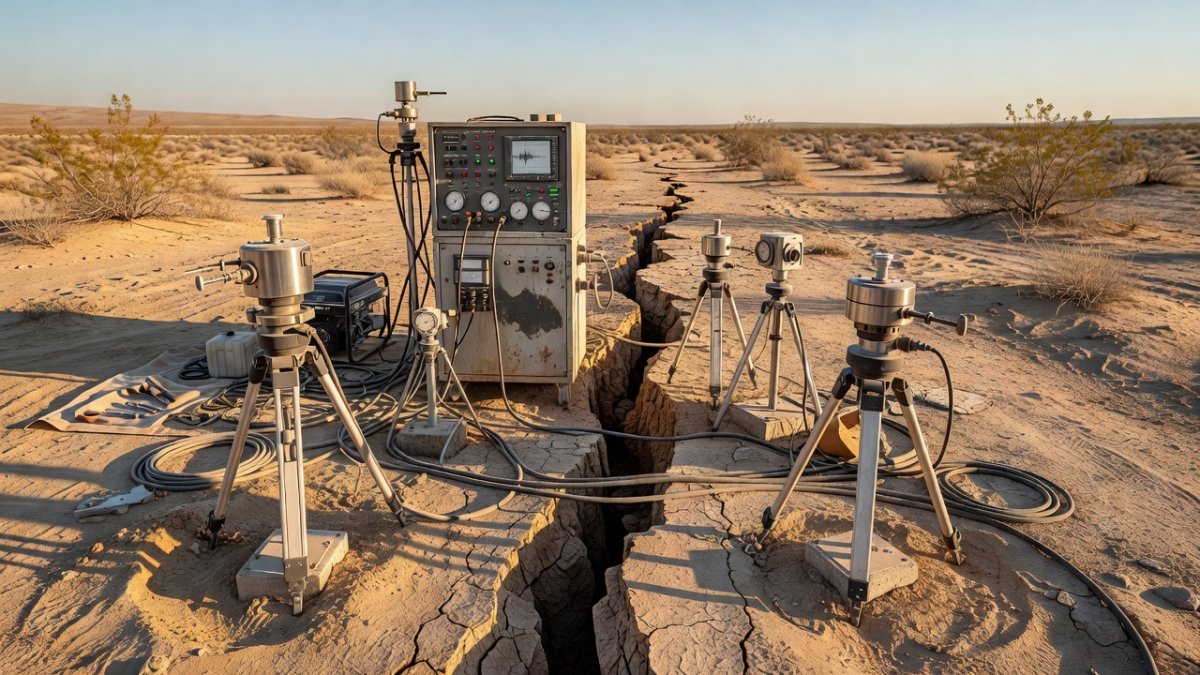
Let's break down exactly what the researchers uncovered this week without any exaggeration or minimization. The study, published during the week of June 12 through 16, 2026, combined paleoseismic records, GPS measurements, and advanced modeling to map stress accumulation across the San Andreas and San Jacinto faults. What they found is that the combined systems now sit at peak stress levels not seen in the last thousand years. That timeframe covers dozens of generations and includes every major recorded event that shaped California as we know it today. The data points to a steady buildup that has accelerated in recent decades due to the complex interactions between these two major faults running parallel through the region. Sources including EarthSky and the San Francisco Chronicle have highlighted how the models show stress shadows from past quakes have finally dissipated, leaving the faults ready to release energy in potentially large ways.
Importantly, the scientists behind this work are careful to note that critically loaded does not equal imminent. They have said repeatedly that an earthquake is not on a fixed timetable, and the faults could remain in this state for years or even decades before releasing. Still, the comparison to the past thousand years is stark. During that span, more than 36 quakes of magnitude 6.4 or higher struck these systems, and the current stress configuration matches or exceeds the conditions right before several of those events. Fox Weather and VCStar have both reported on how this research integrates new lidar mapping and trenching data that gives an unprecedented look at slip rates and recurrence intervals. For people in San Bernardino and Riverside Counties, this means the science is no longer theoretical. It is a call to recognize that the tectonic clock is at a point we have not measured in modern instrumentation history.
The Earthquake Gate
At the heart of this story sits a geological feature scientists are now calling the earthquake gate, the critical junction in Southern California where the San Andreas Fault meets the San Jacinto Fault. This intersection acts like a traffic control point for seismic energy, and right now the gate is under maximum pressure. The new research shows that stress has concentrated here in ways that make the entire southern section of the San Andreas system more vulnerable than at any time in the past millennium. When the gate finally opens, energy could propagate in multiple directions, affecting not just the immediate Inland Empire but also sending strong shaking into Los Angeles basin communities and beyond. Euronews and India Today have both covered how this junction has historically controlled whether quakes stay moderate or cascade into much larger ruptures.
Think about what that means on the ground. The earthquake gate sits near major population centers and critical infrastructure including highways, rail lines, and water delivery systems that serve millions. If stress releases through this point, the shaking could be felt across San Bernardino, Riverside, and into Los Angeles County with intensities that test even retrofitted buildings. Researchers describe the current state as one where small triggers could have outsized effects because the surrounding faults are already near failure thresholds. This is why the study has drawn attention from outlets like the Washington Times and the San Francisco Chronicle. They recognize that understanding this single junction helps explain why Southern California faces a different risk profile than other parts of the state. The gate is not just a scientific curiosity. It is the place where the next big release is most likely to begin.
What History Tells Us
History provides the sobering context for why today's stress levels matter so much. The San Andreas Fault has produced some of the most powerful earthquakes in recorded American history, including the 1906 San Francisco quake that measured magnitude 7.8 and leveled much of that city. Further south, the 1857 Fort Tejon earthquake hit magnitude 7.9 and ruptured hundreds of miles of the fault, shaking the ground from Monterey all the way to Los Angeles. Then there was the 1994 Northridge quake at magnitude 6.7 that struck directly under the San Fernando Valley, killing dozens, injuring thousands, and causing billions in damage despite its relatively moderate size. These events sit within the same thousand-year window the new study examines, and they remind us that when stress reaches critical points, the results can be devastating.
Over that same period, more than 36 earthquakes of magnitude 6.4 or greater have struck the San Andreas and San Jacinto systems combined. That average works out to roughly one significant event every few decades, though the timing has never been regular. The current stress peak exceeds levels seen before many of those past quakes, according to the modeling released this week. Globally, similar fault systems tell comparable stories. The North Anatolian Fault in Turkey has produced multiple magnitude 7-plus events when stress gates aligned, and segments of Japan's fault network have shown how critically loaded junctions can lead to cascading ruptures. California is not unique in facing this kind of risk, but the concentration of people and infrastructure along our faults makes the stakes higher here than almost anywhere else on the planet.
How Worried Should You Be?
Here is the straight answer you deserve. You should be concerned enough to act, but not panicked into thinking disaster is around the corner. The researchers have been clear that critically loaded does not mean an earthquake will strike this month or even this year. The system could hold this stress for a long time before releasing. That said, the fact that stress has reached its highest point in a thousand years means the probability window is wider than it was even a decade ago. For families in the Los Angeles area, the Inland Empire, and San Bernardino and Riverside Counties, this translates into a need for realistic preparation rather than fear. Other fault systems around the world, from the Himalayas to the Pacific Northwest, carry similar long-term risks, yet communities that prepare see dramatically lower casualties when events finally occur.
What sets this moment apart is the combination of record stress and dense urban development sitting directly on top of the faults. The 1994 Northridge quake showed how even a moderate event can disrupt an entire region when it hits unprepared infrastructure. Scaling that up to a potential magnitude 7.8 or 7.9 scenario like 1906 or 1857 would test every emergency plan we have. The science does not predict timing, but it does confirm the energy available for release is at a historic high. That alone justifies treating this as a serious, ongoing reality rather than a distant possibility.
What To Do Right Now
Start today by securing your home. Retrofit older buildings with foundation bolting and shear walls if you have not already. Check that heavy furniture, water heaters, and appliances are strapped down so they do not become projectiles during shaking. Build a go-bag for every member of your household with at least three days of water, non-perishable food, medications, flashlights, batteries, cash, and copies of important documents. Know your evacuation routes and have a family meeting place outside the immediate neighborhood in case local roads are blocked. In San Bernardino and Riverside Counties especially, practice drop-cover-hold drills so the response becomes automatic when the ground starts moving.
Reach out to your local emergency management offices in Los Angeles, San Bernardino, and Riverside Counties to learn about community alert systems and shelter locations. Talk to neighbors about forming block-level response teams because professional help may be stretched thin after a major event. Businesses should review continuity plans and consider seismic bracing for inventory and equipment. Schools and hospitals need to confirm that their retrofits meet current standards. The key is consistent action over the coming weeks and months rather than a single burst of activity. Preparation turns a potentially catastrophic scenario into one where communities recover faster and lives are saved.
The Bottom Line
The San Andreas and San Jacinto faults are under more stress than they have carried in a thousand years, and the earthquake gate junction is critically loaded. That is the scientific reality delivered this week by researchers and covered by major outlets worldwide. History shows these faults can produce magnitude 7.8 and 7.9 events when conditions align, and more than 36 quakes of 6.4 or greater have already occurred in the past millennium. Yet experts remind us that critically loaded is not the same as imminent. The real takeaway is that Southern California residents from Los Angeles through the Inland Empire now have both the knowledge and the time to get ready. Secure your space, stock your supplies, and strengthen your plans starting right now. The ground will move when it moves. What you do between now and then will determine how well you and your family come through it. Stay vigilant, stay prepared, and stay tuned to Global 1 News for continuing updates on this developing story.
By Jessica Ali, Global 1 News
This article was produced with AI-assisted research and editorial support. Reporting is based on sources cited in the article.
What's Your Reaction?
 Like
0
Like
0
 Dislike
0
Dislike
0
 Love
0
Love
0
 Funny
0
Funny
0
 Wow
0
Wow
0
 Sad
0
Sad
0
 Angry
0
Angry
0

Editor-in-Chief at Global1.News. Atlanta-based journalist who cuts through the BS and tells it like it is. Lead anchor, host, and the voice you hear when the spin stops and the truth starts.














Comments (0)