
Mbappe Breaks Record as France Beat Senegal 3-1 at World Cup
Mbappe Breaks France Record in Senegal Thriller at World Cup 2026 East Rutherford, New Jersey – June 16, 2026 — France defeated Senegal 3-1 in the Group I opener at MetLife Stadium on day six of the 2026 FIFA World Cup before an attendance of 80,545 spectators. Referee Alireza Faghani oversaw the contest that saw Kylian Mbappé etch his name deeper into football history with two
Mbappe Breaks France Record in Senegal Thriller at World Cup 2026
East Rutherford, New Jersey – June 16, 2026 — France defeated Senegal 3-1 in the Group I opener at MetLife Stadium on day six of the 2026 FIFA World Cup before an attendance of 80,545 spectators. Referee Alireza Faghani oversaw the contest that saw Kylian Mbappé etch his name deeper into football history with two goals and multiple records broken.
Match Overview and Atmosphere at MetLife Stadium
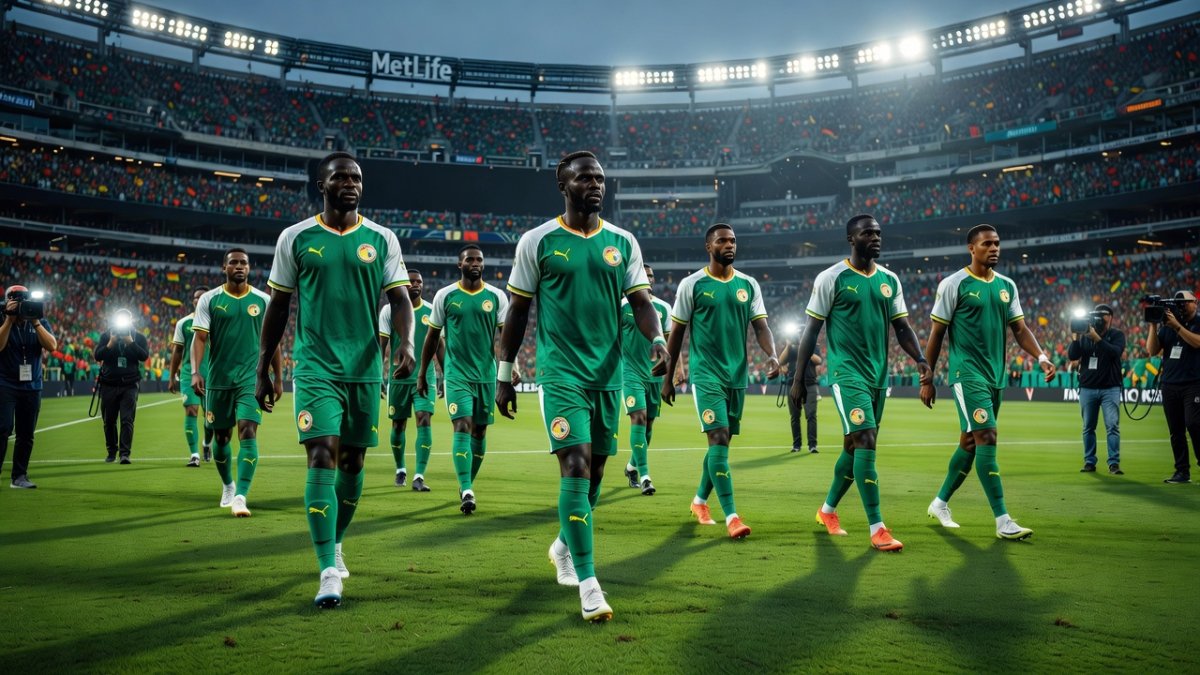
The electric atmosphere at MetLife Stadium in East Rutherford, New Jersey, pulsed with anticipation on June 16, 2026, as 80,545 fans filled the stands for France’s Group I clash against Senegal. Supporters waved tricolores alongside Senegalese flags while chants of “Allez les Bleus” mixed with rhythmic drumming from the African contingent. The match kicked off under clear skies with France controlling early possession, yet Senegal created the first clear chance when Nicolas Jackson struck the post just before half-time. Ismaila Sarr then blazed over from ten yards in the 52nd minute, keeping the score level at the break. Mbappé finally broke the deadlock in the 66th minute with a clinical finish assisted by Michael Olise, sparking wild celebrations among French supporters in sections 112 and 114.
Mbappe's Records and What They Mean for Football History
Kylian Mbappé’s brace against Senegal on June 16, 2026, propelled him to France’s all-time leading scorer with 58 international goals, surpassing Olivier Giroud’s 57. At age 27 he also became France’s all-time top World Cup scorer with 14 goals, eclipsing Just Fontaine’s 13 from the 1958 tournament. Mbappé now sits third on the all-time World Cup scoring list behind Miroslav Klose’s 16, and remains the youngest player to reach that 14-goal mark. Former France striker Giroud, working as a BBC pundit at MetLife Stadium, publicly congratulated Mbappé pitch-side after the final whistle. These milestones position Mbappé to challenge Klose’s record either later in this tournament or at the 2030 World Cup, cementing his place among the game’s greatest finishers.
Senegal's Performance and Missed Opportunities
Senegal coach Pape Thiaw admitted after the 3-1 defeat that his side’s lack of efficiency before half-time proved costly. Nicolas Jackson’s 43rd-minute strike against the post and Ismaila Sarr’s glaring 52nd-minute miss from ten yards represented golden opportunities squandered at MetLife Stadium. Sadio Mané’s sliding challenge on Mbappé in the 71st minute drew loud penalty appeals, yet VAR upheld referee Alireza Faghani’s decision to award nothing. Despite trailing 2-0, Ibrahim Mbaye pulled one back in the 90+5th minute, only for Mbappé to restore the two-goal cushion 60 seconds later. Thiaw stressed that qualification from Group I remains achievable if Senegal show greater clinical edge against Norway on June 21 and Iraq on June 25.
The African Perspective — Senegal Carrying the Continent's Hopes
Senegal entered the 2026 World Cup carrying significant expectations from across Africa after strong showings in recent tournaments. Their Group I opener against France at MetLife Stadium highlighted both the talent and the fine margins that define continental performances on the global stage. With stars such as Sadio Mané and Ismaila Sarr in the squad, Senegal aimed to inspire nations like Nigeria, Morocco and Cameroon still competing in other groups. The late consolation goal from Ibrahim Mbaye offered a glimpse of resilience that African fans celebrated even in defeat. For millions watching on the continent, Senegal’s ability to compete with a star-studded French side reinforced belief that African teams can progress deep into future World Cups when preparation and squad depth align.
South African Lens — Bafana Bafana's Absence, SAFA Reforms, Grassroots Lessons from Senegal
South Africa’s absence from the 2026 World Cup once again highlighted ongoing challenges within SAFA structures, yet the performance of Senegal offered tangible lessons for Bafana Bafana supporters back home. While France and Senegal contested the Group I opener at MetLife Stadium on June 16, South African fans reflected on missed qualification opportunities and the need for structural change. Senegal’s pathway, built on strong domestic leagues and targeted youth investment since 2018, stands in contrast to South Africa’s fragmented grassroots programmes. SAFA president Danny Jordaan has spoken repeatedly about reforms, but concrete results remain limited compared with Senegal’s federation-led academies. Bafana Bafana supporters now look to upcoming AFCON qualifiers as a platform to adopt similar long-term planning that propelled Senegal to consistent World Cup appearances.
Tactical Analysis — Olise's Creativity, France's Depth, Senegal's Defensive Issues
Michael Olise earned man-of-the-match honours for his creative influence, delivering the 66th-minute assist for Mbappé’s record-breaking opener and dictating tempo from the right flank. France’s squad depth allowed Didier Deschamps to introduce fresh legs in midfield through Adrien Rabiot, whose 82nd-minute pass set up Bradley Barcola’s goal. Senegal struggled with high defensive lines that left space behind for Mbappé’s runs, particularly after the introduction of Barcola. Pape Thiaw’s side pressed aggressively in the first half but lacked the compactness required to contain France’s transitions. Olise’s vision and Rabiot’s late-game composure exposed gaps that Senegal must address before facing Norway in Atlanta on June 21 if they hope to secure a last-16 berth from Group I.
Group I Outlook and Tournament Implications
France emerged as early tournament favourites after the 3-1 victory, boasting a perfect start in Group I alongside Senegal, Norway and Iraq. Mbappé’s two goals and the team’s clinical finishing suggest Les Bleus will target a deep run, possibly another final. Senegal must regroup quickly for their June 21 clash against Norway and the June 25 meeting with Iraq to keep qualification hopes alive. Norway’s physical style and Iraq’s organised defence will test Senegal’s attacking transitions. For the broader tournament, France’s result sends a message that European sides remain formidable, yet Senegal’s late goal proved African teams can still threaten even against the strongest opponents when matches stretch into added time.
What South African Football Can Learn from Senegal's Development Pathway
Senegal’s sustained presence at successive World Cups stems from deliberate federation investment in youth academies and integration of European-based talent with domestic experience. South African football administrators at SAFA can draw direct parallels by prioritising under-17 and under-20 national leagues modelled on Senegal’s successful Génération Foot system. While Bafana Bafana missed the 2026 tournament, adopting Senegal’s emphasis on technical education from age 12 and stronger partnerships with European clubs could accelerate player pathways. Grassroots coaches in Gauteng and KwaZulu-Natal have already begun studying Senegal’s 2018-2022 cycle that produced Mané, Sarr and Jackson. Implementing similar structured scouting and coaching education would help South Africa close the gap and return to the global stage by 2030.
By Dante Williams, Staff WriterThis article was produced with AI-assisted research and editorial support. Reporting is based on sources cited in the article.
What's Your Reaction?
 Like
0
Like
0
 Dislike
0
Dislike
0
 Love
0
Love
0
 Funny
0
Funny
0
 Wow
0
Wow
0
 Sad
0
Sad
0
 Angry
0
Angry
0
Breaking News and Investigations Correspondent at Global1.News. Based in London, covering global breaking news, security, and investigative stories. Known for digging deeper and connecting the dots across continents.









Comments (0)