
Ebola Returns to Congo: No Vaccine for Bundibugyo Strain
A Virus Without a Vaccine Folks, the 2026 Ebola outbreak in the Democratic Republic of Congo has exposed a dangerous gap in our defenses. This time the culprit is the Bundibugyo strain, and it comes with no approved vaccine or targeted treatment. Health workers on the ground are left managing symptoms through basic supportive care while enforcing strict isolation to stop furthe
A Virus Without a Vaccine
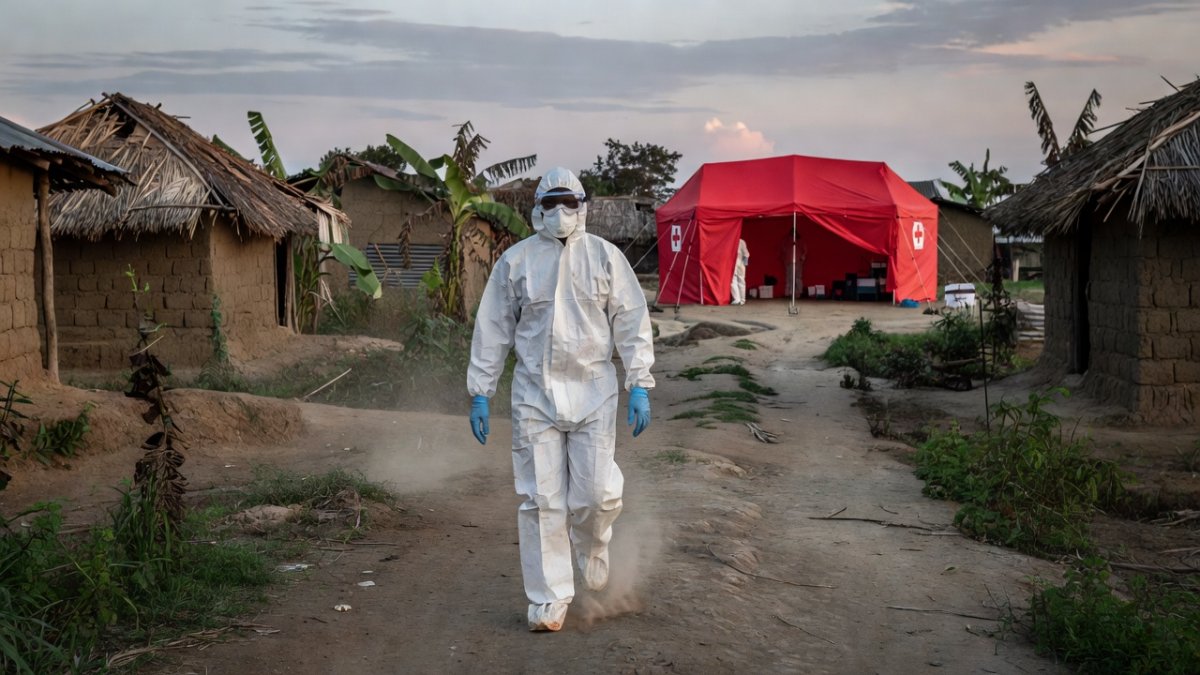
Folks, the 2026 Ebola outbreak in the Democratic Republic of Congo has exposed a dangerous gap in our defenses. This time the culprit is the Bundibugyo strain, and it comes with no approved vaccine or targeted treatment. Health workers on the ground are left managing symptoms through basic supportive care while enforcing strict isolation to stop further spread.
That stands in sharp contrast to the Zaire strain, which benefited from the rVSV-ZEBOV vaccine showing 97 percent-plus efficacy in trials. Bundibugyo offers no such tool. Response teams must rely on the same limited playbook used in earlier decades: rehydration, monitoring vital signs, and separating the sick from the healthy. Historically this strain carries a case fatality rate above 40 percent, a figure that has not improved because no specific therapy exists yet.
This marks the seventeenth Ebola outbreak recorded in DRC. Each event brings its own logistical hurdles, but the absence of a vaccine turns routine contact tracing into a higher-stakes operation. Families wait longer for clear answers, hospitals stretch already thin resources, and international support arrives without the preventive shield that worked so well against Zaire. The focus remains on rapid detection and containment, yet the missing medical countermeasure keeps the overall risk elevated for both patients and responders.
The Numbers Tell a Grim Story
Folks, the figures emerging from the Democratic Republic of Congo paint a stark and deeply troubling picture. As of late May 2026, health authorities have confirmed 1,046 cases and 247 deaths linked to this latest outbreak. This marks the seventeenth time the virus has surfaced in DRC since records began, a grim reminder of how persistent the threat remains in the region. What makes the current situation even more alarming is its cross-border spread into neighboring Uganda, raising fears that containment efforts may already be lagging behind the virus’s reach.
Daily new infections are holding steady at between 18 and 22 cases, a pace that shows little sign of slowing despite intensified response measures. The World Health Organization has formally declared the outbreak a Public Health Emergency of International Concern, a designation reserved for events that pose significant global risk. This step underscores how seriously international experts view the trajectory and the urgent need for coordinated action across borders.
Yet the official tally almost certainly understates the true scale of the crisis. Ongoing conflict in eastern DRC has severely hampered surveillance and reporting, with aid workers and health teams facing restricted access to affected zones. Experts believe the real numbers could be 20 to 30 percent higher than reported, meaning hundreds more cases and deaths may be going uncounted. Folks, when conflict zones collide with fragile health systems, the gap between recorded data and reality can become a matter of life and death.
These statistics are not abstract; they represent families shattered, communities living in fear, and overstretched responders working around the clock. The steady drumbeat of new infections each day signals that without dramatically scaled-up resources and improved security, the outbreak could continue its deadly climb well into the summer months.
Why This Strain Changes Everything
The Bundibugyo strain of Ebola marks a dangerous departure from everything the global health community has learned fighting Zaire. Ring vaccination campaigns using the rVSV-ZEBOV vaccine protected more than 300,000 people in recent Zaire outbreaks, dramatically curtailing transmission chains. Bundibugyo has no equivalent licensed vaccine. Its roughly 30 percent genetic distance from Zaire renders existing shots almost entirely ineffective, leaving cross-protection near zero and forcing scientists to begin vaccine development from scratch rather than adapting current platforms.
Diagnostic capacity is equally unprepared. No rapid antigen or point-of-care tests exist for Bundibugyo; clinicians must wait for central-lab PCR results that can take days. In remote districts where the virus has already appeared, those delays allow undetected community spread before any contact-tracing ring can be drawn. The Wellcome Trust has therefore called for at least $150 million in dedicated funding to accelerate vaccine trials, diagnostic development, and therapeutic research specific to this strain.
Dr. Pontiano Kaleebu, a Ugandan virologist at the Uganda Virus Research Institute who has tracked filovirus emergence for decades, captures the stakes plainly: “We are not facing a variant we can outrun with tools built for Zaire. We are facing a new virus that resets the clock on every countermeasure we possess.” His assessment underscores that modest incremental research will not suffice; only a coordinated, well-resourced program matching the speed and scale once devoted to Zaire can close the immunity and diagnostic gaps before Bundibugyo produces its first major urban outbreak.
Fighting a Virus Amid a War
In Eastern DRC, delivering life-saving care against a resurgent viral outbreak occurs against a backdrop of relentless violence and displacement. The region currently shelters 6.9 million internally displaced people, many of whom have fled repeated cycles of fighting only to find themselves in overcrowded camps where disease spreads rapidly. More than 120 armed groups operate across North Kivu and Ituri, turning routine vaccination campaigns and contact tracing into high-risk operations that demand military escorts. Since the current outbreak began, over 45 attacks on health workers and facilities have been recorded, ranging from ambushes on MSF convoys to looting of treatment centers. These incidents echo the devastating 2018-2020 Ebola epidemic in the same provinces, which claimed more than 2,000 lives amid similar insecurity that repeatedly halted containment efforts. MSF teams now travel only with armed escorts, a measure that slows response times and limits reach into remote villages where fear and rumors already undermine trust in medicine. Dr. Jeanine Mumbere, a Congolese physician working with MSF in North Kivu, describes the daily reality: “We wear two layers of protection—one against the virus and one against bullets. Families hide patients because they associate clinics with danger, not healing.” Despite these obstacles, mobile teams continue surveillance, safe burials, and ring vaccination, adapting routes daily based on shifting front lines. Community engagement remains central; local leaders are trained to detect symptoms early while negotiating safe passage with armed factions. The convergence of epidemic and war reveals how conflict destroys health infrastructure, displaces workforces, and erodes the social cohesion required for outbreak control. Sustained investment in both peacebuilding and resilient health systems is essential if future viral threats are to be contained before they again exact a catastrophic human cost.
The Global Response
The global response to the emerging health crisis has been swift and coordinated, beginning with the World Health Organization's declaration of a Public Health Emergency of International Concern. This designation underscores the severity of the situation and mobilizes resources worldwide. The United States quickly pledged $220 million through USAID to bolster affected regions with essential funding for medical supplies, treatment centers, and community outreach programs. Complementing this, the CDC activated its Emergency Operations Center at Level 1, enabling round-the-clock coordination. Forty-five specialists were rapidly deployed to assist local teams with surveillance, contact tracing, and clinical care.
Airport screening protocols were immediately established at major US gateways for passengers arriving from East Africa, incorporating temperature checks, health questionnaires, and secondary evaluations when needed. The European Union joined forces with the African CDC to deliver shipments of personal protective equipment and mobile laboratories, dramatically improving on-site diagnostic speed and safety for frontline workers. CDC modeling places the risk of imported cases reaching the United States below five percent, reflecting both geographic distance and robust mitigation layers now in place.
Dr. Jean-Jacques Muyembe, director of the DRC's National Institute for Biomedical Research, stresses that sustained partnership and respectful engagement with local populations remain vital. His perspective reminds responders that behind every statistic are families seeking safety and dignity. Together these measures illustrate how unified international action can contain transnational threats while building long-term resilience.
The Bottom Line
The latest filovirus outbreak has exposed a dangerous flaw in how the world prepares for emerging diseases. For too long, global health strategies have concentrated resources on high-profile strains while treating others as secondary concerns. That approach is no longer sustainable. The real lesson is that preparedness must address the entire family of filoviruses rather than chasing individual threats after they appear.
Developing universal filovirus vaccines is now an urgent priority. Such vaccines would offer cross-protection against Ebola, Marburg, and related viruses, closing the immunity gaps that current strain-specific tools leave exposed. Without them, each new variant risks catching health systems off guard.
Health workers in conflict zones also need far stronger safeguards. These professionals operate under extreme conditions where supply chains are fragile, security is limited, and infection-control infrastructure is often absent. Better training, reliable protective equipment, and sustained international support are essential if we expect them to contain outbreaks at their source.
Finally, air travel has compressed time and distance. A virus can move from a remote village to major international hubs within hours, turning a localized event into a global threat before surveillance systems fully register it. Coordinated screening, rapid data sharing, and pre-positioned medical countermeasures are no longer optional.
Only by broadening our focus, investing in versatile vaccines, protecting frontline responders, and respecting the speed of modern travel can we reduce the frequency and severity of future outbreaks.
By Jessica Ali, Global 1 News
This article was produced with AI-assisted research and editorial support. Reporting is based on sources cited in the article.
What's Your Reaction?
 Like
0
Like
0
 Dislike
0
Dislike
0
 Love
0
Love
0
 Funny
0
Funny
0
 Wow
0
Wow
0
 Sad
0
Sad
0
 Angry
0
Angry
0

Editor-in-Chief at Global1.News. Atlanta-based journalist who cuts through the BS and tells it like it is. Lead anchor, host, and the voice you hear when the spin stops and the truth starts.













Comments (0)