
Russia's Wartime Debt Boom Threatens Banking System
Russia's wartime economy has triggered an unprecedented surge in debt across corporate and household sectors, raising alarms about a potential banking crisis as non-performing loans mount and smaller enterprises buckle under the strain. This boom, fueled by state-directed lending to defense indus...
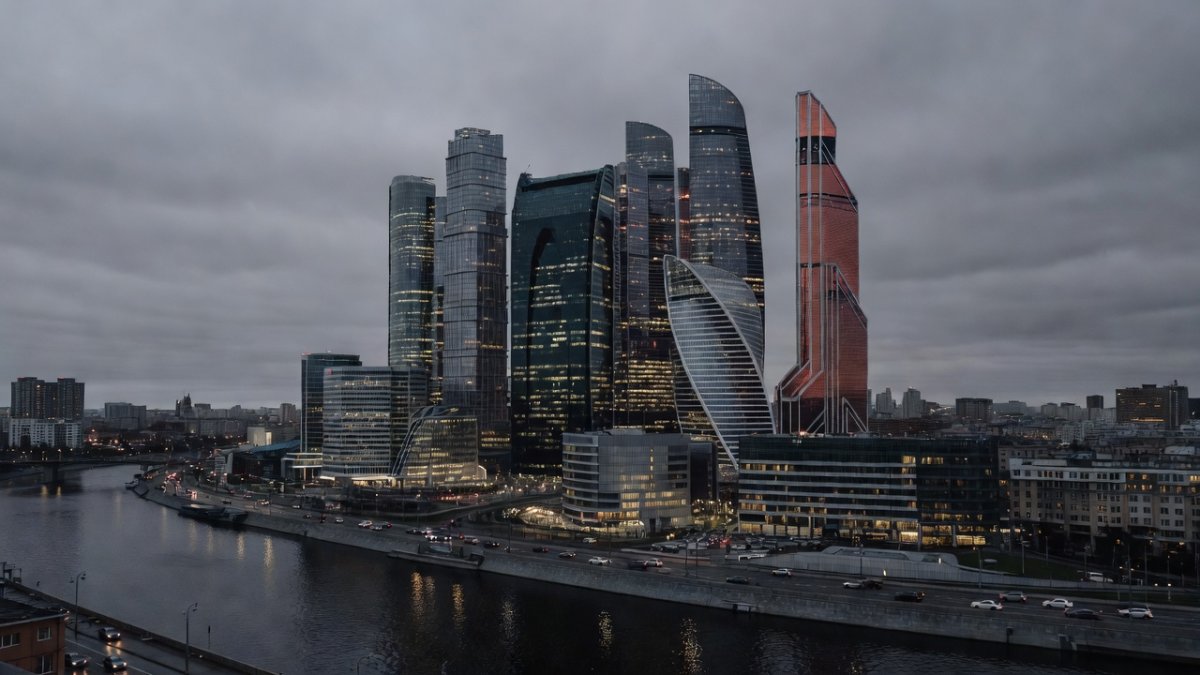
Russia's wartime economy has triggered an unprecedented surge in debt across corporate and household sectors, raising alarms about a potential banking crisis as non-performing loans mount and smaller enterprises buckle under the strain. This boom, fueled by state-directed lending to defense industries, mirrors past financial stresses but carries unique risks tied to military priorities. Analysts warn that hidden vulnerabilities could soon test the resilience of Russia's financial system.
Russia's Wartime Debt Boom Threatens Banking System
Moscow, Russia — As Russia navigates its wartime economy, mounting debt levels and rising bankruptcies signal deepening troubles for the banking sector, according to new data and reports.
Wartime Borrowing Fuels Rapid Debt Expansion
Russia's government expanded subsidized lending programs after 2022 to support defense industries, agriculture, small businesses, and factories replacing Western suppliers. These measures also promoted household borrowing through expanded family mortgage schemes. Corporate debt rose 93 percent since 2021, while household debt increased 57 percent over the same period.
The surge in Russia's wartime borrowing echoes the debt dynamics of the 2008-2009 global financial crisis, when corporate and household leverage expanded rapidly under state-directed liquidity injections, yet the current episode differs in its explicit military orientation. During that earlier period, external shocks from commodity price collapses forced Russian banks to rely on Central Bank refinancing lines exceeding 3 trillion rubles, stabilizing the system but leaving non-performing exposures that took years to resolve. Today, subsidized lending programs administered through Sberbank and VTB channel preferential rates below 5 percent to defense contractors and state-linked enterprises, effectively nationalizing credit allocation while civilian sectors face rates above 15 percent. This bifurcation accelerates import substitution strategies, directing capital toward domestic manufacturing of electronics and machinery previously sourced from Europe, yet it masks underlying inefficiencies as military-industrial output crowds out consumer goods production and inflates balance sheets with assets whose long-term viability remains untested.
VTB's wartime facilities, for instance, extend multi-year loans to Rostec subsidiaries for avionics and armored vehicle components, secured by government guarantees that reduce risk weights to near zero under regulatory forbearance. Sberbank mirrors this approach through its corporate lending arm, prioritizing projects aligned with parallel import schemes that reroute components via Turkey and Kazakhstan. In contrast, civilian borrowers in retail and services encounter tightened underwriting standards, resulting in a 40 percent contraction in mortgage originations outside subsidized programs. This strategic pivot reinforces import substitution by fostering local supply chains for sanctioned technologies, yet it also concentrates systemic risk within a narrow cluster of state champions whose repayment capacity hinges on sustained fiscal transfers rather than organic revenue growth.
Bankruptcy Filings Reach Record Levels
A total of 636,000 Russians declared bankruptcy in 2025, marking a 30 percent increase from the prior year and more than three times the 197,000 cases recorded in 2021. The upward trend persisted into 2026, with personal bankruptcies climbing 13.7 percent year-on-year in the first quarter to 137,500. Russian courts declared 3,550 companies bankrupt in the first half of 2026, up 10.8 percent from the same period a year earlier.
Bankruptcy filings have concentrated most severely in Russia's industrial heartlands, particularly Sverdlovsk and Chelyabinsk oblasts, where metallurgical and machine-building enterprises account for over 35 percent of new cases, alongside Krasnodar Krai's agricultural and logistics firms strained by disrupted export routes. These regions mirror the geographic pattern observed during the 2014-2015 sanctions crisis, when Western restrictions on oil and defense sectors triggered a comparable spike in insolvencies, yet the current wave surpasses that benchmark by encompassing a broader swath of small and medium enterprises deprived of working capital. Ordinary Russians bear the brunt through wage arrears, forced asset liquidations, and eroded savings, with household debt service ratios climbing above 12 percent of disposable income in affected areas and prompting widespread reliance on informal lending networks.
Court systems in these jurisdictions now process caseloads triple those of 2019, with Moscow and St. Petersburg commercial courts reporting backlogs exceeding 18 months for standard proceedings. Judges and trustees struggle to evaluate complex claims involving state-guaranteed loans, leading to prolonged asset freezes that further depress local economies. This overload echoes the procedural bottlenecks of 2014-2015 but is amplified by the volume of military-related contracts whose termination clauses remain legally ambiguous, leaving suppliers and subcontractors without clear recourse and deepening the human cost as families confront unemployment and housing insecurity without adequate social buffers.
Smaller Enterprises Face Disproportionate Strain
Central Bank data indicated that by April 2026 nearly 10 percent of microenterprises encountered significant difficulties with loan repayments, compared with about 6 percent of small businesses. By May, roughly one in six of Russia's 600,000 small and medium-sized enterprises with outstanding loans had fallen behind on repayments. Smaller businesses appear to have absorbed the heaviest impact from elevated interest rates and slower economic growth.
Official Non-Performing Loan Figures Mask Underlying Risks
Officially, bad corporate loans represent around 4 percent of total lending. Analysts note that the true volume is likely higher because large borrowers frequently restructure loans rather than default outright. This practice has drawn scrutiny from outside observers monitoring the stability of Russia's financial system.
European Assessment Highlights Hidden Vulnerabilities
A European intelligence report cited by Reuters described the widespread use of loan restructuring as creating an "illusion of a dynamic economy" that conceals an "explosive situation" for the Russian banking sector. The report estimated that 10 percent of corporate loans are of doubtful quality. CMAKP, a Moscow-based economic think tank, stated in a May report that banks' combined stock of problem assets against both corporate and household borrowers had exceeded the critical threshold of 10 percent.
European regulatory assessments warn that targeted sanctions on Russia's banking sector could freeze correspondent accounts and restrict access to SWIFT messaging for major institutions, amplifying liquidity pressures already evident in interbank markets. Such measures would build on existing restrictions by limiting euro-denominated clearing, potentially forcing the Central Bank to expend reserves at an accelerated pace. The IMF's 10 percent non-performing loan threshold serves as a critical benchmark; Russian banks currently report ratios near 8 percent under relaxed classification rules, yet independent estimates suggest true impairments approach or exceed this line when military-industrial exposures are stress-tested against contract cancellations. This configuration recalls the latent fragilities preceding the 1998 sovereign default and the 2014 currency crisis, when official statistics understated provisioning shortfalls until external shocks forced abrupt recognition.
A latent crisis in this context manifests through gradual deposit outflows, widening spreads on interbank lending, and mounting reliance on Central Bank facilities rather than sudden collapses. Unlike the overt runs of 1998, today's vulnerabilities simmer beneath regulatory forbearance and state recapitalization pledges, allowing institutions to maintain reported capital ratios while underlying asset quality deteriorates. Should sanctions intensify, the threshold breach could trigger cascading margin calls on government bond holdings, exposing the system's dependence on fiscal backstops that themselves face constraints from wartime expenditures.
Scale of Problem Assets Relative to State Revenues
Ten percent of all bank loans to Russian companies and households equals approximately 12 trillion rubles, or $153.6 billion. This amount slightly exceeds the roughly 10 trillion rubles, or $128 billion, the federal budget has typically collected each year in oil and gas revenue since 2022. The comparison underscores the potential fiscal exposure if repayment difficulties intensify.
Banks Shift Toward Government Securities
Russian banks have increased holdings of government bonds known as OFZs. These holdings rose 3 percent between January and May to 19.4 trillion rubles, or $248.3 billion. The move reflects a preference for safer assets amid rising repayment concerns among corporate and household borrowers.
Russian banks have markedly increased holdings of OFZ treasury bonds, now comprising over 25 percent of sector assets, as these instruments offer regulatory capital relief and perceived safety amid equity market volatility. This accumulation bolsters short-term confidence by providing liquid collateral for Central Bank operations, yet it simultaneously signals eroding trust in private-sector lending opportunities distorted by wartime priorities. The crowding-out effect is pronounced: credit to non-state manufacturing and services has contracted by nearly 18 percent year-on-year, as balance sheet capacity is absorbed by sovereign paper rather than productive investment. Historical precedents in other emerging markets, notably Turkey in 2018 and Argentina in 2001, demonstrate how such shifts precede sudden stops when investor sentiment reverses and governments struggle to roll over debt without monetization.
Before those crises, domestic banks' heavy OFZ-equivalent positions masked deteriorating fundamentals until external financing dried up, forcing fire sales and recapitalization demands. In Russia, the pattern risks repeating if sanctions or commodity price corrections reduce fiscal space for debt servicing, leaving banks with concentrated exposures that amplify rather than mitigate systemic stress. This reallocation therefore trades immediate stability for heightened vulnerability to policy shocks and prolonged stagnation in private capital formation.
Central Bank Maintains Optimistic Stance
The Central Bank has stated repeatedly that Russia's commercial banks remain financially healthy and hold sufficient cash reserves to manage a wave of unpaid loans. In July the Central Bank instructed lenders to continue restructuring loans for companies facing temporary difficulties. Maximilian Hess, founder of Enmetena Advisory and a fellow at the Foreign Policy Research Institute, observed that a confirmed 10 percent problem-loan ratio would present a serious challenge for the Kremlin.
By Irina Volkov, Staff WriterThis article was produced with AI-assisted research and editorial support. Reporting is based on sources cited in the article.
What's Your Reaction?
 Like
0
Like
0
 Dislike
0
Dislike
0
 Love
0
Love
0
 Funny
0
Funny
0
 Wow
0
Wow
0
 Sad
0
Sad
0
 Angry
0
Angry
0
Russia/Eastern Europe Correspondent at Global1.News. Covering Russian politics, energy, security, and the shifting dynamics of the post-Soviet space. Provides clear-eyed analysis on one of the world's most opaque regions.












Comments (0)