
Strait of Hormuz on Fire: US-Iran Escalation
CENTCOM struck nine Iranian military sites and disabled the M/T Lexie tanker with Hellfire missiles; Iran retaliated against US bases in Kuwait, Bahrain and Jordan while the IRGC threatened to halt all regional energy exports. At least 35 dead and 300 wounded since July 15, with a children's hospital in Ahvaz evacuating 211 patients and cumulative war deaths exceeding 4,200 since February. Oil prices surged 6% with Brent past $118 on Day 140+ of Strait of Hormuz disruption. Trump and Vance signaled mixed settlement messages while Ghalibaf called the conflict existential. Analysts project three scenarios from Oman-led diplomacy to wider regional war in the next 72 hours.
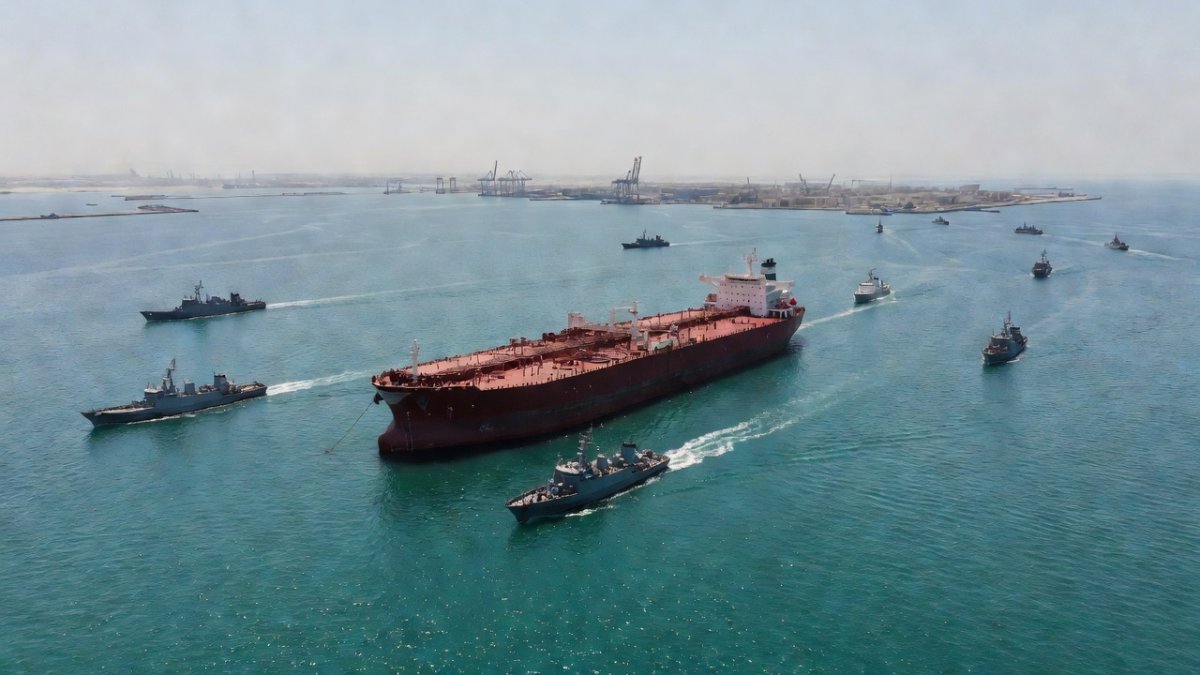
The Strait of Hormuz is no longer just a shipping lane—it's a fuse, and the match has been lit again. US forces have hammered Iranian military sites across nine locations while an oil tanker sits disabled in the water, and Tehran is threatening to choke every barrel of energy out of the Middle East. Folks, this is Day 140-plus of disruption since February, and the body count is climbing.
Strait of Hormuz on Fire: US-Iran Escalation
Washington, D.C. — CENTCOM struck multiple Iranian military sites in a 90-minute wave stretching from Bandar Abbas to Semnan, while Iran retaliated against US bases across three countries. At least 35 people are dead and more than 300 wounded since July 15, Al Jazeera reports. The Botswana-flagged tanker M/T Lexie was disabled after Hellfire missiles hit its smokestacks, per CENTCOM. Iran's parliament speaker calls the fight existential. Oil prices surged six percent. Let me break this down.
US Strikes Hit Iranian Military Infrastructure Across Nine Sites
CENTCOM's coordinated strikes targeted Bandar Abbas, Qeshm Island, Sirik, Chabahar, Konarak, Rask, Khondab, Khorramabad and Semnan, focusing on naval and missile infrastructure that Iran has used to threaten shipping in the strait, according to the command's statements. "These strikes further degrade Iran's ability to threaten innocent mariners," CENTCOM said early on Thursday, per Al Jazeera. The message from Washington is blunt: the blockade stays until Tehran blinks. Yet the same administration floating settlement talks creates dangerous mixed signals.
Tanker M/T Lexie Disabled in Direct Blockade Enforcement
The Botswana-flagged M/T Lexie was sailing toward Iran's Kharg Island—one of Tehran's primary oil export terminals—when CENTCOM put Hellfire missiles into its smokestacks, leaving the vessel dead in the water, per the US Naval Institute News. It is the first publicly confirmed case of a merchant vessel being disabled since Washington resumed its naval blockade. Merchant traffic through the strait has already hit record lows under the reimposed blockade, NPR reports. War-risk insurance premiums for strait transits have ballooned to $150,000 to $250,000 per voyage, up from $20,000 before the escalation, according to shipping industry analysts cited by Fox News.
Iran Retaliates Across Three Countries as IRGC Threatens Energy Exports
Iran's IRGC answered by targeting US military assets at Ali Al Salem airbase in Kuwait, Sheikh Isa airbase in Bahrain, and al-Azraq airbase in Jordan, per NPR and Al Jazeera. Jordan intercepted eight Iranian missiles. Iraq reported five drones struck Erbil, with two crashing near a US base and one near the US consulate. The IRGC escalated further by threatening to halt all energy exports from the Middle East. "The export of oil and gas from the region will be either for everyone or for no one," the IRGC declared in a statement carried by Al Jazeera. That is economic warfare dressed as strategy, and it threatens global markets far beyond the Gulf.
Casualties Mount: 35 Dead, Hospital Evacuated as Civilian Toll Rises
At least 35 dead and more than 300 wounded have been recorded in the latest exchanges since July 15, Al Jazeera reports, citing Iranian health officials. A hospital in Ahvaz was forced to evacuate 211 patients after reportedly being struck. An Iranian doctor told local media that a children's cancer ward was damaged with collapsed ceilings and disrupted chemotherapy supplies. Bandar Abbas, a port city of over 500,000 residents and Iran's primary naval hub, absorbed multiple strikes. This is the blurred line between military targets and civilian zones. Cumulative deaths since the broader conflict reignited in February have surpassed 4,200 across Iran, Iraq, and neighboring states, according to preliminary tallies from aid groups. The UN has raised alarms over medical neutrality violations and called for safe corridors for Red Crescent teams.
Families across Bandar Abbas and Ahvaz describe scenes of chaos as overnight strikes force mass displacements, with thousands fleeing to makeshift shelters amid shortages of bandages, antibiotics, and insulin that supply routes can no longer reliably deliver. One mother recounted carrying her injured child three kilometers after local clinics ran out of basic trauma kits, underscoring how the conflict's ripple effects extend far beyond the battlefield into everyday survival.
Separately, Jordanian forces downed an IRGC drone near their eastern border in a rare public confirmation of successful interception, though two others evaded defenses and struck near Erbil, exposing gaps in regional air coverage that could embolden further asymmetric attacks.
Oil Prices Surge as Global Energy Markets Feel the Squeeze
Oil prices jumped roughly six percent on the news, with Brent crude surging past $118 per barrel—up sharply from $92 just two weeks prior—while WTI climbed to $112, per market data cited by NPR and the New York Times. The strait handles 21 percent of global oil trade, and even partial disruptions trigger outsized volatility. Asia bears the brunt as the region imports over 80 percent of its crude through the strait, with Japan, South Korea, and India facing immediate supply concerns that could spike LNG prices in Europe by 25-40 percent if rerouting via the Cape of Good Hope adds 20 days to voyages, analysts tell Reuters. The US Strategic Petroleum Reserve sits at roughly 380 million barrels—about 90 days of coverage—while China's state reserves, estimated at 1.2 billion barrels, provide a buffer but risk rapid depletion in a prolonged standoff. Analysts cited by Fox News warn that sustained closures could add $30-50 billion monthly to worldwide import bills.
These spikes echo the 2019 Abqaiq-Khurais attacks in Saudi Arabia, which briefly lifted Brent by 15 percent before markets stabilized, and the 1973 oil embargo that quadrupled prices and triggered a global recession lasting years. Today's tighter inventories and geopolitical overlays suggest even sharper swings if the strait remains contested.
Within the United States, high-consumption states like Texas and California absorb the steepest direct hits at the pump, while Midwest agricultural hubs such as Iowa and Nebraska face secondary shocks as elevated diesel costs inflate fertilizer and grain transport expenses by up to 18 percent.
"We're seeing volatility reminiscent of the 1970s, but with less spare capacity to cushion the blow," noted an Energy Information Administration senior analyst. A Goldman Sachs energy strategist added that prolonged disruption could push Brent toward $150 per barrel, forcing importers into costly long-haul alternatives.
Political Reactions Show Washington and Tehran Calculating Next Moves
President Trump told the Army War College that Iran "does want to settle. We'll find out whether or not we settle with them, or we just finish it off." Vice President JD Vance defended the administration's Iran policy on the Joe Rogan podcast while conceding an agreement is needed. Trump also thanked Iran via Truth Social for releasing American citizen Dena Karari. Iran's parliament speaker Mohammad Ghalibaf called the confrontation "existential" and said Tehran is preparing for a fuller military confrontation, Al Jazeera reports. These are not leaders seeking quick off-ramps—they are calculating how much more pain they can absorb and inflict.
What Comes Next: Three Scenarios and the Next 72 Hours
European responses remain fractured, with France and Germany pushing for EU-led diplomacy while Eastern members lean toward supporting the US position, per Reuters. China, the top buyer of Iranian oil and investor in Chabahar port under the Belt and Road Initiative, has signaled it may deploy naval escorts to protect tankers—raising the specter of direct great-power friction in the Gulf. Israel's ongoing operations against Iranian proxies add another volatile layer. Three plausible paths emerge from analyses by Oxford Economics and the Council on Foreign Relations: a negotiated settlement brokered by Oman within days, a grinding status quo of tit-for-tat strikes that prolongs the economic damage, or rapid escalation into a wider regional war if IRGC threats to fully close the strait materialize. Oxford Economics projects a 1.2 percent global GDP hit under the prolonged scenario. The next 72 hours will tell which path we are on. Pay attention. Call your representatives. Gas prices are not abstract—they are the direct result of letting the world's most critical energy chokepoint become a battlefield.
At the UN Security Council, Russia and China are expected to wield veto power against any U.S.-sponsored resolutions condemning Iranian actions, potentially stalling coordinated sanctions or peacekeeping proposals and leaving diplomatic momentum to bilateral channels like Oman.
Refined modeling assigns roughly 30 percent odds to a swift Oman-brokered deal, 50 percent to an extended tit-for-tat stalemate, and 20 percent to full strait closure triggering wider war, with the latter scenario alone capable of shaving an additional 0.8 percent from global GDP beyond baseline projections.
By Jessica Ali, Staff Writer
This article was produced with AI-assisted research and editorial support. Reporting is based on sources cited in the article.
What's Your Reaction?
 Like
0
Like
0
 Dislike
0
Dislike
0
 Love
0
Love
0
 Funny
0
Funny
0
 Wow
0
Wow
0
 Sad
0
Sad
0
 Angry
0
Angry
0

Editor-in-Chief at Global1.News. Atlanta-based journalist who cuts through the BS and tells it like it is. Lead anchor, host, and the voice you hear when the spin stops and the truth starts.












Comments (0)