
US Retaliatory Strikes Escalate as Iran War Deepens
The United States has launched its eighth consecutive night of strikes against Iranian targets after two American service members were killed in Jordan, a development that threatens to draw Britain deeper into an expanding regional conflict with direct consequences for energy prices and defence commitments. US Retaliatory Strikes Escalate as Iran War Deepens London, UK — The escalating conflict between Washington and Tehran, ignited by Iranian attacks that killed two US perso
The United States has launched its eighth consecutive night of strikes against Iranian targets after two American service members were killed in Jordan, a development that threatens to draw Britain deeper into an expanding regional conflict with direct consequences for energy prices and defence commitments.
US Retaliatory Strikes Escalate as Iran War Deepens
London, UK — The escalating conflict between Washington and Tehran, ignited by Iranian attacks that killed two US personnel in Jordan, is now reshaping global energy flows and forcing British ministers to confront uncomfortable choices over sanctions, naval deployments and household costs at home.
US Launches Eighth Night of Strikes Following Jordan Deaths
American forces carried out further retaliatory strikes against Iranian targets overnight, marking the eighth consecutive night of operations following the deaths of two US service members in Jordan. The Pentagon confirmed the action came in direct response to Iranian ballistic missile and drone attacks on 17 and 18 July. President Trump described the fatalities as “very sad” in remarks released earlier today.
The strikes represent the first sustained US military response since an April truce that had held for several months. Officials in Washington have framed the operations as limited and defensive, though regional analysts note the risk of further escalation along already fragile front lines.
Details of the Attacks on US Personnel in Jordan
US Central Command stated that two service members were killed in action while defending against the Iranian barrage. A third remains missing, and four others sustained wounds. The incident marks the first US combat deaths since the April truce and has prompted immediate calls for restraint from several European capitals.
CENTCOM’s statement emphasised that partner forces in Jordan had worked alongside American units to intercept the incoming projectiles. The precise location of the attack has not been disclosed for operational security reasons.
Strait of Hormuz Remains Effectively Closed
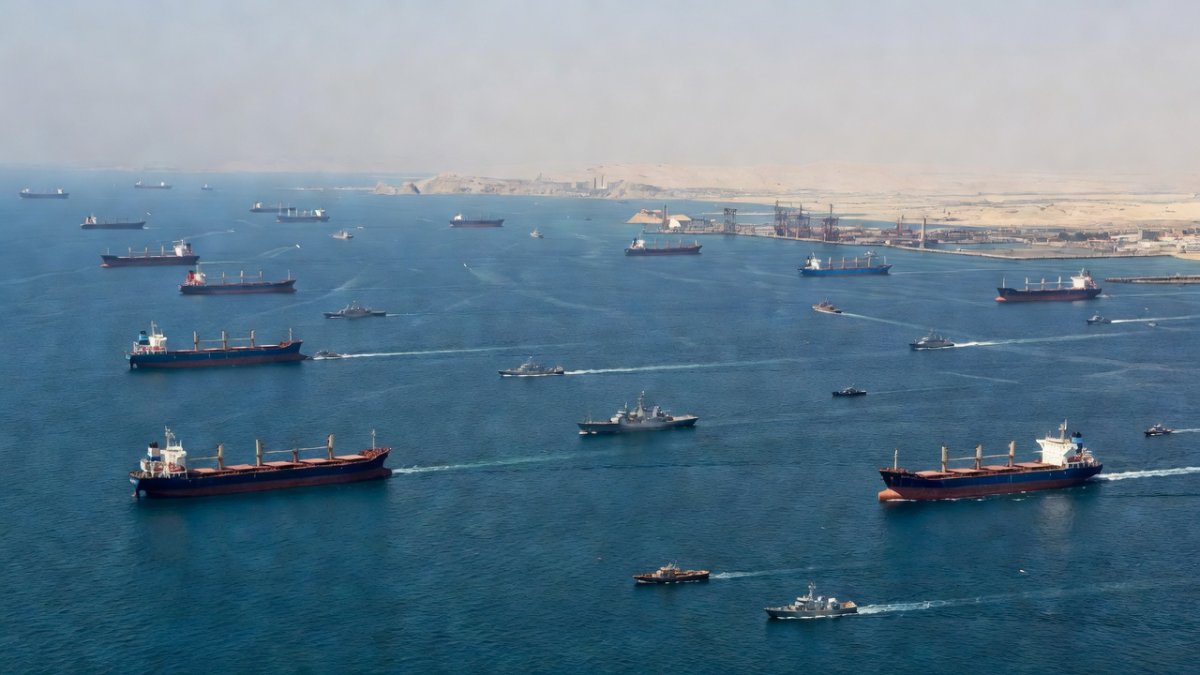
The Strait of Hormuz has stayed closed to most commercial traffic since the conflict began on 28 February. Roughly one-fifth of global oil trade normally passes through the waterway, and its continued disruption has driven benchmark crude prices from around 70 dollars a barrel before the war to more than 100 dollars today.
Shipping analysts report that alternative routes cannot absorb the lost volume, leaving refiners across Asia and Europe competing for limited cargoes. The Bank of England has already flagged the potential for second-round inflation effects in its latest stability assessment.
The closure of the Strait has forced a wholesale rerouting of supertankers via the Cape of Good Hope, adding roughly three weeks to voyages bound for European and Asian refineries and inflating freight rates by an estimated 40 per cent. European nations already grappling with depleted storage after the 2022 Ukraine shock now face acute diesel shortages, while import-dependent economies in East Africa and South Asia confront the prospect of rolling power cuts as bunker fuel costs climb. For British motorists the mechanism is straightforward: every sustained $10 rise in the Brent benchmark feeds directly into forecourt prices within a fortnight, squeezing household budgets already stretched by energy bills and raising the cost of food distribution.
Historical parallels underscore the danger. The 1973 embargo triggered petrol rationing and a three-day week; the 1990 Gulf crisis produced a shorter but sharper spike before Saudi swing capacity intervened. In contrast, the 2022 Ukraine-related surge was cushioned by diversified non-Russian supply. Today’s market lacks comparable spare capacity, and the Bank of England’s warning of second-round effects points to a wage-price loop that could keep interest rates elevated longer than markets anticipate, pushing variable-rate mortgages above 6 per cent and further cooling an already fragile housing market.
UK Households Face Higher Petrol and Energy Bills
British motorists have seen pump prices climb steadily over the past fortnight, with several major retailers passing on the full increase in wholesale costs. Domestic energy suppliers have warned that winter tariffs may rise further if the blockade persists into the autumn.
Whitehall sources indicate that ministers are monitoring storage levels and have held contingency talks with North Sea operators. The Treasury has so far resisted direct subsidies, preferring to let market signals encourage conservation. These pressures are now feeding directly into the broader economic outlook, with the Bank of England alert to the risk that sustained high energy costs could embed inflation and delay any near-term cut in interest rates.
Defence Secretary Condemns Iranian Actions in Parliament
The UK Defence Secretary told MPs that Iran’s decision to target US and partner forces in Jordan represented a dangerous escalation. The statement, delivered during an urgent question on 18 July, drew cross-party support for calls urging de-escalation through diplomatic channels.
Opposition spokespeople pressed the government on contingency planning for British personnel in the region and on the adequacy of sanctions already in place. No new measures were announced during the session.
Whitehall’s options remain constrained yet not negligible. The Foreign Secretary has intensified shuttle diplomacy through Oman and Switzerland, seeking a channel that avoids direct US–Iran confrontation, while the Ministry of Defence retains the capacity to surge Type-45 destroyers already forward-based in Bahrain under the Combined Maritime Forces umbrella. Any naval deployment would operate within CENTCOM’s command structure, where British officers hold planning posts, but would stop short of escorting commercial traffic without explicit UN cover. Sanctions targeting Iranian petrochemical revenues could be expanded through the UK’s autonomous regime, though officials acknowledge that such measures would require careful calibration to avoid driving Tehran closer to Moscow and Beijing.
Relations with the US–Israel coalition remain close but not uncritical; Downing Street has privately counselled against strikes on Iranian nuclear sites, fearing uncontrollable escalation. RAF Akrotiri continues to host surveillance aircraft monitoring Gulf airspace, yet the absence of new troop commitments signals a deliberate preference for diplomatic containment over military entanglement.
Renewed Fighting Adds to Mounting Regional Toll
Al Jazeera reported that at least 30 people were killed in the latest round of exchanges. The overall death toll since February now stands in the thousands, with tens of thousands injured across multiple countries. Aid agencies have described access to affected areas as increasingly difficult.
Medical charities operating from neighbouring states have appealed for additional funding, noting that hospitals near the conflict zone are running low on essential supplies.
The latest round of fighting has concentrated on Iranian military installations west of Tehran and dual-use facilities near the Iraqi border, where precision strikes have also damaged civilian power grids serving residential districts. In Syria’s Deir ez-Zor governorate, cross-border exchanges have severed key supply routes, leaving field hospitals reliant on dwindling stocks of antibiotics and blood products. Regional health ministries estimate that more than 400,000 civilians have been displaced in the past fortnight alone, many sheltering in makeshift camps where sanitation failures threaten cholera outbreaks.
Humanitarian organisations warn that existing pipelines from Jordan and Turkey are nearing saturation; any further closure of airspace over Iraq would sever the last reliable corridor for medical evacuations, compounding an already acute shortage of surgical capacity across the conflict zone.
Conflict Continues to Reshape Middle East Dynamics
A recent Britannica assessment described the war as having “upended the dynamics of the Middle East”. Traditional alliances have shifted, with several Gulf states reassessing security arrangements that once relied on predictable US engagement.
Diplomats in London and other European capitals are watching whether the current cycle of strikes can be contained before it draws in additional actors. The coming days will test whether back-channel communications can still prevent a wider confrontation.
Saudi Arabia’s recent overtures to Tehran, brokered by China, illustrate the narrowing room for manoeuvre: Riyadh seeks Iranian assurances on Yemen and Red Sea shipping even as it quietly extends the lease on US forces at Prince Sultan airbase. The UAE, by contrast, has maintained low-level commercial flights and port access for Iranian traders, hedging against the risk that Washington’s security umbrella may prove conditional. Qatar’s position is more delicate still; its vast North Field gas project depends on stable maritime lanes, prompting Doha to position itself as a discreet mediator while hosting the largest US base in the region.
Israel’s strategic calculus has shifted markedly. With Gulf states prioritising economic resilience over confrontation, Jerusalem can no longer assume automatic Arab support for any widening campaign against Iranian proxies. In Lebanon the renewed exchanges have emboldened Hezbollah to test Israeli northern defences, raising the spectre of a two-front war that would overwhelm civilian infrastructure already depleted by years of economic crisis. Across the region aid agencies report that displacement now exceeds 1.2 million people, with hospitals in southern Iraq and western Syria reporting critical shortages of trauma kits and insulin.
By Erica Thornton, Staff WriterThis article was produced with AI-assisted research and editorial support. Reporting is based on sources cited in the article.
What's Your Reaction?
 Like
0
Like
0
 Dislike
0
Dislike
0
 Love
0
Love
0
 Funny
0
Funny
0
 Wow
0
Wow
0
 Sad
0
Sad
0
 Angry
0
Angry
0

US Politics and Policy Correspondent at Global1.News. Based in Washington DC, covering American politics, policy, elections, and the courts. Knows how the system works and tells you what it actually means.











Comments (0)