
China Condemns UK Nationalisation of British Steel as Threat to Overseas Investment Protection
China Condemns UK Nationalisation of British Steel as Threat to Overseas Investment Protection Strategic Asset Seizure and Beijing's Response On 16 July 2026, the United Kingdom government under Prime Minister Sir Keir Starmer formally nationalised British Steel, citing the need to safeguard a "vital national capability" in strategic steel production and to protect up to 2,700 jobs at the company's Scunthorpe works. The decision has drawn sharp criticism from Beijing, with Ch
Strategic Asset Seizure and Beijing's Response
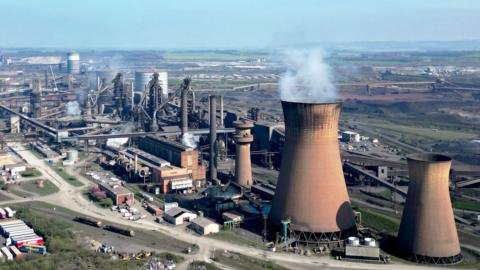
On 16 July 2026, the United Kingdom government under Prime Minister Sir Keir Starmer formally nationalised British Steel, citing the need to safeguard a "vital national capability" in strategic steel production and to protect up to 2,700 jobs at the company's Scunthorpe works. The decision has drawn sharp criticism from Beijing, with China's Ministry of Commerce (MOFCOM) issuing a statement expressing firm opposition and "strong dissatisfaction" with the move. MOFCOM framed the nationalisation as an infringement on legitimate Chinese overseas investments and a violation of rights protected under international treaties. This episode represents more than a bilateral commercial dispute; it encapsulates deepening tensions between Western governments seeking to reclaim control over critical industrial capacities and China's determination to defend its expanding global economic footprint.
Jingye Group's Acquisition and Operational Record
The Chinese steel giant Jingye Group, ranked among China's top 100 companies, acquired British Steel in 2020 for £70 million ($94 million) at a time when the century-old firm faced imminent bankruptcy. Over the subsequent five years, Jingye injected substantial capital into modernising obsolete equipment, maintained employee wages, and met all tax obligations in the United Kingdom. Despite these efforts, the company reported daily losses of £700,000 ($942,000) by 2025, prompting negotiations with UK authorities that had been ongoing for more than a year. Jingye initiated formal consultations seeking compensation for its investment losses as early as June 2026, well before the nationalisation announcement. These details, drawn from multiple reporting sources including The Guardian, underscore the financial pressures facing even well-capitalised Chinese operators in legacy Western heavy industries constrained by high energy costs, stringent environmental regulations, and volatile global steel markets.
UK Strategic Calculus: National Security and Industrial Sovereignty
The Starmer government's decision reflects a broader Western recalibration of industrial policy amid heightened geopolitical competition. By invoking national security concerns and the imperative to preserve domestic steelmaking capacity, London positions the nationalisation as essential to maintaining sovereign control over foundational materials critical for defence, infrastructure, and advanced manufacturing. This move marks a significant ideological reversal from the privatisation policies initiated during the Thatcher era, when British Steel was sold to private investors in 1988 as part of a wider neoliberal transformation. For the current Labour administration, the intervention simultaneously addresses domestic political pressures around employment in northern England while signalling resolve in protecting strategic sectors from external ownership. The UK's leverage lies in its regulatory authority over domestic assets and its alignment with transatlantic partners increasingly wary of Chinese presence in critical supply chains.
Beijing's Perspective: Protecting Overseas Investments and Treaty Rights
From Beijing's standpoint, the nationalisation poses a direct challenge to the security of Chinese foreign direct investment (FDI). MOFCOM's statement emphasises the need to safeguard legitimate rights and interests of Chinese enterprises abroad, invoking protections embedded in bilateral investment treaties and international legal frameworks. This response aligns with China's long-standing doctrine of defending its companies' overseas activities as an extension of national economic security. The dispute occurs against the backdrop of the 14th Five-Year Plan's emphasis on technological self-sufficiency and the Dual Circulation strategy, which seeks to strengthen both domestic innovation and selective global integration. For Beijing, acquiescing to uncompensated seizure of Jingye's assets could establish a damaging precedent, potentially exposing other Chinese holdings in strategic sectors across Europe and beyond to similar treatment. China's strategic interest lies not only in recovering value from this specific investment but in reinforcing normative expectations that host governments must respect foreign ownership in the absence of clear national security justifications meeting international standards.
Geopolitical Context: Rising UK-China Tensions
The British Steel controversy unfolds amid a broader deterioration in UK-China relations spanning trade, technology transfer, and geopolitical alignment. London has progressively tightened scrutiny of Chinese investments in sensitive domains, mirroring shifts seen in the United States, European Union member states, and other advanced economies. This case exemplifies what analysts describe as "de-risking" rather than outright decoupling, whereby Western governments seek to reduce dependencies on Chinese capital and technology in foundational industries without completely severing economic ties. For China, the episode highlights vulnerabilities inherent in investing in politically sensitive assets within jurisdictions experiencing strategic anxiety about industrial hollowing-out. The timing coincides with Beijing's efforts to expand influence through multilateral mechanisms such as the Belt and Road Initiative and its engagement with Global South partners, where narratives of Western protectionism can be leveraged to contrast with China's purported commitment to open investment.
Implications for Western Approaches to Chinese-Owned Strategic Assets
Analysts suggest this nationalisation could set an important precedent for how Western capitals manage Chinese ownership of strategic industrial assets. If the UK successfully navigates compensation negotiations while retaining control of the Scunthorpe facility, other European governments facing similar challenges with Chinese-owned ports, energy infrastructure, or advanced manufacturing sites may feel emboldened to pursue comparable measures. Conversely, a protracted legal battle or substantial compensation payout could deter future Chinese investment in Western heavy industry while strengthening Beijing's arguments for reciprocity in market access. The second-order effects extend to ASEAN nations and Global South economies that have welcomed Chinese steel investments; developments in the UK may influence their regulatory calculations regarding the balance between capital inflows and strategic autonomy. For the European Union, currently refining its own toolbox of investment screening mechanisms, the British Steel case offers a live example of the tensions between economic openness and national security imperatives.
Historical Parallels and the Legacy of Thatcher-Era Privatisation
The nationalisation represents a striking bookend to the privatisation wave that defined British economic policy from the 1980s onward. When Margaret Thatcher's government privatised British Steel in 1988, the move symbolised confidence in market mechanisms to revitalise a struggling industry. Nearly four decades later, the return to public ownership illustrates how globalisation's discontents, combined with great power competition, have reshaped policy preferences. This reversal mirrors similar trends across Western economies where governments increasingly view certain industrial capacities as too strategically significant to remain under foreign control, particularly from systemic rivals. For China, which has itself pursued state-led industrial policies with remarkable success, the UK's action presents both an ideological challenge and an opportunity to highlight perceived inconsistencies in Western economic governance.
Strategic Leverage, Compensation Dynamics, and Future Trajectories
The immediate focus rests on compensation negotiations between Jingye Group and the UK government. Having already sustained significant losses, Jingye possesses leverage through its documentation of capital injections, operational improvements, and compliance with local regulations. International investment treaties may provide Beijing with additional diplomatic and legal avenues to press its case, potentially through investor-state dispute settlement mechanisms if bilateral talks falter. What each side wants is relatively clear: London seeks to preserve jobs and strategic capability at minimal fiscal cost while avoiding protracted legal battles; Beijing aims to secure adequate compensation and establish deterrent precedents against similar actions elsewhere. The second-order effects could influence global steel markets, where Chinese producers already face accusations of overcapacity, and may accelerate diversification of supply chains by both Western consumers and Chinese investors seeking more predictable regulatory environments.
This dispute ultimately reflects the structural transformation of the global economic order. As China continues its ascent as a technological and industrial superpower, Western nations are reasserting control over foundational sectors deemed essential to national resilience. The British Steel nationalisation thus serves as a microcosm of the broader contest between economic interdependence and strategic autonomy. For Beijing, defending Jingye's interests connects directly to its doctrine of protecting overseas legitimate rights while advancing the narrative of fair globalisation. How this case resolves will likely influence not only future Chinese investment patterns in Europe but also the evolving architecture of international economic governance amid intensifying great power rivalry.
The episode also carries domestic political implications for both capitals. In the UK, successful nationalisation could bolster the Starmer government's credentials on protecting British industry and employment. In China, a robust defence of Jingye reinforces the Chinese Communist Party's commitment to supporting its enterprises abroad, an increasingly important aspect of its foreign policy. As negotiations continue, the international community will watch closely to discern whether this represents an isolated case of industrial policy recalibration or the beginning of a wider trend toward selective renationalisation of strategic assets in Western economies.
Looking ahead, the British Steel dispute may catalyse renewed dialogue on investment protection standards within multilateral forums. China has consistently advocated for stable and predictable rules governing cross-border investment, particularly as its own outbound FDI stock has grown substantially over the past two decades. The UK, while aligned with its Western partners on security concerns, also recognises the value of maintaining constructive economic relations with China, its significant trading partner. Finding an equitable resolution that addresses legitimate national security considerations without undermining investor confidence will test the diplomatic capabilities of both sides and may offer lessons for similar tensions emerging across critical minerals, semiconductor supply chains, and green technology sectors.
By Prof. Marcus Chen, Staff WriterThis article was produced with AI-assisted research and editorial support. Reporting is based on sources cited in the article.
What's Your Reaction?
 Like
0
Like
0
 Dislike
0
Dislike
0
 Love
0
Love
0
 Funny
0
Funny
0
 Wow
0
Wow
0
 Sad
0
Sad
0
 Angry
0
Angry
0

World Politics Analyst at Global1.News. Based in Beijing, covering US-China relations, global trade, and geopolitical strategy. Brings deep analytical perspective to the power dynamics shaping international affairs.















Comments (0)